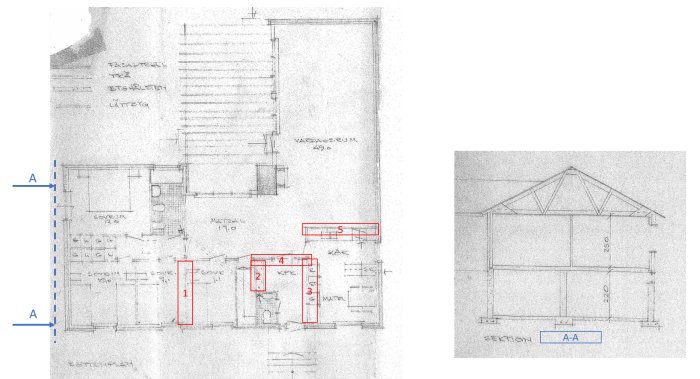
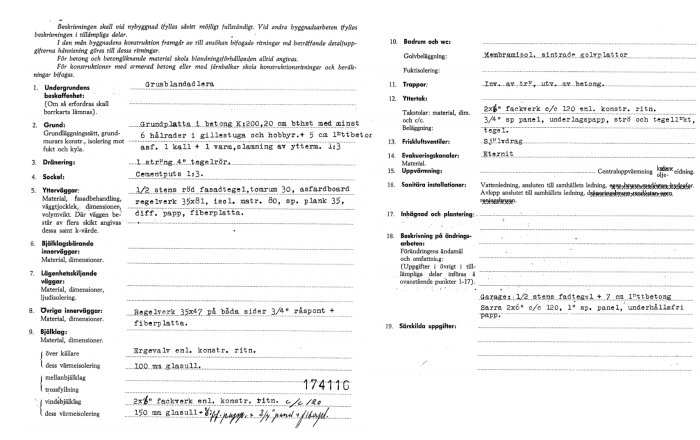
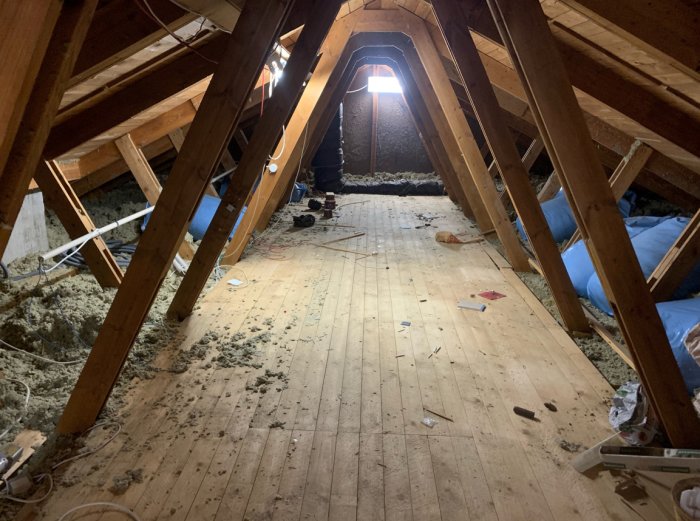
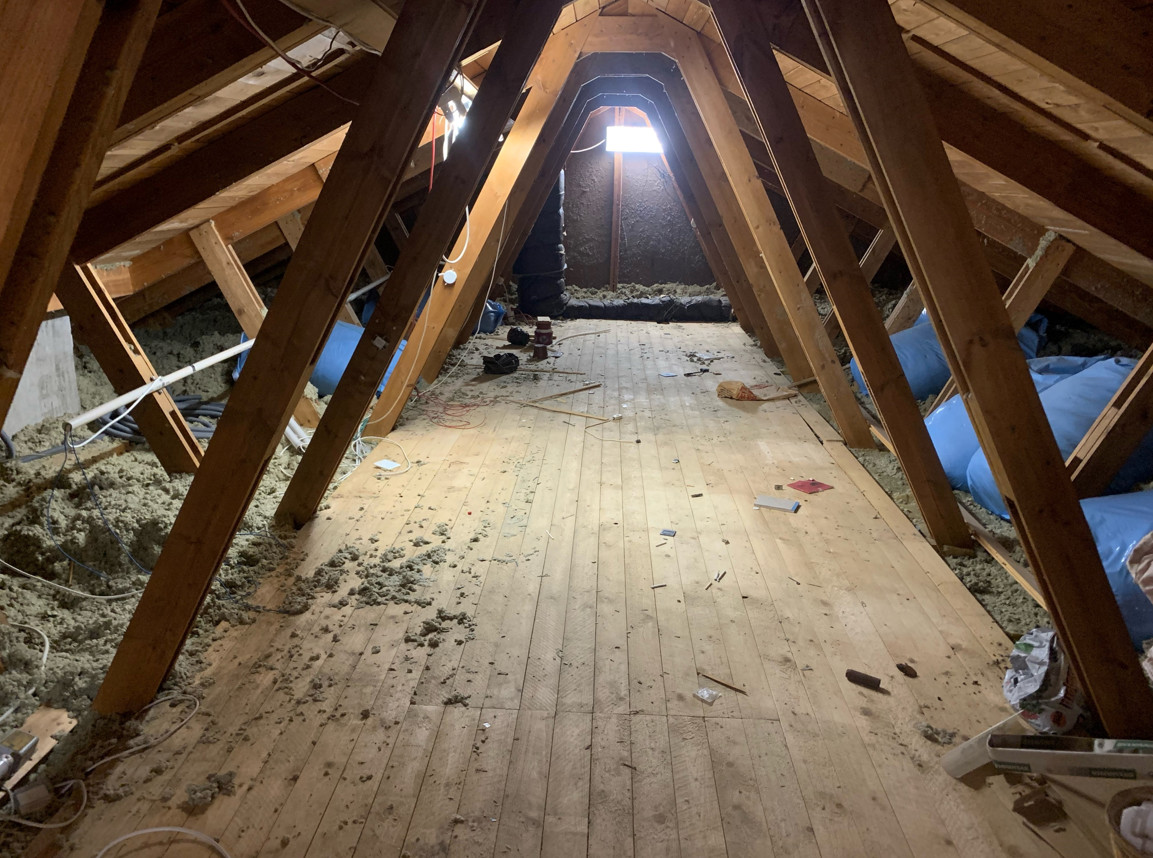
Under the truss rafters there should be no load-bearing walls, but how it works near the angle between the two building bodies is another matter. However, that there is nothing mentioned in the description about load-bearing interior walls is positive. Besides load-bearing walls, there can be walls necessary for stability, meaning preventing the outer walls from falling inward or outward, which can become relevant if you remove many walls close to each other.
I recommend contacting a structural engineer (www.sbr.se) for an investigation.
Have you thought through whether it's really nice to have sand, gravel, and other dirt coming directly into the kitchen, for guests to hang their coats in the kitchen, and to have a bathroom door in the kitchen considering odors?
Under the truss rafters, no walls should be load-bearing, but how it works near the angle between the two building sections is another matter. However, the fact that there is no mention of load-bearing inner walls in the description is positive. Besides load-bearing walls, there may be walls necessary for stability, i.e., to prevent outer walls from collapsing inward or outward, which can particularly be an issue if many walls close to each other are removed.
I recommend you contact a structural engineer (www.sbr.se) for an assessment.
Have you considered whether it's really nice to have sand, gravel, and other dirt coming directly into the kitchen, for guests to hang their coats in the kitchen, and to have a bathroom door in the kitchen considering odors?
Thank you for the welcome, and thanks also for all the input above.
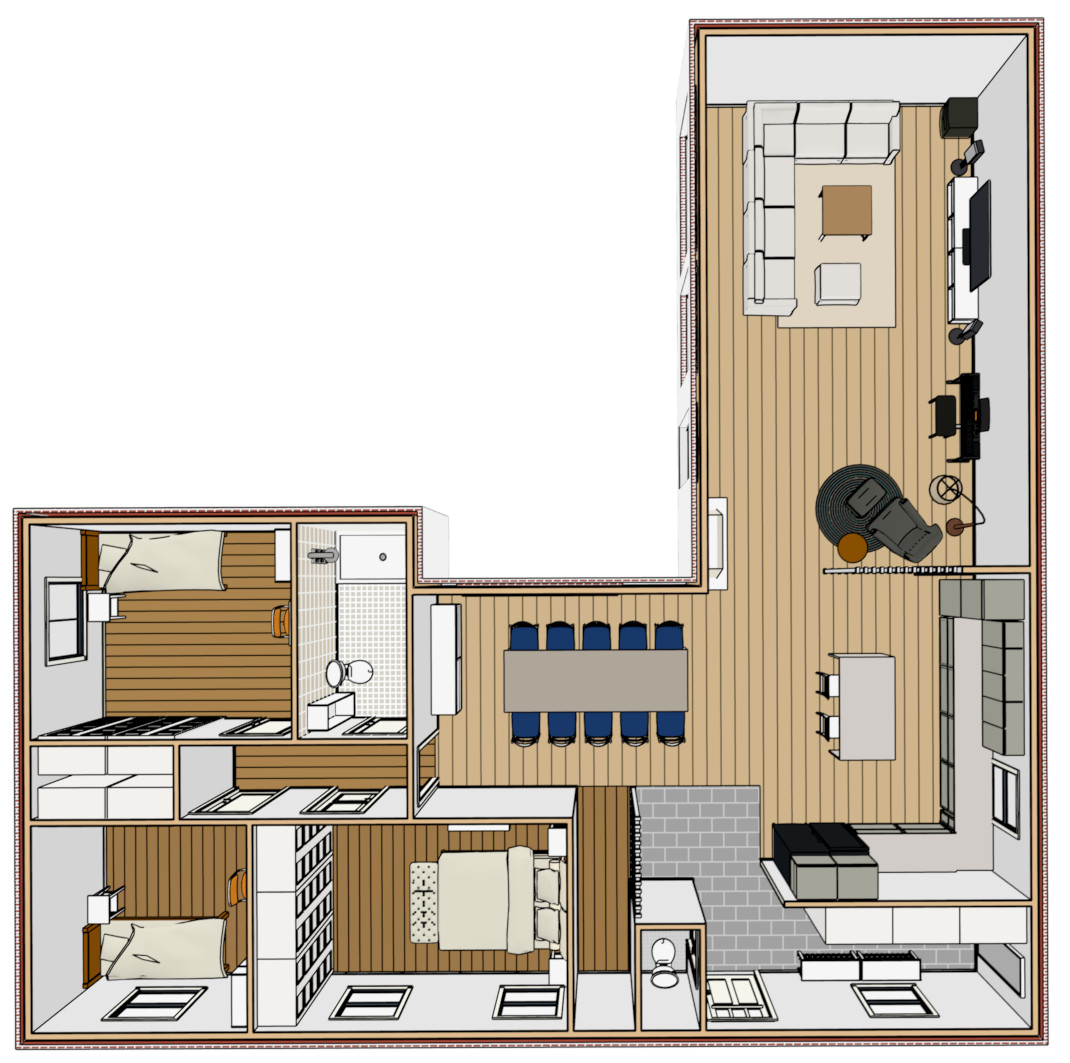
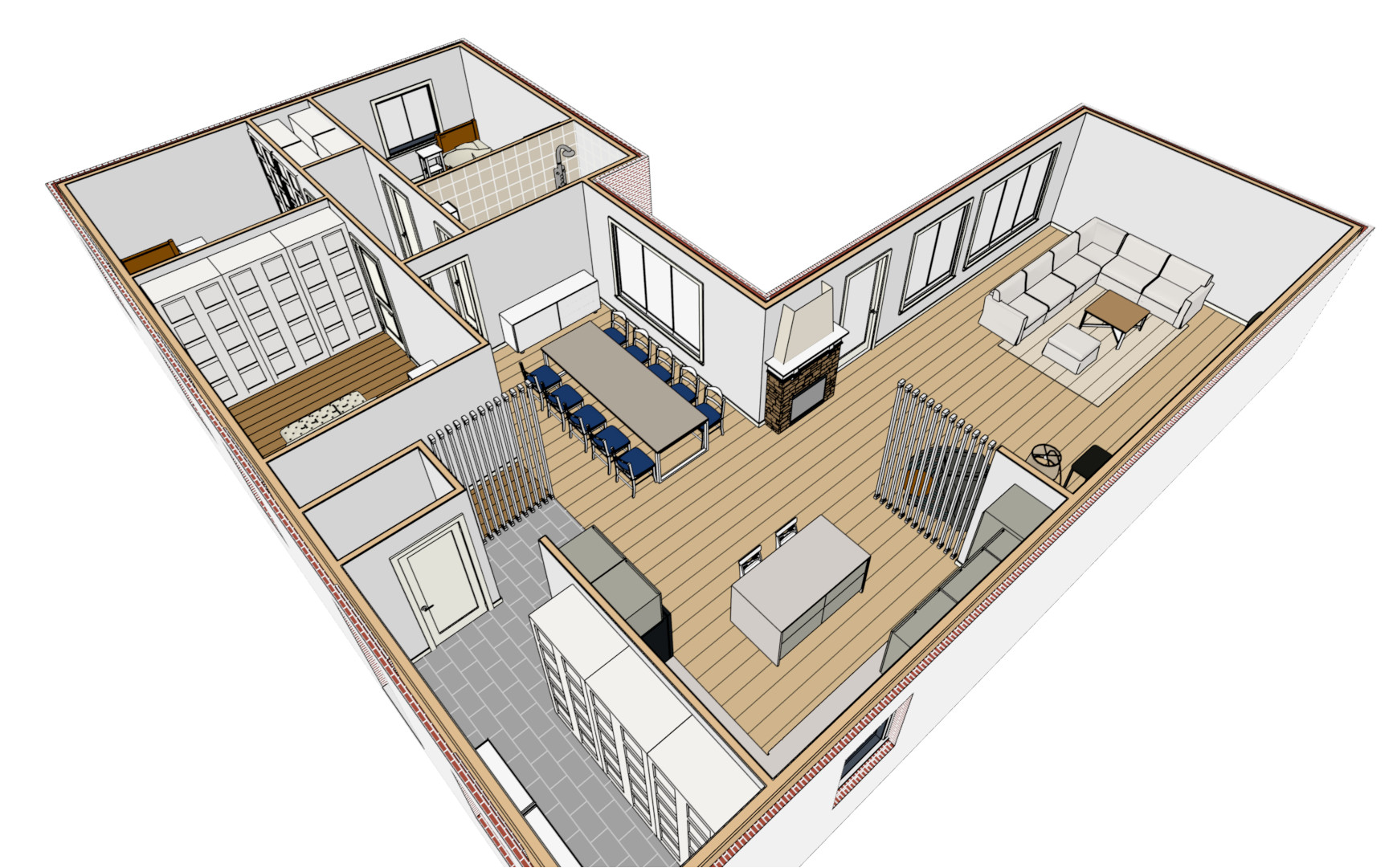
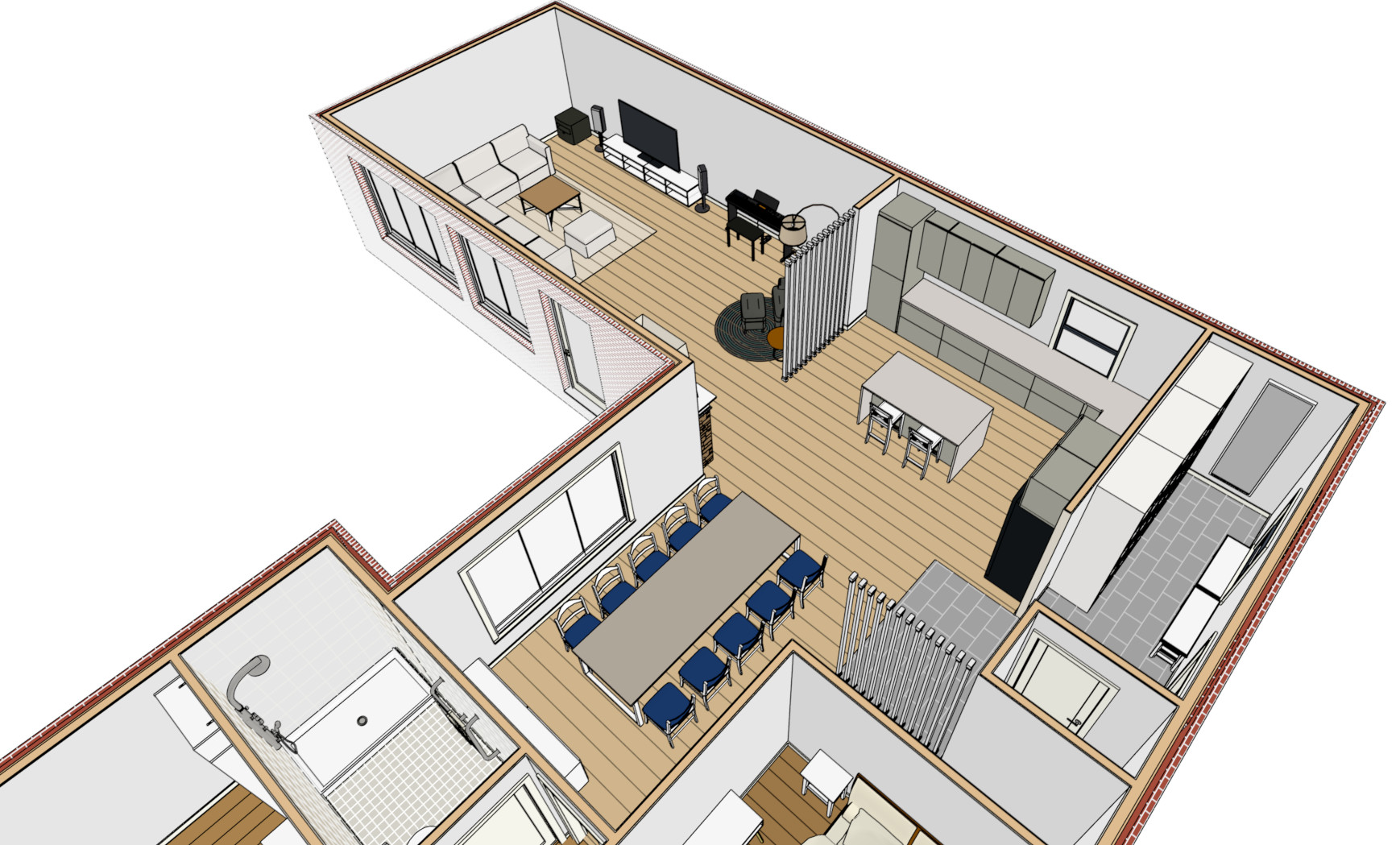
Regarding the planned solution, below are some pictures of how we intend it to be in the future.
Maybe the partition is not sufficient?
Some dirt from the shoes will probably sneak into the kitchen for people, especially when the tile goes into the kitchen. As a guest, I would find it a bit embarrassing to go from the dining table or sofa to the guest bathroom because it will be very noticeable.
Then maybe it's not the case, but it looks quite cramped in front of the hallway closets, and it's not so fun if you have to stand and queue there to hang up your things when the whole family comes home at once.
A little dirt from the shoes will probably sneak into the kitchen for people, especially when the tiles continue into the kitchen. As a guest, I would probably find it a bit embarrassing to go from the dining table or sofa to the guest toilet because it will be very noticeable.
Then maybe it isn't, but it looks quite cramped in front of the hallway wardrobes, and it's not fun if you have to queue there to hang up when the whole family comes home at once.
I thought a lot along similar lines as you before we came to the suggestions above.
When we started from the original floor plan, the hallway is basically unusable. Narrow, dark, and no space for a larger wardrobe.
The intended narrow space in front of the hallway wardrobes has about 1.2 m between the wardrobe door (which should be sliding doors, but I don't know the program well enough) and the wall. I have a similar setup in my current apartment, and it works quite okay.
If you see any other spontaneous solution that could work, input is received with great gratitude.
The disadvantage with the current floor plan is the kitchen's size and the non-functional hallway
It's always a matter of compromises and only the person who will live there can prioritize their preferences.
Possibly, it was originally intended for the family to enter through the basement, making it a utility entrance that can handle muddy boots, etc., allowing just a coat rack for guests' clothes in the hallway.
A 1.2 m corridor is good, but then you seem to have placed low cabinets or a bench along the outer wall. But if you are satisfied with having it that way today, that's good. It probably requires good planning of how sliding door wardrobes are used so that no one slides a door to the side and then blocks someone else.
One way to make the bathroom more secluded is to shorten the counter length next to the fridge and freezer so that the opening towards the hallway is moved to the right, allowing for the construction of a small wall "above" the bathroom door. Instead, the kitchen island can be extended towards the living room to gain more counter space and storage there.
It's always a matter of compromises and it's only the one who will live there who can prioritize their wishes.
Perhaps it was originally intended that the family would enter through the basement and that there is then a utility entrance that can handle muddy boots etc., so then a coat rack for the guests' clothes in the hallway is sufficient.
1.2 m corridor is good, but then it seems you have placed low cabinets or a seating bench along the outer wall. But if you are happy with having it that way today, then it's good. It probably requires good planning of how wardrobes with sliding doors are used so that no one slides the door to the side and then blocks someone else.
One way to make the toilet more secluded is to shorten the counter length next to the fridge and freezer so that the opening to the hallway moves to the right, making it possible to build out a small wall "above" the toilet door. Instead, the kitchen island can be extended toward the living room to get more counter space and storage there.
Thanks again for the input. Appreciated!
More to think about.
The thread went somewhat off-topic.
Back to the original question, probably not load-bearing walls, but I probably need to get a structural engineer to take a look.
Click here to reply
Vi vill skicka notiser för ämnen du bevakar och händelser som berör dig.




BirgitS said:
Welcome to the forum!