
73,866 views ·
76 replies
74k views
76 replies
Probably inhaled asbestos
Well, I am a former heavy smoker though many years ago. In the past 2 years, however, my wife has convinced me to go out and have 1 to 2 in the evenings. I have long thought about quitting this habit because I don't really want to. Yesterday, I actually said stop to it because of what happened. A good reason to quit.
Moreover, we live in a house with some radon, so smoking is incredibly stupid in every way.
Moreover, we live in a house with some radon, so smoking is incredibly stupid in every way.

Such exposure increases the lifetime risk of lung cancer and mesolitism, and the exposure is done and cannot be undone. There is a thread about the scientific danger of asbestos here on byggahus, and based on the info available, you can estimate how dangerous it is. Without checking the thread, I would guess it can be compared to smoking a few dozen packs of cigarettes. I would also ventilate the house thoroughly and wipe down all surfaces.
These diseases take 20-40 years to develop, and I am quite sure that doctors will be renovating your lungs in 15-20 years. Medical science is advancing rapidly, and there are many patients with smoke-damaged lungs who would need such treatment.
These diseases take 20-40 years to develop, and I am quite sure that doctors will be renovating your lungs in 15-20 years. Medical science is advancing rapidly, and there are many patients with smoke-damaged lungs who would need such treatment.
Then it is very possible that it is glass wool and not asbestos, submit it for analysis! If you're lucky, you'll receive reassuring news.Pippirull said:Of course, I can't be completely sure, but it clearly looks like white asbestos from what I've seen. What I removed was like gauze with something white. Looking now later at the ends of the insulation, I quite clearly see a white cake, kind of like gypsum. The house was built in 1957, so everything points to asbestos.
The neighbor has worked with asbestos and never smoked a cigarette, now he has lung cancer.
Do you know which thread it is? Which forum section should I search in?pelpet said:Such exposure increases the lifelong risk of lung cancer and mesolitism, and the exposure has been done and cannot be undone. There is a thread about the scientific dangers of asbestos here on byggahus, and based on the information available, you can figure out roughly how dangerous what you have been exposed to is. Without having checked the thread, I would guess it can be compared to smoking a few dozen packs of cigarettes. I would also ventilate the house properly and wet wipe all surfaces.
These diseases take 20-40 years to develop, and I am fairly certain doctors will be able to renovate your lungs in 15-20 years. Medical science is advancing quickly, and there are many patients with heavily smoked lungs who would need such treatment.
In fact, he has worked with it, so he is clearly at a higher risk of developing something. Not surprised at all, actually.Thomas_Blekinge said:
Well, I do believe it's glass wool insulation, but at the ends and bends, there's something like a white cake, which I interpret as white asbestos. But perhaps I should send a sample for confirmation anyway.mlkjhr said:
Any tips on a company to send it to?

Well, Pippirull, now you've caused a stir. This means that you're going to die ...
... some day ...

But jokes aside.
First and foremost, here's the link you requested:
https://www.byggahus.se/forum/miljo-halsa/249301-asbest-fakta-om-verkliga-risker.html
Then it's true that most people who are worried about asbestos are often unreasonably worried, not in line with the actual risk.
It's a bit like fear of flying, spider phobias, etc. The fear does not match the real risk. And the fear itself can damage one's quality of life.
If it's that bad, you should probably try to work on the fear itself and/or seek help.
In a forum like this, one can hardly get help, as rational arguments and scientific arguments usually fall flat.
But read the attached link.
Think about how many asbestos fibers you inhale every day as you move around in a typical big city, compared to the one-time exposure you might have experienced.
Try making a long list of different risks, such as driving, your smoking, getting assaulted outside a bar, getting stomach or bowel cancer from your eating habits, having a heart attack or stroke from your lifestyle, getting murdered, something getting stuck in your throat and choking, etc. Then work on finding statistics, etc., so that you can jot down a percentage risk for different things, and you'll probably realize that many things you don't worry about at all are actually quite likely compared to others you're worried about.
This could be a path to self-help and understanding, or it might not result in anything.
... some day ...
But jokes aside.
First and foremost, here's the link you requested:
https://www.byggahus.se/forum/miljo-halsa/249301-asbest-fakta-om-verkliga-risker.html
Then it's true that most people who are worried about asbestos are often unreasonably worried, not in line with the actual risk.
It's a bit like fear of flying, spider phobias, etc. The fear does not match the real risk. And the fear itself can damage one's quality of life.
If it's that bad, you should probably try to work on the fear itself and/or seek help.
In a forum like this, one can hardly get help, as rational arguments and scientific arguments usually fall flat.
But read the attached link.
Think about how many asbestos fibers you inhale every day as you move around in a typical big city, compared to the one-time exposure you might have experienced.
Try making a long list of different risks, such as driving, your smoking, getting assaulted outside a bar, getting stomach or bowel cancer from your eating habits, having a heart attack or stroke from your lifestyle, getting murdered, something getting stuck in your throat and choking, etc. Then work on finding statistics, etc., so that you can jot down a percentage risk for different things, and you'll probably realize that many things you don't worry about at all are actually quite likely compared to others you're worried about.
This could be a path to self-help and understanding, or it might not result in anything.
Statistically, one should be concerned about cardiovascular diseases, alcohol, accidents, mental health, and cancer. It is worth taking serious measures here to reduce the risk of being affected. Other risks are very uncommon.
http://www.stat.fi/ajk/tiedotteet/v2006/tiedote_065_2006-10-31_sv.html
My life tips are to stay active and maintain weight, drink moderately, not smoke, drive carefully and use protective gear, avoid stupid things like heavy drugs and a criminal lifestyle, and otherwise not worry too much.
http://www.stat.fi/ajk/tiedotteet/v2006/tiedote_065_2006-10-31_sv.html
My life tips are to stay active and maintain weight, drink moderately, not smoke, drive carefully and use protective gear, avoid stupid things like heavy drugs and a criminal lifestyle, and otherwise not worry too much.
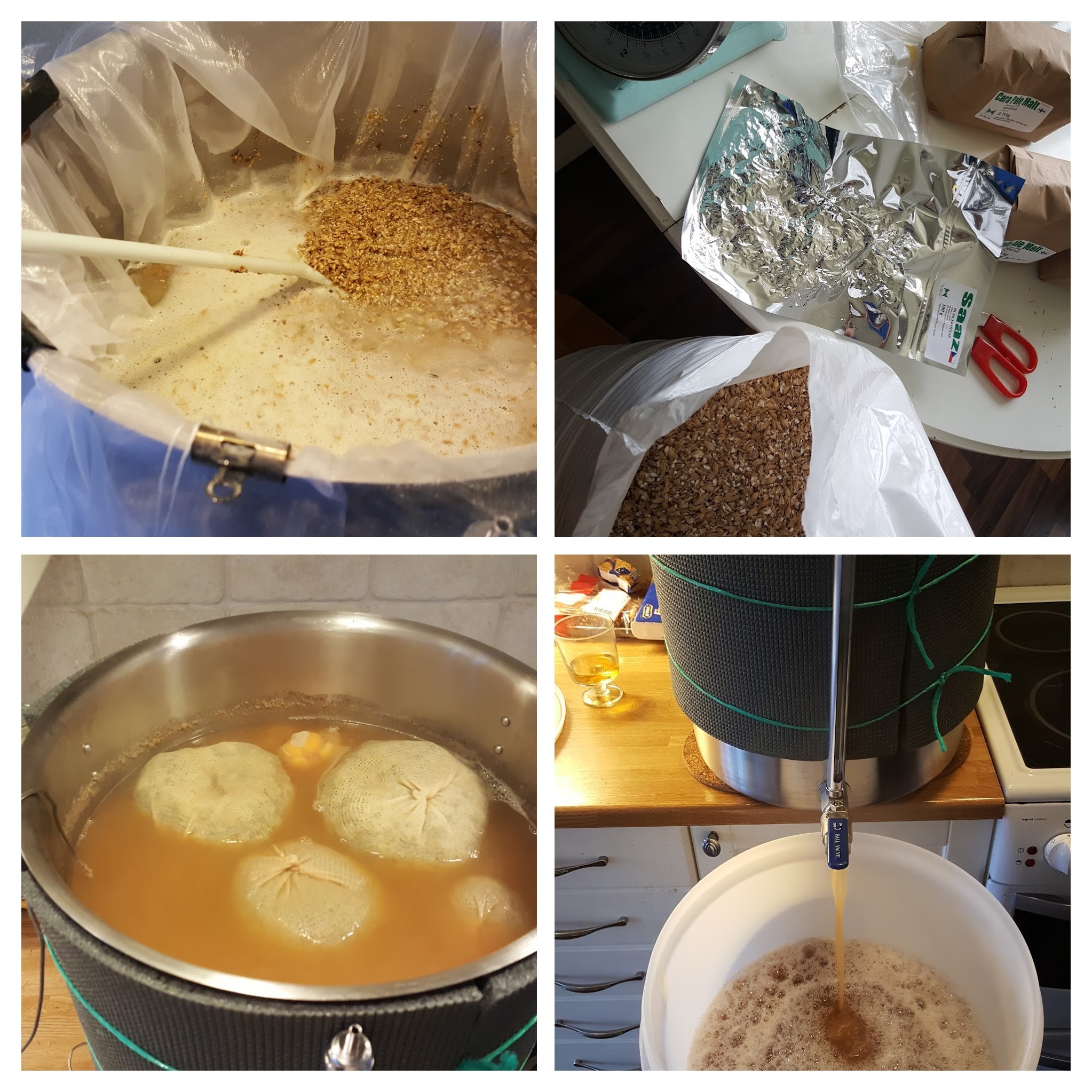
Yes, I'm alive 😁
I've been busy with this pleasant task in the picture, brewing 25 liters of beer.
I've also read the thread in the link above and sure, it's reassuring to see that we breathe asbestos every day, yet it's a bit frightening in a way that we'll have to live with that material in the air forever due to building materials from the past. Now it is what it is and there's nothing one can do.
Then I saw that the work I did took somewhere between 15-25 minutes, and according to the link, I reasonably inhaled somewhere between 60-140 million fibers from tearing down a couple of bits of asbestos insulation. A whole lifetime's exposure in the upper tier, even if the risk of getting something nasty is small, I still have inhaled a hefty dose of fibers.
But the same here, it has happened and there's nothing one can do. I won't go around being afraid, but I will, however, rent a good vacuum cleaner and try to clean more. I've already wet-mopped the floor and pipes, etc., but vacuuming the rest feels good to do. Possibly rent an air purifier to clean out the remaining stuff. Then, I've done what I can to minimize exposure for the rest of the family.
I would think that those figures mean that the work was done without a protective mask. You have used a mask, even though you should have had a different one. I believe your exposure is significantly much lower.
Here are some interesting things currently being researched. So soon you might be able to smoke like a chimney, break vast amounts of asbestos without protection, check in for lung renovation for a week, and then come out with the lungs of a 20-year-old again.
CELLULAR PLASTICITY IN LUNG DEVELOPMENT AND DISEASE
Normal lung development is controlled in a tight spatio-temporal fashion by several soluble factors, as well as cell types required for proper organ development [1]. It is likely that the capability of the lung to initiate repair and regeneration following any insult is altered over the life span of an organism. If and how the human adult lung regenerates are two of the most exciting questions that remain to be answered.
CIRCULATING AND RESIDENT PROGENITOR CELLS
The bone marrow represents a potent source for several progenitor cell populations, such as haematopoietic stem cells, mesenchymal stem cells or fibrocytes. Many of these cell types have recently been reported to modify chronic lung disease;
REGENERATIVE SIGNALLING MECHANISMS
Recently, signalling pathways essential for organ development, such as Notch, Sonic Hedgehog, or Wnt signalling, have been demonstrated to be aberrantly altered in several chronic lung diseases.
TISSUE ENGINEERING AND LUNG TRANSPLANTATION
Another promising approach for lung regeneration is based on tissue engineering. Here, the community has witnessed major breakthroughs in recent years
Here are some interesting things currently being researched. So soon you might be able to smoke like a chimney, break vast amounts of asbestos without protection, check in for lung renovation for a week, and then come out with the lungs of a 20-year-old again.
CELLULAR PLASTICITY IN LUNG DEVELOPMENT AND DISEASE
Normal lung development is controlled in a tight spatio-temporal fashion by several soluble factors, as well as cell types required for proper organ development [1]. It is likely that the capability of the lung to initiate repair and regeneration following any insult is altered over the life span of an organism. If and how the human adult lung regenerates are two of the most exciting questions that remain to be answered.
CIRCULATING AND RESIDENT PROGENITOR CELLS
The bone marrow represents a potent source for several progenitor cell populations, such as haematopoietic stem cells, mesenchymal stem cells or fibrocytes. Many of these cell types have recently been reported to modify chronic lung disease;
REGENERATIVE SIGNALLING MECHANISMS
Recently, signalling pathways essential for organ development, such as Notch, Sonic Hedgehog, or Wnt signalling, have been demonstrated to be aberrantly altered in several chronic lung diseases.
TISSUE ENGINEERING AND LUNG TRANSPLANTATION
Another promising approach for lung regeneration is based on tissue engineering. Here, the community has witnessed major breakthroughs in recent years

Renovation rookie
· Dalarna
· 3 173 posts
According to the cleaning company that fixed our bathroom, asbestos is more likely to be found in the bends.
I taped the joints myself, closed all doors, used a HEPA filter in the heavy-duty vacuum, a P3 filter in the breathing mask, wore a tight disposable suit, and carefully sawed only on straight pipes.
I taped the joints myself, closed all doors, used a HEPA filter in the heavy-duty vacuum, a P3 filter in the breathing mask, wore a tight disposable suit, and carefully sawed only on straight pipes.