We have replaced an old rusty cast iron well in the basement. We have already cast over the supporting structure with reinforced fine concrete. My question now is how best to cast up the last 50-70 mm to a finished concrete floor surface level with the old floor? Continue with regular fine concrete? Smoothing compound? Self-leveling compound?
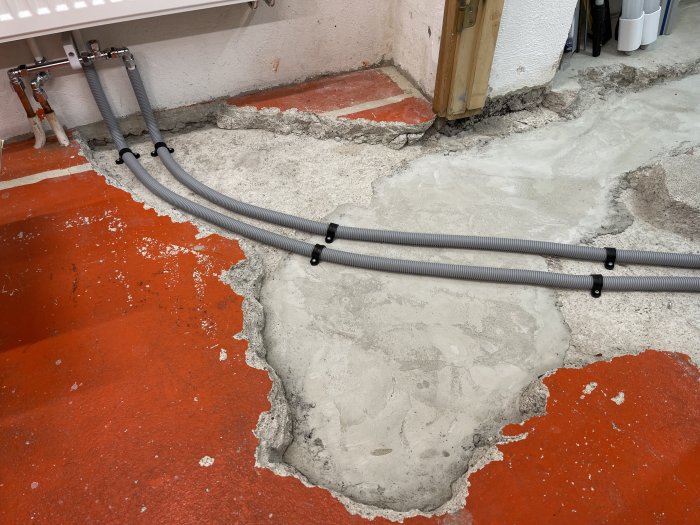
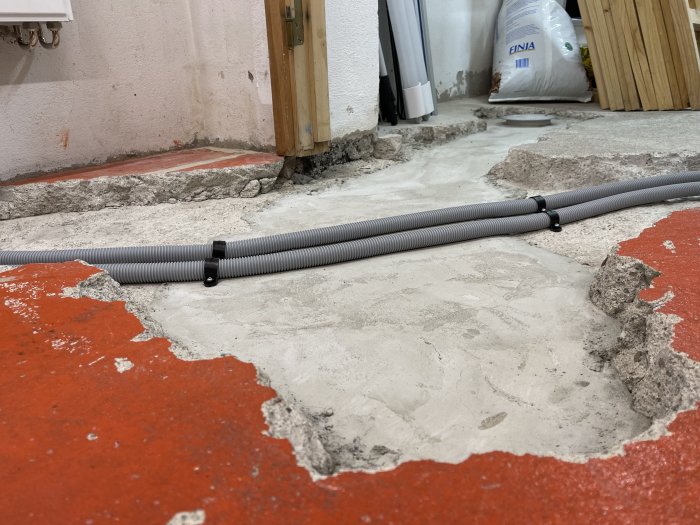
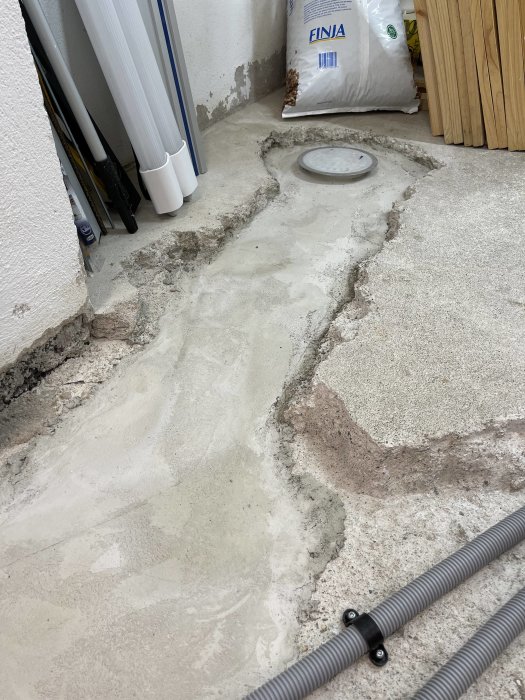
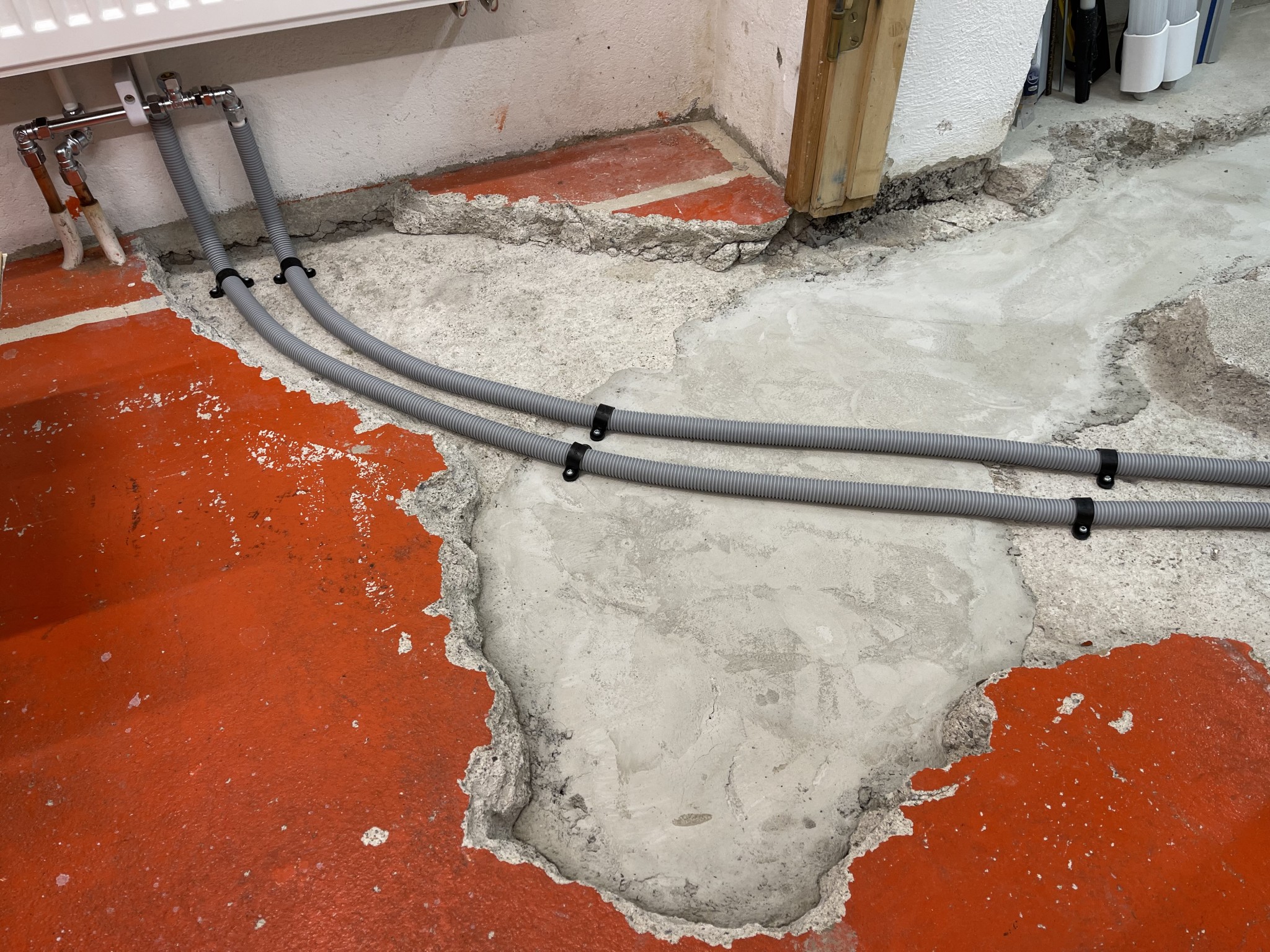
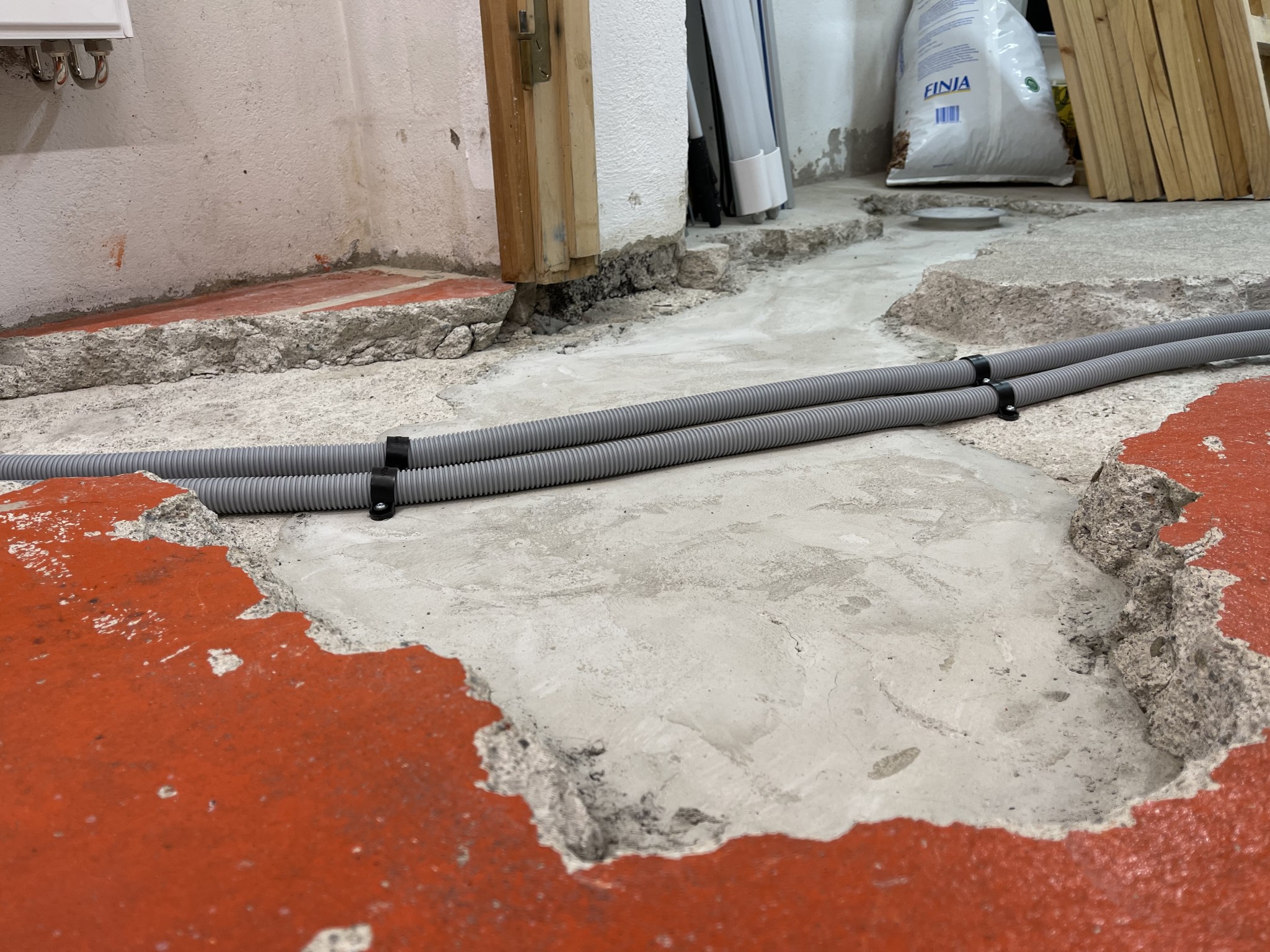
This is how it looks now
Storage room, with door to basement with new floor drain:
Basement room with new floor drain:
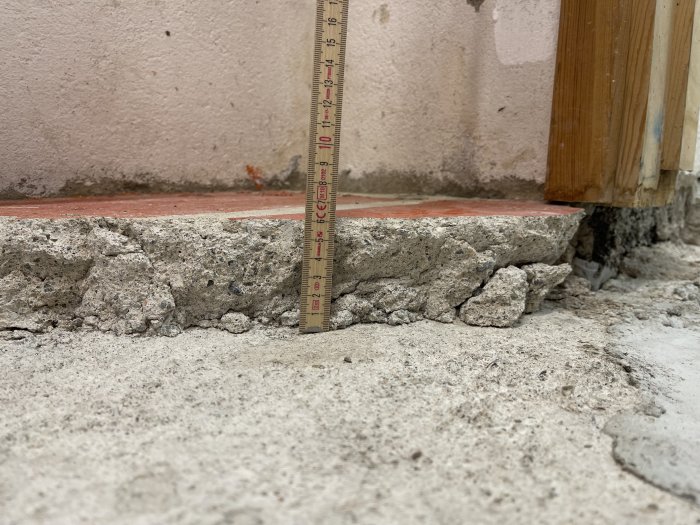
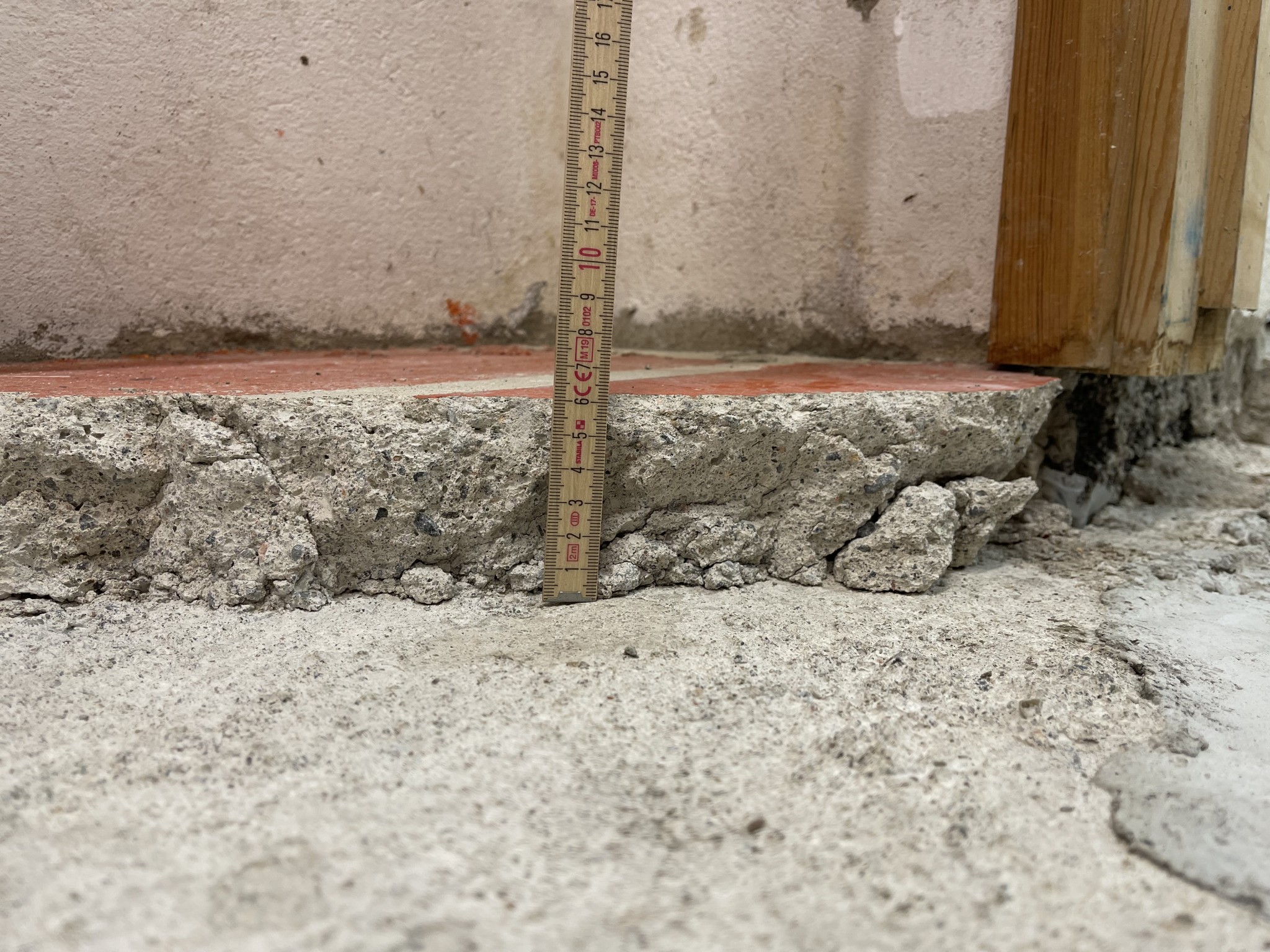
Approximate thickness of existing surrounding concrete floor:
In the first room, there is no slope. In the room with the floor drain, there is a certain slope on the surrounding floor.
I had used expanding concrete. It flows out very nicely and fills your hole precisely to the edge if you pour it carefully.
You can also make divisions in the hole with modeling plaster so that you can cast in stages.
Expanding concrete sounds interesting, I haven't worked with it before. In that case, I definitely need to divide it into two parts, one for the flat floor and one for where there should be a certain slope. I'm guessing expanding concrete isn't that great if you want to create a slope?
EPS concrete + self-leveling compound for the part that doesn't have a slope. The self-leveling compound is simple + you can adjust it/scrape it when it's semi-hardened.
For the part that has a slope, EPS concrete also works; check the minimum thickness, but I believe it's often 30mm. Then self-leveling compound or a screed on top of that. Self-leveling compound with a slope is difficult; I have outsourced that part. Check out the "Onsalakorvens" thread where I believe he uses a screed for sloped casting.
Thanks for the tips. The challenge in the part that needs a slope is that I have to relate to the surrounding concrete floor that already has a slope towards the floor drain. Probably, I can use a screed board against the existing floor, but that requires the mass I use not to flow too much on its own. I don't know much about different slip compounds, but from what I understand, they typically don't flow out on their own.
Click here to reply
Vi vill skicka notiser för ämnen du bevakar och händelser som berör dig.