There are two screw holes on each side and one underneath in the middle.
The wall I mounted it on is brick in some places and more porous, lightweight concrete in others. The bottom drill hole was brick, and the right and left were lightweight concrete.
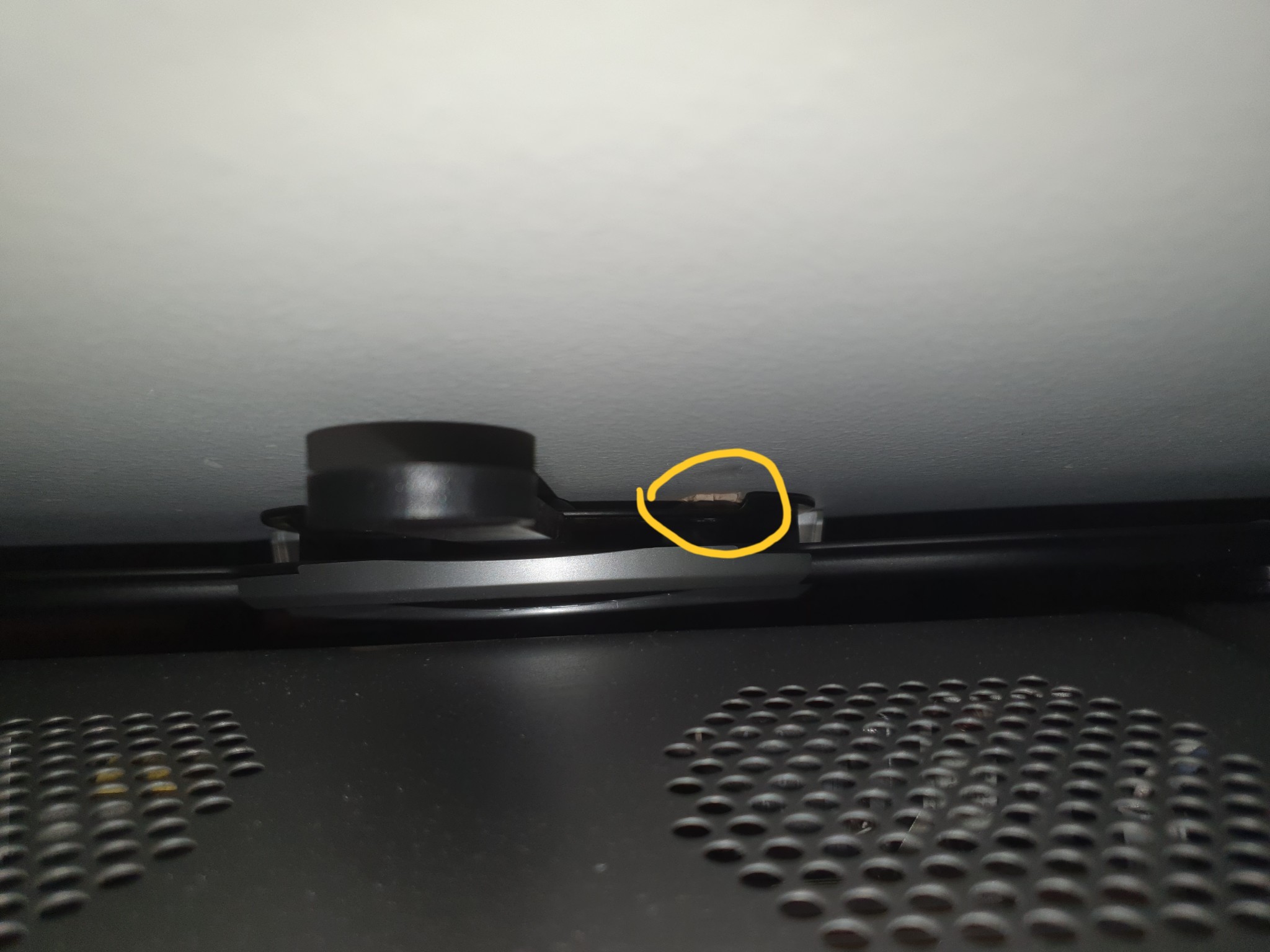
However, now the plug in the right screw hole has come out about 0.5 cm after two days. See attached photo (taken from above).
The question is if it will hold, or if I should unscrew and try to fill the hole?
It is not optimal. A correct plug in a hole of the right size should be firmly secure. Especially if it's concrete or brick.
It might be a bit of a hassle if you decide to fix this, maybe you should wait and see if the plug stays in place.
There were no uncertainties regarding the dimension of the drill hole and plug type when you mounted the bracket?
Now, however, the right screw hole plug has come out about 0.5 cm after two days.
I would have taken down the TV immediately. No one can be sure if it will hold or if everything has already fallen down. If a plug starts to come out after installation, something is very wrong, and if I cared at all about the TV or the surface, I wouldn't risk it.
Agree with the previous two posts, it should sit firmly in the wall if it's done correctly, so something is wrong. Take it down and do it again. It's important that the hole and the screw are at least a few cm longer than the plug.
Thanks for the response. Removed the screw and plug. Used a 12 mm plug instead. Checked the mount thoroughly and it's as solid as a rock. Put the TV back up and now the mount is pressed directly against the wall, no plug "pushing out".
This is the heaviest mounting I've done so far, except for a fairly heavy mirror and a shelf that holds a fair amount of books. The difference must have been that I had more problems with this one because, even though I drilled with a 10 mm drill and deeper than the screw - perpendicular - the screw wouldn't go all the way in. Drilled again and felt drilling resistance halfway. Probably this caused too large a hole.
Any theory on this? The hole seemed to have filled itself back in.
In lightweight concrete, you should use a triangular plug, a plug half a mm smaller, or use a screw with a coarse thread directly into the lightweight concrete.
Lightweight concrete tends to crumble, and then the plug doesn't sit as intended.
Sounds like the plug you've used now works, nice.
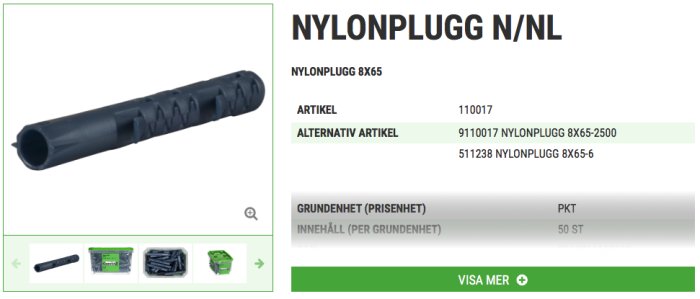
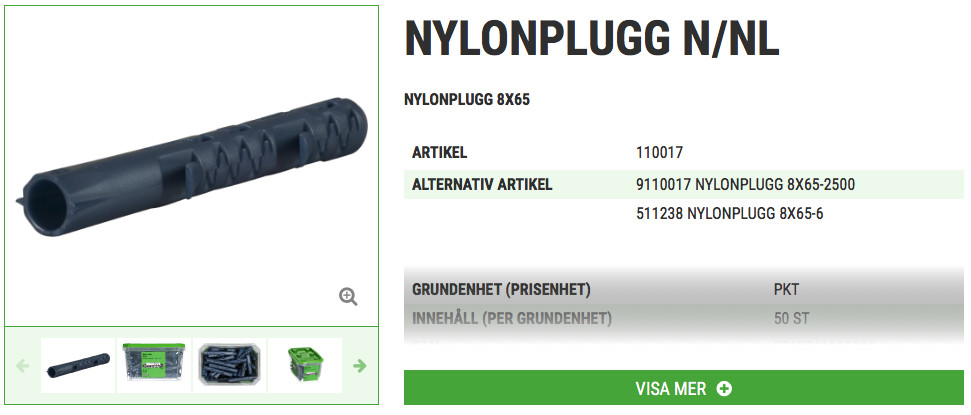
My favorite for use in lightweight concrete, mainly for various kitchens that have been installed and no one has called yet to report that the overhead cabinet is resting on the countertop - Essve Nylon Plug 8x65. 8mm because it doesn't leave a huge hole and 65mm to get past any plaster and really have a surface to grip.
In lightweight concrete, I usually use a regular screwdriver and a 7mm drill to give the plug even more hold; the power drill is avoided as it tears more in soft materials. For that, I choose the maximum recommended screw thickness of 6mm and preferably a 6x80 mm Essve Cutter with a rounded head. Stays put like a rock!
In porous walls, it's better to use as long an anchor as possible. "Normal" anchors that everyone is familiar with are usually too short and don't hold well since the hole often becomes too large when drilling. An anchor that is a decimeter long holds in a completely different way even if the hole is a bit rough. Long nail anchors or similar ones with a screw instead work excellently on such things, and you don't need as large a diameter either.
But in porous walls, it's better to use as long a plug as possible. "Normal" plugs that everyone knows are usually too short and don't hold well because the hole typically becomes too large when drilling. A plug that's a decimeter long supports differently even if the hole ends up a bit rough. Long nail plugs or those with screws instead work excellently for such things, and you don't need a large diameter either.
Just nail plugs in porous walls, I haven't had such good experiences with - One hit too many and they become loose; the expansion of a nail plug cannot be compared to the expansion of, for example, a nylon plug.
If it's lightweight concrete, then a long lightweight concrete screw is superior. Low speed on the screwdriver and low torque, the problem with most plugs is that they are too short to provide really good strength.
I don't have good experiences with spike plugs in porous walls - One hit too many and they become loose, the expansion of a spike plug doesn't compare to the expansion of, for example, a nylon plug.
I didn't mean that one should choose spike plugs specifically for the OP's application but more the type of plug. These are usually long in relation to the diameter unlike regular plugs which are often thick and short. If you have a porous wall and believe that regular plugs are what you need, it tends to go wrong since the mistake often happens already when drilling and the hole becomes too big.
Click here to reply
Vi vill skicka notiser för ämnen du bevakar och händelser som berör dig.








slacker said: