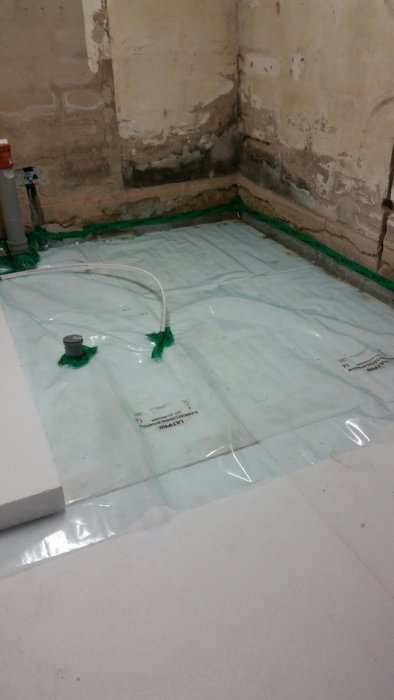
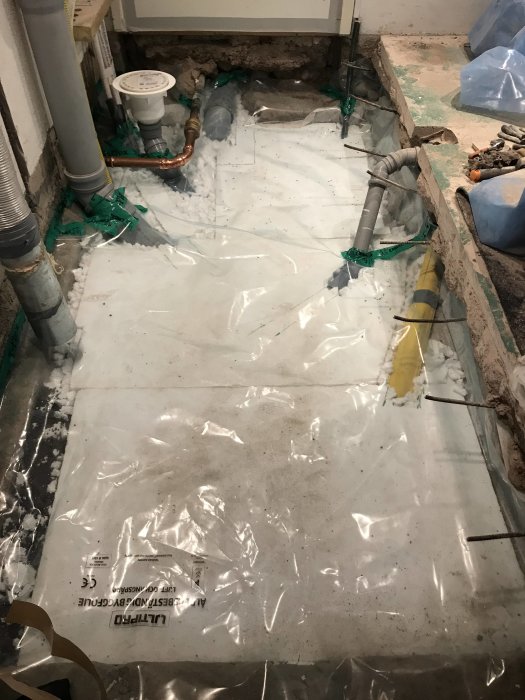
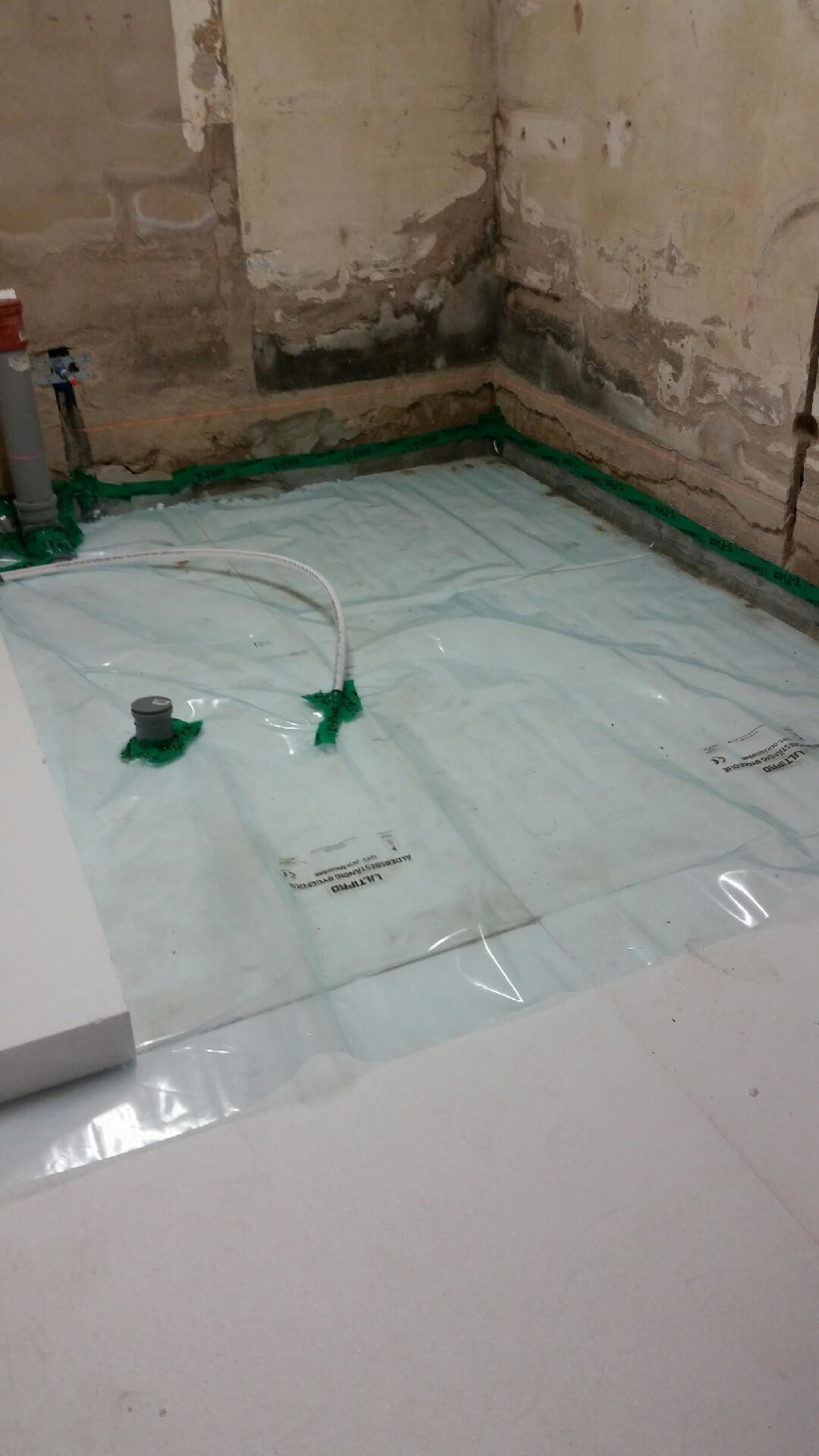
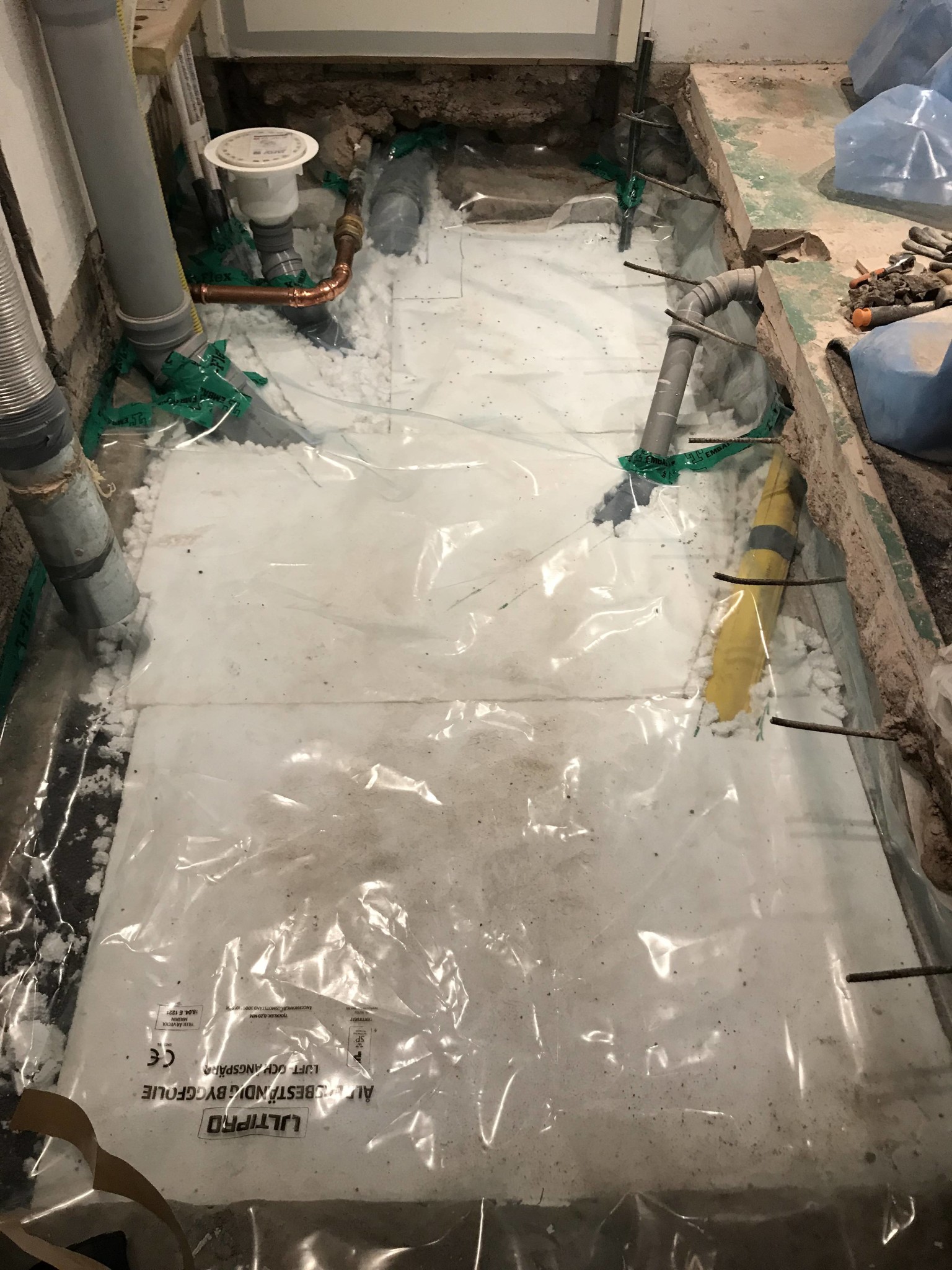
I am working on a basement renovation where I have been breaking up and excavating parts of the basement. I've been back and forth on whether I should install age-resistant plastic between the bottom and the second bottom layer of insulation. We have detected high levels of radon and have a radon fan already installed. The "experts" I've spoken with have had divided opinions on whether the plastic makes any difference... I'm not doing the entire basement anyway. As you can see, I decided to go ahead and add the plastic once I started with the insulation. But it feels like it's still "so-so," it's difficult to get the tape to stick properly to the uneven walls. I don't feel like plastering the wall just to have something for the tape to adhere to.
How would you have done it, continued to struggle and make it as good as possible or removed it and ignored it completely? Could it even be a risk considering moisture and condensation in an old house built entirely without plastic from the beginning ('65)?
The plastic prevents the cast slab from drying out downward, leaving the water in vapor phase to move upward, which is undesirable since the drying time means you have to wait a long time before applying a surface coating.
And as a radon barrier, the plastic is useless!
The plastic prevents the cast slab from drying out downwards, leaving vapor-phase water to move upwards, which is undesirable since the drying time means you have to wait a long time to apply surface coatings.
And as a radon barrier, the plastic is useless!
Thanks for the input! In what way do you mean that the plastic is useless as a radon barrier? (It should be added that it concerns soil radon.) Because it doesn't seal well against the walls? Several builders I've talked to think it's a good idea.
Thanks for the input! In what way do you mean that the plastic is useless as a radon barrier? Due to it not being airtight against the walls? Several builders I've talked to think it's a good idea.
Hard to get absolutely airtight everywhere, Polyethylene is also not gas-tight, which is required to stop radon.
If you're looking for a solution against radon, look into products developed for this purpose, such as radon membranes.
I've met many builders who carry out measures without really knowing why they are doing them.
Difficult to get completely airtight everywhere, Polyethylene is also not gas-tight, which is required to stop radon.
If you're looking for a solution against radon, look at products developed for the purpose, such as radon membrane.
I have met many builders who perform measures without knowing why they are doing them in the first place.
So as you see it, I might as well skip the plastic ?
I would like to get it as "right" as possible, not keen on tearing up the slab again to redo it...

Needas said:
 ?
?