
4,998 views ·
22 replies
5k views
22 replies
Plastered ceiling wrong

Construction rookie
· Nässjö
· 46 posts
Hello.
I am new to renovation and tore down old tretex from both the walls and the ceiling and have started installing new drywall on the ceiling, but I'm beginning to realize that I've made several mistakes. Is there anything that can be done about this, or do I have to tear it down and redo it? Joint compound as filler?
I am new to renovation and tore down old tretex from both the walls and the ceiling and have started installing new drywall on the ceiling, but I'm beginning to realize that I've made several mistakes. Is there anything that can be done about this, or do I have to tear it down and redo it? Joint compound as filler?
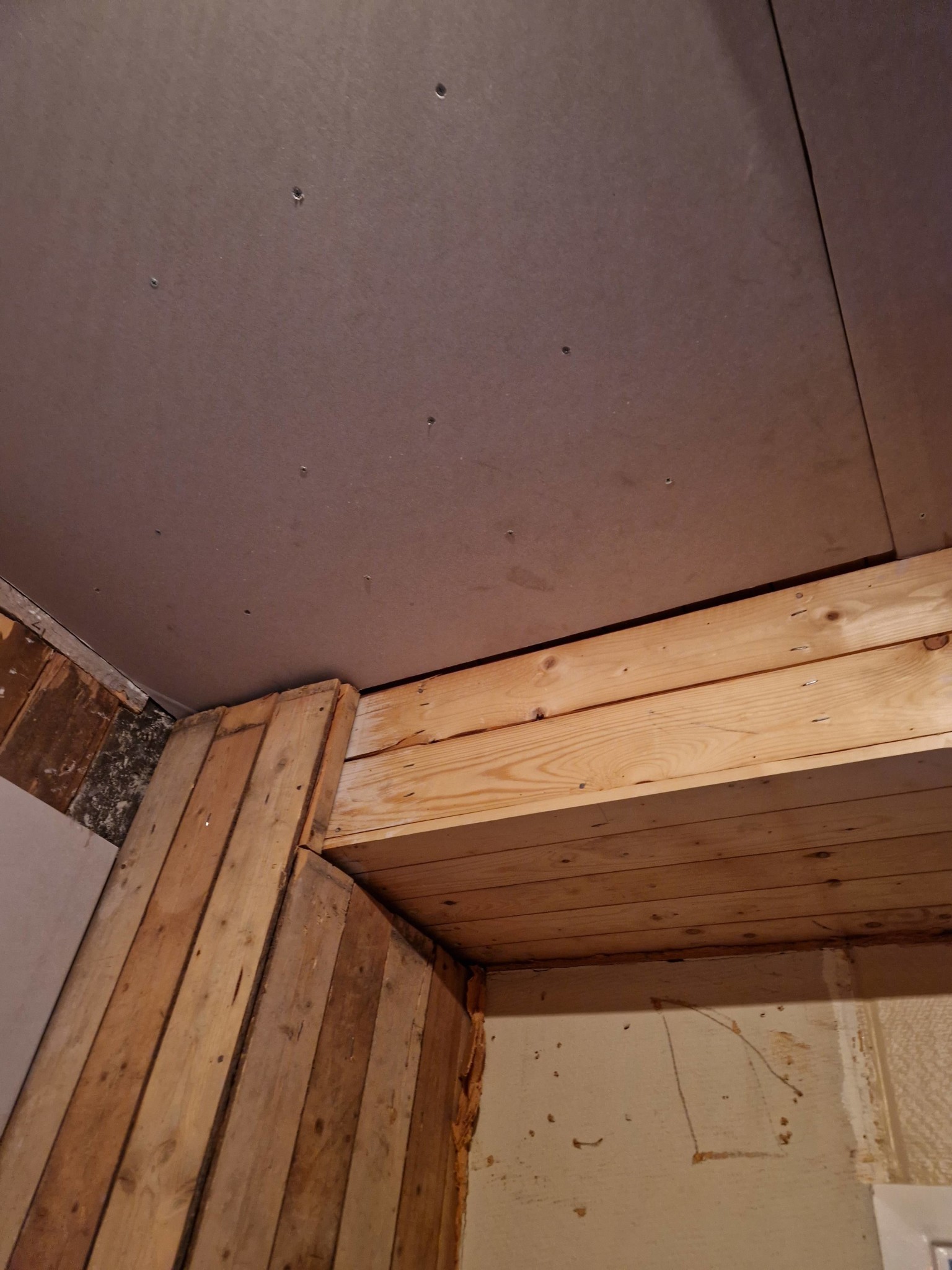

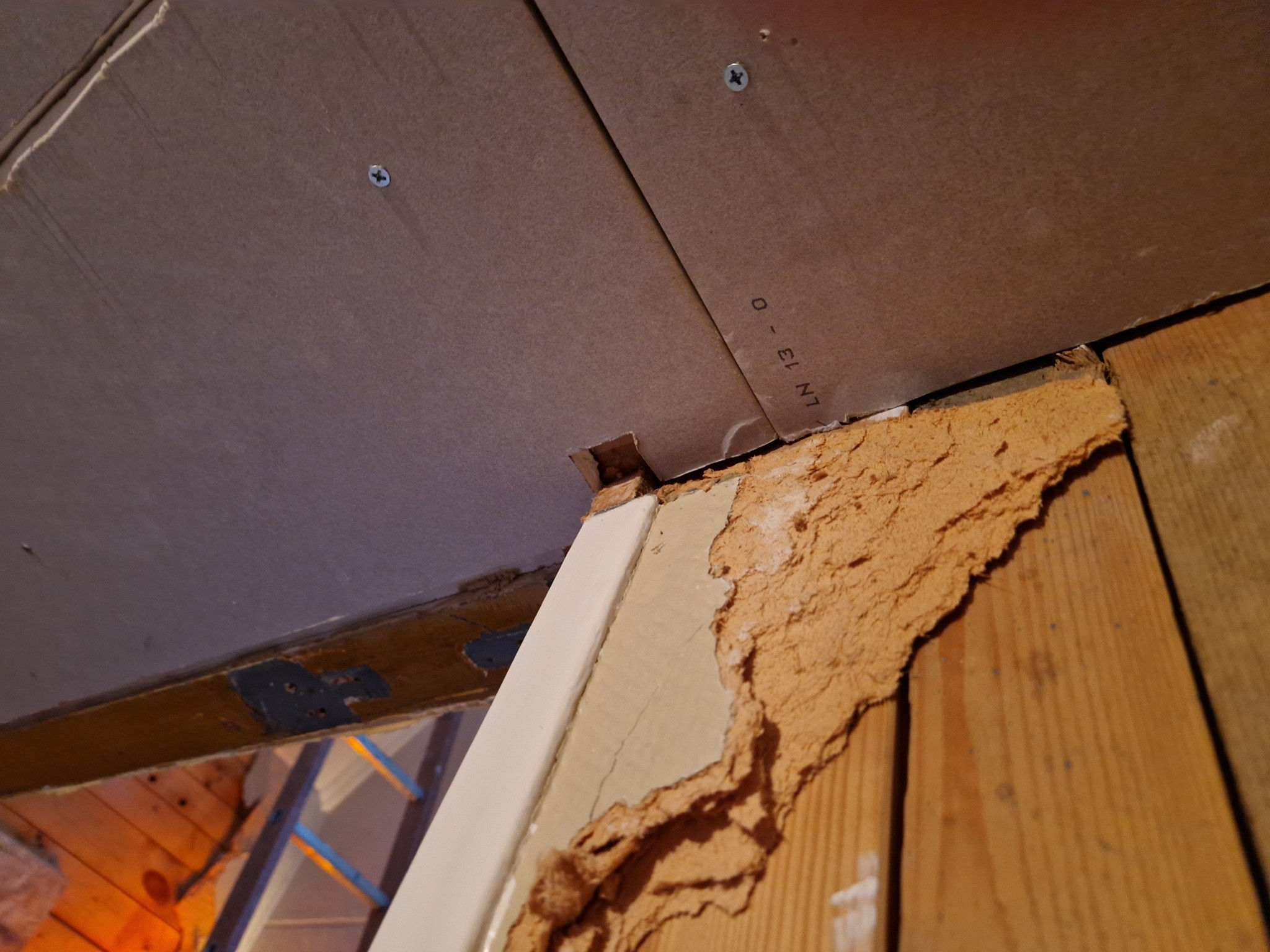


Construction rookie
· Nässjö
· 46 posts
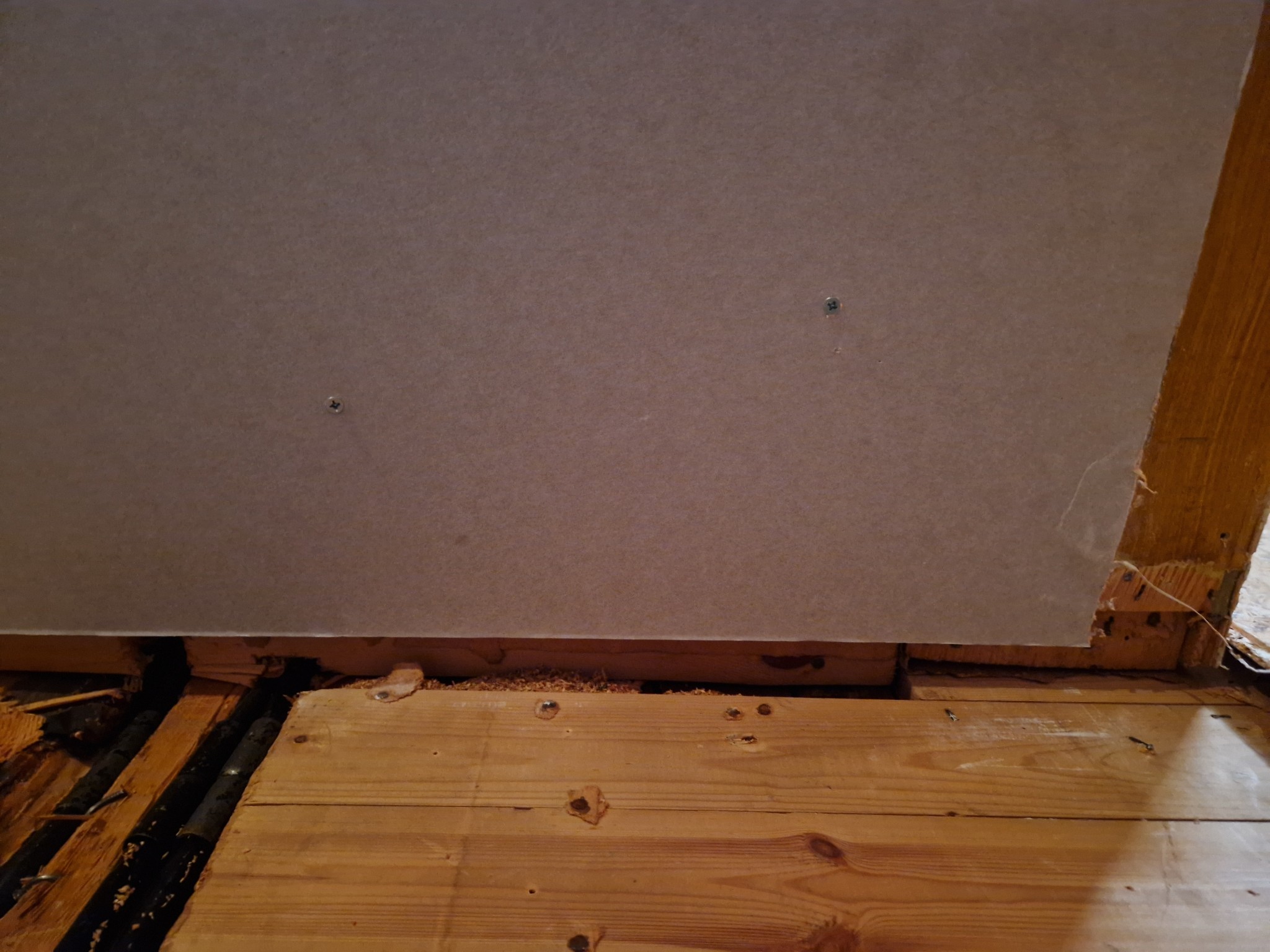
You should have drywall and then ceiling moldings, right? It will add some thickness and the moldings will also cover. If there are any mistakes here and there, you can fix them with joint compound/spackle.
Keep drywalling and fix any mistakes if needed later.
Keep drywalling and fix any mistakes if needed later.
Construction rookie
· Nässjö
· 46 posts
it's super important that the boards are at an angle. Snap a chalk line along an arbitrary long side. Start by mounting a board against a short side with the long side aligned with the line. The next board is mounted with an offset short side against this first board. Then you'll have 90 degrees on the short side. The short ends should also be chamfered.Hello.
I'm new to renovation and have torn down old tretex on both the walls and the ceiling and have started putting up new plasterboard on the ceiling but I have begun to realize that I've made mistakes in several ways. Is there anything I can do about this or do I need to tear it down and redo it? Gypsum compound as filler?
Construction rookie
· Nässjö
· 46 posts
I don't quite understand what you mean.

Stagger the joints, bevel the short sides as well. That's all. Don't really understand the problem, if you haven't staggered the joints then remove two and redo. You don't seem to have screwed them down yet so it will be quick.



Construction rookie
· Nässjö
· 46 posts
No, if it's only in one spot it doesn't matter. It might crack a bit easier there because it becomes a weaker seam. If you use paper tape for jointing instead of fiberglass tape, that type of joint should be stronger than the drywall if done correctly. So tape and joint carefully, and it should be fine. The joints should be staggered by 60cm if I recall correctly.
The short edges should also be beveled. Buy a drywall knife with a beveling tool. Saves a lot of time.
You learn from your mistakes, but don't rebuild everything for the smallest mistake, you'll never finish.
No no! If you're going to drywall a ceiling, rent a drywall lift, it costs about 70 SEK/day. Maybe 150 SEK to rent over a weekend for a private person.
Drywall knife with blade for chamfering, drywall rasp, drywall lift and while you're at it, rent a screw gun as well and buy collated drywall screws (which are usually cheaper) so you save a lot of time and it's easier to do it right.
Construction rookie
· Nässjö
· 46 posts
Ok, thanks. I'll look into this next week. Luckily, I don't have any more ceiling work to do for a while...but you don't think I should take everything down and redo it, just leave it as it is and plaster over with a tape joint and hope it doesn't crack?sunnis said:
No no! If you're going to plaster the ceiling, rent a panel lift, it costs about 70 SEK/day. Maybe 150 SEK to rent over a weekend for private individuals.
Drywall knife with chamfering blade, drywall rasp, panel lift and when you're at it, also rent a screw gun and buy collated drywall screws (which are usually cheaper) to save a lot of time and make it easier to do it right.

Construction rookie
· Nässjö
· 46 posts
Yes, I am. I'm going to buy a rasp at Biltema today. I will need to join the walls, so I'm also going to buy a plane for chamfering. The panels are only 2500 and the wall is 2780 to the ceiling, so I haven't really thought this through, I realize. You live and learn.Bart said: