Here comes another basement plaster-thread. I've done a lot of research here in the forum and found great information. However, I would appreciate if someone could support with a couple of questions regarding the groundwork.
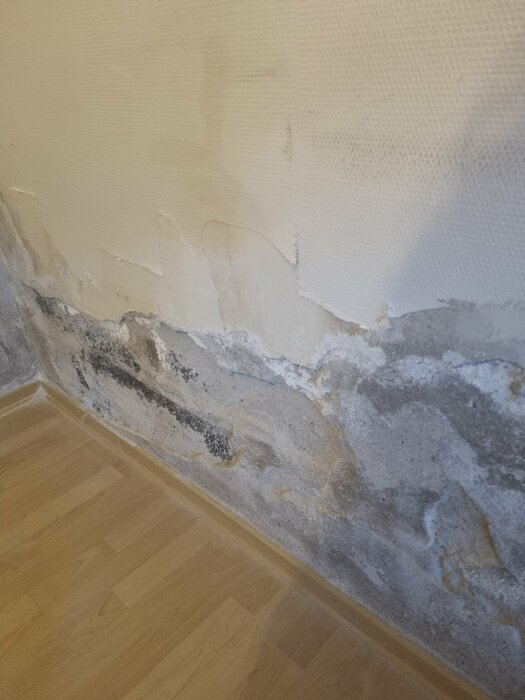
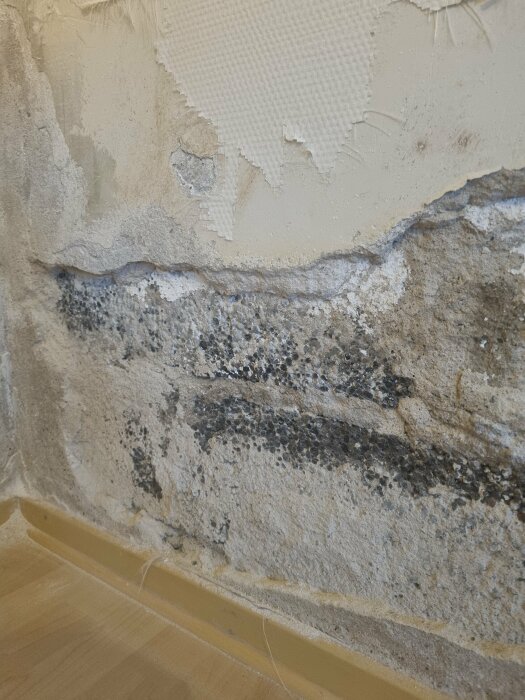
I've embarked on a minor renovation in our heated basement from 1975. The walls have long been enclosed with an unclear type of paint and woven wallpaper(!!). Incredibly enough, the walls are in pretty good condition except at the bottom corners of the exterior walls. No other problems with moisture or odor either.
I'm thinking of making a targeted effort where the plaster has come off the worst. It will require roughly 2-3 cm of plaster in thickness in some places.
What I've done so far:
- Tear down the woven wallpaper (will be done everywhere eventually)
- Knock off loose plaster
- Go over with a wire brush and remove all deposits
- Clean the wall from dust with a vacuum cleaner
My question concerns the next step. I've read that you should dampen highly absorbent surfaces before plastering. Is old plaster and exposed leca (?) blocks considered absorbent materials? Or is it enough that I prepare by applying a wash coat with loosely mixed C-mortar?
My plan moving forward is as follows:
- Apply a wash coat with loose C-mortar 1-2 rounds (I've bought Finnjas Puts- & Murbruk C)
- When the above has started to dry slightly, I'll continue plastering with normally mixed C-mortar by throwing on the plaster with a masonry trowel and smoothing it out with a smoothing trowel
- When the wall is even and the plaster has started to dry a bit, I'll finish with a plastering float.
Eventually, the entire wall will be sanded down a few millimeters and surface-treated. But that’s a future project!
All of this is new to me, so I apologize if the questions are too silly or repetitive. I've really tried to search the forum before posting
Here comes yet another basement plastering thread. I've done quite a bit of research here in the forum and found really good information. However, I would appreciate if someone could support with a few questions regarding the groundwork.
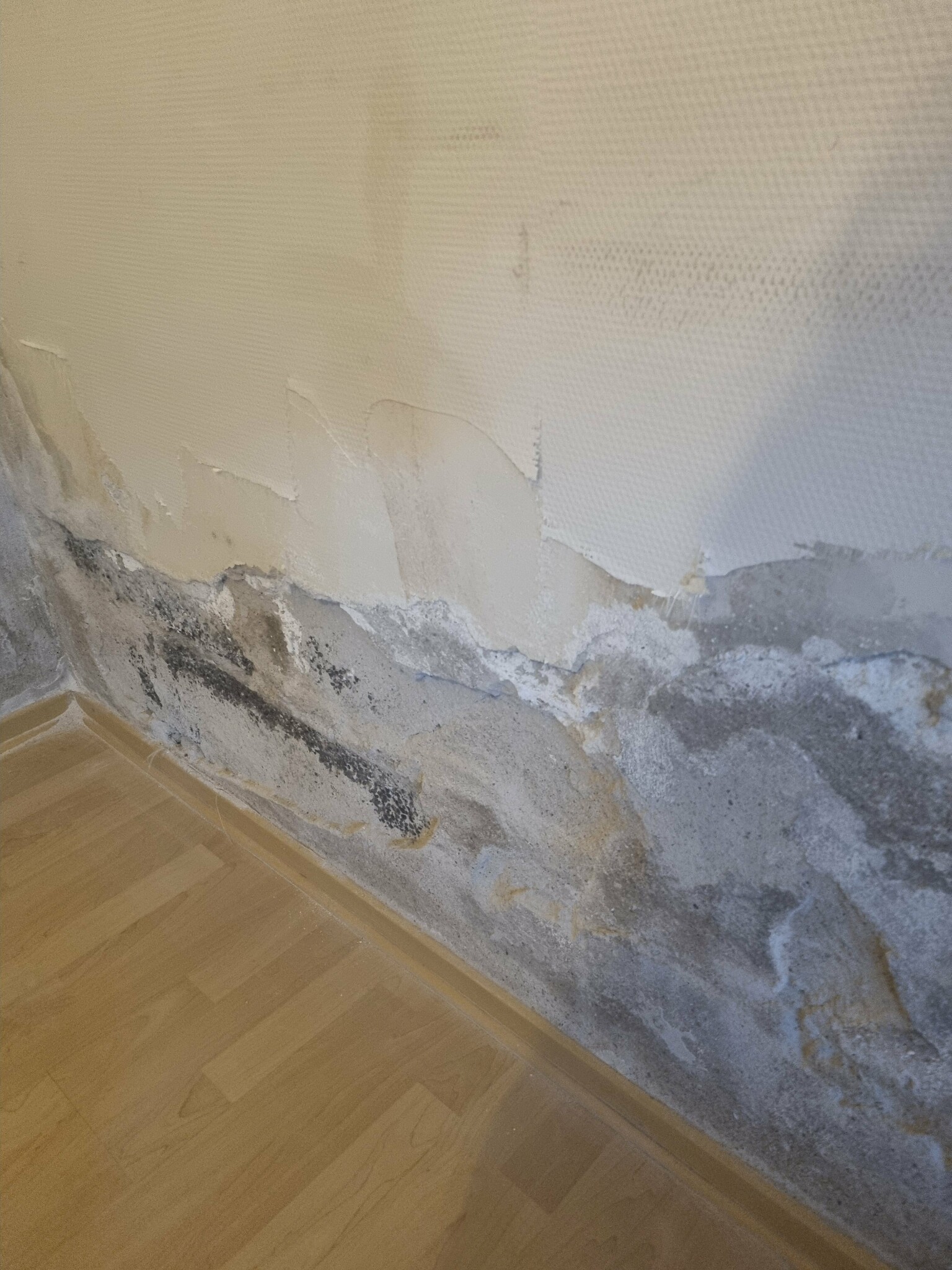
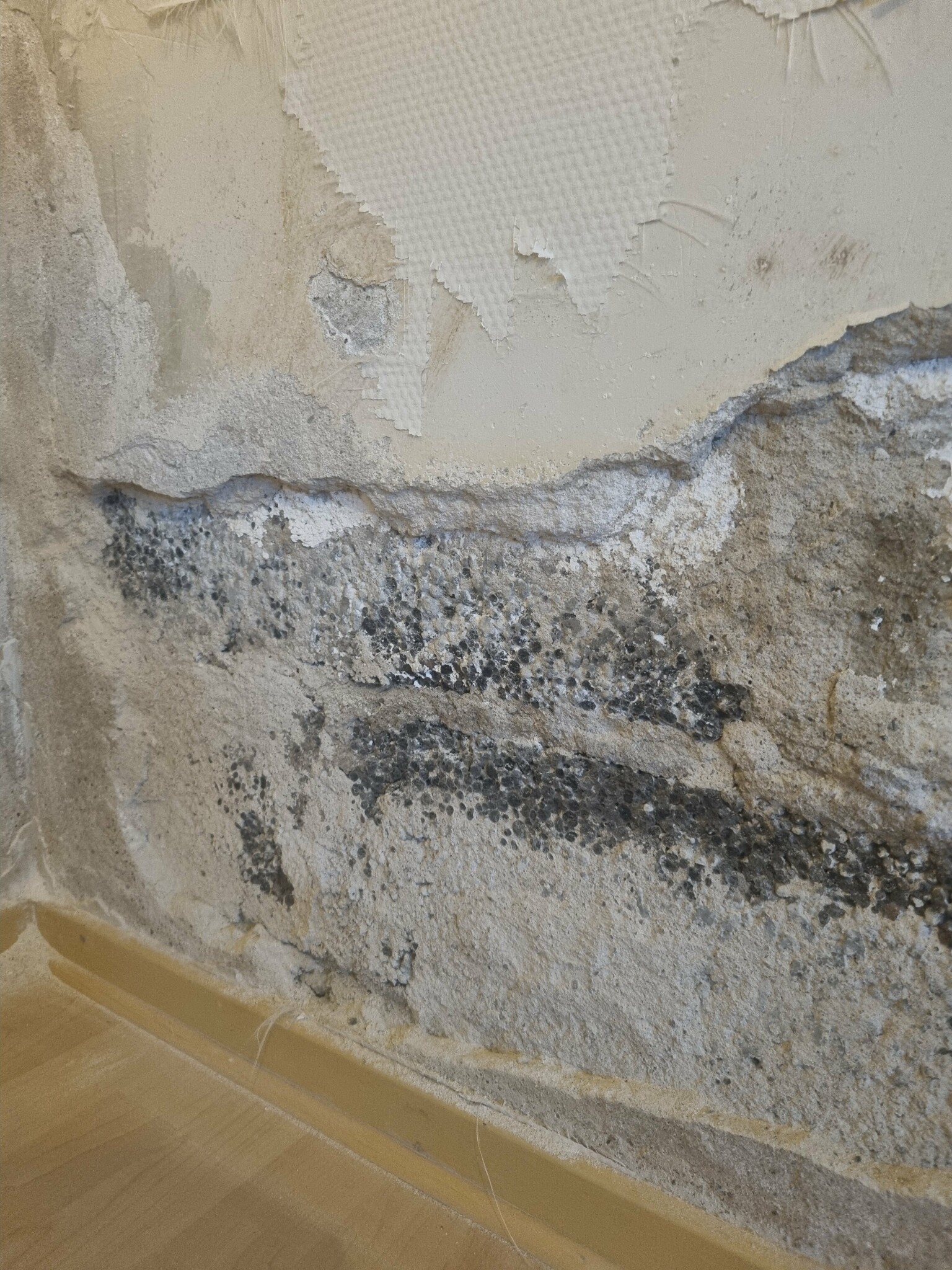
I've taken on a smaller renovation in our heated basement from 1975. The walls have long been covered with an unclear type of paint and woven wallpaper(!!). Amazingly, the walls are in fairly good condition except for the very bottom corners of the exterior walls. No other issues with moisture or smell either.
[image]
[image]
I'm thinking of doing a targeted effort where the plaster has come off the worst. It will require about 2-3 cm of plaster in thickness in some areas.
I've done so far:
- Remove woven wallpaper (will be done everywhere eventually)
- Knock off loose plaster
- Go over with a wire brush and remove all efflorescence
- Clean the wall from dust with a vacuum cleaner
My question concerns the next step. I've read that you should wet highly absorbent substrates before plastering. Is old plaster and exposed leca (?) blocks considered absorbent material? Or is it enough that I prime by slamming with loosely mixed C-mortar?
My plan going forward is:
- Slam with loose C-mortar 1-2 rounds (have bought finnjas Plaster & Mortar C)
- When the above has started to dry a little, I'll continue plastering with normally mixed C-mortar by throwing on the plaster with a trowel and smoothing it out with slip steel
- When the wall is even and the plaster has started to dry a little, I'll smooth it with a plastering float.
Eventually, the entire wall will be sanded down a millimeter and surface treated, but that's a future project!
All this is new to me, so I apologize if the questions are too stupid or repetitive. I've really tried to search the forum before posting
Thanks in advance!
You've done everything right! KC mortar also works. It's popularly called red mortar, because you plaster with KC - mortar on brick and lightweight concrete.
You have done everything right! KC mortar works too. It's popularly called red mortar. Because KC mortar is used for plastering on bricks and lightweight concrete.
Awesome! Good to hear 🙂 what do you think about the first step in rebuilding? Is it enough to parge with loosely mixed C mortar in this case, or should I thoroughly moisten the substrate with water first?
Click here to reply
Vi vill skicka notiser för ämnen du bevakar och händelser som berör dig.