
3,250 views ·
6 replies
3k views
6 replies
Plaster for filling gaps between Wall and Floor when there is no "supporting" structure for the plaster in the gap
Hi,
I'm trying to fill this hole with plaster, BUT it's "empty" in the hole, it's very deep until something reasonable appears to act as a shelf for the plaster... What should I do?
Can I just fill it, and if it succeeds, build a little bit so the hole is covered? Or will it, over time (if it moves), crack and fall into the hole, creating more problems?
(It’s so tight that it’s difficult to insert a piece and attach it to something to create a shelf.)
I'm trying to fill this hole with plaster, BUT it's "empty" in the hole, it's very deep until something reasonable appears to act as a shelf for the plaster... What should I do?
Can I just fill it, and if it succeeds, build a little bit so the hole is covered? Or will it, over time (if it moves), crack and fall into the hole, creating more problems?
(It’s so tight that it’s difficult to insert a piece and attach it to something to create a shelf.)
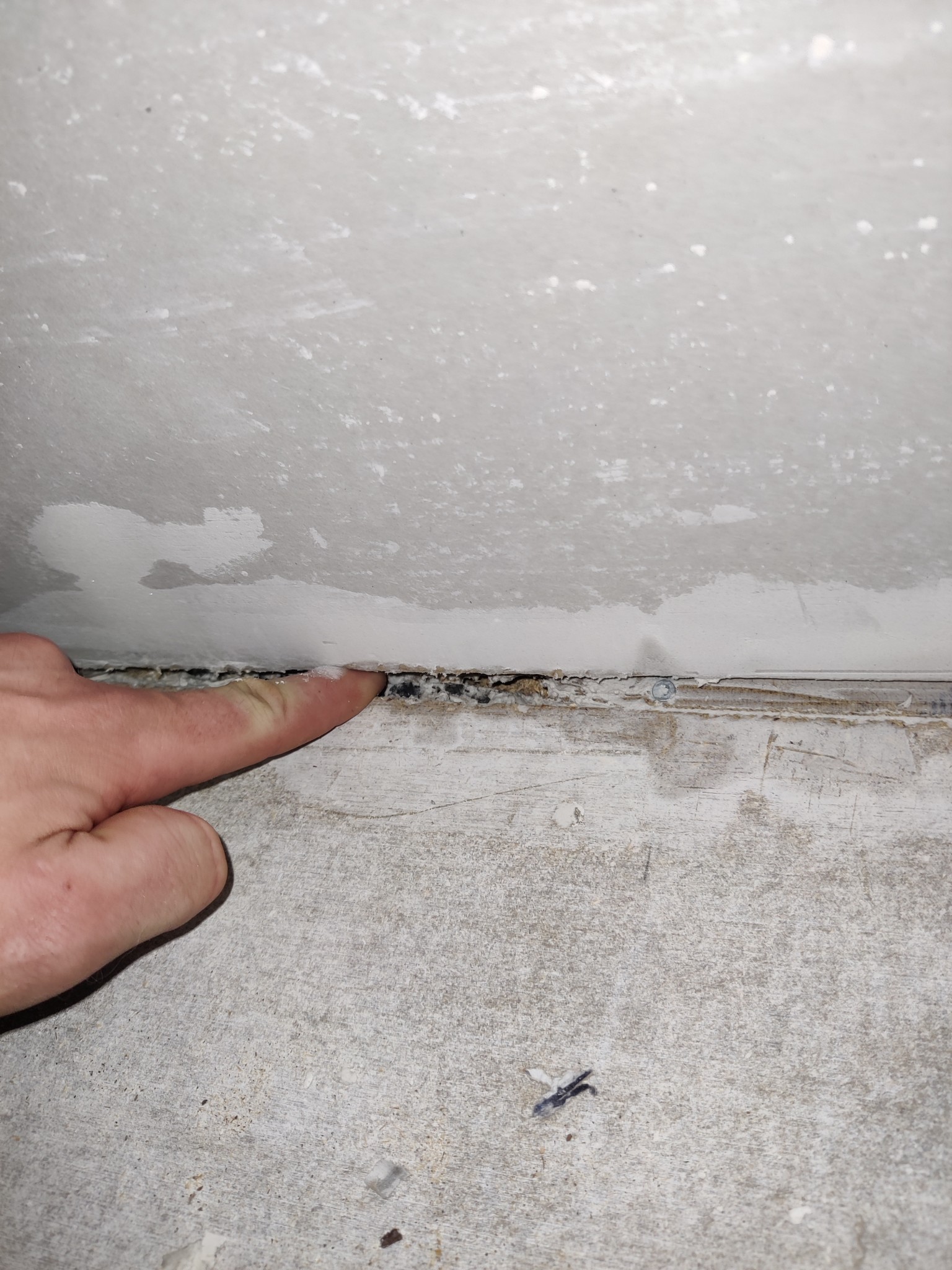
What is the space?
If there might be moisture/moisture migration, it's not suitable to use gypsum plaster, so use, for example, husfix.
As @olofh says, is it enough with soft sealant?
Otherwise, it can also be done with gypsum plaster. First, spray with a plant sprayer to dampen it a bit and press in the gypsum plaster as well as you can without overfilling and pull off "slantwise" against one edge. Let it dry and apply a second layer of gypsum plaster which you then "trowel" to make it smooth and even with the wall.
If there might be moisture/moisture migration, it's not suitable to use gypsum plaster, so use, for example, husfix.
As @olofh says, is it enough with soft sealant?
Otherwise, it can also be done with gypsum plaster. First, spray with a plant sprayer to dampen it a bit and press in the gypsum plaster as well as you can without overfilling and pull off "slantwise" against one edge. Let it dry and apply a second layer of gypsum plaster which you then "trowel" to make it smooth and even with the wall.
Maybe it is, I don't know what you "can" and cannot do! I will level the floor later, and then put on a wet room mat, (it's only a toilet and not a wet room) so I'm just worried that cavities will cause the sealant/mortar to come loose and affect the mat or the leveling (even though it has hardened)... but maybe I should go with thatO olofh said:

Thanks
It's for a toilet, so moisture CAN occur but shouldn’t be more than usualanders07 said:
What kind of space is it?
If there is a chance of moisture/moisture migration, gypsum plaster is not suitable; use something like husfix instead.
As @olofh says, could soft sealant be sufficient?
Otherwise, you can do it with gypsum plaster as well. First, spray with a plant mist bottle to moisten it a bit, and press in the gypsum plaster as well as you can without overfilling and scrape off "diagonally" towards one edge. Let it dry and apply a second layer of gypsum plaster, then "smooth" it so it becomes flat and even with the wall.
Maybe I should go for Soft sealant
any specific Soft sealant?Take the cheapest possible, I initially thought it was a gap between the wall and the ceiling. If it's just to stop the leveling compound, use whatever you have, the moisture barrier will go on afterwards, so if you have problems with moisture there, then you have a broken waterproofing layer.
Oh. Can't see how big it is, but either soft joint or, if a bit larger, a dab of expanding foam. It stops the leveling from running away.T Tiggrawastaken said:Maybe it does, I don't know what you "can" and can't do! I'm going to level the floor later, and then lay the waterproof flooring, (it's just a toilet and not a wet room) so I'm just worried that cavities will cause the joint/mortar to come loose and affect the flooring or leveling (even though it has hardened).. but maybe I should just go for it
Thanks
Click here to reply