Had a large door lying on the lawn for quite some time, and now when I lifted it up, it didn't look good anymore - but mice and others have had a good roof at least.
Taking measurements, making a drawing, buying the same type of wood, cutting the same lengths, etc., are no problems.
But what do I do next? How did they make my old door?
Which board do I start with first?
If it were all one big frame around the door, it would feel easier, but the original is just horizontal braces. Do I lay a brace on the ground, measure out roughly where the first plank should go, and nail it in place?
The door is 291cm wide and 325cm high. So it's not something I can assemble inside the garage on the workbench.
Pulling a long threaded rod across to straighten the door...
But it was precisely about how to put everything together. Which larsbj gave tips on. However, they didn't do it like that before since the posts are undamaged. I find it a bit disappointing with unnecessary screw holes and other things from temporary angles, even though the method sounded smooth.
Remove the old door and lay it on the ground.
Saw 2 battens and place them in the same spot as those on the original door (hinge attachments).
Cut the boards and lay them so they are positioned the same way as the old ones.
Nail 4 nails into each board into the batten.
2 at the top, 2 at the bottom.
Once all the boards are in place, turn the whole thing over and attach the braces, which will form a Z shape.
I would choose to add an extra brace higher up to create 2 Z shapes.
It’s important to nail it correctly; otherwise, the door will sag again.
Place a vertical batten in the direction where the hinges are attached to the doorpost.
The battens are to be diagonally screwed into each other; place a nail plate from the upper horizontal batten on top and let it run down the outside of the vertical batten, as you can adjust the door if it sags.
45x145 is heavy, so why not use double 45x45 with the bends facing each other; this way, you'll have a batten that doesn’t pull in any direction once screwed together.
Good luck...
I know that it does not hold worse; you first drill where the franskingar are, or use carriage bolts. Large washers at the nut of the carriage bolt and some extra stainless screws on each side of the holes between the joists. That means screwing joist to joist. If you want it extra sturdy, use winter wood glue before the joists are screwed together. The glue never releases.
Mount a wheelbarrow wheel just beyond the center of the door towards the opening, on the inside, with locking, and you won't have any problems with the door sagging and it will serve as a doorstop when open! Had such ones at my old farm, but it was a hard-packed gravel yard! Used it for the tractor garage!
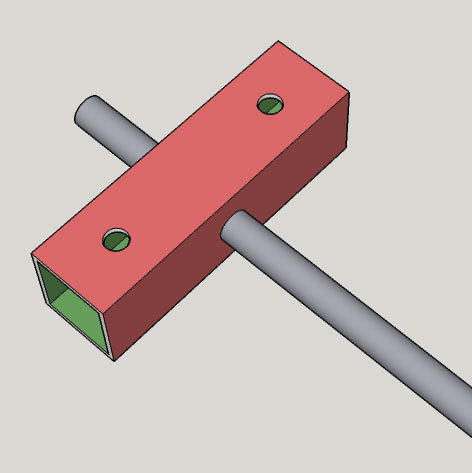
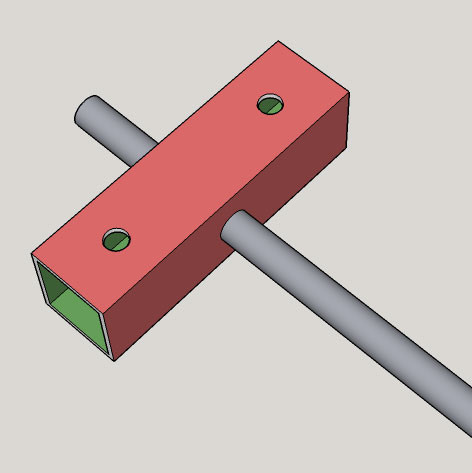
In order to adjust the door so that it doesn't hang crookedly, I was advised to install a threaded rod across it so I can tighten it to lift the door.
Is it worth buying L or T profile and welding a lot of reinforcements on it, etc., to get mounts for the rod?
Or should I take the easy route and buy a rectangular piece and drill holes in it?
The only downside to this, as I see it, is that the rod will run diagonally, so I have to mount the bracket diagonally, but the door frame is horizontal, so I'll have to think about this a bit. Maybe not drill the mounting holes in a straight line so they align with the frame even if the bracket is angled... hmm hmm...