
Good evening,
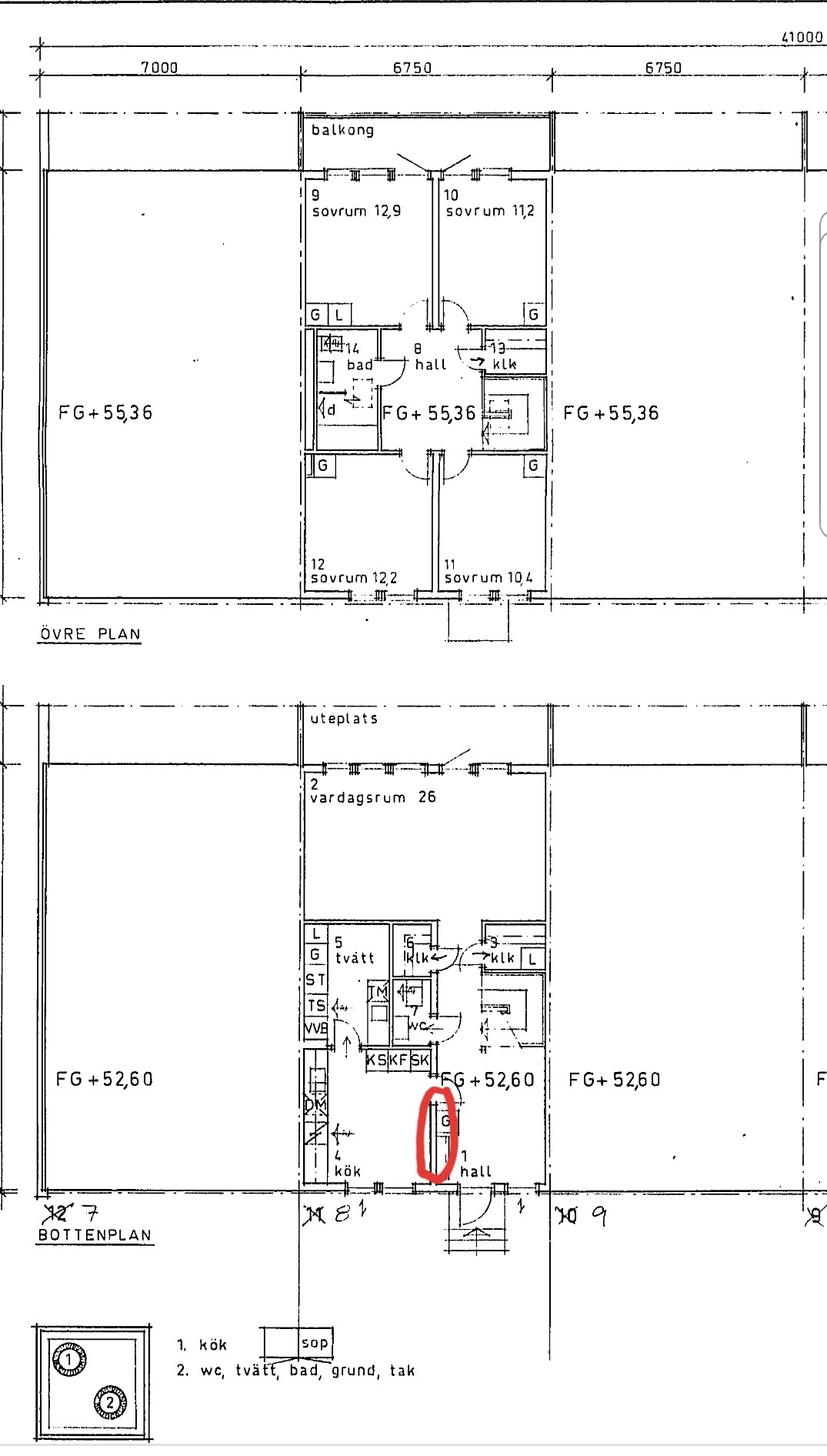
Perhaps one of the more common questions on the forum: Can I open up the wall between the kitchen and the hall (see building permit drawing)?
Townhouse from '77, slightly sloped roof, two floors.
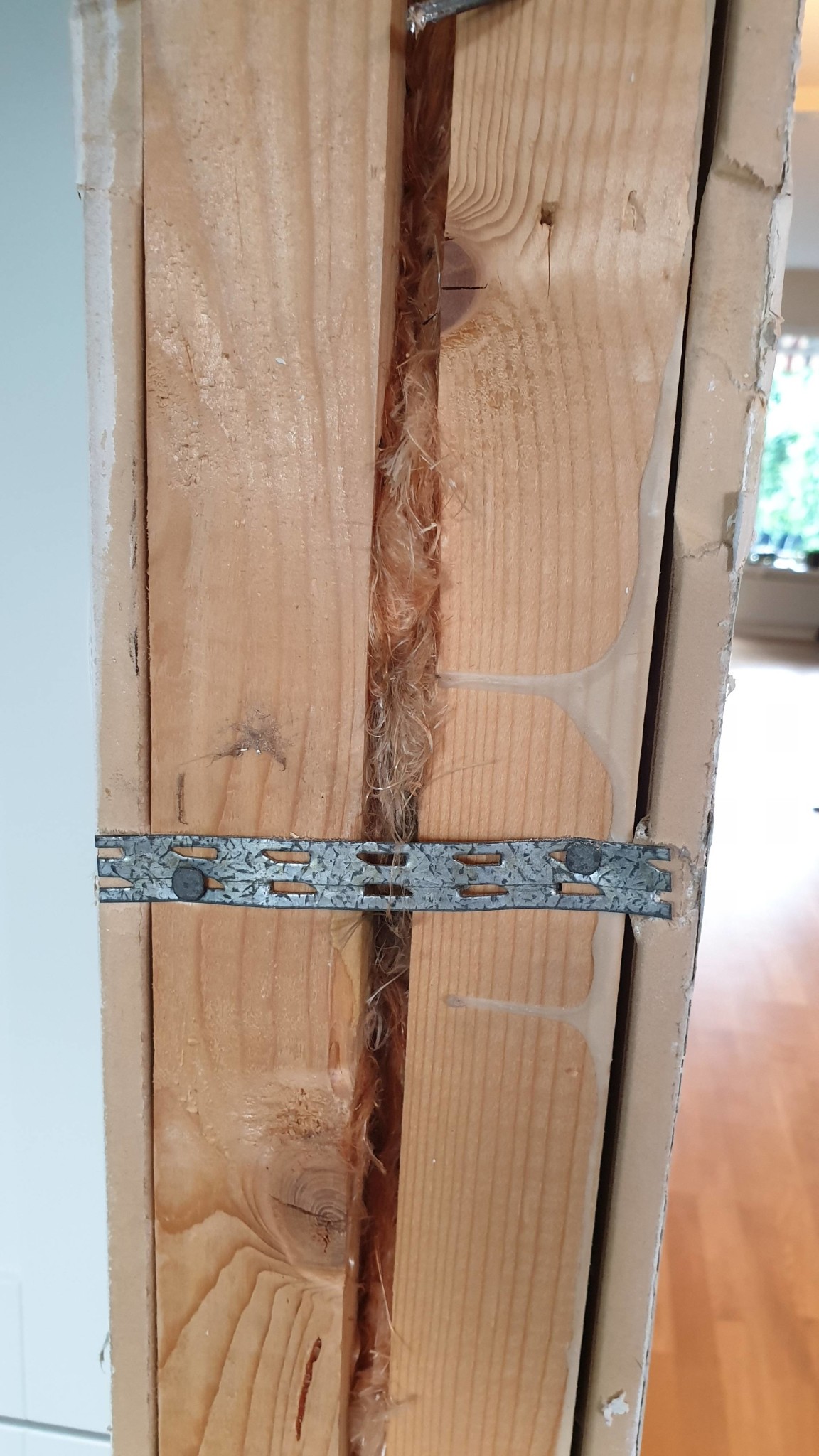
As I see it, it's all calm, but would like to get feedback. The wall runs parallel to the length of the house, consists of two 45x45 studs with insulation in between and plasterboard on each side, total 120 mm. The load-bearing walls are likely the perpendicular ones that go down to the concrete beams/piers in the crawl space (see drawing).
Thanks in advance!
Perhaps one of the more common questions on the forum: Can I open up the wall between the kitchen and the hall (see building permit drawing)?
Townhouse from '77, slightly sloped roof, two floors.
As I see it, it's all calm, but would like to get feedback. The wall runs parallel to the length of the house, consists of two 45x45 studs with insulation in between and plasterboard on each side, total 120 mm. The load-bearing walls are likely the perpendicular ones that go down to the concrete beams/piers in the crawl space (see drawing).
Thanks in advance!

Best answer

Hello and welcome to the Byggahus forum!
No, that wall can hardly be load-bearing.
No, that wall can hardly be load-bearing.
Thank you!
Removed the drywall and was met with this view, is it only for stiffening in the weak direction as the boards counteract buckling perpendicular to the wall? Completely new with wooden houses...
The beams of the floor structure run, as far as I can see, in the longitudinal direction of the house, both in the ceiling for the lower floor and the floor.
Removed the drywall and was met with this view, is it only for stiffening in the weak direction as the boards counteract buckling perpendicular to the wall? Completely new with wooden houses...
The beams of the floor structure run, as far as I can see, in the longitudinal direction of the house, both in the ceiling for the lower floor and the floor.
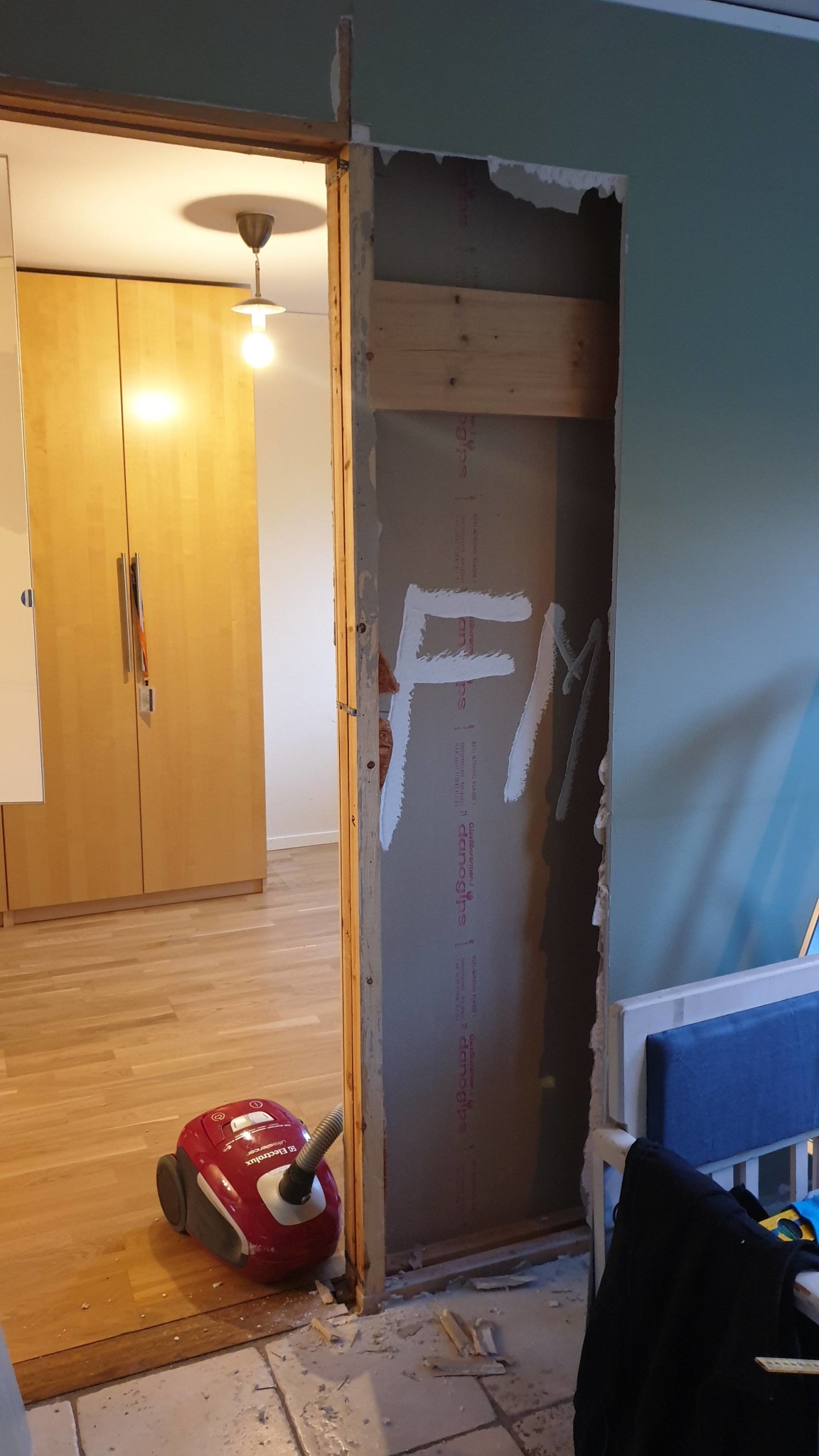
I agree with @Magnus E K, it is a reinforcement to be able to hang things.
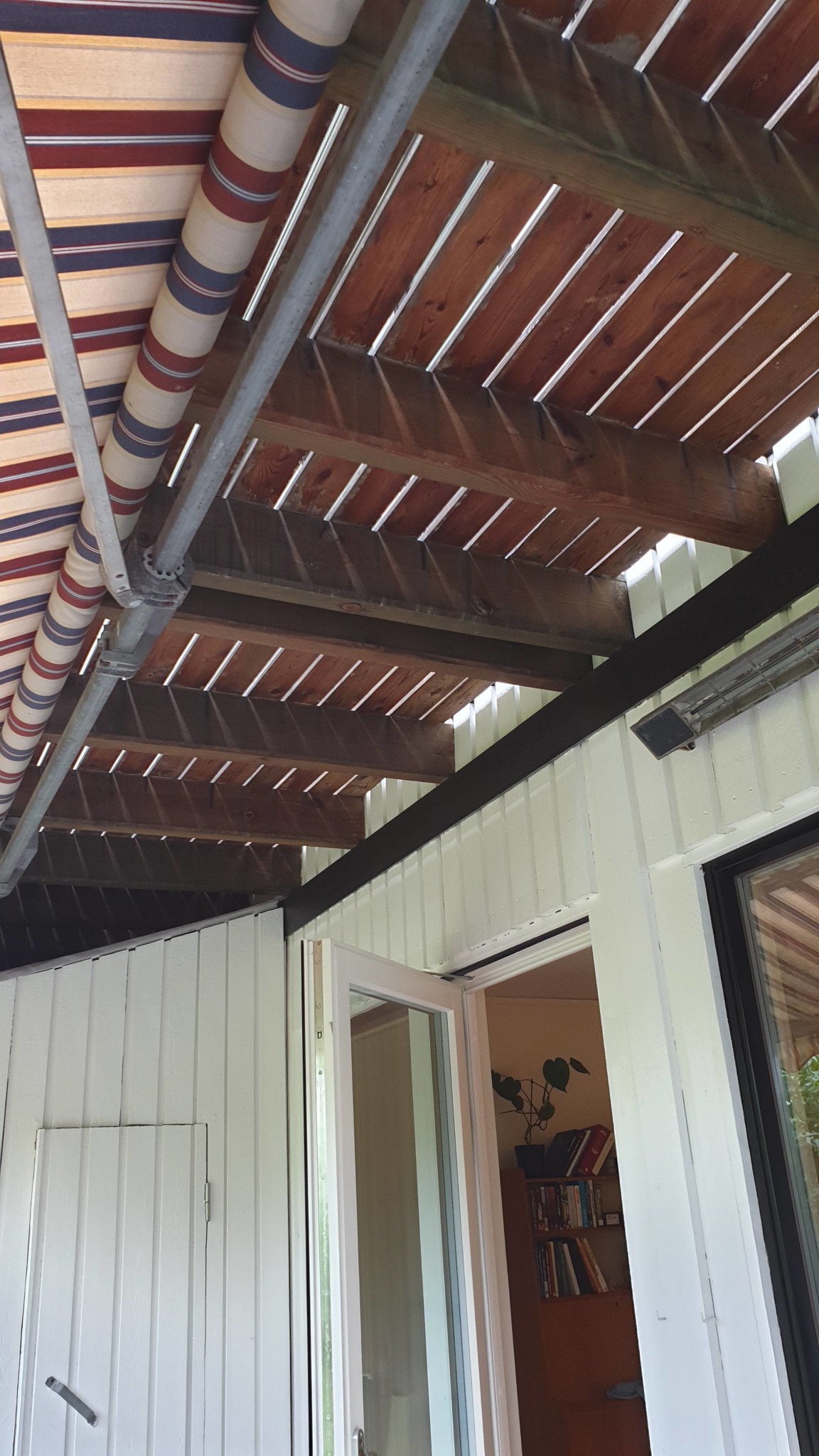
Impossible to comment further without detailed drawings. It is likely the result of a building system. In a custom-built house, you would never do that.
Yep, I've actually purchased a new one so the old one in the picture will act as a construction vacuum and car vacuum.Magnus E K said:
Your townhouse is a modular house that has been manufactured in 4 pieces, two “blocks” on the ground floor and two blocks upstairs. The wall you have opened has double studs precisely because it is the seam between the modules. In the hallway upstairs and in the living room downstairs, you have a “cover plank” in the same place.
The same on your balcony, it is the seam between the modules hence the double studs.
I grew up in a similar townhouse just mirrored against yours, in the area there were more who had opened up between the kitchen and hall than who had retained the original wall.
The same on your balcony, it is the seam between the modules hence the double studs.
I grew up in a similar townhouse just mirrored against yours, in the area there were more who had opened up between the kitchen and hall than who had retained the original wall.
Interesting! Thanks for the exciting info, truly appreciated!M Mr.fluff said:Your townhouse is a modular house that has been manufactured in 4 pieces, two "blocks" on the ground floor and two blocks upstairs. The wall you have opened has double studs precisely because it is the joint between the modules. In the hallway upstairs and in the living room downstairs, you have a "covering plank" in the same place. The same on your balcony, it's the joint between modules, hence the double studs.
I grew up in a similar townhouse just mirrored to yours, in the area there were more who had opened up between the kitchen and hall than those who had kept the original wall.
I also lived in a townhouse built in this way, with four modules constructed in a factory and transported to the site by truck. The wall you opened had studs of 2x2 and boards on one module and corresponding on the other. The other walls in the house were built with 2x3 studs with boards on each side.
What we could note was that between the house modules, they had placed a foam rubber seal at the level of the ground floor framing, which was practically gone in our house. This resulted in drafts between the modules, like a chimney effect from the crawl space up to the outer roof, and very cold floors in the hall and kitchen, as well as in two bedrooms upstairs. When I opened up and filled with foam between the modules, it got better.
Another effect of this in our house was that the moisture from the crawl space affected the boards on the second floor, causing them to swell on the inside of the wall. Since it was a weak stud without support from the other wall's stud, the walls bent between each joint. What we did was open a small hole at each stud (when we were going to re-wallpaper) and pressed the studs (2x2s) apart and placed a block between them to make it rigid. Then I filled the remaining bowing and applied renovation plasterboard on top.
We also had some problems with movements in the wall in the upstairs hall between the respective bedrooms where a main joint was, and the wallpaper wrinkled - there we also fixed it by opening up, better fastening the studs together, and then putting new plasterboard on the entire wall.
What we could note was that between the house modules, they had placed a foam rubber seal at the level of the ground floor framing, which was practically gone in our house. This resulted in drafts between the modules, like a chimney effect from the crawl space up to the outer roof, and very cold floors in the hall and kitchen, as well as in two bedrooms upstairs. When I opened up and filled with foam between the modules, it got better.
Another effect of this in our house was that the moisture from the crawl space affected the boards on the second floor, causing them to swell on the inside of the wall. Since it was a weak stud without support from the other wall's stud, the walls bent between each joint. What we did was open a small hole at each stud (when we were going to re-wallpaper) and pressed the studs (2x2s) apart and placed a block between them to make it rigid. Then I filled the remaining bowing and applied renovation plasterboard on top.
We also had some problems with movements in the wall in the upstairs hall between the respective bedrooms where a main joint was, and the wallpaper wrinkled - there we also fixed it by opening up, better fastening the studs together, and then putting new plasterboard on the entire wall.
Click here to reply