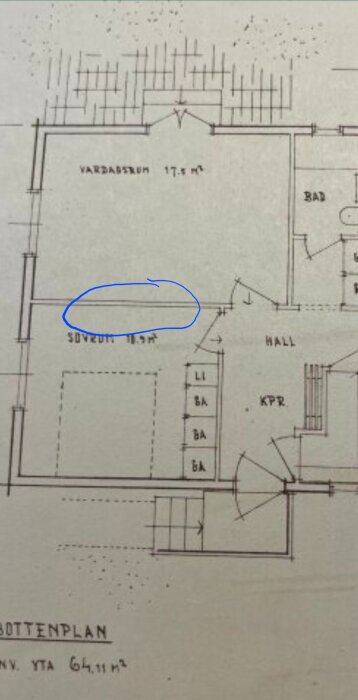
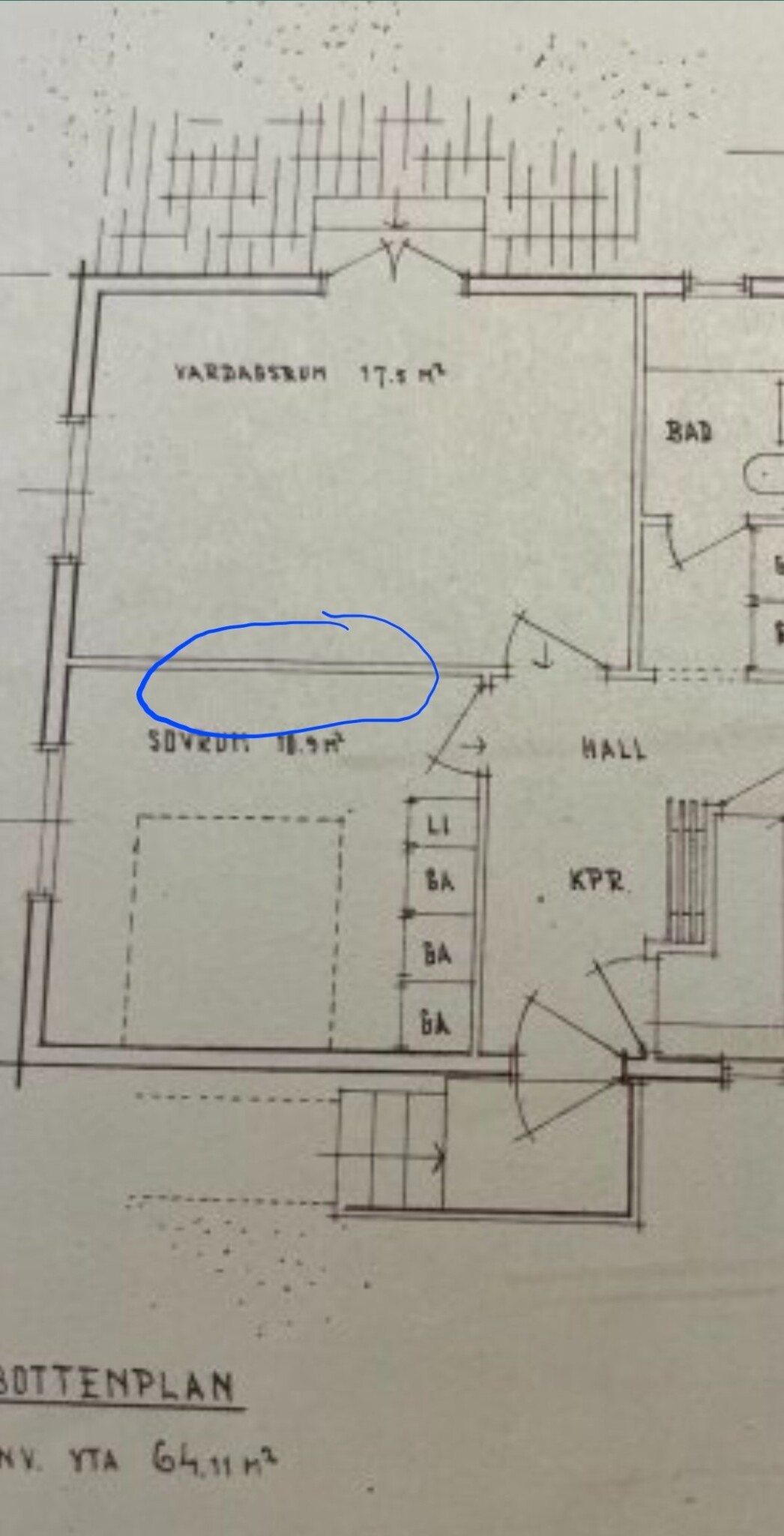
We have opened up a bit more now. What I thought was a beam rests on joists but I don't understand how it relates to the roof. On the other hand, I have education in social studies and not construction 😅 so what do I know…
But how nice. Then you should definitely be able to create your more open floor plan. Tear down without any issues. I can't see any load-bearing parts there. It's awful how quick people in the forum are to tell you to contact engineers, etc.
How nice. Then you should certainly be able to create your more open layout. Go ahead and tear down without problems. I can't see any load-bearing parts there. It's terrible how quick people are here on the forum to ask you to contact structural engineers, etc.
It's also unfortunate to end up with a "collapsed" house because some stranger on the internet encouraged you to go ahead. Taking proper photos and looking at blueprints is still the minimum for a serious answer.
It's an elemenhus. Those are somewhat unique in their construction.
In that drawing list, there was numbering in the now removed drawings...
The new ones you uploaded are a floor slab drawing, so they don't help...
But in this picture, there are no load-bearing beams or similar, so you can remove this part...
I understand. Thanks.
We've always been told that the wall is load-bearing 😅
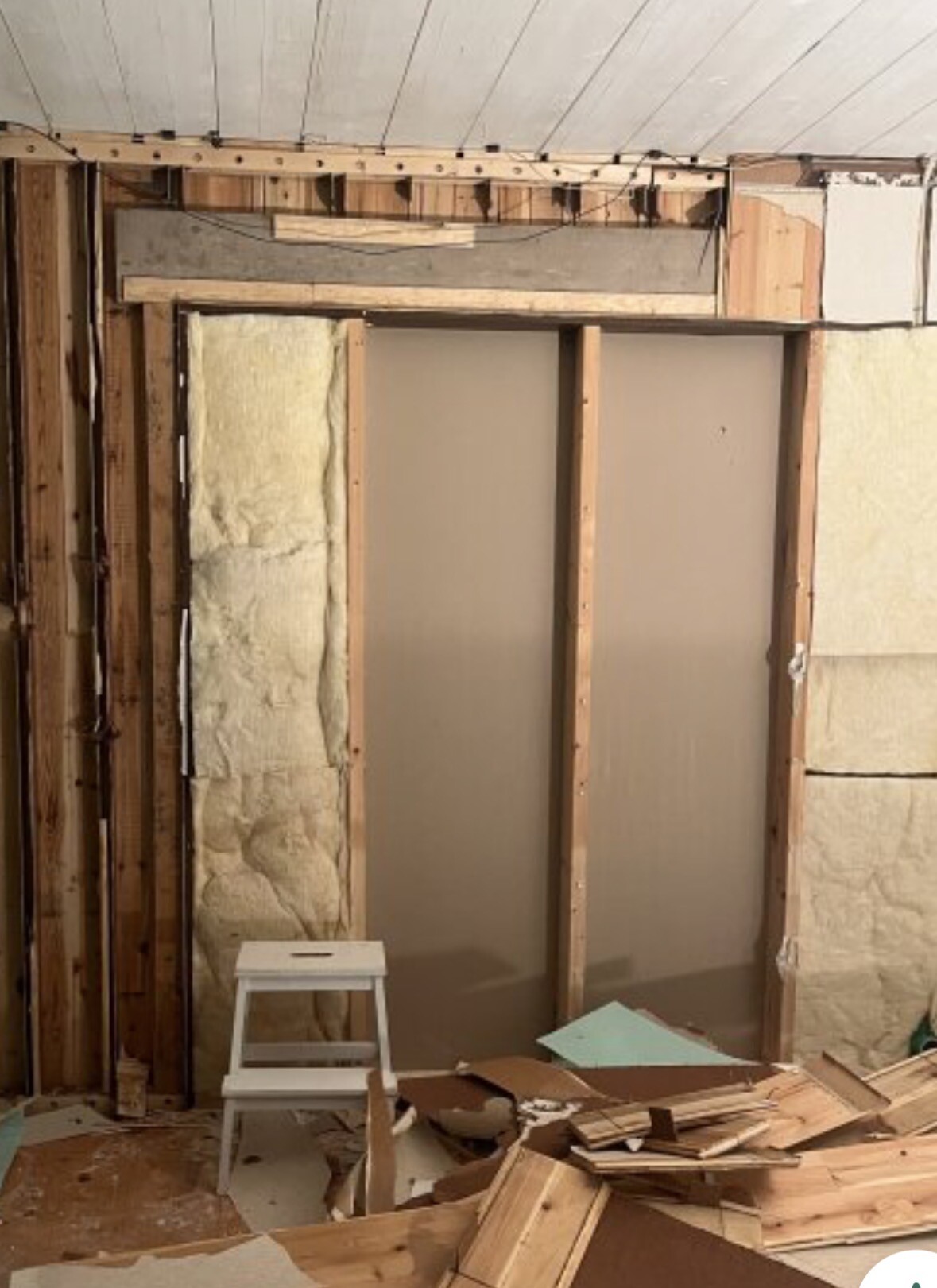
Do you know what that thing with holes up against the wall is? And why someone has put studs in studs that aren’t anchored to the ceiling?
I understand. Thank you.
We have always been told that the wall is load-bearing 😅
Do you know what that is up against the wall, the one with holes in it? And why are there studs in studs that are not anchored in the ceiling?
The top beam with holes is the wall plate, aren't the posts attached to this?
The top rule with holes is the wall plate isn't the studs attached to this?
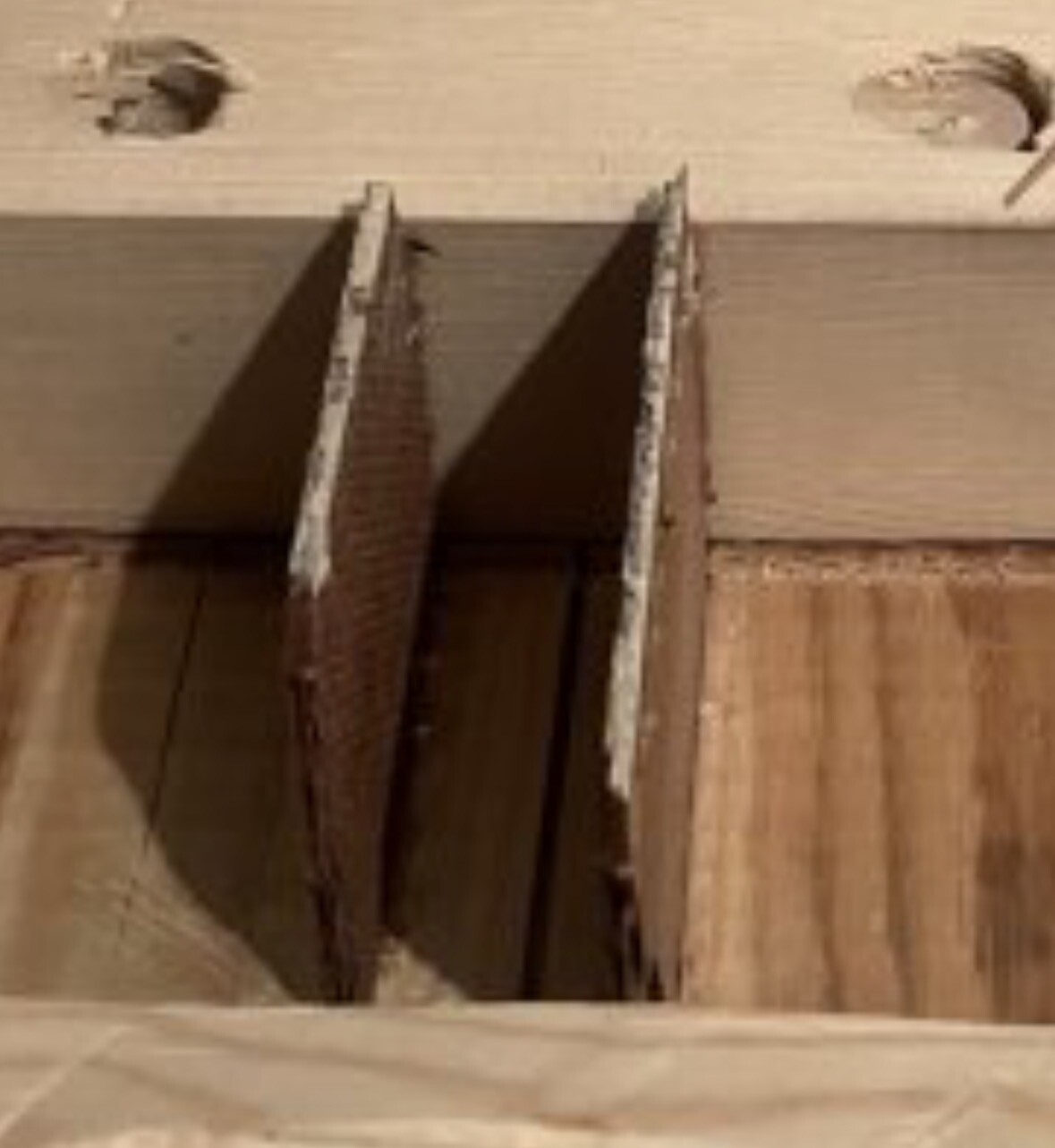
Is this just masonite or what is this?
Isn't that masonite from the sides of broken elements? Either as part of the original assembly, or when the wall hole was built. Elementhus are not stud frames.
It's also unfortunate to be left with a "collapsed" house because some stranger on the internet encouraged you to go ahead. Taking proper pictures and looking at blueprints is still the minimum for a serious answer.
It's an elemenhus. Those are a bit special in their construction.
Absolutely, I agree with you. I haven't said anything different until recently. When she posted more pictures
Isn't that masonite from the sides of smashed-up radiators? Either as part of the original assembly, or when the wall opening was constructed. Elementhus are not frame structures.
I would have built a beam header around the new hole just to be safe. The load-bearing parts are not clear in the images, but if that hole was made by the previous owner, it might not be done correctly. The big gray stud and the shear panel may have supported it okay.
A new solution with the largest possible stud that has support upwards against the one with lots of holes, and downwards on legs made of two studs per side wouldn't be expensive and likely won't hurt even if it might not be necessary.
- So the house has a basement and entry level? No second floor?
- What is the pitch of your roof? Are they truss rafters?
The span is about 7.2 m according to your attached drawings - if the rafters are to be self-supporting (especially considering the house is from the 1950s) they should be truss rafters.
Vi vill skicka notiser för ämnen du bevakar och händelser som berör dig.

Suvi5700 said:
Karrock said: