Hello!
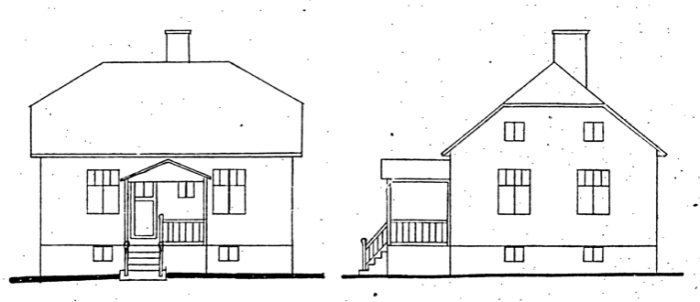
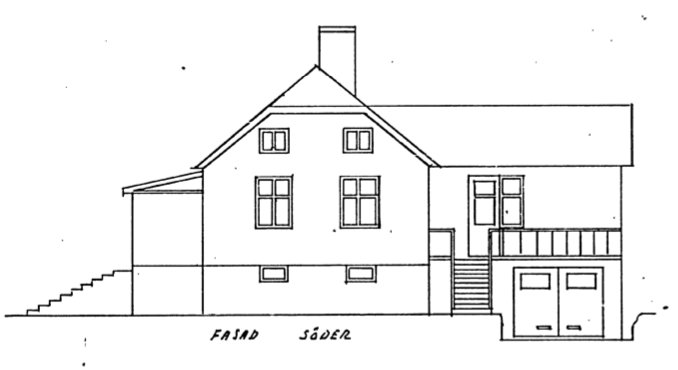
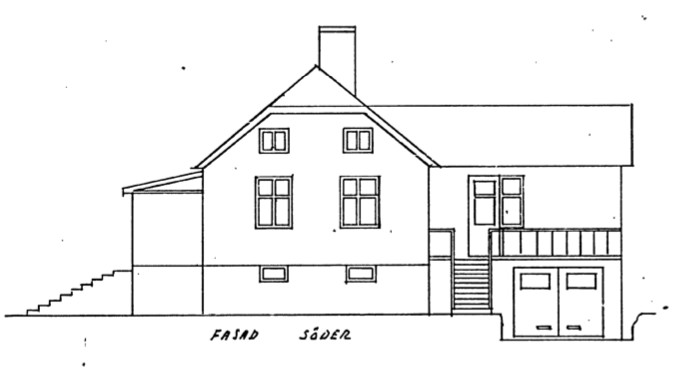
I would appreciate some good advice and ideas regarding a tricky upper floor. The house was built in 1939 and extended in 1950, with a new roof extending perpendicular from the original. Later, the attic was furnished, and dormer windows were installed. There are a few things that I find a bit strange and might be improved.
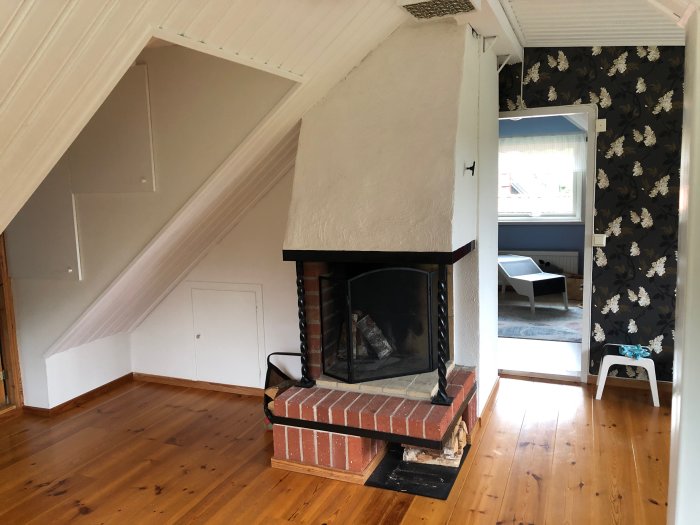
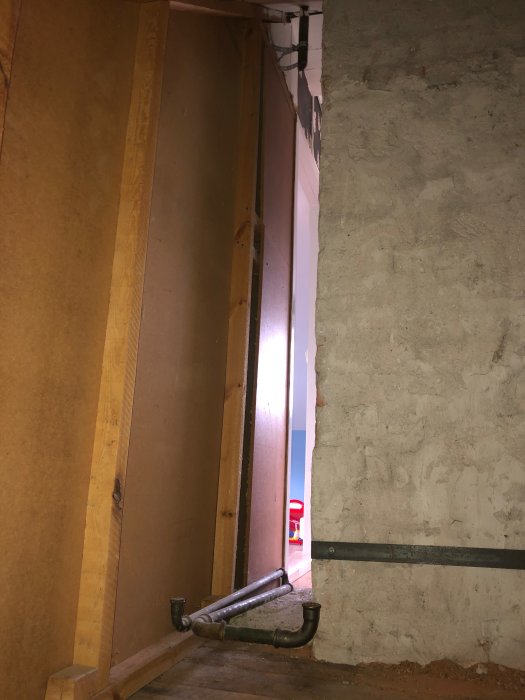
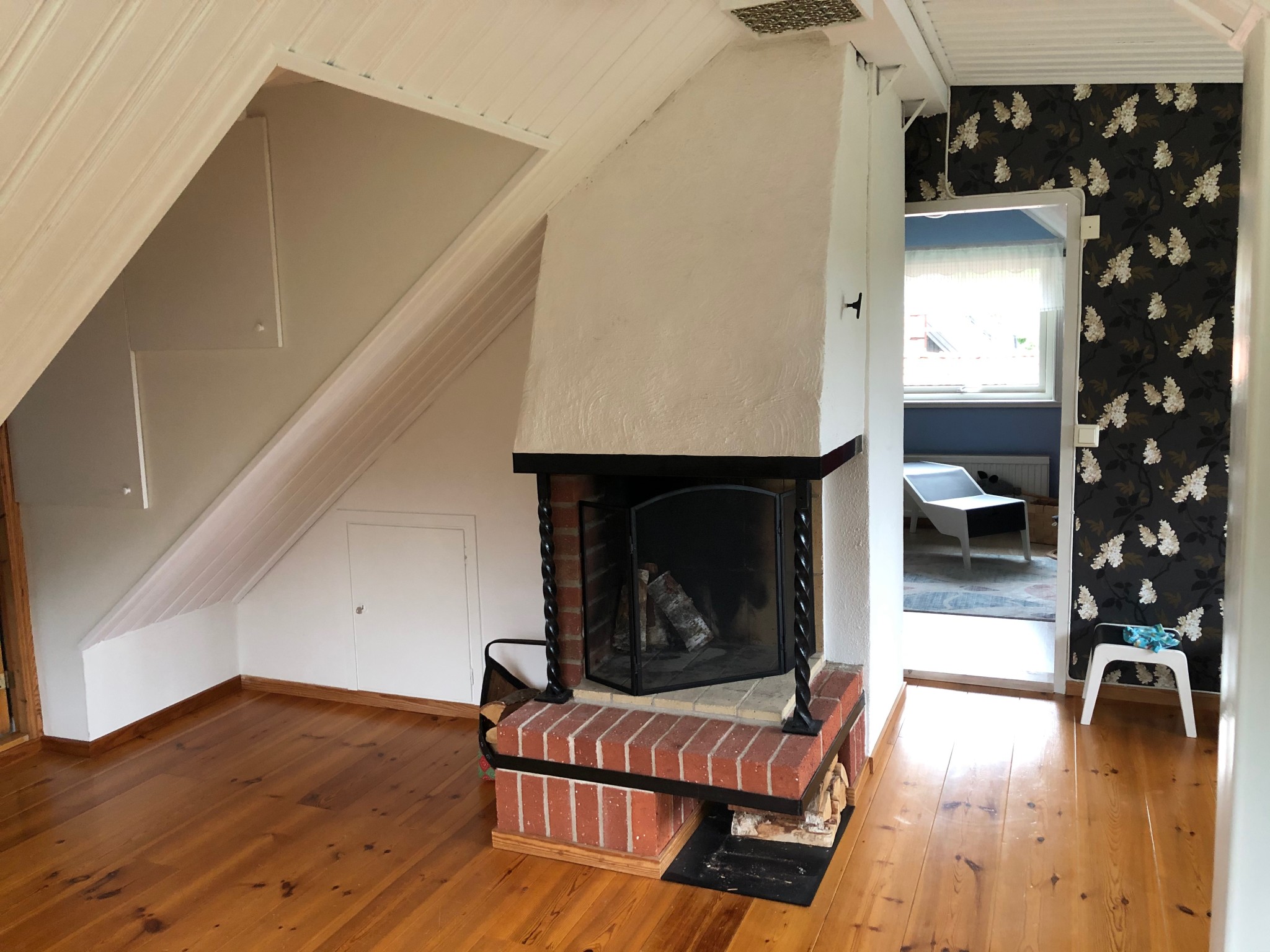
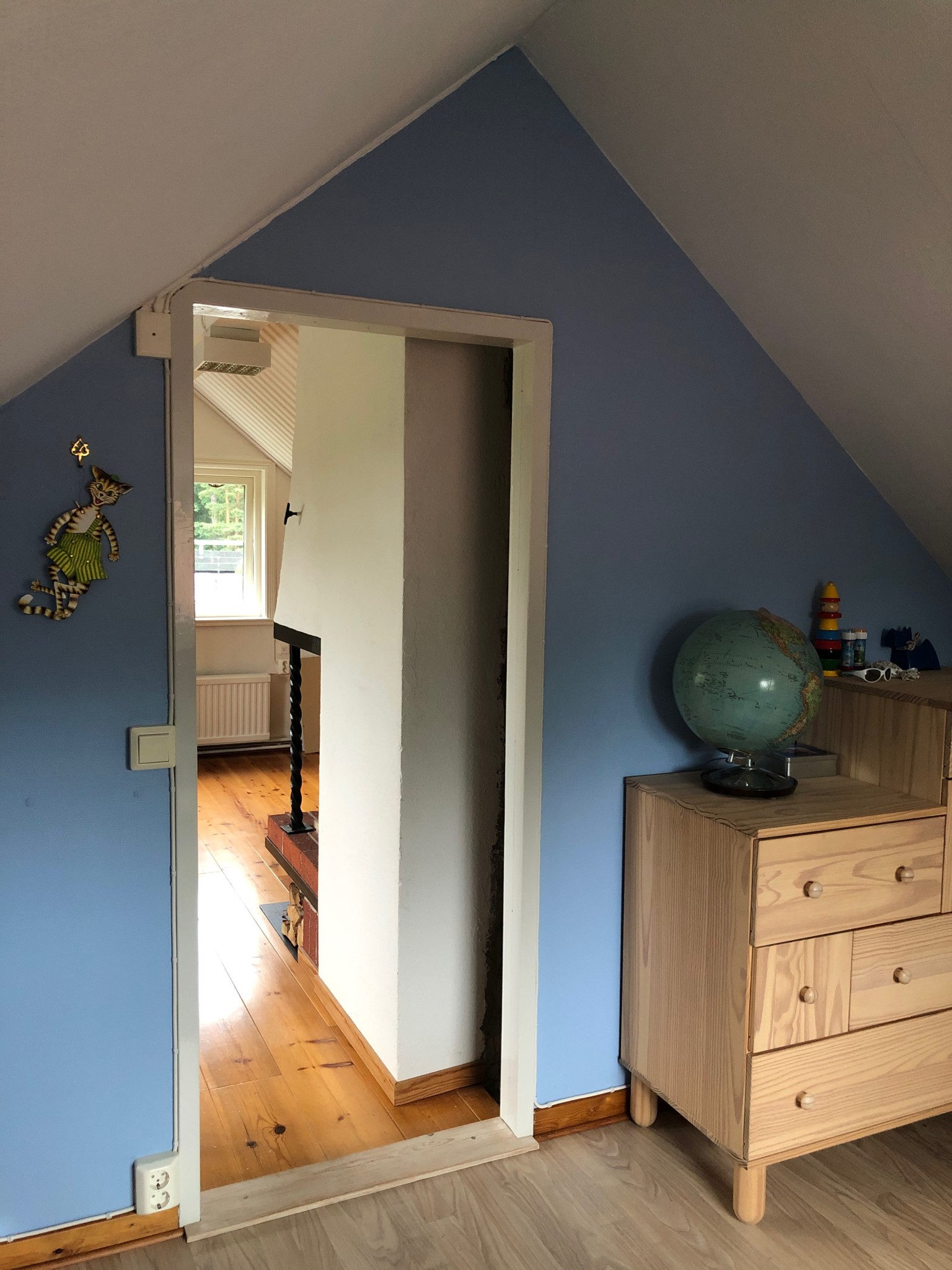
The door to the blue room is partially inside the chimney.
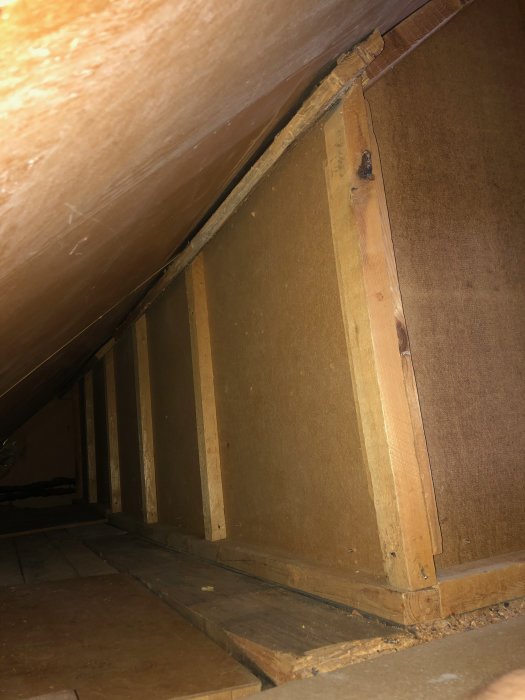
At the junction between the two roofs, storage and cabinets have been built; can this be removed to create more space?
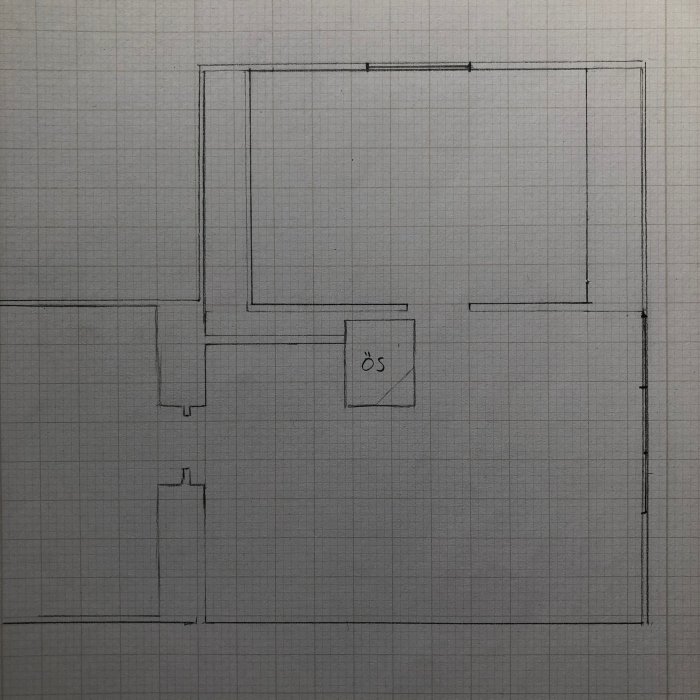
Is it possible to open up around the chimney and the attic? The studs in the room seem mainly to support gypsum boards and nothing else.
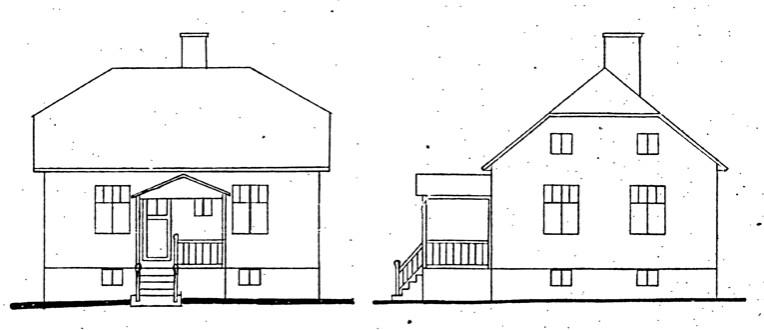
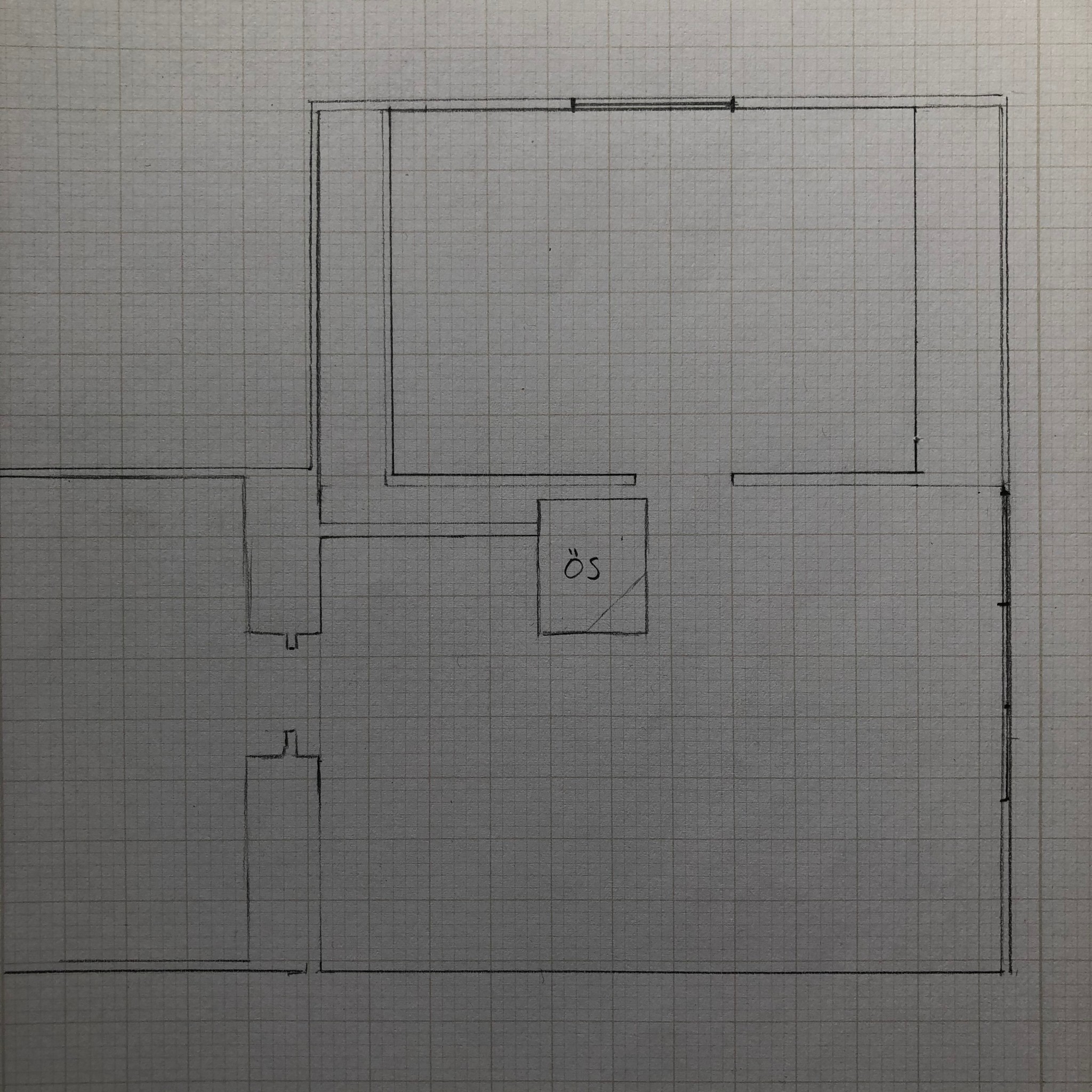
Original drawings:
Extension to the right:
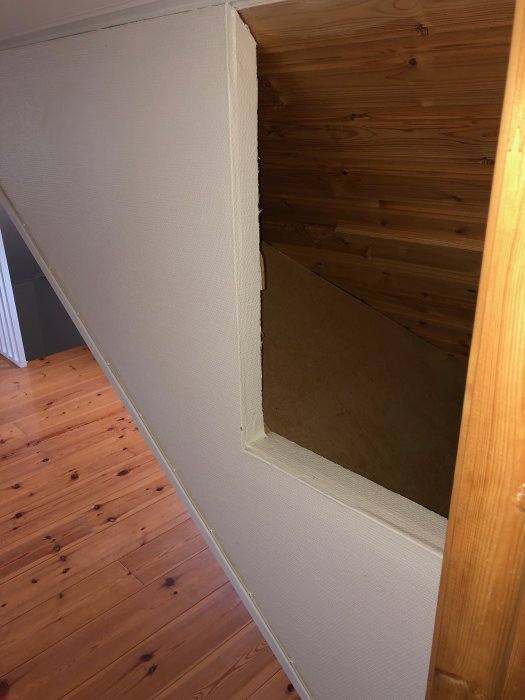
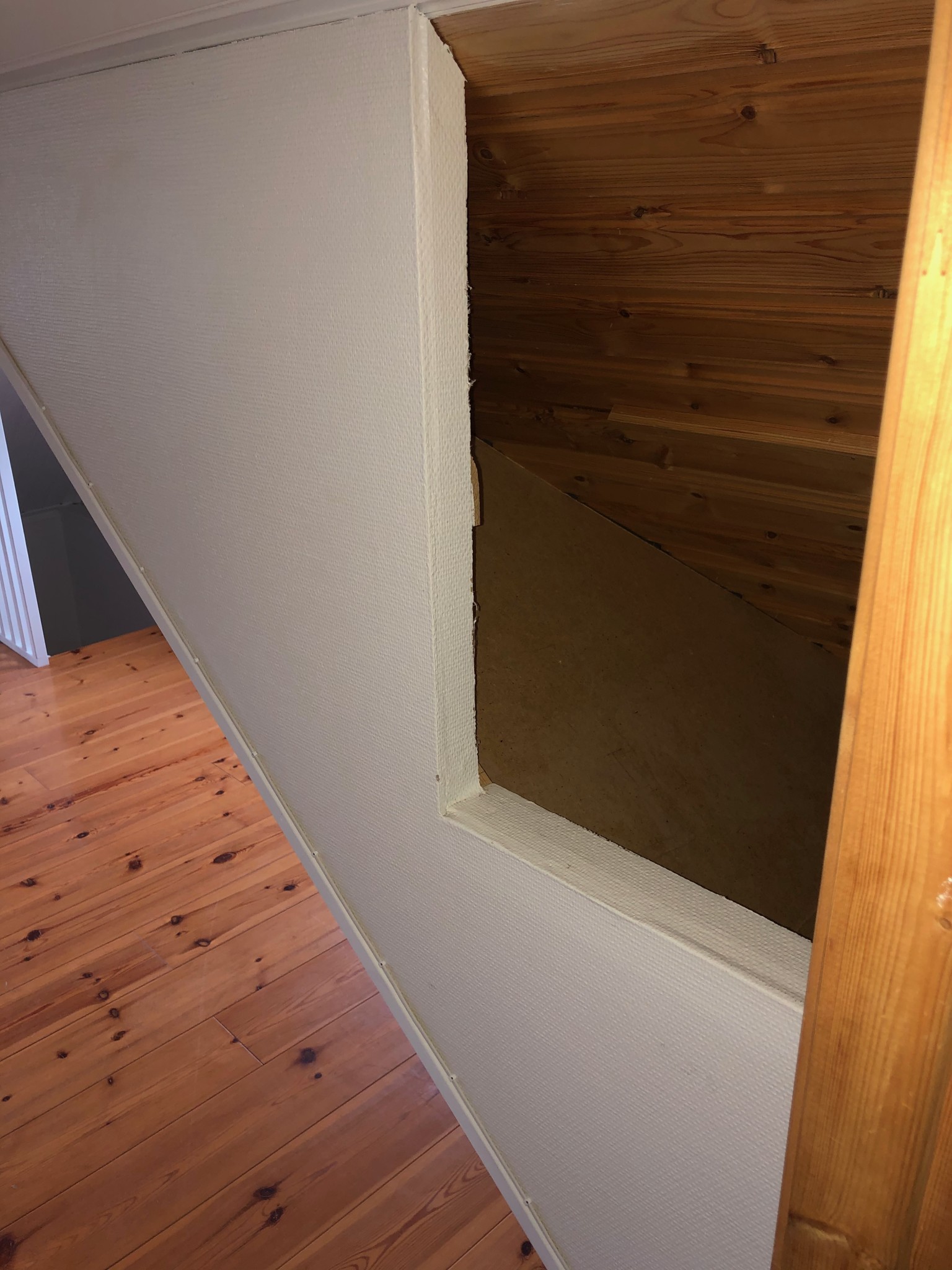
The extension goes in here to the left. Is it possible to remove everything here so that the two roofs meet each other?
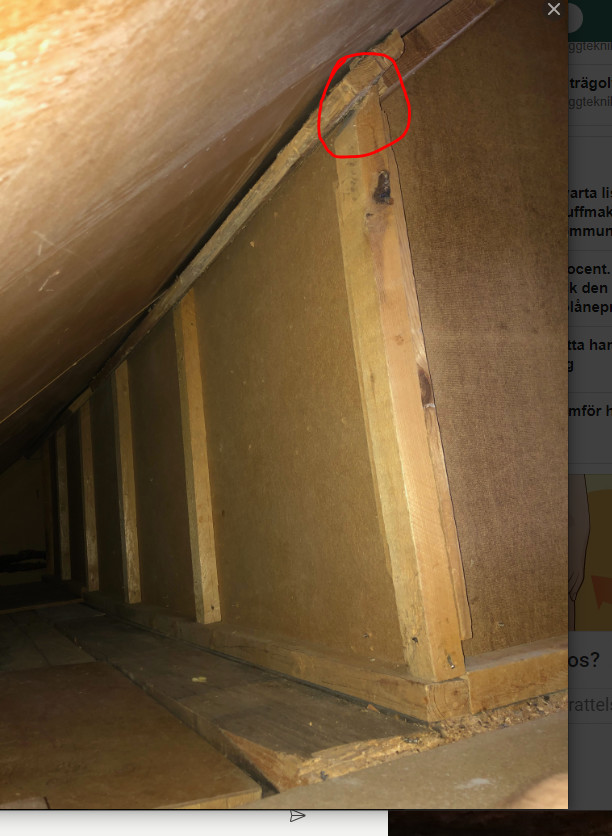
The storage is built of masonite, could there be a hidden roof truss there?
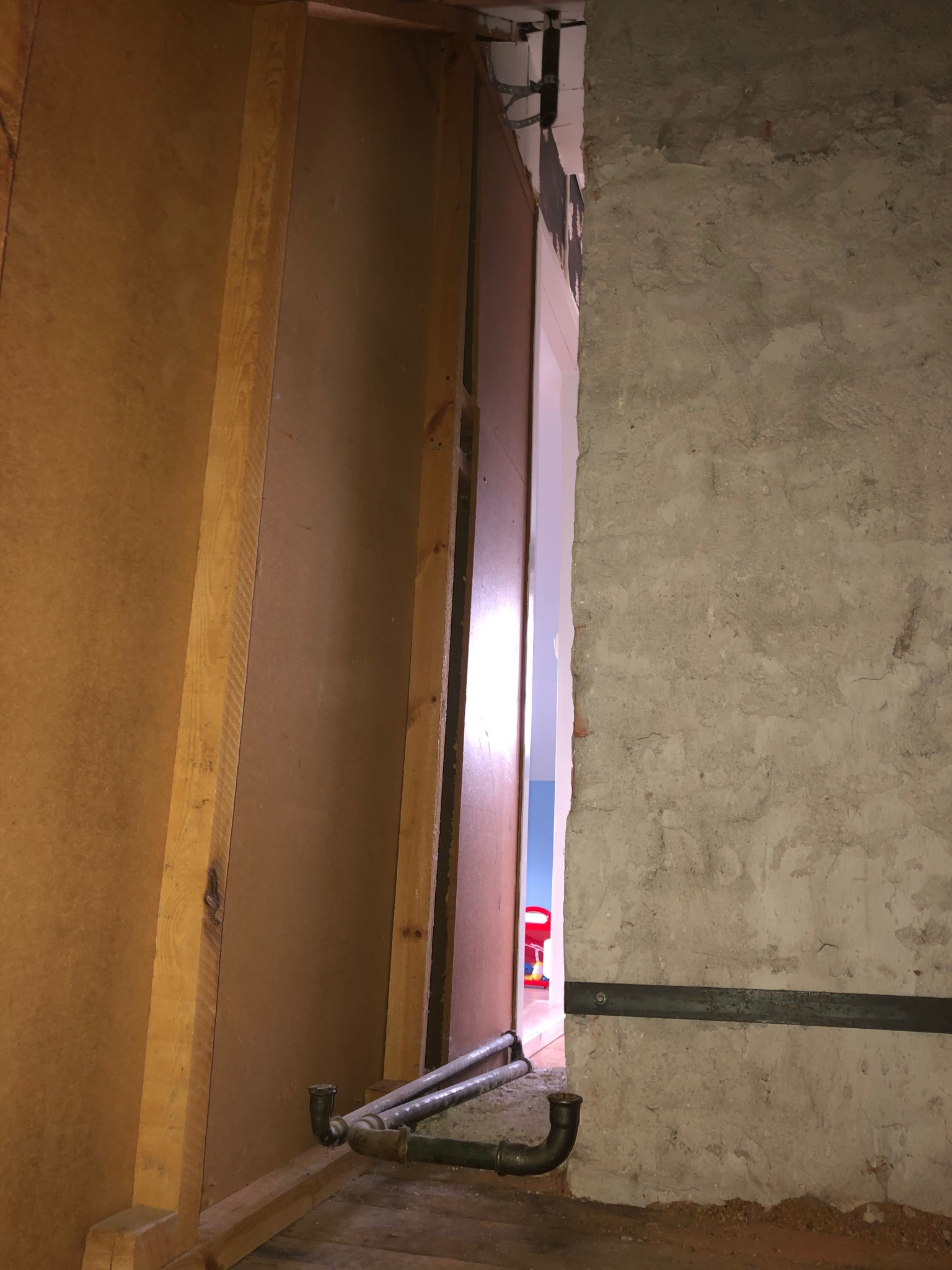
This is what the attic looks like, behind the chimney:
There are some odd angles and it's not entirely easy to understand how everything fits together. The door to the room behind the fireplace might need to stay where it is because it's the highest point.
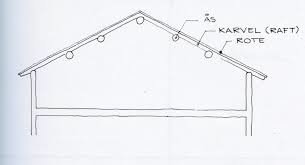
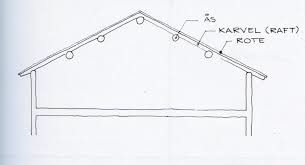
As I assess it, there are no load-bearing walls. There might be åsar* and not trusses in the house. I can't see that there is a "hanbjälke". Alternatively, in 1950 they might have removed the "hanbjälken", installed a ridge beam (resting on the chimney and the gable wall), and reinforced the "överramarna".
* then the åsar should rest on the wall towards the bedroom, alternatively a strong beam in the ceiling above?
Thanks for the reply! Yes, there are no purlins today, and perhaps there never were any. When the dormers were built, they probably inserted a ridge beam. However, that beam does not continue into the bedroom. At the same time, the walls in the bedroom seem so flimsy that they can hardly have any significant function.
It would also be interesting to have ideas on the sloped ceiling and whether it would work to remove the part of the old roof that now protrudes into the living room.
"It would also be interesting with ideas for the sloped ceiling and whether it's possible to remove that part of the old roof that now extends into the living room."
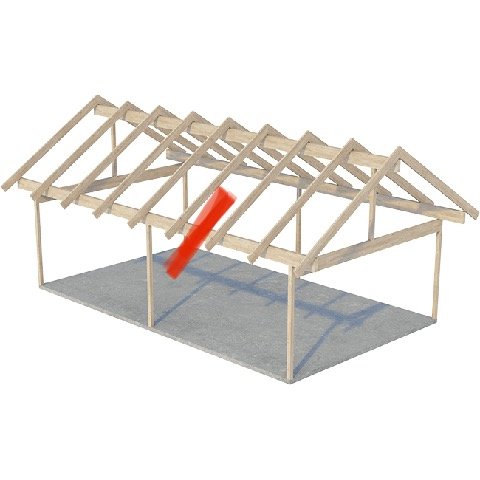
You'll have to imagine something like this, I suspect.
MMarcus_R said:
It would also be interesting with ideas for the sloped ceiling and whether it's possible to remove that part of the old roof that now extends into the living room.
There is a truss on either side of the entrance to the extension that you cannot remove. Then you have to imagine a diagonal line where the ridge meets the older roof, down to where both eaves meet. I don't think you'll get much usable space out of it.
imagine that the entrance is between two trusses. The trusses remain and are still part of the structure.
With a hipped roof on the original house, one can probably assume that it was built with roof trusses with collars. What happened during the extension (quite insensitively done) in 1950 can only be speculated without a thorough inspection. Before proceeding, you should carefully draw up the upper floors to get an overview. Normally, walls on the upper floor are not load-bearing, but braces are.