
Hello,
I live in an HSB property from the early 1930s. My apartment is on the top floor of the fourth floor, and I also own the attic above.
In the middle of the apartment on the lower floor, there is a wall protruding at a right angle from the outer wall, separating the old two-room apartment's bedroom and living room.
I want to remove this wall. The problem is that I do not know whether the wall is load-bearing or not, and it seems not to be easy to find out either.
After extensive research on this forum, I am a bit wiser but not certain.
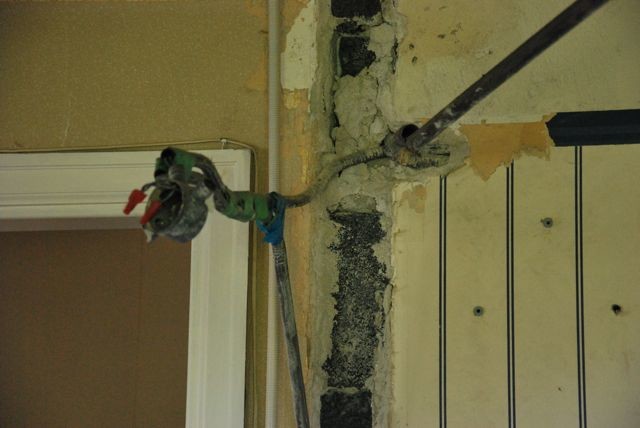
The wall is 110mm thick and consists of a total of about 1/3 plaster and the middle of the wall of something that looks like black hard lecablock, kind of like bricks, but black and not as hard.
Is the wall too thin to be load-bearing with the 1930s construction knowledge?
Does the material, those who can identify it from my description, indicate that it is safe to tear down the wall or the opposite?
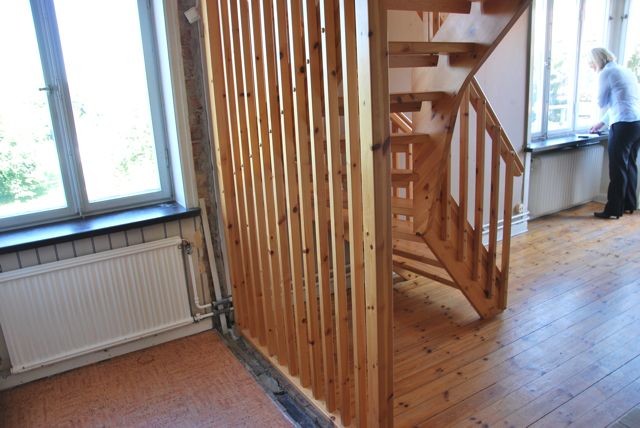
It should be added that previous owners have removed the wall between the kitchen and living room, which is an identical wall, and now there is an exposed steel beam underneath. (bad since it then should be load-bearing?)
The association has replied that the work must be done professionally and that it is my job to ensure that the wall is not load-bearing, etc.
Grateful for answers!
I live in an HSB property from the early 1930s. My apartment is on the top floor of the fourth floor, and I also own the attic above.
In the middle of the apartment on the lower floor, there is a wall protruding at a right angle from the outer wall, separating the old two-room apartment's bedroom and living room.
I want to remove this wall. The problem is that I do not know whether the wall is load-bearing or not, and it seems not to be easy to find out either.
After extensive research on this forum, I am a bit wiser but not certain.
The wall is 110mm thick and consists of a total of about 1/3 plaster and the middle of the wall of something that looks like black hard lecablock, kind of like bricks, but black and not as hard.
Is the wall too thin to be load-bearing with the 1930s construction knowledge?
Does the material, those who can identify it from my description, indicate that it is safe to tear down the wall or the opposite?
It should be added that previous owners have removed the wall between the kitchen and living room, which is an identical wall, and now there is an exposed steel beam underneath. (bad since it then should be load-bearing?)
The association has replied that the work must be done professionally and that it is my job to ensure that the wall is not load-bearing, etc.
Grateful for answers!
If you have access to the attic above, you could see what the potentially load-bearing wall might be carrying? Is it part of the roof structure resting on it, or a floor joist? You might get wiser if you can see if it's the same on the floor below, if it's a construction with walls meant to transfer the load down to the basement floor.....
The stone might be slag stone. However, that doesn't say much since many different materials were used in the past. The properties of two similar stones didn't necessarily have to be the same.
The wall is quite thin, but it sounds tricky when there is also a steel beam underneath.
What is on top of the wall doesn't mean much. Walls can also have a horizontal stabilizing function or bear forces that are transmitted via hidden steel beams in the framework.
But since the association basically requires you to bring in a structural engineer, it's just a matter of doing that. Not much to think about.
The wall is quite thin, but it sounds tricky when there is also a steel beam underneath.
What is on top of the wall doesn't mean much. Walls can also have a horizontal stabilizing function or bear forces that are transmitted via hidden steel beams in the framework.
But since the association basically requires you to bring in a structural engineer, it's just a matter of doing that. Not much to think about.
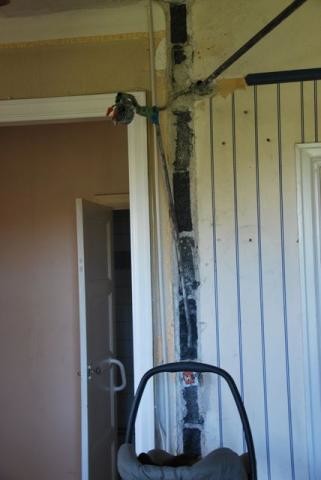
Based on what you find when you google slag stone, I don't think that's it, but I'm not sure. I'm attaching images so maybe it's easier.
I was thinking of heading to the city planning office to research further into the matter.
What do you think?
These are pictures of the other wall that the previous owner took down.
I was thinking of heading to the city planning office to research further into the matter.
What do you think?
These are pictures of the other wall that the previous owner took down.
Click here to reply