
2,912 views ·
14 replies
3k views
14 replies
Obstacles in Small Wall Construction

Hello,
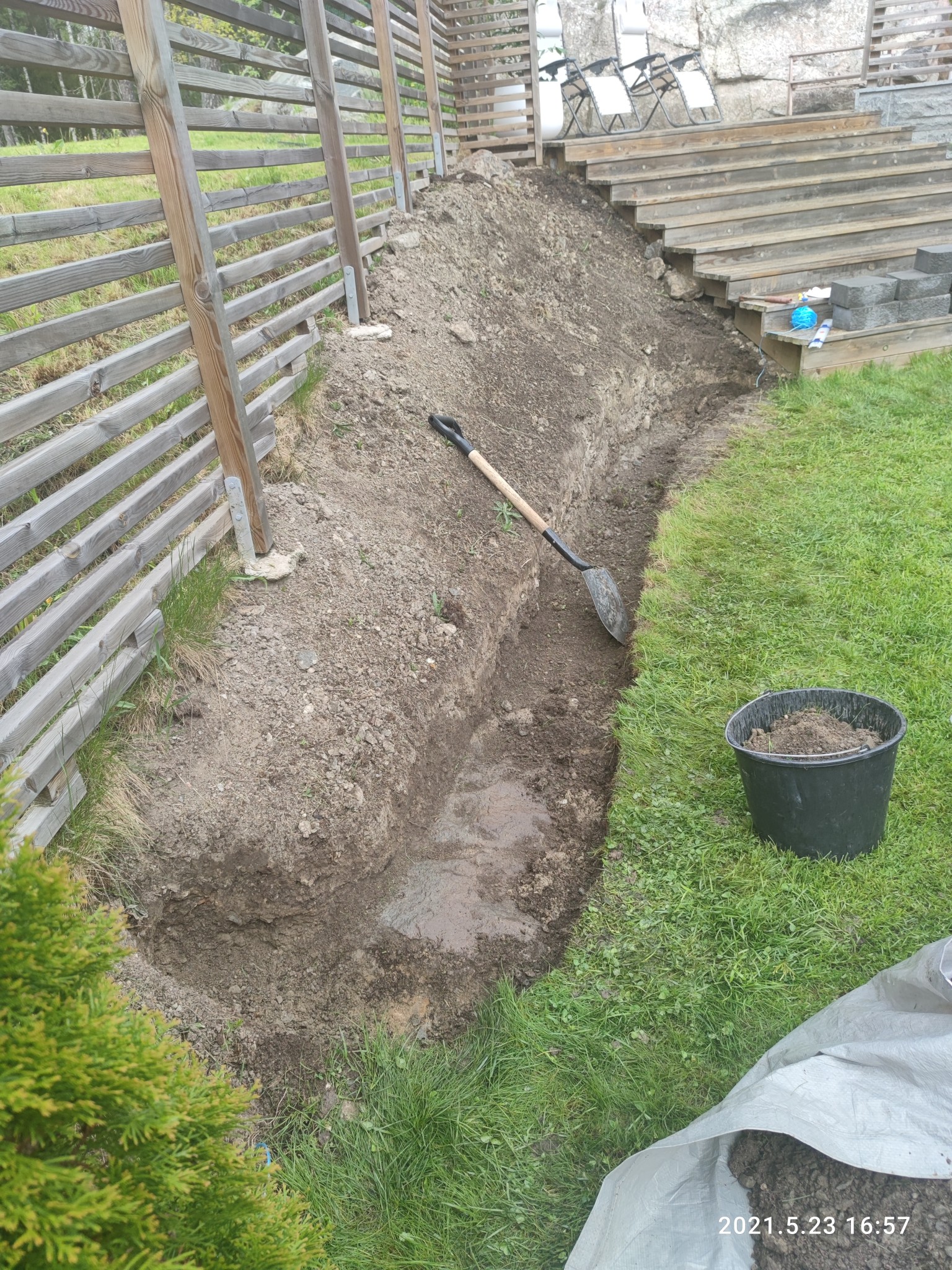
I have excavated to build a wall with a maximum height of 40 cm at the top, with the lowest point being 30 cm since the ground slopes a bit. It will be a total of 4.5 meters long.
At the lowest point, where the wall will be the highest, I have encountered a gigantic stone, which cannot be lifted.
My suggestion is to use the stone as the lowest point for the base layer, meaning the wall stone will stand on the stone. I think if the stone isn't a stable foundation, nothing is.
Now to my question, since the stone is sloping, I need to ensure that the wall stone at least stands level. How do I do this in the best way so that it lasts long?
What type of base layer should I use?
Hhheeelllpppp!!!
I have excavated to build a wall with a maximum height of 40 cm at the top, with the lowest point being 30 cm since the ground slopes a bit. It will be a total of 4.5 meters long.
At the lowest point, where the wall will be the highest, I have encountered a gigantic stone, which cannot be lifted.
My suggestion is to use the stone as the lowest point for the base layer, meaning the wall stone will stand on the stone. I think if the stone isn't a stable foundation, nothing is.
Now to my question, since the stone is sloping, I need to ensure that the wall stone at least stands level. How do I do this in the best way so that it lasts long?
What type of base layer should I use?
Hhheeelllpppp!!!
Last edited:

Build the wall as you want it, with the intended base. When you reach the stone, don't worry about it staying in place. Clean it off thoroughly, drill, and insert, for example, 4 pieces of 12 mm rebar that stick up about 10 cm. Drill holes in the masonry blocks 25 mm so that they can slide over the rebar and add a lot of concrete underneath so they are level. When the concrete has set, mix a thin (almost like water) concrete and pour it into the holes, it will hold like a rock and not move.
Very good advice and I'm deeply grateful for your tip. I've now bought concrete and cut some rebar. A bit more time-consuming but should set like a rock as you say. It's people like you that one hopes will respond to posts. Thank you once again.J jonaserik said:Build the wall the way you want it, with the intended base. When you reach the stone, don't worry, leave it as it is. Clean thoroughly on it, drill and insert, for example, 4 pieces of 12 mm rebar that protrude about 10 cm. Drill holes in the wall stone 25 mm so that they can be slid over the bars and a lot of concrete underneath so they stay level. Once the concrete has set, mix a thin (almost like water) concrete and pour it into the holes, it will sit like a rock and won't move.
Do you know if you need to have geotextile under the sub-base? It will be a relatively low wall that will function as a border for a flowerbed.J jonaserik said:Build the wall the way you want it, with the base as planned. When you reach the stone, don't worry, it stays there. Clean, clean it thoroughly, drill and insert for example 4 pieces of 12 mm rebar that stick up about 10 cm. Drill 25 mm holes in the masonry so that they can slide over the bars and lots of concrete underneath to make them level. Once the concrete has set, mix a thin (almost like water) concrete and pour it into the holes, it will be rock solid and not move.
Not wrong to use a fabric under crushed stone laying on softer ground, it becomes a bit like it floats, the 8/16 crushed stone approximately 10 cm should be compacted hard so it's not loose. If the wall is to be level, you set a slightly stronger stake at each end with a stretched string (masonry string is good) between and measure down from there. You can also have a fabric on top of the crushed stone and level in (the first layer) the stone with concrete underneath. Since it is a steep slope there, water can come from above and settle behind the wall, place something pipe-like in the crushed stone, anything as long as it's plastic and between 20-40 mm in diameter.
Ok thanks for the good description.J jonaserik said:Not wrong to use a fabric under crushed stone that lies on softer ground, it's a bit like floating, the crushed macadam 8/16 about 10 cm should be compacted hard so it doesn't stay loose. If the wall is to be level, then you set a slightly sturdier stake at each end with a stretched string (mason's string is good) between and measure down from there. You can also have a fabric on top of the crushed stone and level the (first row) stone with concrete underneath. Since it is a steep slope there, water can come from above and settle behind the wall, lay something pipe-like in the crushed stone, anything as long as it is plastic and between 20-40 mm in diameter.
Wondering if one should use landscape fabric where stone meets concrete in some way? Feels instinctively wrong.
No geotextile between mountain/rock and wall. The bottom of the wall is placed directly against the rock with a bit of stiff concrete and leveled for alignment. Concrete doesn't adhere to rock, hence a few rebar to prevent the wall from sliding down. Wall stone ? type.
https://steriks.se/produktsortiment/murar/murar-och-block/aws-windsor/J jonaserik said:
OK. then it's important that the dowels come as close to the center of the stone as possible. Make sure to measure correctly then. Getting the stone to lie correctly (first course) works well with concrete underneath, it will end up underground and won't be visible. Feel free to place a couple of iron bars underneath to better support the wall's load-bearing capacity. That type of stone makes it difficult to place any iron between the courses. How does it look behind the wall? It seems a bit steep, what will be behind it, a flower bed perhaps? I would probably lay a geonet up the slope about 10-15 cm under the topsoil and place it between the last and second-to-last course to keep the soil in place and prevent the wall from tipping outward. A geonet stabilizes everything, slope + wall, and everything grows into it. It's also suitable to add some crushed stone behind the wall. It might seem a bit over the top, but it's not wrong to do it right the first time to avoid problems in the future. I made a simple sketch, hope you understand.
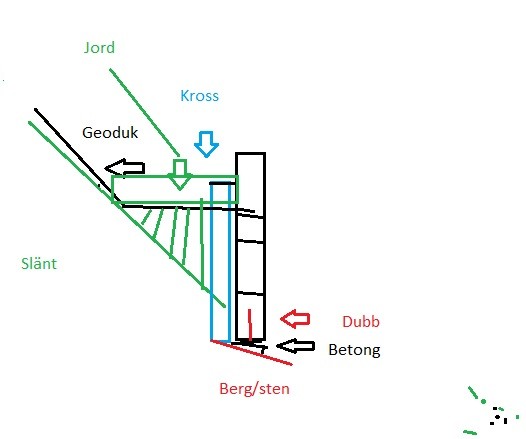
Yes, that's roughly what I had in mind. It will be a slope with a few plants. However, there are ledges on the wall stones, and them bending outwards is not possible, or is it? Is it possible to attach geogrid when there are ledges?J jonaserik said:OK. then it's important that the spikes are as close to the center of the stone as possible. You've got to measure correctly then. Getting the stone to lay correctly (the first course) goes well with concrete underneath, it will end up below ground and won't be visible. Feel free to place a couple of irons underneath so it will hold better, the bearing capacity under the wall will improve. This type of stone is difficult to lay any iron between the courses. What's the plan behind the wall, it seems a bit steep, is it going to be a flowerbed or something? I would probably lay a geogrid up the slope about 10 - 15 cm under the topsoil and placed between the last and second last course to keep the soil in place, and prevent the wall from bending outwards. A geogrid stabilizes everything, slope + wall and everything grows into it. A bit of crushed stone behind the wall is also suitable. It may seem a bit over the top, but it's not wrong to do it right the first time with no problems in the future..
Made a simple sketch, hope you understand.
No cloth/net on mountain/stone but it must be clean. Geoduk is the wrong name by me, it should be Geonät and it comes in different mesh sizes, coarse ones work fine. Grass and plants anchor it strongly, you can cut out for the stone's edge and place the net 5-6 cm in between the layers, it won't tilt visibly. Search for Geonät and you'll find results and can choose what you want based on size and price.
Just wanted to thank you for your dedication and tips during the construction. The result turned out really well!J jonaserik said:No fabric/net on rock/stone but it should be clean. Geoduk is the wrong name by me, it should be Geonät and it comes in different mesh sizes, coarse ones are fine. Grass and plants anchor it strongly, you can cut it out for the stone ledge and place the net 5-6 cm in between the courses, it won’t tilt visibly. Search for Geonät and you'll get results and can choose what you want based on size and price.
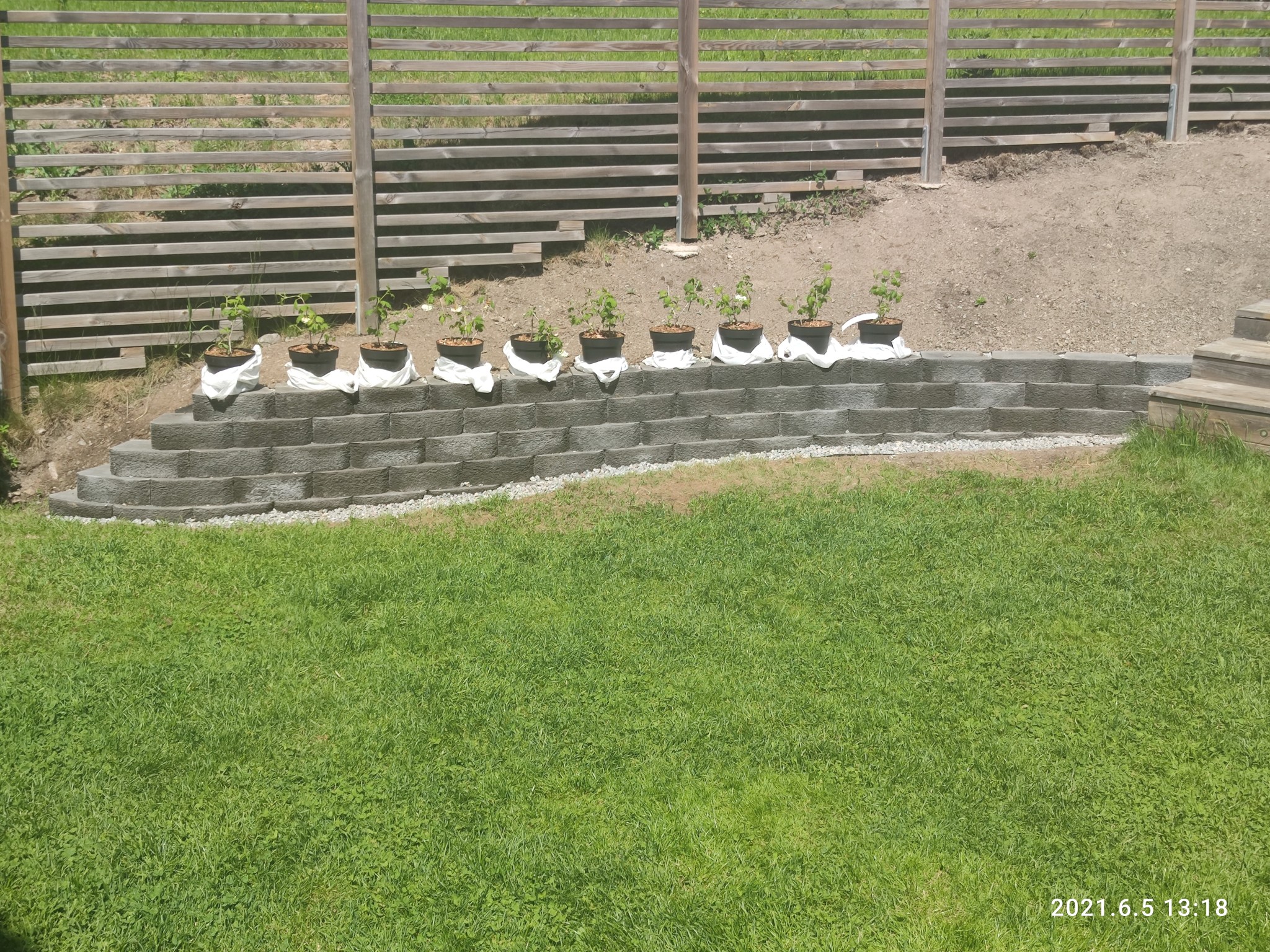
 looks incredibly professional
Click here to reply