I hoped to avoid a post like this during our construction period, but apparently, it's time for one. So far, we've encountered a lot that we think has gone wrong, but... I really hope that we're the ones who are uninformed and unnecessarily nervous about the construction.
We have hired a house company and have only signed a contract with them. No other contracts. Our agreement is that the house supplier delivers the entire house, but we install the kitchen frame and cabinets ourselves. We are now so far in the process that the kitchen is halfway in place and the painting company is coming next week.
These concerns have arisen:
> When we started setting up kitchen frames and cabinets, we noticed that there is nothing to attach the studs to behind the drywall, so we had to put holes in the plastic in the wall in some places. Is that really how it's supposed to be done?
> It's drafty around the water pipe under the sink that we have in our kitchen island. Additionally, those pipes were also incorrectly routed, so the water pipe almost didn't come up behind the kitchen island...
> The house supplier urged us to start installing the kitchen after the plumbing and electrical work was done, but before the flooring and painters come. But no pressure testing has occurred, yet we were encouraged to proceed. The house supplier gave me a meaningful "I promise you it won't leak." So now the kitchen is in place, and we have to hope there's no leak behind... Since the kitchen is our responsibility, the house supplier will likely place the blame on us for making holes in the wall. But what were the alternatives?
> We asked the house supplier if the foundation had been measured, but they claimed it's never done at all. The foundation is very uneven, bumpy with deviations up to 5mm. According to the house supplier, it's up to the tilers to smooth this before the floors are laid, but we're worried there will be negligence. No one wants to take responsibility for what someone else has done before...
> The sewer pipe that continues up to the upper floor comes up in the slab so that it's ended up in the middle of a wall stud. The carpenter solved this by simply leaving a hole in the chipboard and drywall. So the pipe sticks out a bit from the wall. Now, this is behind the fridge and freezer, but still.
> Laundry room: in the foundation in the laundry room, pipes for water and sewage come up. These pipes have ended up so far into the room that the space for equipment (according to the plan) is compromised. Is that really okay?
Should it really be like this? And if we hadn't gotten involved, we probably wouldn't have noticed much of the above - until something happens or it's time to renovate.
Bring in an independent inspector now. Get in touch with one as soon as possible.
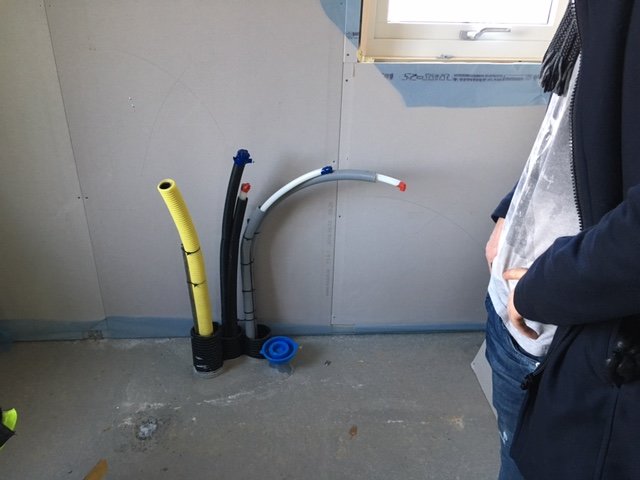
Image 1: The plaster around the window looks poorly done. The plastic protruding at the window does not look right either, it should have been folded in and connected to the seal around the window frame and sealed/taped at the corners. The casting looks like it was done one bucket at a time from a concrete mixer. But deviations of 5mm are usually considered acceptable in a slab.
No idea if the technique will be a problem with water pipes, I can't see how it's supposed to work.
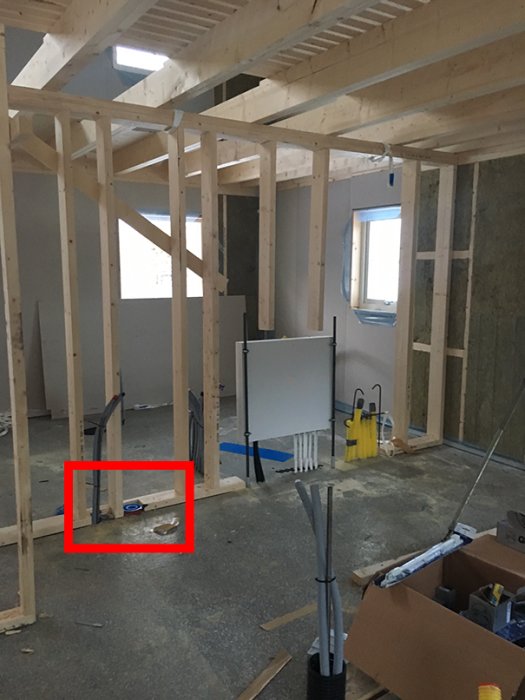
Image 2: Clumsily done with the pipes, not a huge disaster but bad. Switching to smartliner pipes could have mitigated it a bit once the mistake was realized since it just seems to be the sleeve part sticking out. Even better would have been to thicken the wall when it was broken out and realized it needed to go within the pipe's diameter.
Again, an awfully ugly casting but probably within margins.
BUT, that wall looks absolutely dreadful. Now, I'm hoping and assuming the floor system is self-supporting given that it looks roughly dimensioned. If the floor system is supposed to be supported by the wall, it's terrible. There's nowhere to transfer the load from the cut studs. The spacing from the second to the third stud from the right looks very large but could be an optical illusion. Look at the drawings to see what's a load-bearing wall and what's not.
And get an inspector there, it will probably pay off as things look. And make sure they pressure test promptly.
Is there no installation layer in the house at all?
Image 2: Because the framework looks stable in the wall, it should be load-bearing (or maybe floating if you look at the 2 beams by the distribution cabinet for the underfloor heating.....). Have you looked at the drawings?
We are not in the industry at all, which makes it even more difficult. We don't have much of an idea of how it should be, but we have occasionally received input from acquaintances who are in the industry and who comment on things that seem crazy.
We should definitely contact our KA tomorrow. I have contacted him before via email but we haven't received a response...
Regarding that wall, it is free-standing. It's a solution they made for us so that we could fit in a full-height kitchen since there is actually a visible metal beam there in the original drawing.
We haven't looked at the drawings. Now I'm embarrassed, but it's because our KA told us that "you don't need that pile of paper." Really stupid, but now we know......
The KA, on the other hand, has his own pile of papers, so HE should be able to make a decision about what's right and wrong. But honestly, I don't think we really understand what the KA's task is other than just to "be there" for the Municipality to grant a building permit. Something like that.
KA should, of course, be the one to ensure that the construction follows the applicable rules. Make sure to have a proper contract such as ABS09 or equivalent, and don't hesitate to consult a consumer advisor in your municipality.
KA should of course be the one to ensure that the construction complies with the applicable regulations. Make sure to have a proper contract like ABS09 or equivalent, and don't hesitate to consult a consumer advisor in your municipality.
Is it with the KA that this contract should be drawn up?
KA is all well and good, but an inspector is what's needed. Do as you like, but I maintain that it is money well spent. If something is wrong, it could just as well be the KA who failed in their commitment, in which case he won't help your situation at this stage.
What do you mean by the wall being load-bearing?
Is the joist dimensioned to manage without support? It mostly looks like double 45 studs upon closer inspection. Not glulam or Kerto. What is the span of the joists?
KA in all its glory, but it's an inspector that's needed. Do as you wish, but I maintain that it is money well spent. If something is wrong, it could just as well be the KA who has failed in their duty; they won't exactly help your case at this stage.
What do you mean by the wall being load-bearing?
Is the floor system dimensioned to manage without support? It mostly looks like double 45 studs on closer inspection. Not glulam or kerto. What's the span length of the joists?
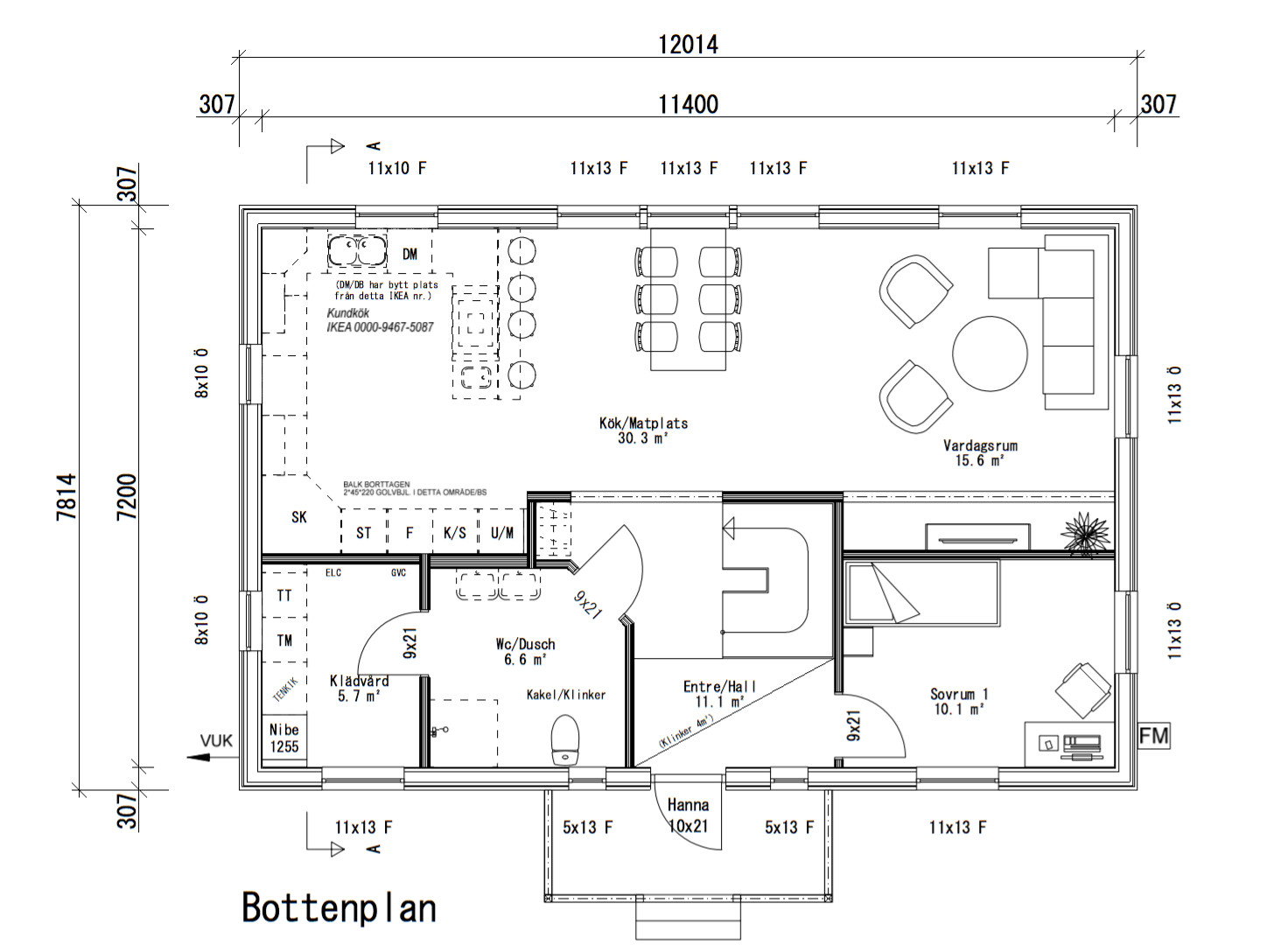
I don't understand half of it but I'm sending the floor plan anyway, where it shows how the load-bearing beam goes and that it ends just above the wall visible in picture 2.
KA is all well and good, but an inspector is what's needed. Do as you please, but I maintain that it's money well spent. If something is wrong, it could just as well be the KA who failed in their duties, and they won't help your case at this stage.
Where can one find an inspector?
Vi vill skicka notiser för ämnen du bevakar och händelser som berör dig.