
71,396 views ·
259 replies
71k views
259 replies
Newly laid floor flexes on 3 floors and in all rooms
It's really the one who installed the floors that should find out the cause and fix the floors.P Peter Petterson said:The beam structure was lying in the garage for 2 weeks before it was installed. Then it lay installed without the floor chipboards being mounted for about 4 weeks. There was a vacation in between and so on.
The carpenters have been very careful to vacuum and keep it clean underneath. Floor heating pipes laid properly in the grooves.
I'm going to buy an RH meter today and see what we have in the house ✅
As previously written, I would have removed a floor molding where it sags the most to see if the gap between the floor and the wall is too small. If it's sufficiently large, I would tear up the floor in the smallest room and check that the whole floor is level and properly screwed down.
Even a mm of height difference can make a big difference.
I had a sag in the floor in the hall; it turned out that they had forgotten to screw down the noggings.
Last edited:

Do you have a picture of the gaps in the floor? I can't see it in your pictures...P Peter Petterson said:Hey hey!!!
Installed new flooring on 3 levels of the house. The carpenters went down to the joists, installed new battens on the old ones to level the floor.
Glued and screwed according to all the rules of the art. Pre-countersunk the chipboard flooring, same thing there, glued and screwed according to all the rules of the art.
Aluminum plates installed at the correct distance.
The floor, they say, was also laid with enough gap against walls, thresholds, etc.
Now to the problem: the floor is like floating on an air cushion almost everywhere. Both along the baseboards and in the middle of the floor.
At doorways, where it is the tightest, the floors creak and squeak as if they have risen significantly.
Short seams have begun to develop large gaps and are not tight in many places.
Big, big problems, in other words.
Anyone have suggestions on what's wrong and solutions?
I suspect too little play out at the walls and that the floor is under tension?
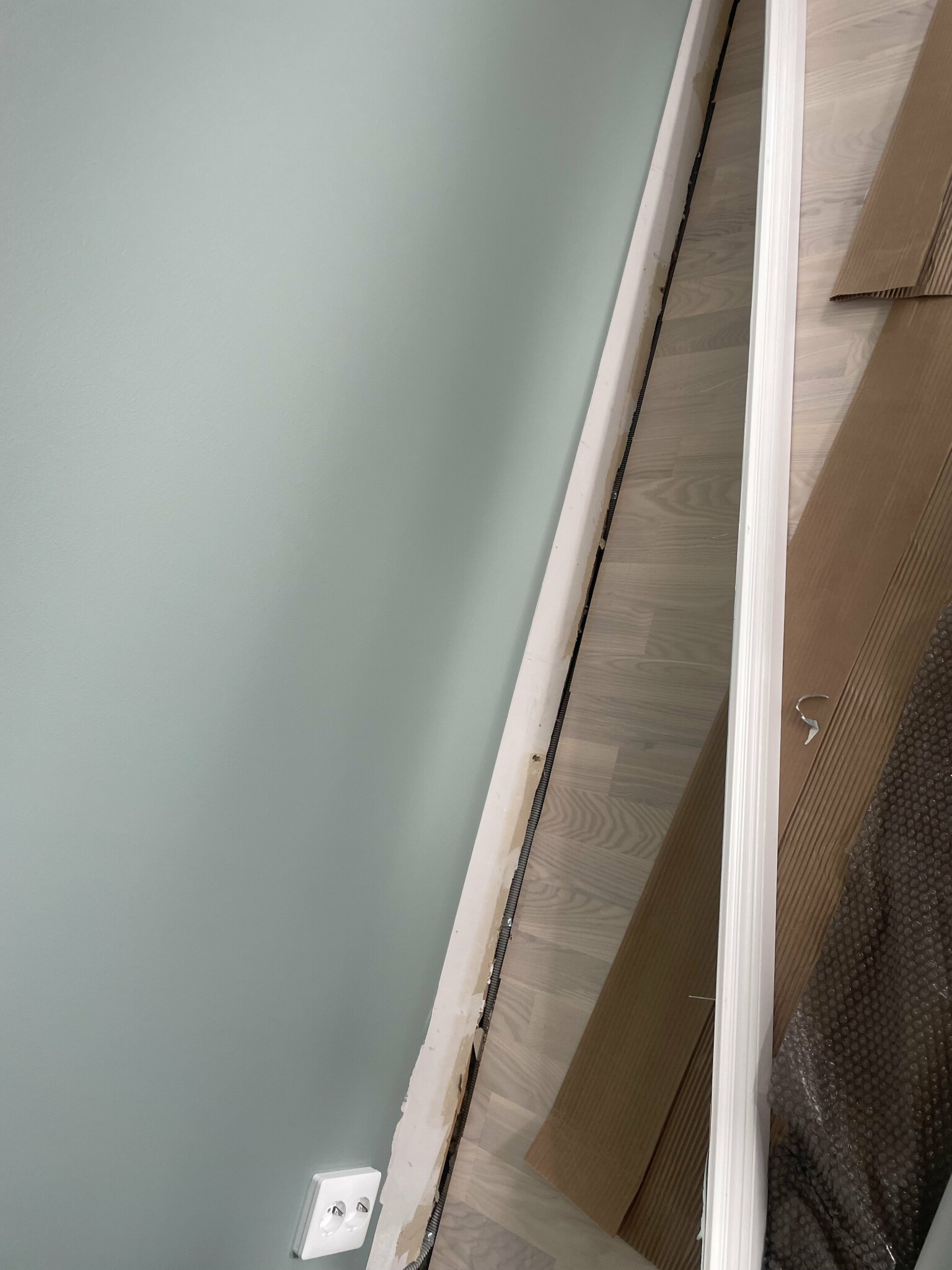
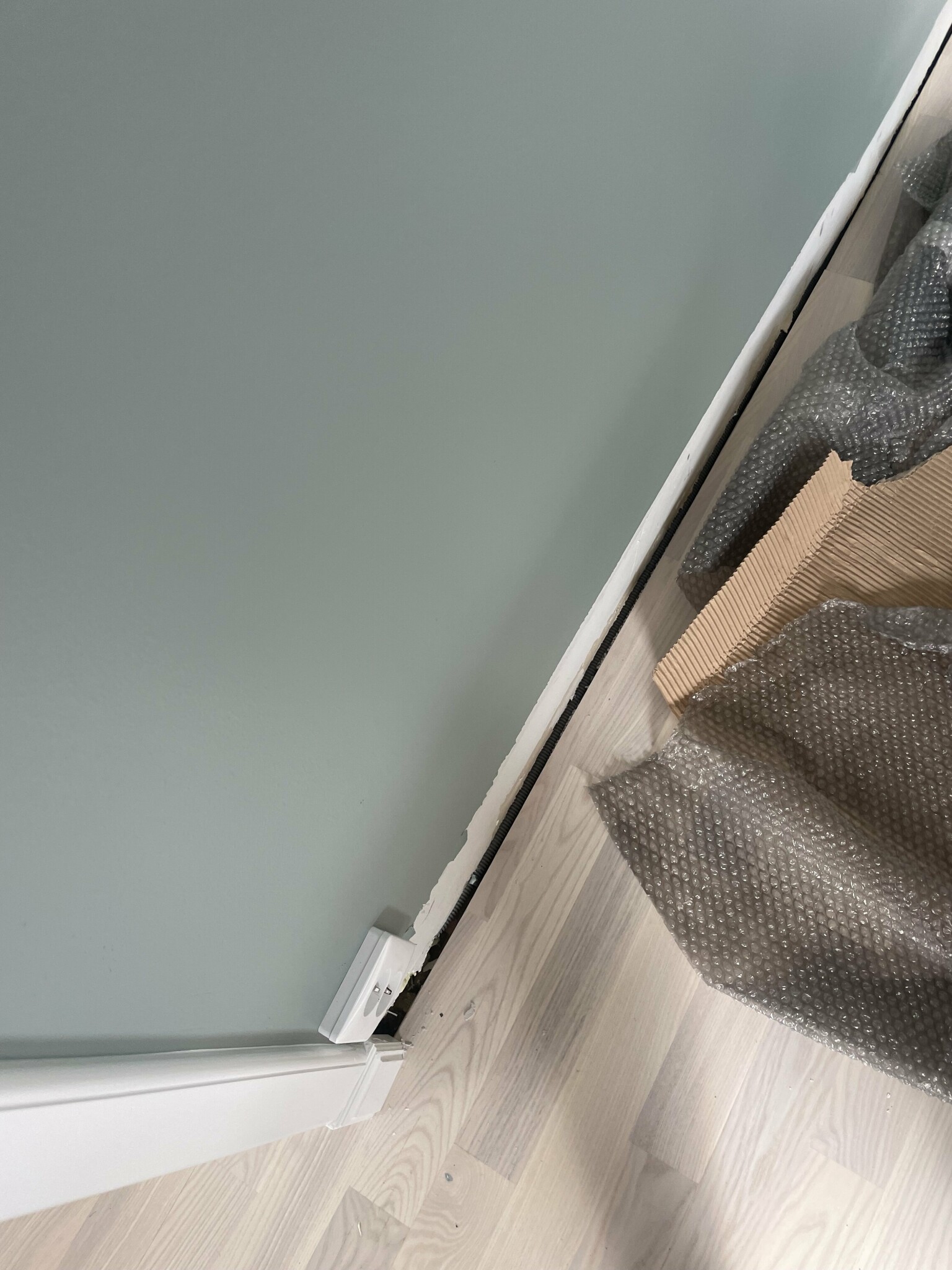
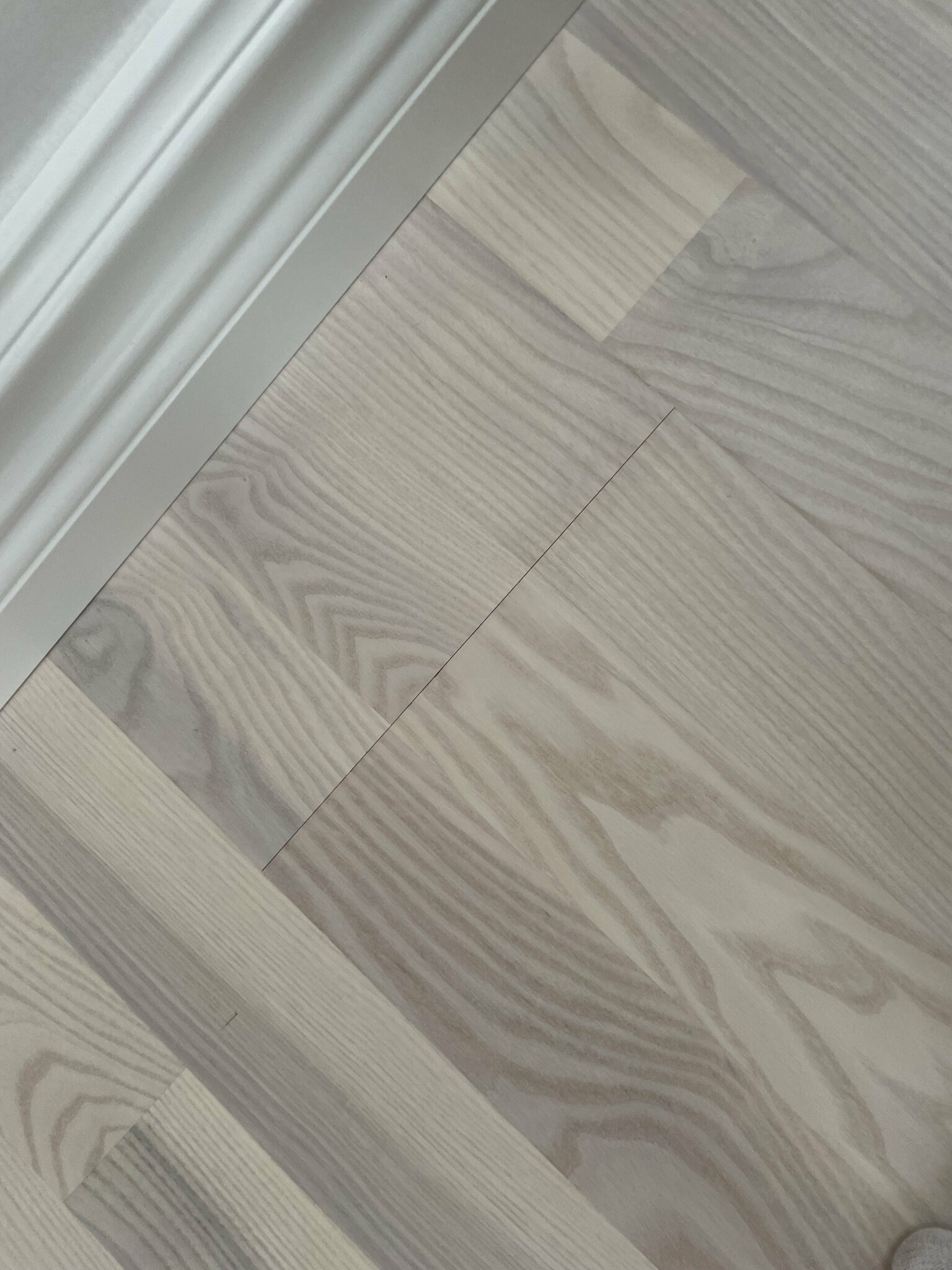


Is this done?
Installing parquet on underfloor heating: Regardless of the chosen underfloor heating system, a report must be written confirming the heating of the subfloor for 21 days before the wooden floor is installed. The report must be signed by a qualified floor installer. If the floor is not installed immediately after the report is written, set the heating to 21°C approximately two weeks before laying the floor and maintain the temperature also while laying the floor. Use gray felt paper or foam intended for underfloor heating systems as a base. Note: the warranty does not apply if damage has occurred due to the floor drying out/overheating. The heating system must be designed to provide even heat across the entire floor surface and never exceed 27°C on any part of it. This applies also under carpets, cabinets, etc. To achieve this, a self-regulating electrical or properly designed water-based underfloor heating system is required. A vapor barrier should always be applied with underfloor heating. The boards should be installed perpendicular to the underfloor heating loops. As the heat passes through the wooden floor, it dries more than usual, which can cause gaps during the heating period.
https://www.byggmax.se/media/catalo...visning 5Gc-golv Parkett_-1691501013.1518.pdf
Installing parquet on underfloor heating: Regardless of the chosen underfloor heating system, a report must be written confirming the heating of the subfloor for 21 days before the wooden floor is installed. The report must be signed by a qualified floor installer. If the floor is not installed immediately after the report is written, set the heating to 21°C approximately two weeks before laying the floor and maintain the temperature also while laying the floor. Use gray felt paper or foam intended for underfloor heating systems as a base. Note: the warranty does not apply if damage has occurred due to the floor drying out/overheating. The heating system must be designed to provide even heat across the entire floor surface and never exceed 27°C on any part of it. This applies also under carpets, cabinets, etc. To achieve this, a self-regulating electrical or properly designed water-based underfloor heating system is required. A vapor barrier should always be applied with underfloor heating. The boards should be installed perpendicular to the underfloor heating loops. As the heat passes through the wooden floor, it dries more than usual, which can cause gaps during the heating period.
https://www.byggmax.se/media/catalo...visning 5Gc-golv Parkett_-1691501013.1518.pdf
All that has been carried out correctly and documented!M Mortsken said:This is done?
Laying parquet on underfloor heating: Regardless of the chosen underfloor heating system, a report must be written confirming the heating of the subfloor for 21 days before installing the hardwood floor. The report must be signed by a qualified floor installer. If the floor is not laid immediately after the report is written, set the heating to 21°C about two weeks before laying the floor and maintain the temperature while laying the floor. Use gray cardboard or foam intended for underfloor heating systems as the underlay. Note: the warranty is not valid if damage occurs due to the floor being dried out/overheated. The heating system must be designed to provide even heat across the entire floor surface and never exceed 27°C in any part, including under rugs, cabinets, etc. To achieve this, a self-regulating electric or properly designed water-based underfloor heating system is required. Vapor barrier must always be applied with underfloor heating. The boards should be installed perpendicular to the heating loops. When the heat passes through the hardwood floor, it dries more than normal, which may cause gaps during the heating period.
[link] 5Gc-golv Parkett_-1691501013.1518.pdf
RH during laying 30-40%.
RH today 45-55%
The underfloor heating has been on all summer, but we had cardboard on the floors, and now that we have started to remove it to finish, the problems are revealed!!
We've had high humidity all summer; it should have caused the planks to swell rather than separate, one would think 🤷♀️

Assuming it's plastic-covered foam. Joists and possibly noggins are screwed in properly and level. Now I'm guessing based on my experiences. Either the floor is not level, or the underfloor heating pipes have popped out of the tracks when the parquet was laid.P Peter Petterson said: