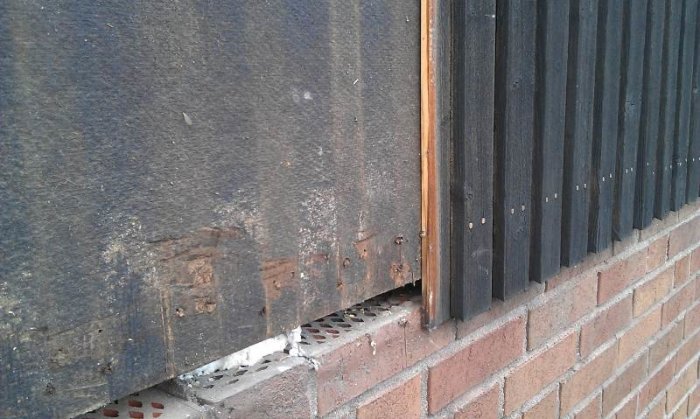
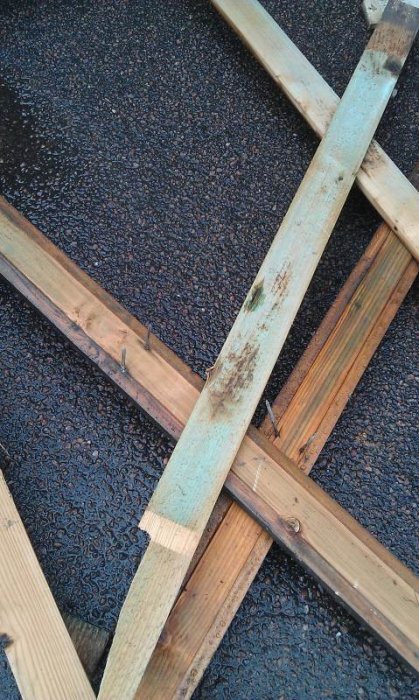
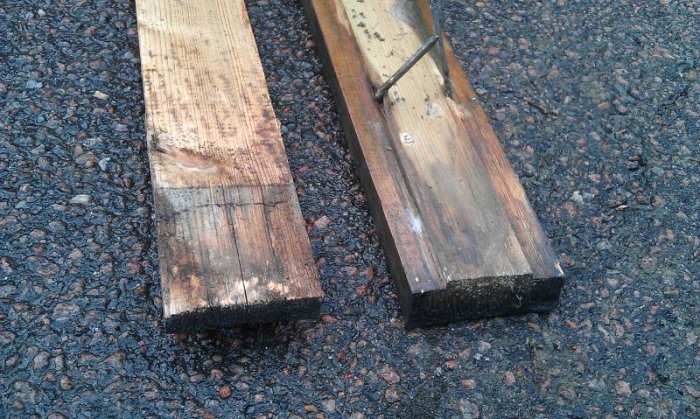
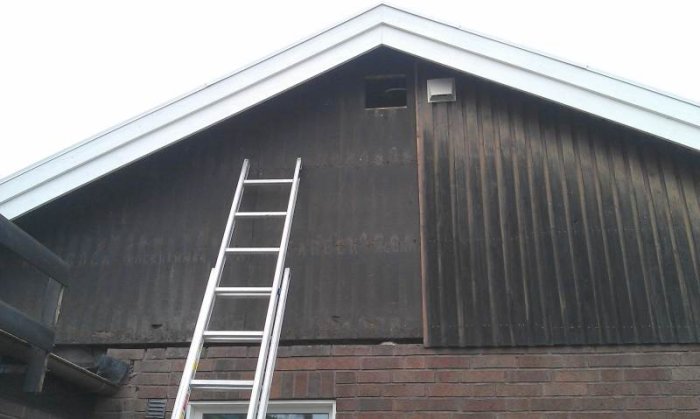
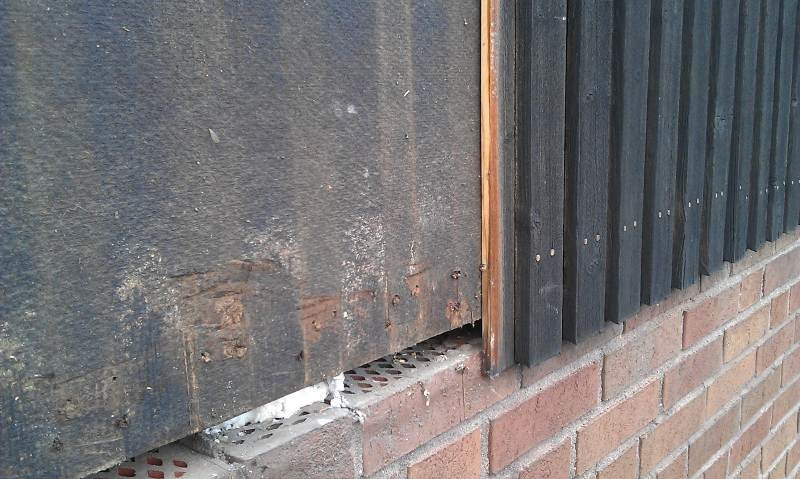
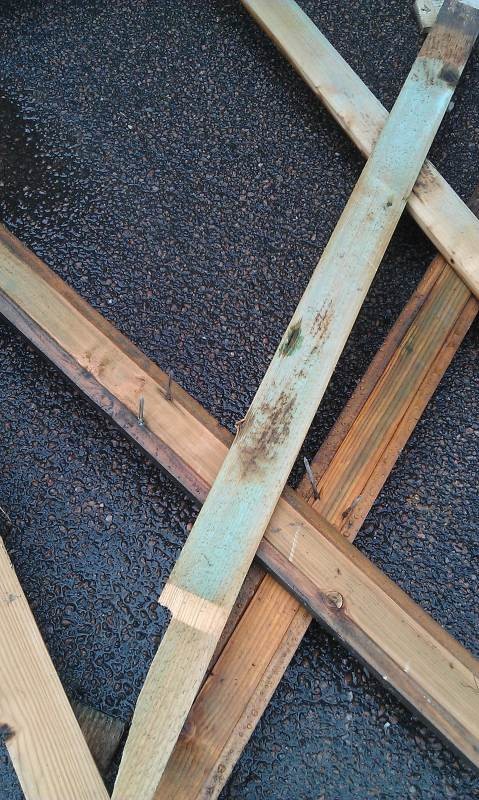
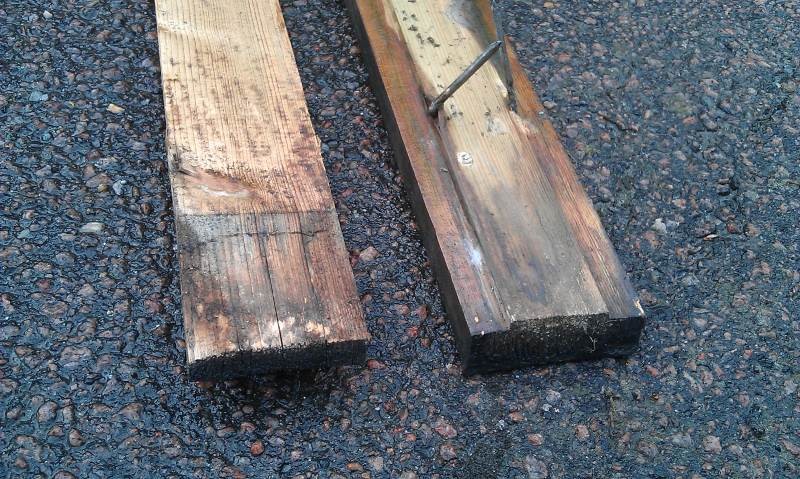
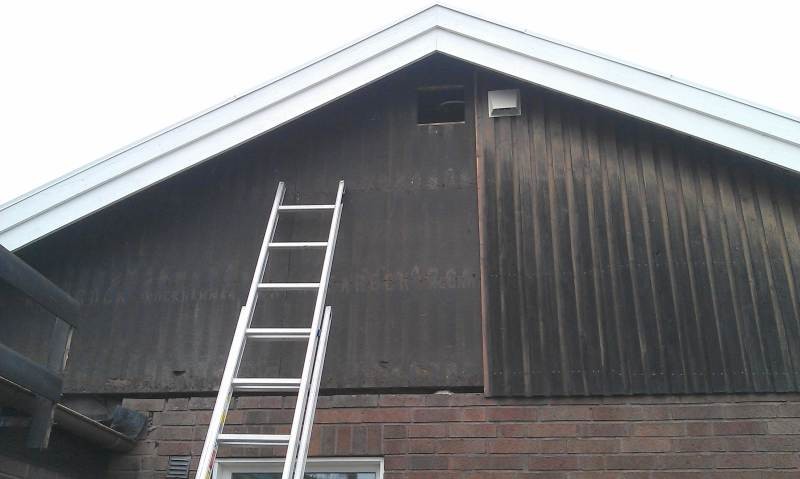
I'm in the process of replacing the panel on a gable (facing a cold attic) and have started tearing down the old panel where the underboards are nailed directly to an asfaboard. That can't be right, can it? There's nothing behind the asfaboard since it's a cold attic.
Should I add an external horizontal batten to create an air gap? Or can the new underboards be attached directly to the board as it is now?
If I add a small spacer, the facade will be a few centimeters out from the brick at the bottom. Should I seal against insects somehow then?
The old facade seems to consist of underboards of slim dimensions and covers with milled grooves for the underboards, and the facade also appears to be pressure-treated? Were they maybe a bit extra relaxed the day they put the panel on my house in the 70s, or did they actually use pressure-treated wood for facades?
An air gap is never wrong; some boards on the eastern gable rotted for me because the panel was placed directly on the asphalt board.
If it’s a cold attic, remove the asphalt board and put exterior gypsum board or wind barrier to make the measurement more accurate.
Put 10 mm air battens on the asfaboard it is sufficient when there is no insulation behind.
That would probably be enough. But what do you do down by the brick, there would then be a gap between the brick and the facade (which admittedly sounds good) where insects etc. could get in. Already now they have been able to fly in under the covering boards. I've been thinking about roof edge nets but don't know how to attach it to the brick.
What does it usually look like on the gables of houses with "half brick"? Does the asfaboard weather strip usually go all the way down to the brick and not, as in my case, stop 5 cm above the brick? Now all the wasps and bumblebees can fly right into the attic.
I don't think it's pressure-treated lumber... looks like it's the same siding since the house was built... I guess you can expect a similar lifespan for the siding you're putting up now... meaning you might have to replace the siding again in about 40 years if you nail directly onto the asfaboard...
Panel - air gap - asfaboard is the correct construction according to me. Then I would take 21-22 mm for the air gap. For example, 22X95 formwork or something like that. Cheap and works well.
Attach the eave mesh to a wooden strip that you then nail on top of the tile, let the mesh go up to the first air strip.
Sounds like a pretty good idea, even if it would work without an air gap, a small strip solves the problem of sealing the hole between the tile and the asfaboard (wasps and others like to take that route and into the attic). But what is the smartest way to attach the strip to the tile? It's pretty poorly built so I'm not sure if I dare to nail it. Sealant/glue?
Sounds like a pretty good idea, even if it would work without an air gap, a small batten/strip solves the problem of sealing the hole between the brick and the asfaboard (the wasps and others like to take that path and into the attic). But what is the smartest way to attach the strip to the brick? It's pretty poorly bricked, so I'm not sure if I dare to nail. Sealant/glue?
Tex pl 600 works well.
Click here to reply
Vi vill skicka notiser för ämnen du bevakar och händelser som berör dig.