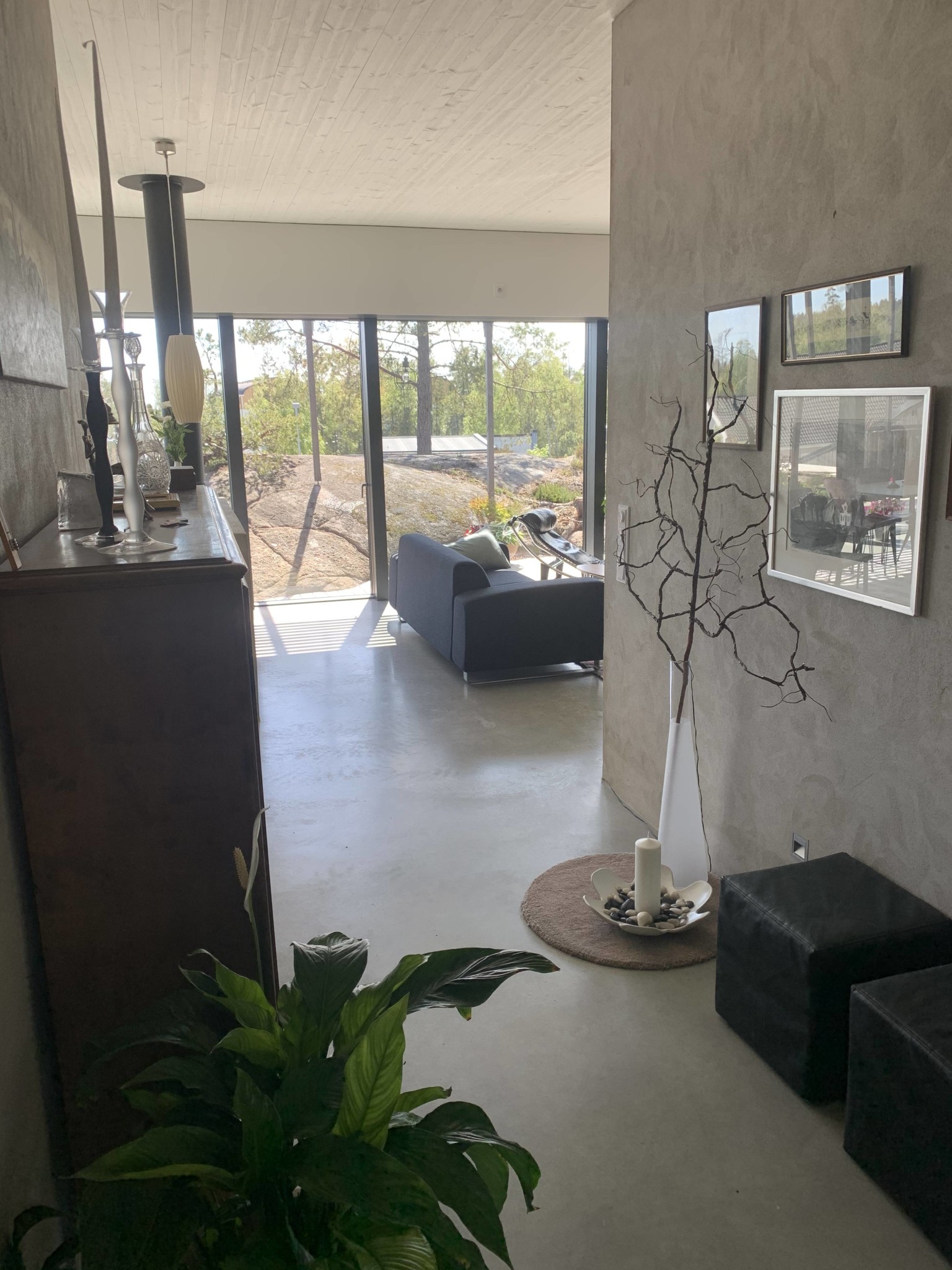
Hello,
We are considering how to achieve a neat finish for our ceiling panel against walls (of different materials).
Will it look good (durable in the long run with movements) to end the panel about 5mm from the wall, or will it look shabby?
Is there any point in applying a flexible sealant if the above does not look good?
We have a brick wall that the panel will run along and meet at the ends, it's not as even as a plasterboard wall, how is it usually finished there?
We see moldings as a last resort if nothing else works well; we aren't very fond of moldings, hence the questions.
Do you have wood paneling on the ceiling? You can't mount it flush against the wall even where the wall is smooth. You need to allow for movement just like with flooring.
A small rectangular trim won't ruin the final result. Treat it in the same way as the ceiling and it will disappear.
Do you have wood paneling on the ceiling? You can't mount it flush to the wall even where the wall is flat. You need to allow for movement just as with floors.
A small rectangular strip won't ruin the end result. Treat it the same way as the ceiling so it disappears.
We are planning to install paneling and are wondering how to best (most aesthetically) handle the ends.
Yes, I understand that the wood moves, more across the width than lengthwise.
If you don't use moldings, what's the common finish?
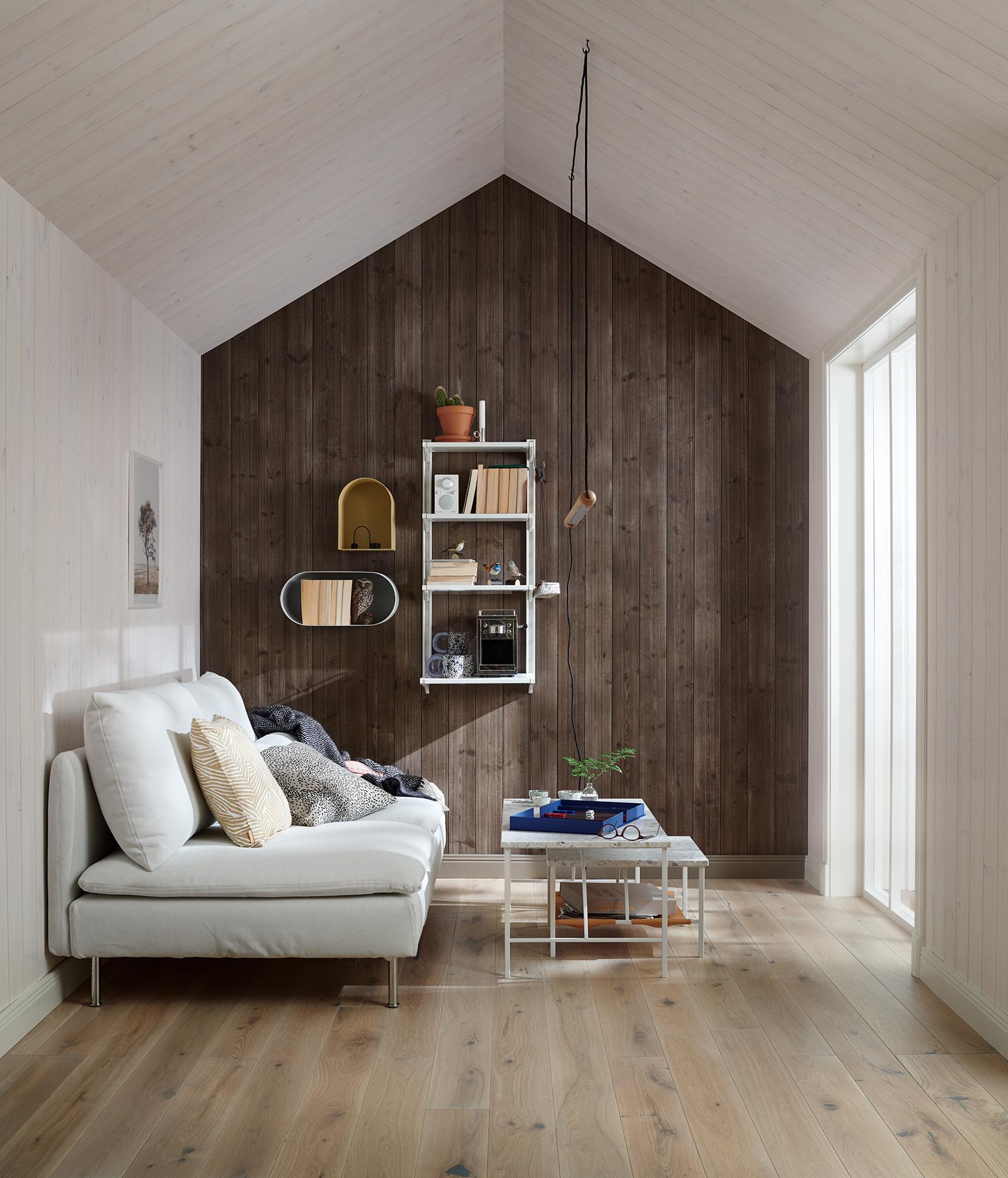
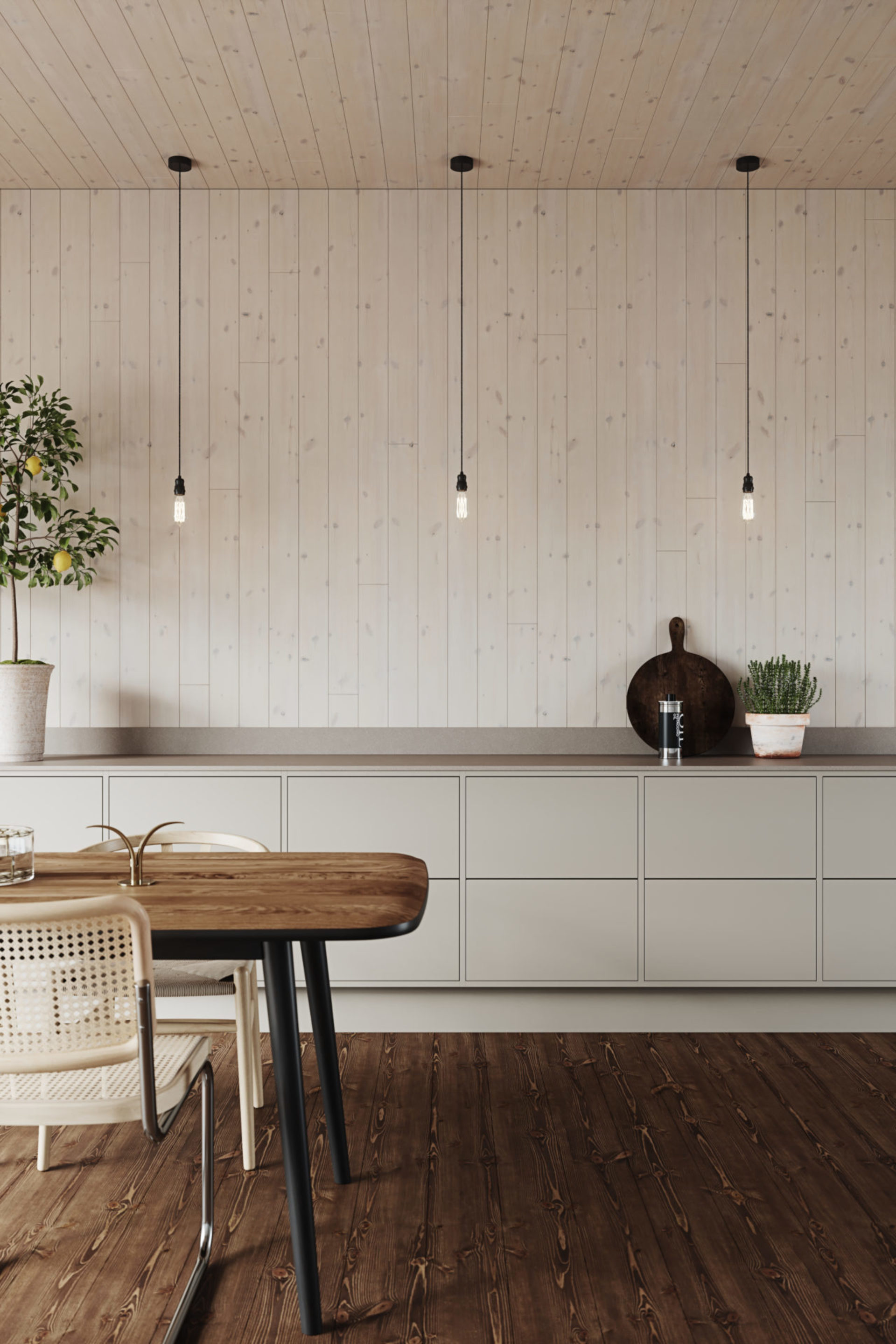
Looking at manufacturers' inspiration photos, they've for example placed the paneling quite close, together at the ridge?
Now, perhaps the manufacturers don't care about the practical aspects in their inspiration photos, but we have never had paneling on the ceiling before so we have no experience with HOW much it truly moves.
We don't want to, for example, leave 5mm that looks perfectly straight at installation but after a few years has ends that have shifted relative to each other.
I believe that the ceiling panel in the meeting with the wall panel "disappears behind" the wall panel.
Maybe they do, I think (in all three pictures) that the ceiling ends against the wall, i.e., that the wall panel doesn't cover the ceiling. But don't you get the same effect no matter what hides what? The wall panel moves as much as the ceiling, right?
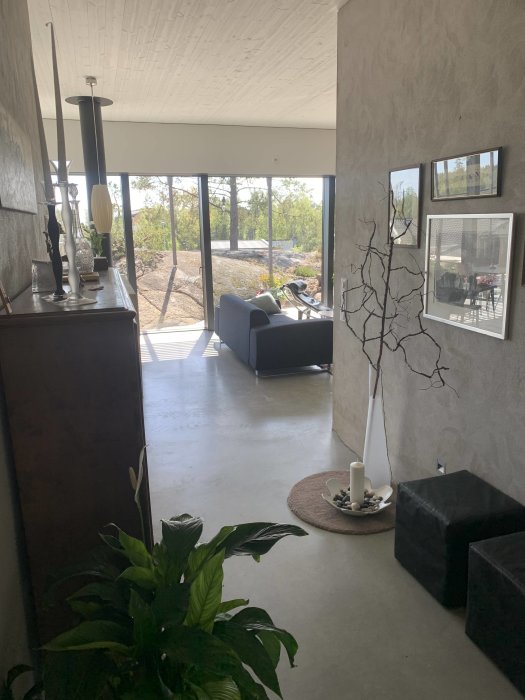
We have wood paneling on the ceiling with both plastered, gypsum, and panel on the walls.
We installed all the ceiling paneling before the interior walls were built and then left a 4mm gap against the ceiling when we mounted the boards.
edit: When we mounted the panel on the wall, we did it flush against the ceiling.
Since each board is nailed, the horizontal panel on the wall barely moves at all against the ceiling. And if the ceiling paneling moves, it is not visible as it is under the walls.
[image]
We have wood paneling in the ceiling with both plastered, plasterboard, and paneled walls.
We installed all the paneling in the ceiling before the interior walls were built and then left a 4mm gap against the ceiling when we mounted the boards.
edit: When we mounted the panel on the walls, we pushed them right up against the ceiling.
Since each board is nailed, the horizontal paneling on the wall hardly moves at all against the ceiling. And if the ceiling paneling moves, it doesn't show because it's under the walls.
[image]
Thanks for the pictures, I had to enlarge the first picture to see that it was paneling; it looked like drywall at first
If one installs the ceiling/floor first, I wouldn't see it as a problem, but we want to install it last to avoid getting it dirty. Then we won't have the same opportunity to hide it in the same way.
You can at least lay the floor last, right? Just make sure you put the roof on before the walls. And the roof doesn't get particularly dirty during construction, just vacuum before moving in.
We have the concrete slab as the floor so we couldn't wait and lay the floor last. Instead, we had to cover the floor/concrete carefully when the walls were painted and plastered. The concrete absorbs quite well, so it's not something you want to spill on
Click here to reply
Vi vill skicka notiser för ämnen du bevakar och händelser som berör dig.


MathiasS said: