
Hello
I have very little experience with masonry and therefore have a lot of questions
I have an old pond that I am restoring. It is built up with natural stone along a mountain slope.
I started using cement mortar A, but when it ran out, I only found mortar B at Byggmax, so I continued with that. This was to build up natural stone and plaster cracks where the mortar had previously come loose.
In hindsight, I might realize that it was foolish, so I wondered how much the properties differ between mortar A and B?
Is it a disaster to have a 4cm joint between the natural stone with mortar B?
I find the mortar crumbles after it has cured for a few days. I have watered it afterward but not as often as perhaps should be.
The plan is to paint the joint afterward. I see that Biltema has masonry primer or concrete glaze, which of these would be best suited to bind the joint before painting?
Kind regards,
John
I have very little experience with masonry and therefore have a lot of questions
I have an old pond that I am restoring. It is built up with natural stone along a mountain slope.
I started using cement mortar A, but when it ran out, I only found mortar B at Byggmax, so I continued with that. This was to build up natural stone and plaster cracks where the mortar had previously come loose.
In hindsight, I might realize that it was foolish, so I wondered how much the properties differ between mortar A and B?
Is it a disaster to have a 4cm joint between the natural stone with mortar B?
I find the mortar crumbles after it has cured for a few days. I have watered it afterward but not as often as perhaps should be.
The plan is to paint the joint afterward. I see that Biltema has masonry primer or concrete glaze, which of these would be best suited to bind the joint before painting?
Kind regards,
John
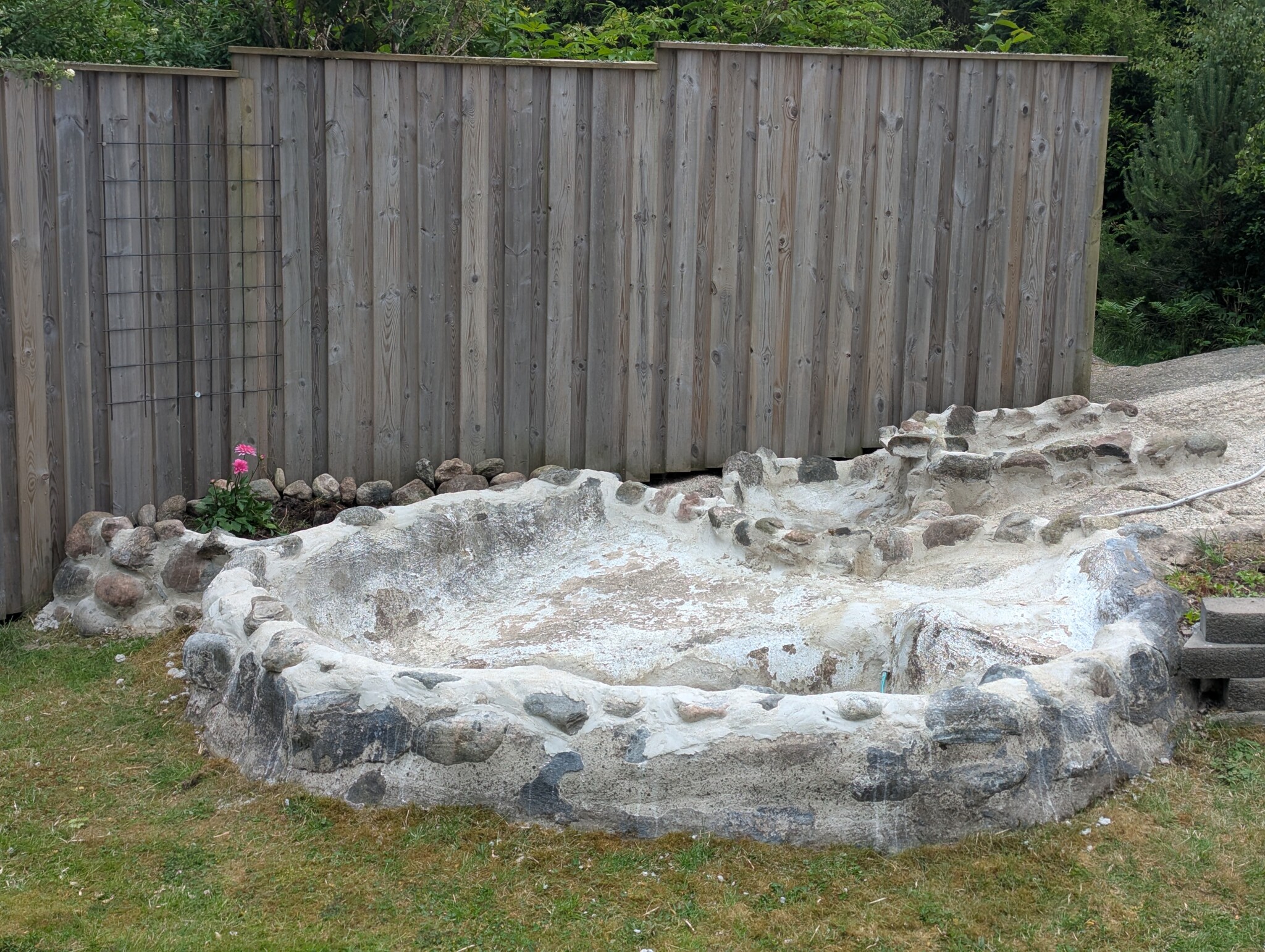


Mortar B contains a lot of lime and is quite porous. It does not survive hard frost if it is exposed to water, it cracks apart. For this reason, walls and masonry facades are always under a roof in our climate, otherwise they crack apart.
Oh dear, my uncertainty is punishing. Doesn't sound suitable to use in a pond.
The reason I chose this was that the contents list states that it only contains Cementbruk A and sand. If I understand correctly, Cementbruk A is the one suitable for outdoor use where there is high moisture load?
The reason I chose this was that the contents list states that it only contains Cementbruk A and sand. If I understand correctly, Cementbruk A is the one suitable for outdoor use where there is high moisture load?
Not quite. You would need to check the ingredients list of your product. I can only guess here.J jlsys said:Oh no, my uncertainty is punishing me. It doesn't sound suitable to use in a pond.
The reason I chose this was because the ingredients list states that it only contains Cement Mortar A and sand. If I understand correctly, Cement Mortar A is what is suitable for outdoor use where there is a high moisture load?
But usually, the cement clinker is mixed with ground limestone in A-mortar. This is done to obtain a stickier mortar that sets more slowly and is better suited for preparing masonry and rendering mortar. Such mortar is not great in frost-prone environments due to the lime.
What you want for unprotected outdoor structures is pure cement mortar (maybe you already have that?). It only contains cement clinker and sand. It's not much fun to lay bricks or plaster with; it's practically concrete without the concrete's coarser aggregate. In practice, you can use bagged concrete (but warning - sometimes the cement content is quite low to save money for the company that manufactures it).
Click here to reply