
Hello,
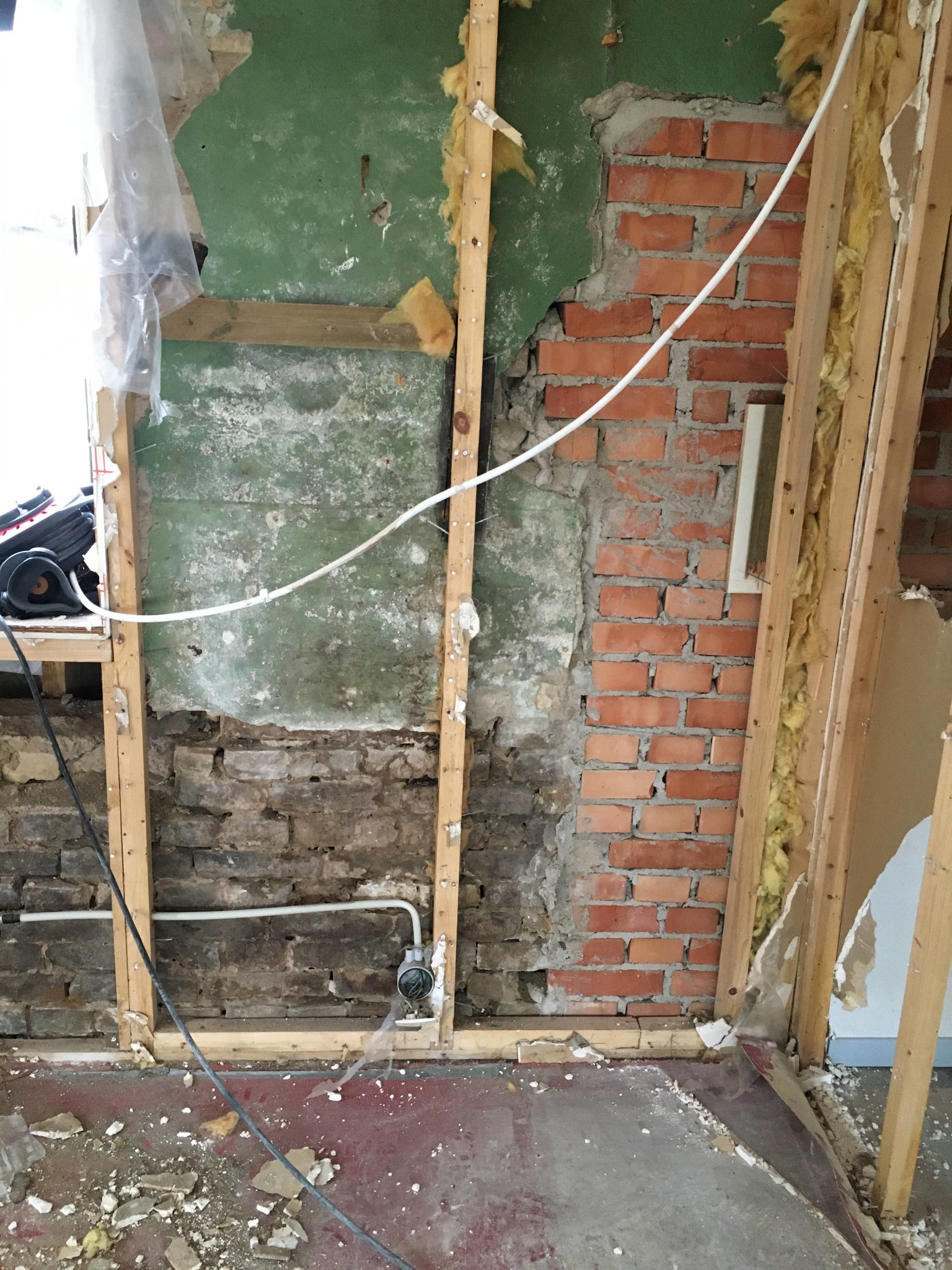
Today I tore down the plaster on an interior wall in my old house and noticed that the bricks (the old ones on the left from the 1930s) looked damp. This was not noticeable on the plaster. There were also many ants crawling through the joints.
Do you think the ants could have caused the moisture on the bricks, or is it coming from the foundation below? They also brought in some soil.
The bricks on the right are not damp. They are probably from the 1980s.
Additional info: Crawl space
Regards
Today I tore down the plaster on an interior wall in my old house and noticed that the bricks (the old ones on the left from the 1930s) looked damp. This was not noticeable on the plaster. There were also many ants crawling through the joints.
Do you think the ants could have caused the moisture on the bricks, or is it coming from the foundation below? They also brought in some soil.
The bricks on the right are not damp. They are probably from the 1980s.
Additional info: Crawl space
Regards


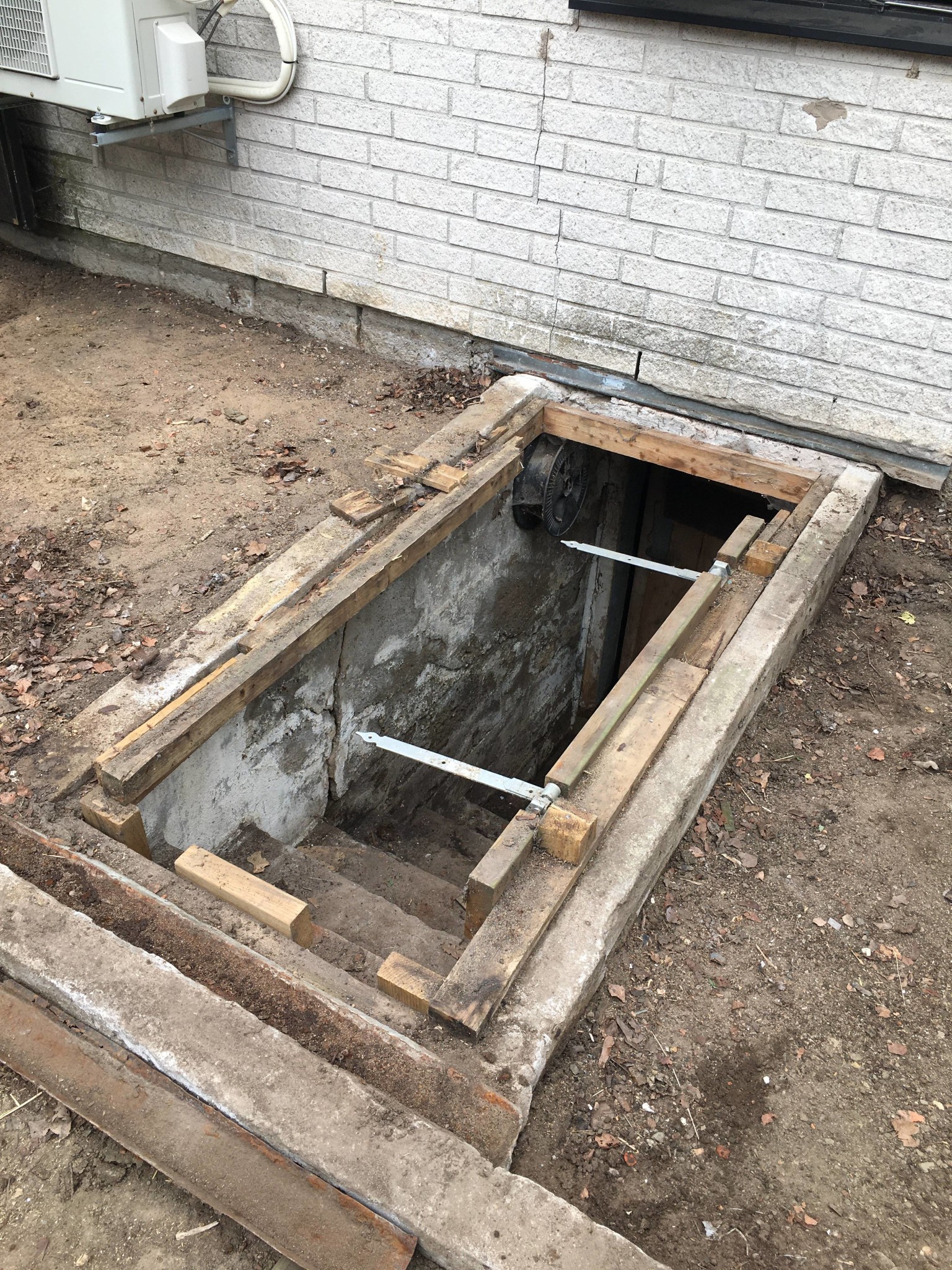
The exterior looks good, except for a crack in the brick. This is an old brick house (1929) that was later "clad" with mexisten (1978).
The previous problem was that water was running toward the house instead of away from it as it does now. This has caused water to run down the stairs in the crawl space, which is located diagonally under this damp stone. I suspect that the moisture has arisen in this way.
The crawl space does not feel rotten or anything, but the foundation wall here underneath is damp.
The previous problem was that water was running toward the house instead of away from it as it does now. This has caused water to run down the stairs in the crawl space, which is located diagonally under this damp stone. I suspect that the moisture has arisen in this way.
The crawl space does not feel rotten or anything, but the foundation wall here underneath is damp.
Okay! 
I don't know when the drainage was last done. The thing is, if you look at the sides of the stairs, it's not the gravel that surrounds the house but it is cast from the house's outer wall about a meter out to a wall.
My guess is that an old house previously stood here, but I have no info about it.
When I bought the house, the crawl space was full of stuff, and I mean full! This has now been cleared out, so it should at least help. All the interior walls otherwise look good. It's just right at this spot by the stairs.
I don't know when the drainage was last done. The thing is, if you look at the sides of the stairs, it's not the gravel that surrounds the house but it is cast from the house's outer wall about a meter out to a wall.
My guess is that an old house previously stood here, but I have no info about it.
When I bought the house, the crawl space was full of stuff, and I mean full! This has now been cleared out, so it should at least help. All the interior walls otherwise look good. It's just right at this spot by the stairs.
Aha, there's the answer! So does the basement staircase lead to a non-existent basement?
Of course, there is no drainage under that old basement staircase. If you fix that, you'll probably solve the problem. Perhaps the staircase can be removed if there's no basement and only a crawl space?
Of course, there is no drainage under that old basement staircase. If you fix that, you'll probably solve the problem. Perhaps the staircase can be removed if there's no basement and only a crawl space?
The basement stairs lead to today's crawl space. But as you mentioned, it was probably a basement earlier. There's an old wood stove in the crawl space that seems to have been there for a very long time.
Removing the stairs feels like quite an extensive intervention, but it might be the only solution.
Since it's cast from the house and extends as far out as the stairs do on this side of the house, I'm a bit uncertain about how to be able to drain. Is it just a matter of breaking everything up and redoing it?
Couldn't one drain outside this cast section?
Removing the stairs feels like quite an extensive intervention, but it might be the only solution.
Since it's cast from the house and extends as far out as the stairs do on this side of the house, I'm a bit uncertain about how to be able to drain. Is it just a matter of breaking everything up and redoing it?
Couldn't one drain outside this cast section?
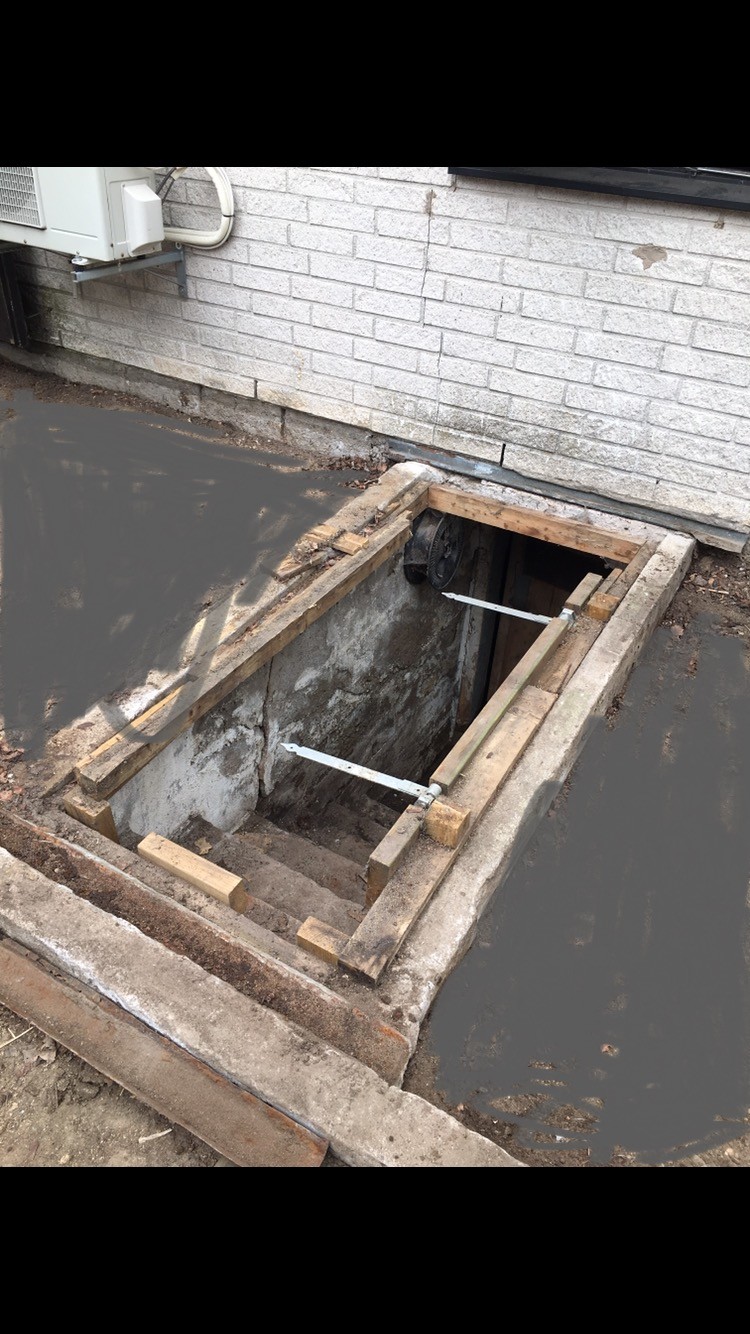
Yes, I'm uncertain about the construction of the slab under the house. At the same height as the house and extending as far out as the stairs, it is concrete (see the gray area in the image), but do you think the concrete goes all the way down to the bottom of the stairs, that is, to the bottom of the crawlspace?
How can this be most easily drained without having to break away several cubic meters of concrete?
The concrete at ground level extends about two meters to either side of the stairs.
How can this be most easily drained without having to break away several cubic meters of concrete?
The concrete at ground level extends about two meters to either side of the stairs.
Click here to reply