
Hello,
Completely new here and not sure if I'm posting in the most sensible category.
We've found a house we've fallen in love with, a house from '78 with extensive renovation needs. We've received the transfer inspection and it shows a bit of everything.
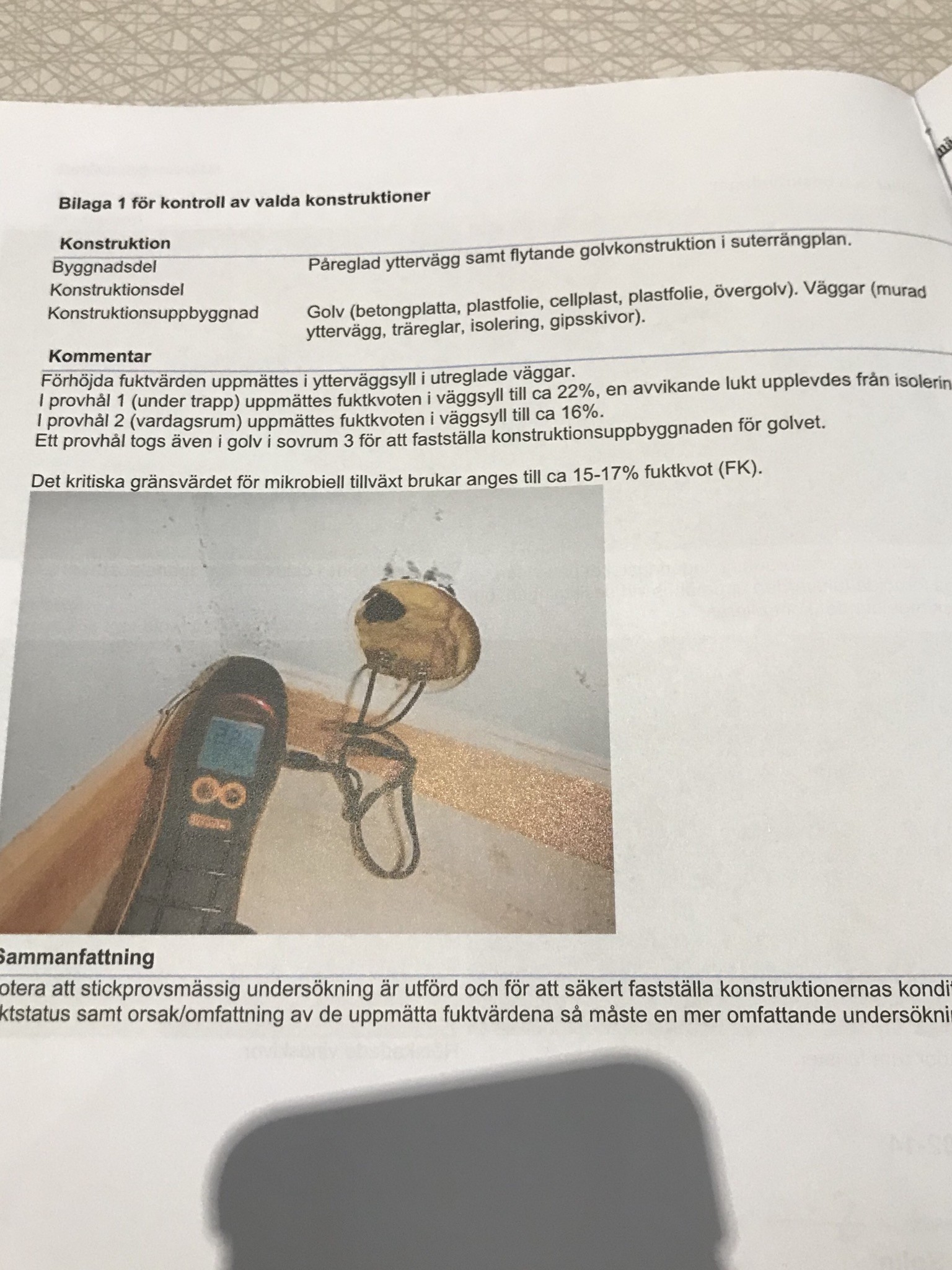
The basement needs some love, internally and probably new drainage. Can someone with experience or knowledge share their thoughts on this section below? We want to believe, or maybe delude ourselves, that maybe it's just the insulation that's damp and that the concrete wall is still relatively okay since the values aren't very high, right? I need advice from you! I understand it's impossible to say exactly how it is in this house...
Our spontaneous thought is to tear out everything in the basement - such as drywall, insulation, wooden studs, plastic mats in wet areas, and the floor down to the concrete slab on the entire plane... make sure the concrete slab is clean from any leftover sawdust, among other things.
Plaster the walls in the recreation room, laundry room & bathroom. In the recreation room and laundry room, we'll then paint with plaster paint, and in the bathroom, we'll tile. The floor in the laundry room will also be bare concrete; I guess there is suitable paint for concrete floors that can breathe? There's an interior wall to be built between the laundry room and bathroom - can you use steel studs and moisture-resistant drywall?!
Planton mat and floor or alternatively a breathable carpet in the recreation room. The bedrooms are above ground - do we need to consider anything special there as well, with the interior walls? There are three bedrooms side by side, so maybe it's nice to insulate them in some way. Most likely the floors will have breathable carpet and ventilated baseboards, just like the recreation room.
Help me! Bring thoughts, advice, and tips!
Thank you so much in advance!
Completely new here and not sure if I'm posting in the most sensible category.
We've found a house we've fallen in love with, a house from '78 with extensive renovation needs. We've received the transfer inspection and it shows a bit of everything.
The basement needs some love, internally and probably new drainage. Can someone with experience or knowledge share their thoughts on this section below? We want to believe, or maybe delude ourselves, that maybe it's just the insulation that's damp and that the concrete wall is still relatively okay since the values aren't very high, right? I need advice from you!
I understand it's impossible to say exactly how it is in this house...Our spontaneous thought is to tear out everything in the basement - such as drywall, insulation, wooden studs, plastic mats in wet areas, and the floor down to the concrete slab on the entire plane... make sure the concrete slab is clean from any leftover sawdust, among other things.
Plaster the walls in the recreation room, laundry room & bathroom. In the recreation room and laundry room, we'll then paint with plaster paint, and in the bathroom, we'll tile. The floor in the laundry room will also be bare concrete; I guess there is suitable paint for concrete floors that can breathe? There's an interior wall to be built between the laundry room and bathroom - can you use steel studs and moisture-resistant drywall?!
Planton mat and floor or alternatively a breathable carpet in the recreation room. The bedrooms are above ground - do we need to consider anything special there as well, with the interior walls? There are three bedrooms side by side, so maybe it's nice to insulate them in some way. Most likely the floors will have breathable carpet and ventilated baseboards, just like the recreation room.
Help me! Bring thoughts, advice, and tips!
Thank you so much in advance!
It sounds like you've already understood what applies, and your solutions seem wise. Uncovered concrete/plaster and inorganic materials with paint or other breathable surface coatings.
I don't believe there's any durable floor paint that breathes. But if you don't have an extremely wet slab, tiles should work well in the laundry room. They breathe in the joints.
When it comes to wet rooms in basements, there are different schools of thought. Some say waterproofing at least in the shower zone, others not. But that's just a detail in the context, and by the time it becomes relevant, you will have had time to read up on it or get help from a professional.
If you don't have very wet ground and drainage and water from gutters is properly diverted, it might not even be necessary to drain. With the solutions you suggest, the wall can handle some moisture, and you'll never achieve complete dryness as the slab is most likely in contact with the ground.
I would build the inner wall with leca blocks and plaster it.
I don't believe there's any durable floor paint that breathes. But if you don't have an extremely wet slab, tiles should work well in the laundry room. They breathe in the joints.
When it comes to wet rooms in basements, there are different schools of thought. Some say waterproofing at least in the shower zone, others not. But that's just a detail in the context, and by the time it becomes relevant, you will have had time to read up on it or get help from a professional.
If you don't have very wet ground and drainage and water from gutters is properly diverted, it might not even be necessary to drain. With the solutions you suggest, the wall can handle some moisture, and you'll never achieve complete dryness as the slab is most likely in contact with the ground.
I would build the inner wall with leca blocks and plaster it.
If you want to do it wisely from the beginning, start with drainage from the outside. There are solutions with ventilated floors, insulating hygroscopic materials, or plaster with similar properties. Regardless, the moisture will migrate, and if you've not addressed the root problem, I consider the available options to be artificial respiration, even if these solutions do their job. Begin with drainage. Then, check what will be needed internally. There are no given models. If you drain, you can insulate externally, and that is the method that has proven to work best. The slab underneath can improve from this procedure, but there will probably still be moisture unless you break it up and insulate it too. However, this is a much more laborious procedure. Depending on how much moisture remains, you can do different things to circumvent this issue. If you choose not to address it, I would just plaster the wall internally with hygroscopic lime plaster and use tiles on the floor. Insulating internally in a basement is asking for trouble unless you choose a solution with an air gap and fan system.
Last edited:
Thank you so much! We will further investigate this drainage issue if the house becomes ours, for sure. Regardless, the basement floor must be emptied... nothing has been done since the '70s.Silver78 said:
If you want to be wise from the start, you should begin with drainage from the outside. There are solutions with ventilated floors, insulating hygroscopic materials, or a plaster with equivalent properties. Regardless, moisture migrates, and if you haven't addressed the root problem, I consider the available alternatives to be artificial respiration even if these solutions do their job. Start with drainage. Then check what will be needed inside. There are no predetermined models. With drainage, you can insulate externally, and that is the method that has proven to work best. The slab underneath may improve from this intervention, but moisture will probably remain unless you break it up and insulate it too. However, it's a much more labor-intensive intervention. Depending on how much moisture remains, there are various ways to work around this problem.
Thank you so much! It feels good to have confirmation that we've grasped the basement world, it was new to us just a week ago.H Henrik.S said:I think it sounds like you already understand what's required, and your solutions seem wise. Bare concrete/plaster and inorganic materials with paint or other breathable finish.
I don't think there's any durable floor paint that's breathable. But if you don't have an extremely damp slab, tiles will probably be good in the laundry room. It breathes in the joints.
As for wet spaces in basements, there are different schools of thought. Some say waterproofing at least in the shower zone, others not. But that's a detail in the context, and before it becomes necessary, you will have had time to read up or get help from a professional.
If you don't have very wet ground and drainage and water from gutters are directed away properly, it's not even certain you actually need to drain. With the solutions you suggest, the wall can handle some moisture, and you'll never get it completely dry since the slab is most likely in contact with the ground.
I would build the interior wall in Leca blocks and plaster it.
Then the laundry room is probably going to be tiled too.
We sincerely hope to avoid draining; if the house becomes ours, we will investigate the matter thoroughly, with help, to see if it seems necessary or not. No one on the street has done it as far as we understand. Additionally, it’s an estate sale - it's been without ventilation and heating in the basement for a while as we understand and that contributes to the dampness. Once again, thank you so much!
A little tip is to also get more knowledge through course literature. When you turn to different companies for suggestions, they are often bound by various brand-specific solutions and, of course, their product is better than everyone else's.M marliie said:
If there are cultural interests you want to preserve, the building preservation association is great for the maintenance of older buildings.
HelloM marliie said:Thank you so much! It feels reassuring to have confirmation that we have grasped the basement world, which was new to us just a week ago. Then the laundry room might need to be tiled as well. We sincerely hope to avoid drainage, if the house becomes ours, we will thoroughly investigate the matter, with help, to see if it seems necessary or not. From what we understand, no one on the street has done it. It should be noted that it's an estate sale - it has been without ventilation and heating in the basement for a while, which we understand adds to the humidity. Once again, thank you so much!
Since it's an old estate sale and a damp semi-basement wall, I would really recommend drainage with external additional insulation and that you review the roof drainage and possibly melting water from the hill the house is located on first!!!
Then remediate the basement/ sv!
The problem in sv slab is wood directly against concrete and possibly all such needs to be addressed?
Smell when it's humid indicates mold and then total remediation of damaged and affected areas is necessary!
Immediately separate the floors with construction plastic and install a construction dryer, note that mold spreads when dry so immediately remediate affected areas while they are still damp.
Construction of drainage and insulation outside Platon mat is recommended then you avoid some issues that isodrän solutions suffer from especially in semi-basement solutions.
Poorly insulated concrete slab is a nuisance both in terms of moisture and temperature!!
Do not build away the height in the floor with insulation but build ventilated floors with Platon and install a heat pump with double indoor units one on each floor and install an FTX unit.
Make sure that the floors are ventilated with warm dry air so that warm humid indoor air cannot get to it.
Many thanks for the tips and advice! Great things to keep in mindB byggarätt said:Hello
Since it's an old estate and a damp crawl space wall, I would really recommend drainage with external additional insulation and that you review roof drainage and any meltwater from above the hill the house is on first!!!
Then decontamination of the basement/crawl space!
The problem with the crawl space slab is wood directly against concrete and possibly everything like that must be addressed?
Smell already when it is damp indicates mold and then complete decontamination is required of damaged and affected parts!
Immediately separate the floors with construction plastic and put in a construction dryer, note that mold spreads when it is dry so decontaminate affected parts immediately in a damp state
Construction of drainage and insulation outside Platon mat is recommended as you avoid some things that isodrän solutions suffer from, especially in crawl space solutions
Poorly insulated concrete slab is a nuisance in terms of both moisture and temperature!!
Do not build away the height in the floor with insulation but build ventilated floors with Platon and install an air source heat pump with double indoor units, one on each floor, and install an FTX unit
Ensure that the floors are ventilated with warm dry air so that warm humid indoor air does not reach
Click here to reply