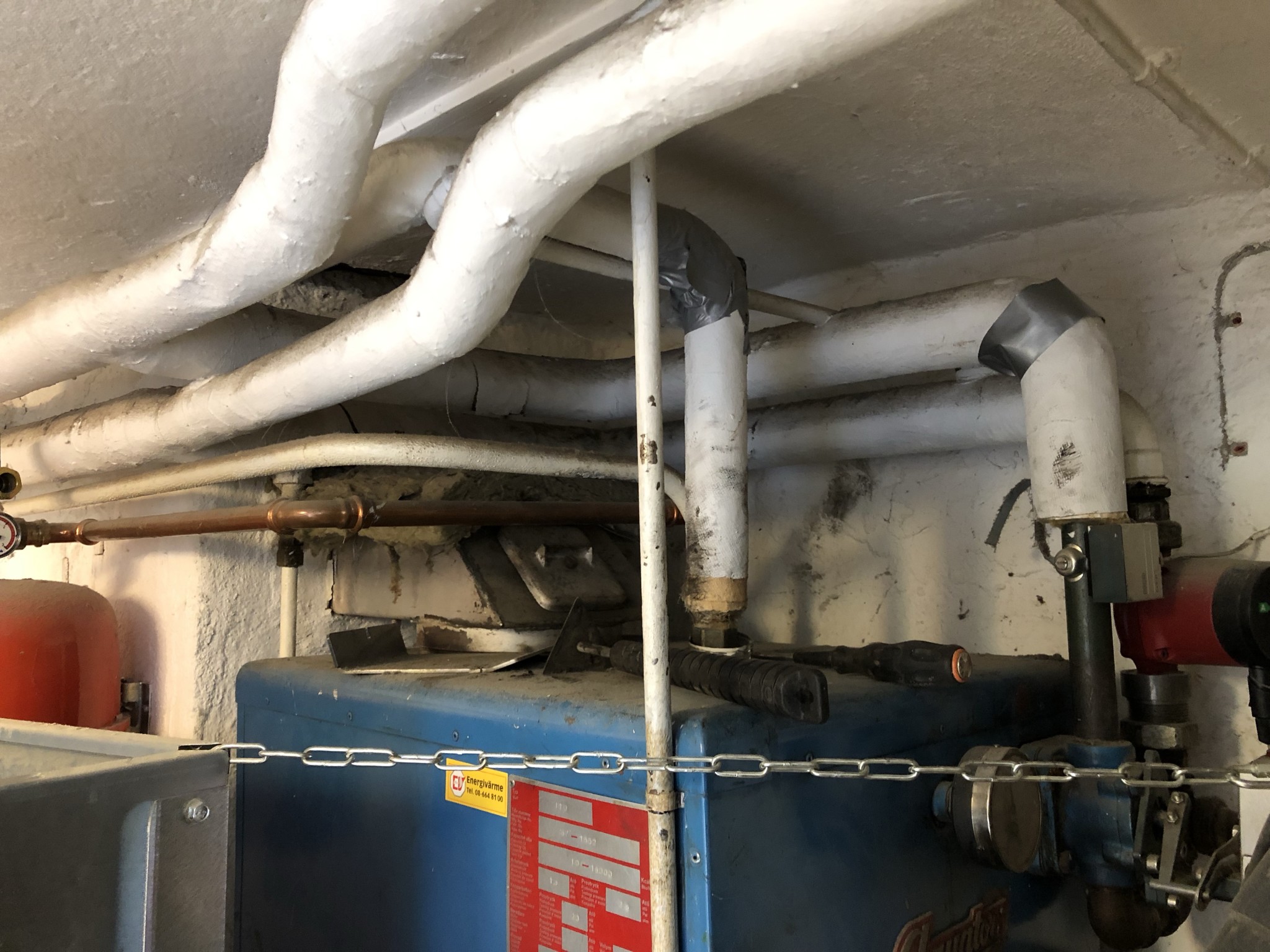
We have some pipe insulation that an inspector from a remediation company in the Stockholm area has determined contains asbestos. He never took samples but just stuck a utility knife through the casing at the pipe bend, and when he pulled out the knife there was white dust on the knife tip, he then said that this is guaranteed to be Asbestos. He also cut a hole on a straight section and said there was NO asbestos there.
I understand that one might assume it is very likely asbestos, but is it 100% certain that it is? Has other insulation been used in pipe bends over the years that looks the same when you stick a knife through it? I'm thinking of things like gypsum powder or others. What I'm considering is whether I should first send off the material for analysis before I order asbestos remediation from a firm. (I do want to disturb the "stuff" as little as possible if it's not useful) What do you think, should I just assume it’s asbestos and order remediation, or should I first ensure that it really is asbestos in the pipe bends?
Furthermore, a few firms have come with quotes and described how they will proceed to remediate the pipe insulation in our boiler room if I order the task from them.
2 firms will be using so-called Glove Bags. They will NOT be sealing off the room to minimize dust spread, nor will they use an airlock in and out of the boiler room through the basement door that leads directly into the boiler room.
1 firm has responded that they will "establish an area" (they will seal off an area in the room and use an airlock/vacuum to suck out dust from the room), but they will not use Glove Bags when removing the insulation.
Anyone with knowledge about which of the 2 proposed methods is preferable, that is, which leads to the least dust spread to adjacent rooms...
we will soon need to replace the boiler (the one we have today is from 1967), and with that, pipes will need to be cut/redirected, so I want to remove the insulation before then.
When I replaced my district heating system model year 1967, I had to prepare myself by wrapping the bends with plastic and taping them securely. Then the company came to replace the district heating and cut the pipes with a reciprocating saw on the straight sections. Wrapping and taping was a requirement to avoid the risk of asbestos spreading when handling the pipe stubs. The replacement was subsidized by the district heating provider instead of rebuilding the system for remote reading. It was a package that included the demolition and removal of the old system and the installation of the new one. Asbestos remediation was not included, but since I made the necessary preparations, there were no delays.
Cut the pipes on the straight sections where there is no asbestos and take them to the dump.
That's what the plumber did with me, cut where it wasn't covered, then I went to the dump's asbestos drop-off myself... However, I still have pipes left that shouldn't be replaced. Considering just leaving them as they are...
Cut the pipes on the straight sections where there is no asbestos and take them to the dump.
It sounds like a pragmatic solution.
Wrap and tape all pipe bends, and then go to town with the angle grinder or reciprocating saw on the straight sections/distributors that are uninsulated and only painted white.
Then comes the next question, what should I replace the current iron pipes with? Copper? Another type of pipe? I recall reading that you should use the right type of pipes and combine them with old iron pipes to avoid any form of reaction!?
Many are switching to plastic, have understood that it is important to use gas-tight pipes in radiator systems, not just drinking water pipes, because oxygen should not enter the system.
Many switch to plastic, have understood it is important on radiator systems to use gas-tight pipes, not just potable water pipes, because oxygen should not enter the system.
Type Uponor's CombiPEX? (we have these pipes as underfloor heating loops in some rooms)
At my place, they ran a mix of plastic and metal. Exposed metal. Copper is expensive, but maybe worth it since running it at work is even more expensive. In closed radiator systems, copper is probably overkill, as they hardly rust because there's no oxygen...
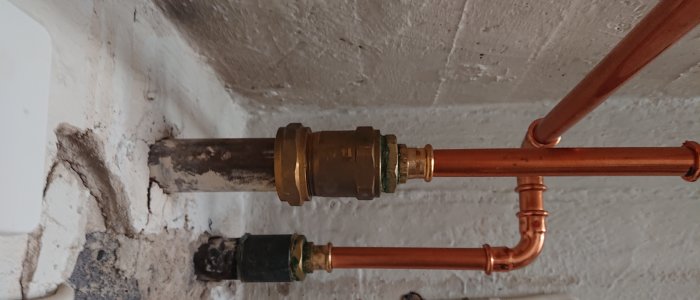
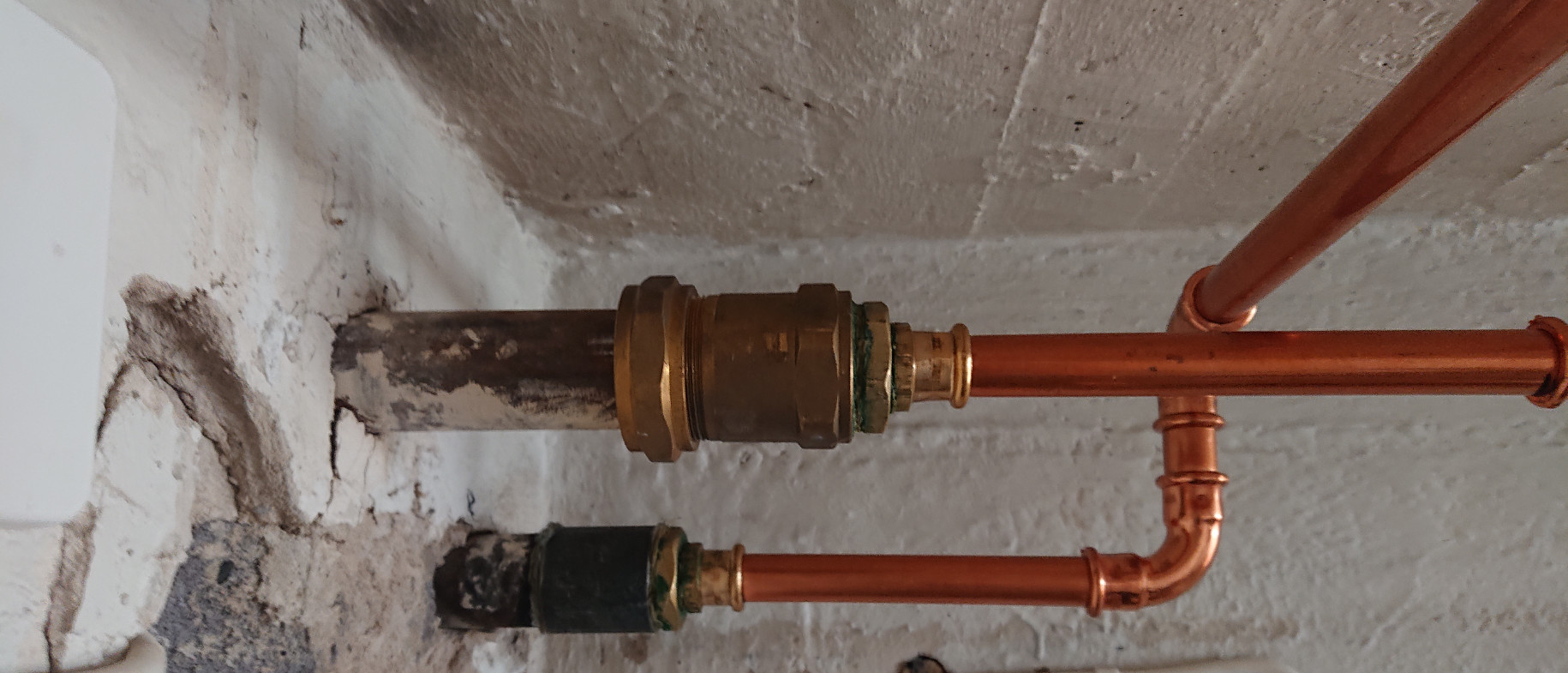
This is how my connection looks between the new part with copper and press fitting and the old heating system (1951, oil fired).
One has to consider that all radiators are iron and the temperature control housing/thermostat housing is brass, so there has always been a mix of metals regardless of the pipe type.


useless said: