
Does anyone know what material these wall panels are made of? Found in an old closet in a house built in 1893, but certainly renovated in stages over the years. The material feels brittle and a bit "soft." The panel appears to be painted with a blue/green color. Wondering if the material might possibly contain asbestos. Grateful if anyone has any ideas!
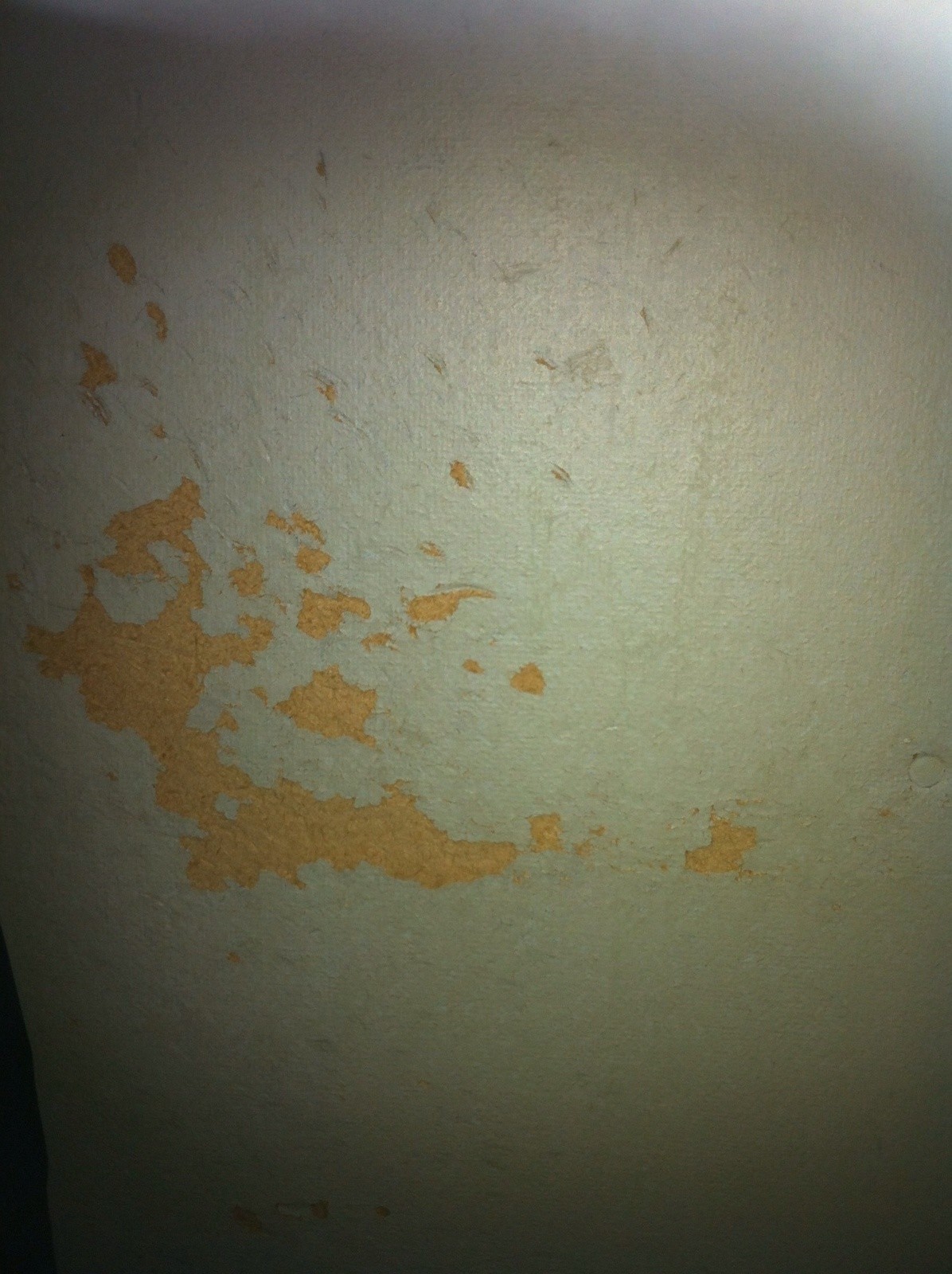
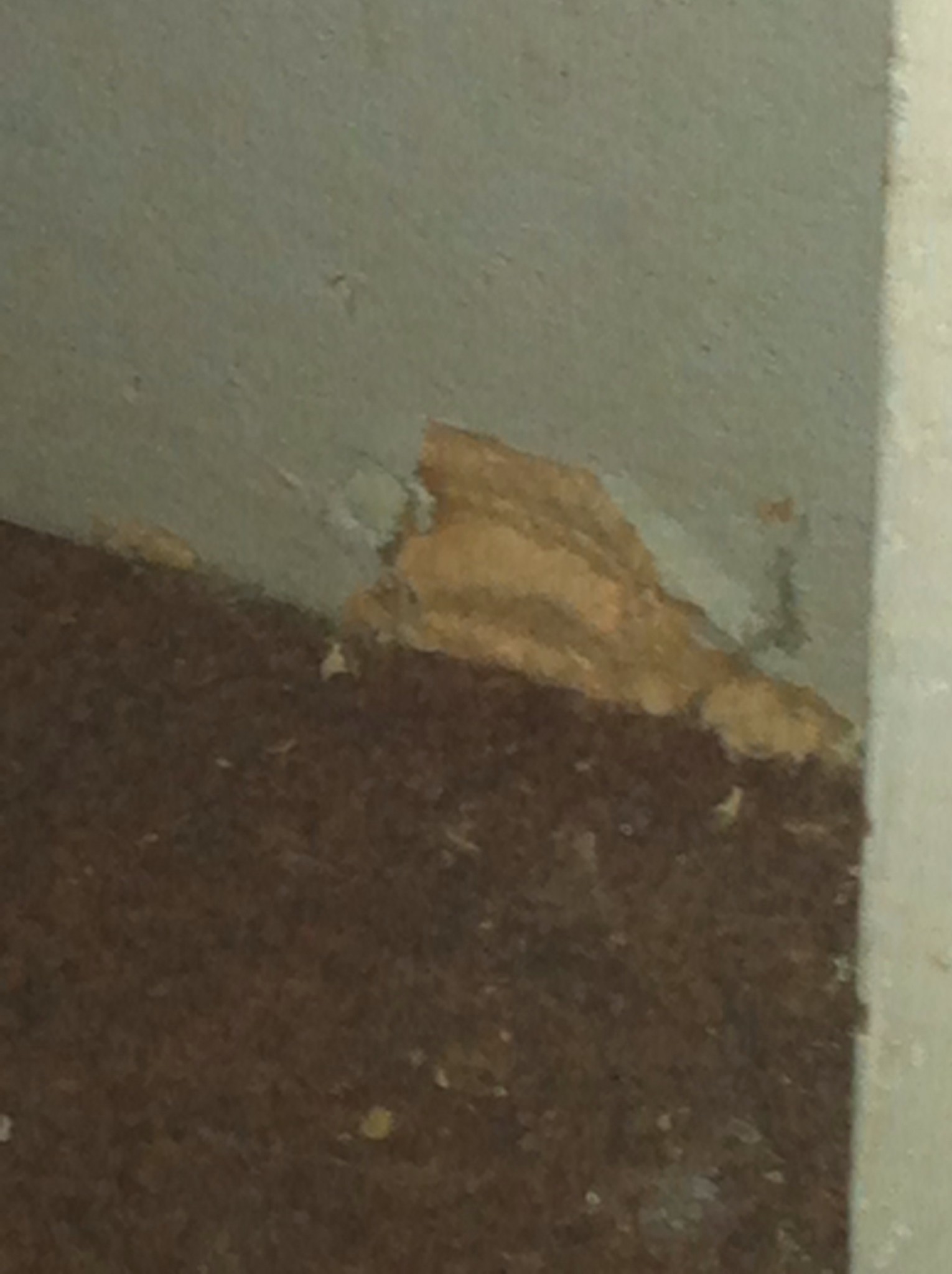


Can Tretex boards have different thicknesses? I believe this board is quite thin, while I have thicker Tretex in some ceilings. If you look closely at the top image, you can see a certain type of typical surface texture in the pattern. I thought it was some kind of thin brittle particleboard, but maybe Tretex can also have that kind of surface texture?! Is Tretex fibrous inside? And brown/beige? The bottom image looks like a mouse or something has gnawed at the material. Can particleboards contain asbestos? And is Tretex always free from asbestos? Thanks for your answer, by the way!
Tretex came in several different thicknesses. Can dust a lot when you remove them, so it's good to use a dust filter, otherwise completely harmless. They are brownish and can have different textures, no asbestos in chipboard either.Stina71 said:Can Tretex boards have different thicknesses? I believe that this board is quite thin, while I have thicker Tretex in some ceilings. If you look closely at the top picture, you can see a certain typical surface texture in the pattern. I got the impression that it's some kind of thin brittle chipboard, but maybe Tretex can also have such a surface texture?! Is Tretex fibrous inside? And brown/beige? The bottom picture looks like a mouse or something has gnawed through the material. Can chipboards contain asbestos? And is Tretex always free from asbestos? Thanks for your answer by the way!
Last edited:
Actually, I don't think any wallpaper was on the board. It looks like it has that surface texture directly under the paint. But maybe Tretex can have different surface textures?! This one almost looks a bit checkered.
By the way, what do you think about the paint? I know that some paint can contain asbestos, especially so-called textured paint.
I haven't been able to understand in which kind of paint asbestos can be found. Wall paint? Paint on old furniture?
Paint on old iron thresholds? Do you have any idea about this?
By the way, what do you think about the paint? I know that some paint can contain asbestos, especially so-called textured paint.
I haven't been able to understand in which kind of paint asbestos can be found. Wall paint? Paint on old furniture?
Paint on old iron thresholds? Do you have any idea about this?
When it comes to asbestos, you should be cautious mainly in the following cases:
1. Eternit panels on facades, roofs, or in old boiler rooms.
2. Insulation around old water pipes
3. Ventilation ducts made of eternit
4. Adhesive under old plastic flooring.
In all cases, completely harmless where it is and only a health risk when the material is broken.
Do yourself a favor and consider everything else in the house completely harmless.
1. Eternit panels on facades, roofs, or in old boiler rooms.
2. Insulation around old water pipes
3. Ventilation ducts made of eternit
4. Adhesive under old plastic flooring.
In all cases, completely harmless where it is and only a health risk when the material is broken.
Do yourself a favor and consider everything else in the house completely harmless.

Diversearbetare
· Göteborg
· 11 276 posts
5. Old linoleum floor tiles.MathiasS said:
Diversearbetare
· Göteborg
· 11 276 posts
Thank you for your good advice!
Regarding asbestos, I personally, due to sheer ignorance, have been involved in tearing out old flooring with asbestos both in the carpet and the backing paper/glue underneath... Not good at all! We were simply uninformed. Since no one thought of asbestos then, the floor wasn't cleaned/remediated before a new click floor was laid on top. The floor layer was also really careless and left remnants of the old torn paper under the floor. Not to mention all the loose asbestos fibers that surely remain underneath.. Where the floor meets the baseboard, there are quite wide gaps, sometimes definitely over a centimeter. Quarter round should go there, but it was never done. What do you think? Asbestos fibers that were released when the old carpet was torn out and are gradually coming through the gaps? What would you have done? Torn up the newly laid floor. Remediated underneath? Or hope that the fibers remain relatively still under the floor and leave it as it is?
Regarding asbestos, I personally, due to sheer ignorance, have been involved in tearing out old flooring with asbestos both in the carpet and the backing paper/glue underneath... Not good at all! We were simply uninformed. Since no one thought of asbestos then, the floor wasn't cleaned/remediated before a new click floor was laid on top. The floor layer was also really careless and left remnants of the old torn paper under the floor. Not to mention all the loose asbestos fibers that surely remain underneath.. Where the floor meets the baseboard, there are quite wide gaps, sometimes definitely over a centimeter. Quarter round should go there, but it was never done. What do you think? Asbestos fibers that were released when the old carpet was torn out and are gradually coming through the gaps? What would you have done? Torn up the newly laid floor. Remediated underneath? Or hope that the fibers remain relatively still under the floor and leave it as it is?



Asbestos is not deadly, if you aren't daily engaged in its removal!
For a long time, asbestos was present in brake pads and brake linings, which car mechanics replaced and simultaneously cleaned before new ones were fitted using compressed air. This dust was also released along the roads...
In everyday life, as previously described, asbestos appeared in many different materials. Therefore, you shouldn't worry too much. Be cautious and use a respirator when you feel uncertain.
There are significantly more dangerous things in your surroundings that can harm your health and even cause death.
For a long time, asbestos was present in brake pads and brake linings, which car mechanics replaced and simultaneously cleaned before new ones were fitted using compressed air. This dust was also released along the roads...
In everyday life, as previously described, asbestos appeared in many different materials. Therefore, you shouldn't worry too much. Be cautious and use a respirator when you feel uncertain.
There are significantly more dangerous things in your surroundings that can harm your health and even cause death.
Click here to reply