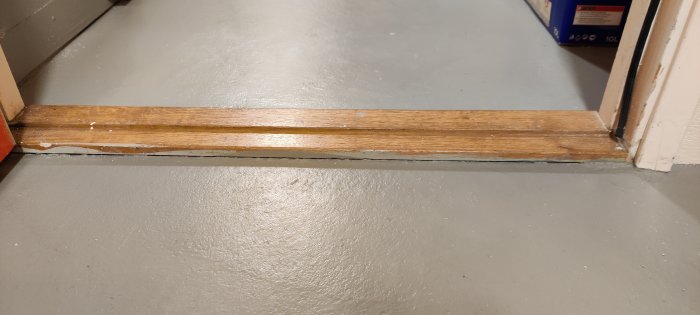
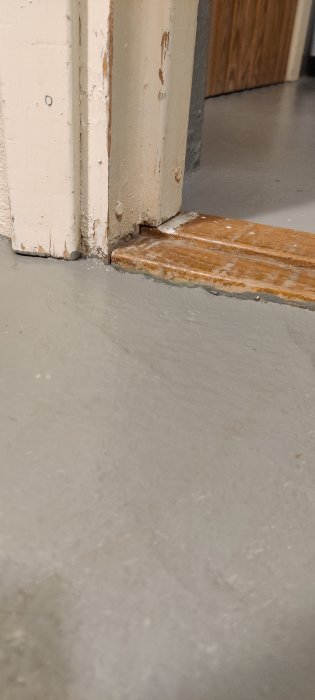
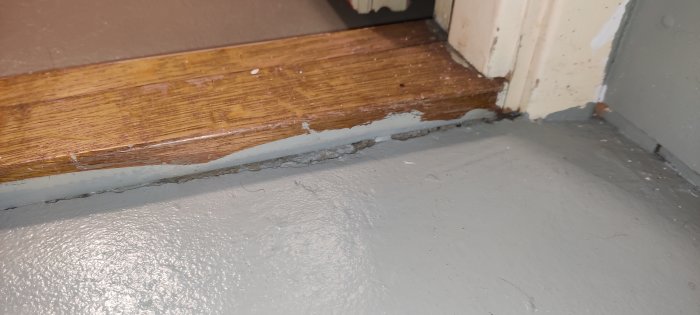
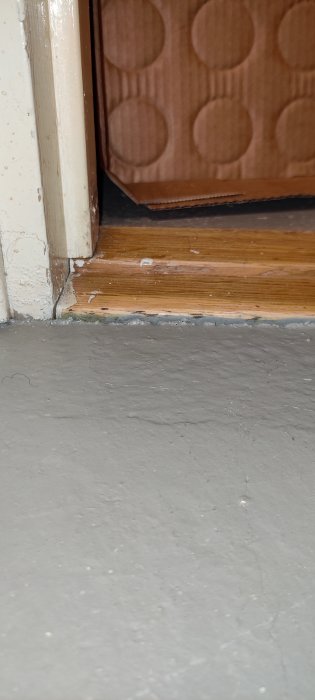
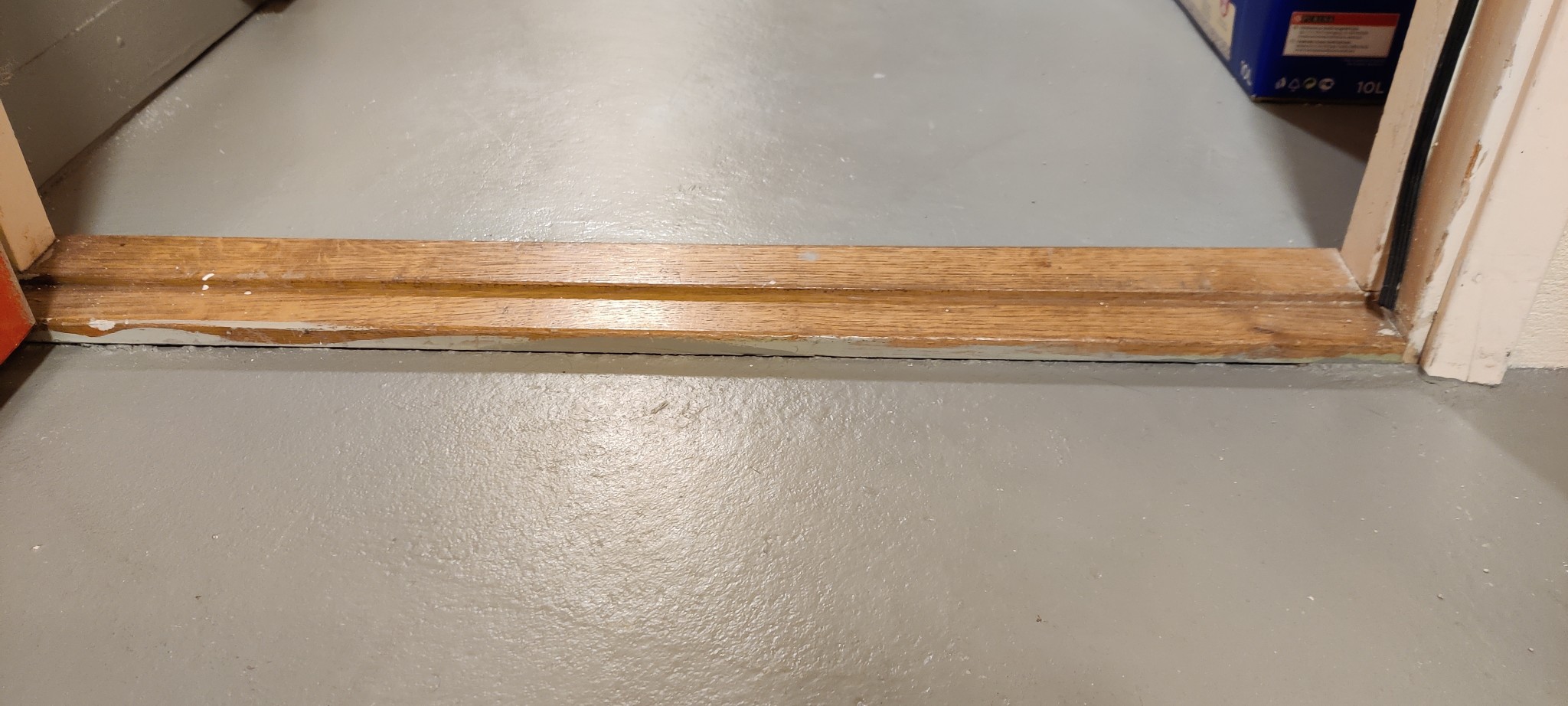
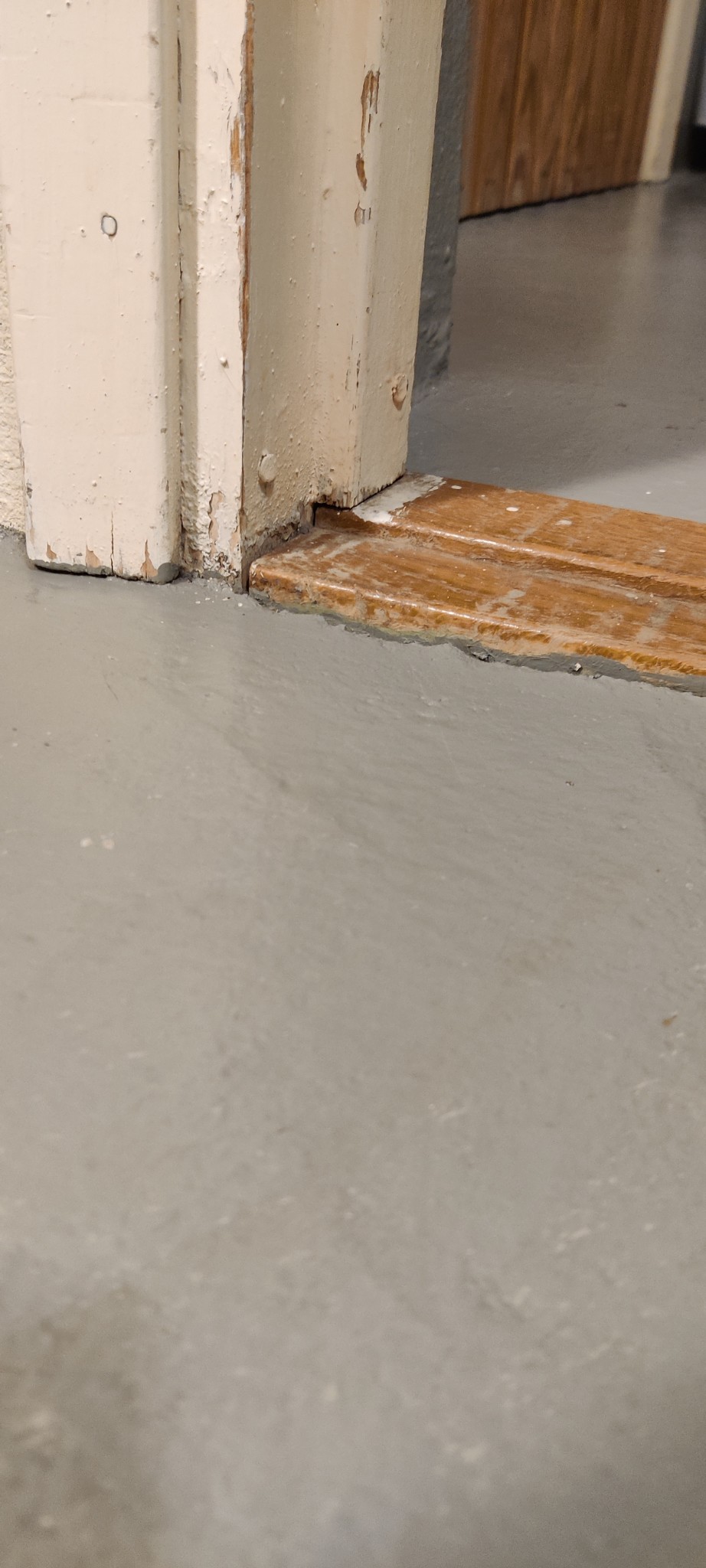
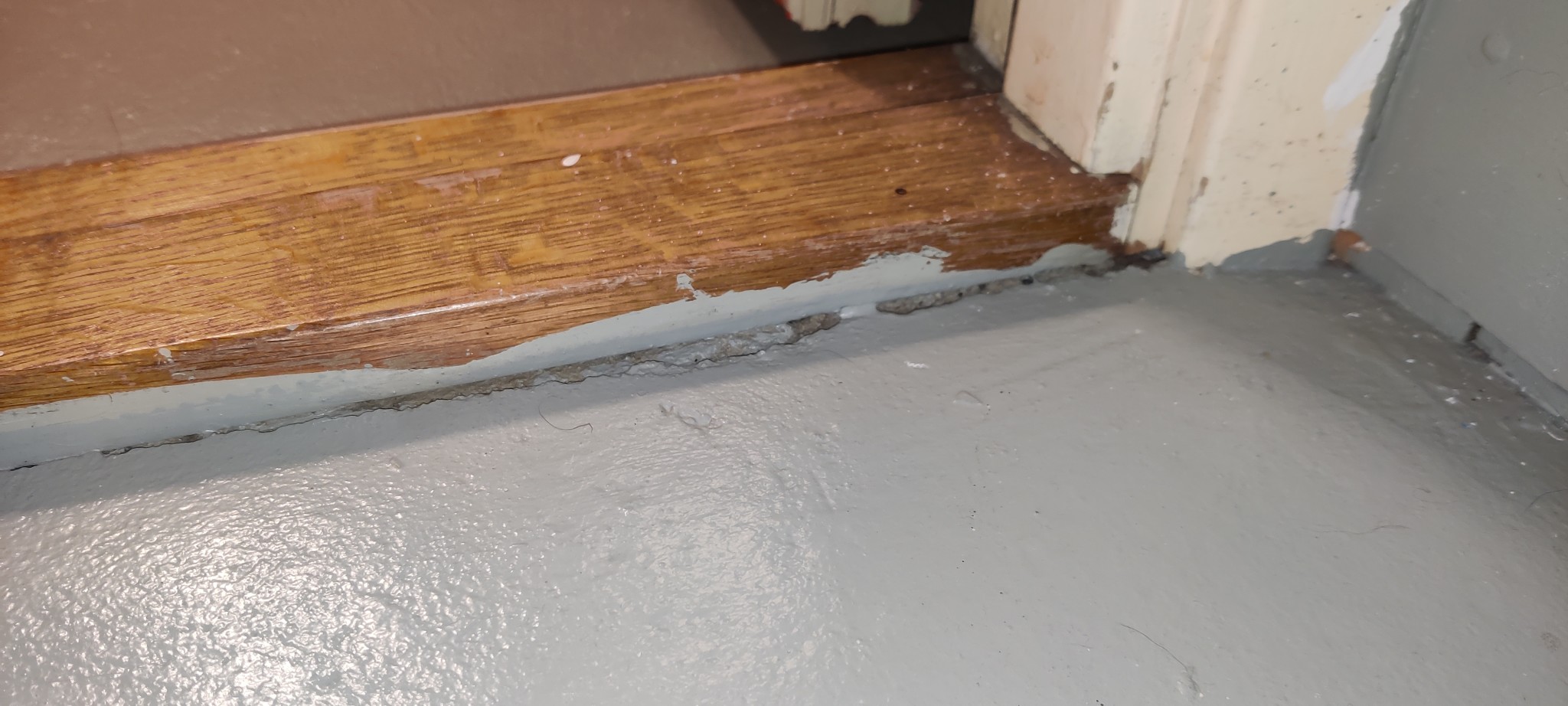
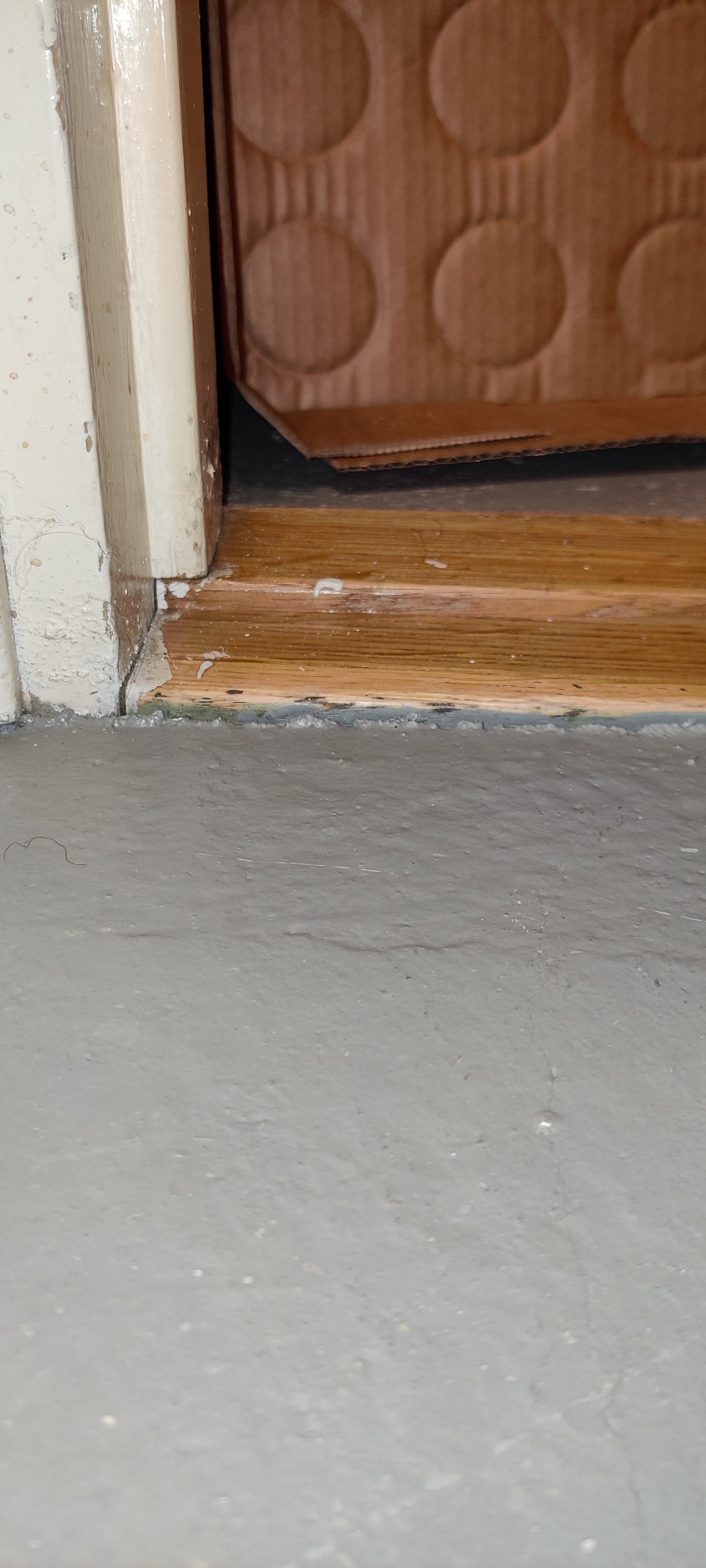
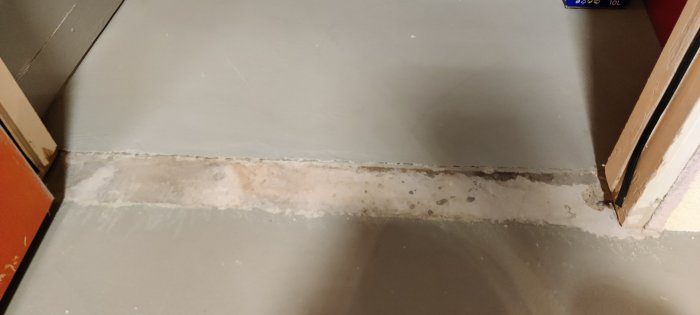
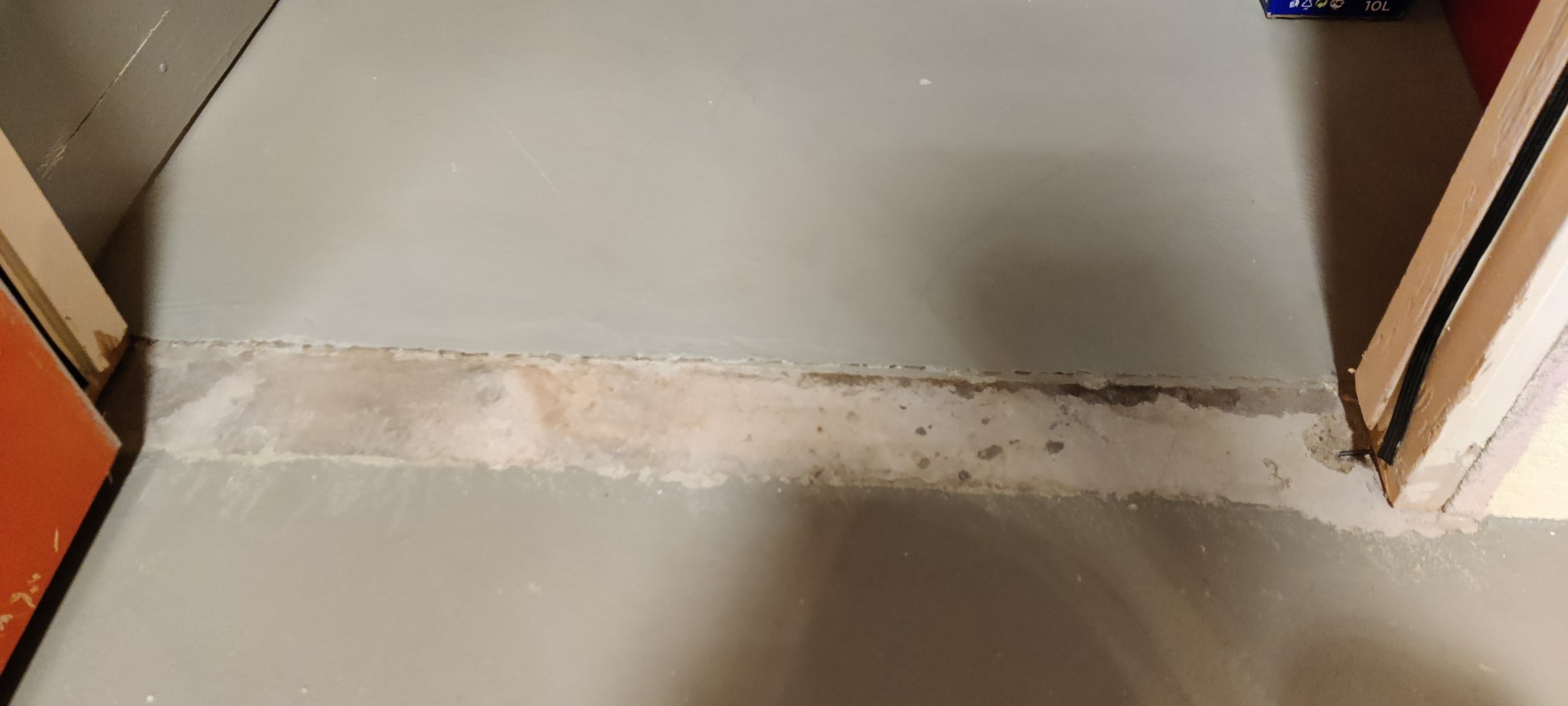
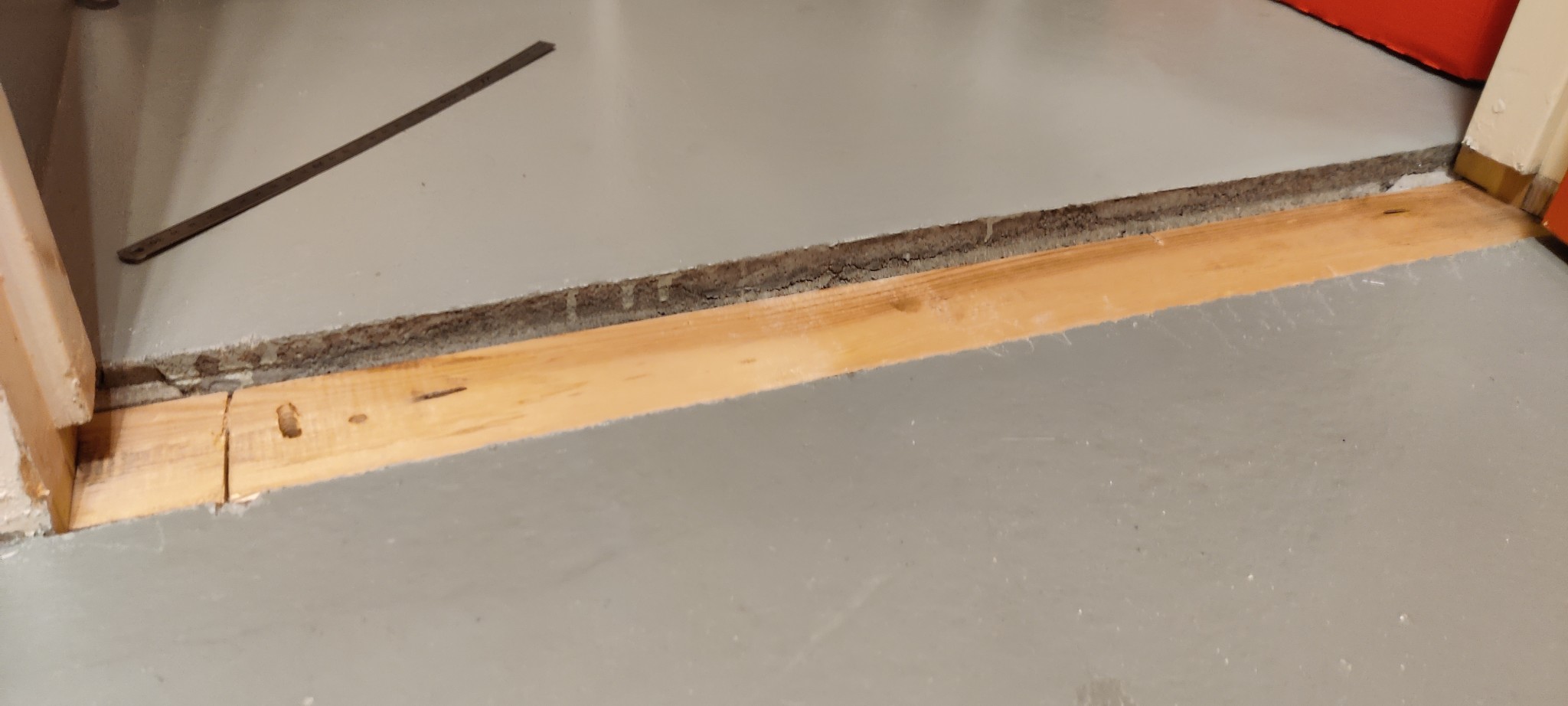
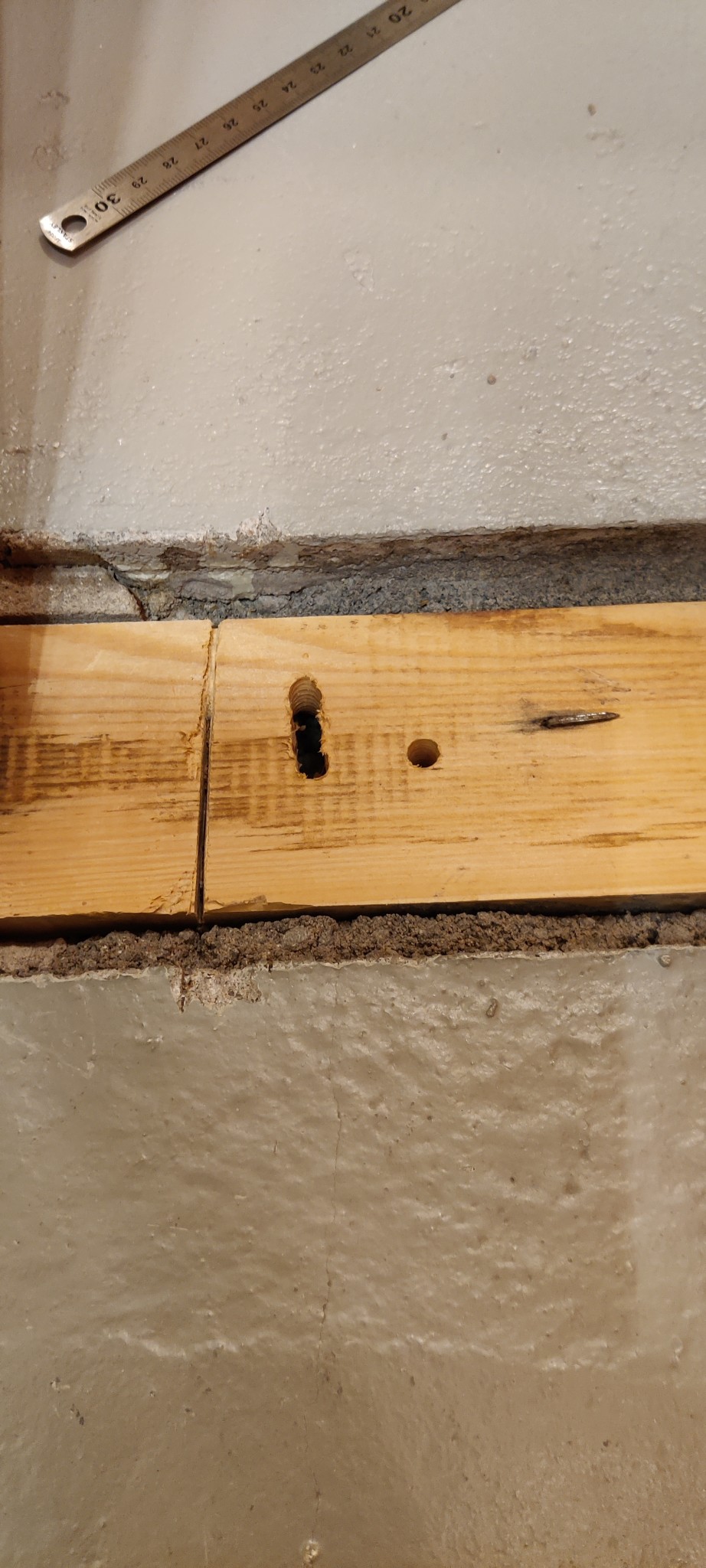
I have been asked by the rest of the family to paint and freshen up a couple of rooms in the basement, and the other day we bought paint to paint the ceiling, walls, floor, door frames + trim, and interior doors. But then we came to the thresholds that look really worn out and that I'm a bit puzzled about.
As you can see in the pictures here, all the thresholds have different levels in relation to the floors. I suspect that the thresholds originally lay directly on the slab and that the floors were cast to the current level after the thresholds and door frames were put in place.
All the thresholds creak to varying degrees when you walk on them, which sounds quite bad. There are also very large and rather unsightly cracks against the floor where I've seen more than one silverfish scuttle away when you get close.
I wonder if anyone has had the same problem and what you might have done about it?
I've considered replacing the threshold with a new one level with the floor, which might be challenging with the interior doors but would look fresher.
An alternative would be to remove the threshold and cast a bit underneath the existing threshold to make it level with the existing floors, but then the interior doors would be too short in some places.
Are there any advantages to having thresholds versus not having them?
I think it looks about the same as it did at our place.
The door frames were put in place at the same time as the wall was built up, the side pieces go down under the threshold, underneath there was a stud that held the side pieces together and which the threshold was then nailed into.
Looks like we have pretty much the same conditions and the same colors in the original too, maybe we have houses from the same manufacturer, Götene-hus?
We also have an activity to ensure airflow between rooms as we are going to install mechanical exhaust, so the plan is to remove existing thresholds, level and install new flat/low thresholds, and ensure there is a reasonable air gap at the bottom. There will be a bit of fiddling with the interior doors, but since they are going to be painted, it won't be much extra work.
Here's an update on the situation with the thresholds.
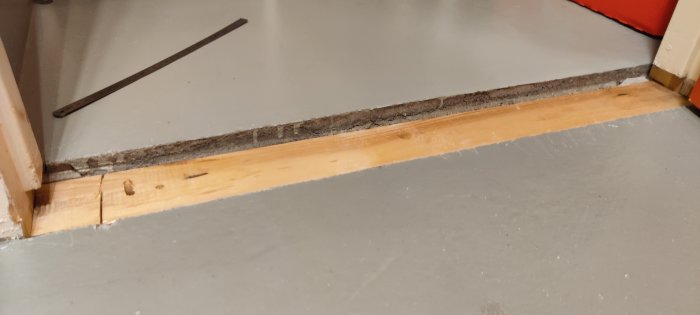
I have removed all the thresholds that lead into the room I plan to paint and tidy up. 3 thresholds were "embedded" in the floor while 1 sat entirely on top.
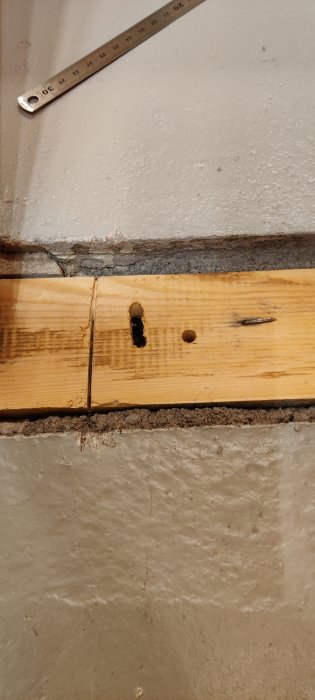
The reason I removed all the thresholds is that they were loose and creaky when walked on and they were worn out and impossible to sand and make nice.
Under the embedded thresholds, there was a board, which I guess is some kind of base of the frame. It seems to extend under the door frame on both sides.
My first plan was to apply some self-leveling compound in the hole and then put a new low threshold on top to cover the whole thing. However, this plank is just as loose and flexes when you walk on it, so I guess it won't hold in the long run. The plan now is instead to remove this plank as well and then fill the entire cavity up to the level of both floors and then put a new threshold on top. That should be what holds best in the long term. The floor levels are quite uneven on the different sides of the threshold "hole," so I'm currently thinking of choosing a level, filling the hole to that level, and then adjusting the threshold plate to the other level.
Does anyone have experience with something similar and can offer some wise advice?
Yes, remove the underlying wooden parts, there are probably wooden blocks underneath to align the frame and set it at the right height level.
Remove all wood that is below the floor level.
Cut off the frames flush with the existing floor, and use self-leveling compound/cast under the frames.
Click here to reply
Vi vill skicka notiser för ämnen du bevakar och händelser som berör dig.