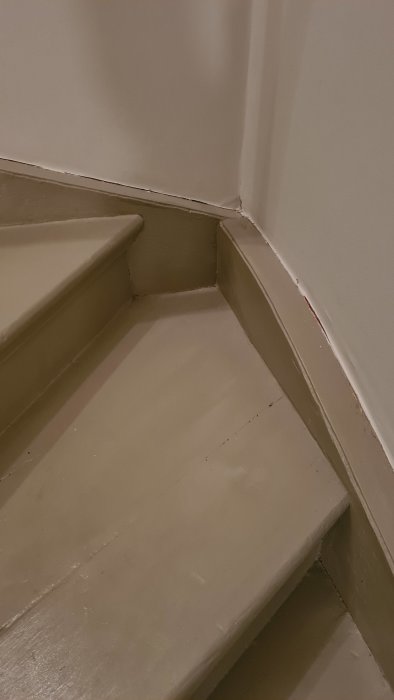
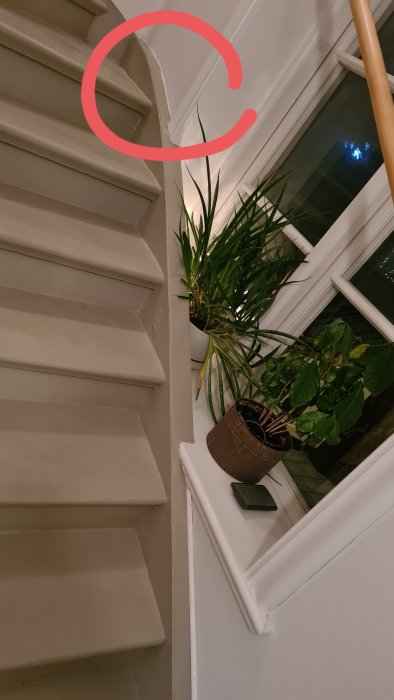
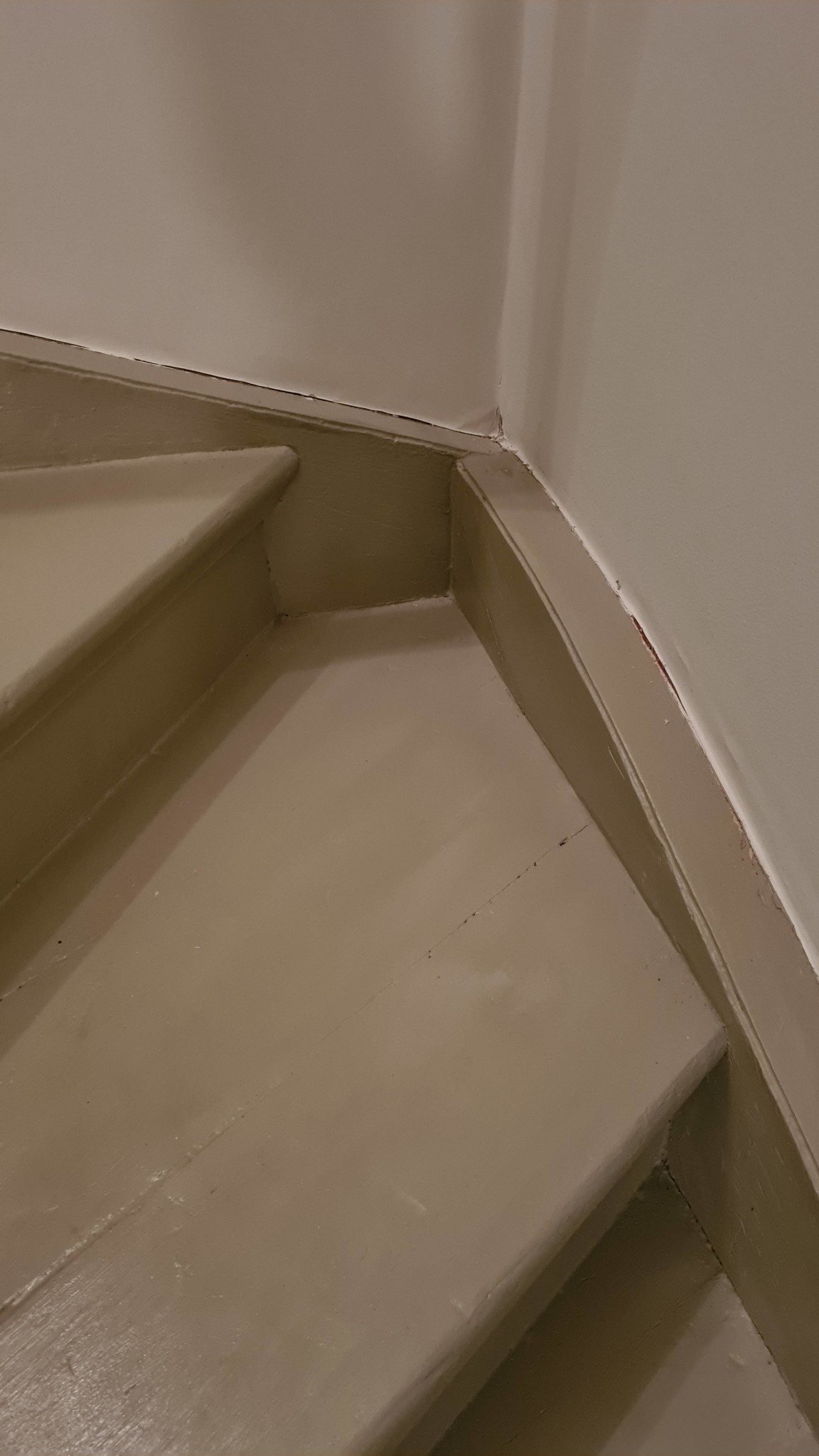
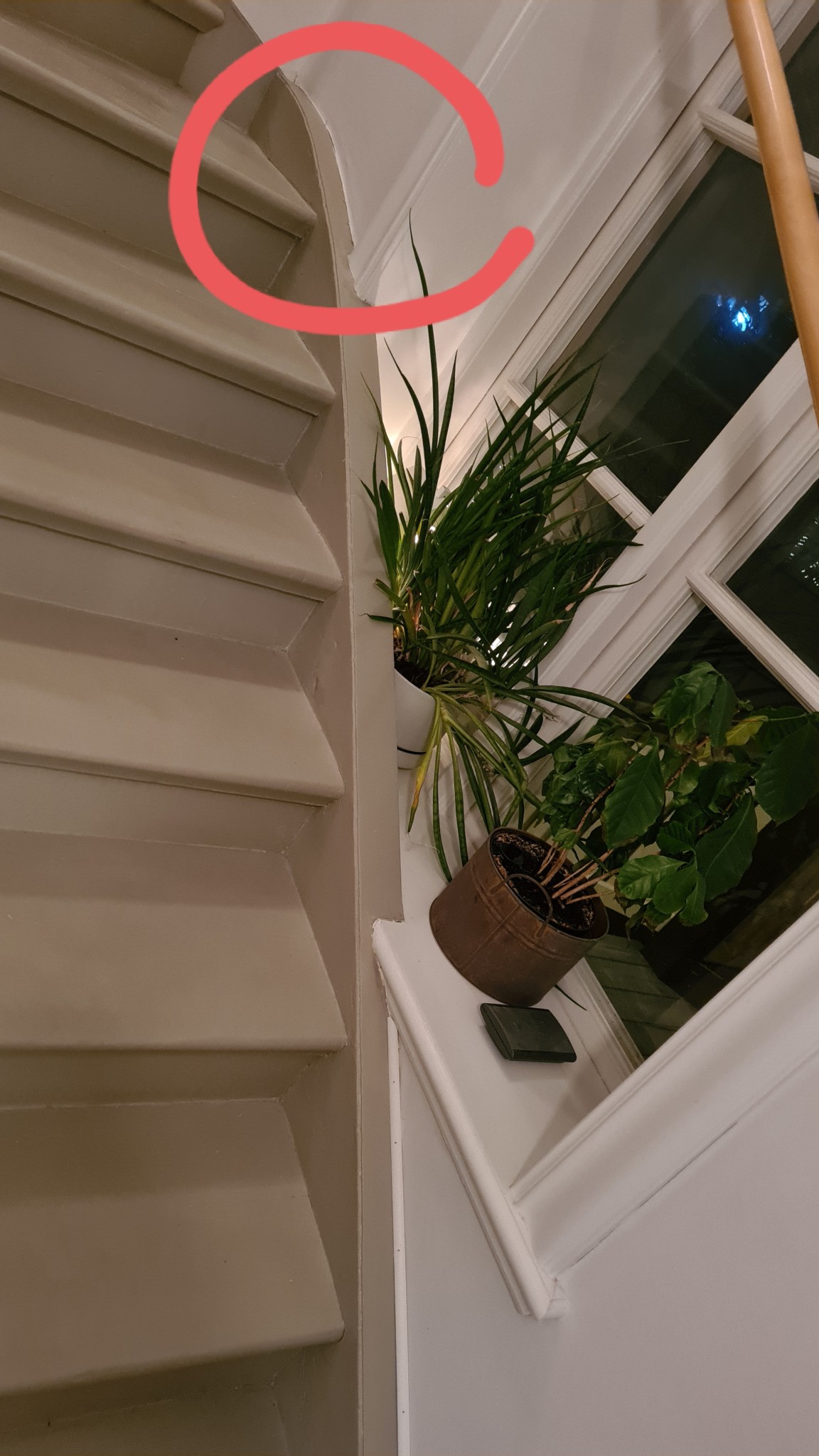
After failing to bend a 9mm quartz rod that I intended to mount between the wall and carriage pieces (somewhat curved) in our old house, I am considering caulking instead. I remember our carpenters talked about a type of caulk that worked for thicker seams, compared to regular painter's caulk. I can't recall what it was called though.
In certain lengths, it worked well to place a molding, but here I failed and every brad nail split the molding. I'm also wondering if it looks silly with white molding between the wall and carriage pieces in some parts, while in other areas the wall color directly meets the carriage piece color. Perhaps this is something that one doesn't notice over time, hopefully.
TEC7 is good but there may be other types of sealants of course. Otherwise, I would have pre-drilled before nailing. You can also try soaking the moldings before.
Tec7 was exactly what they talked about, thanks! @raveper - Yes, a lying molding type would have been easy to bend of course, but I think the quarter-round (which I will paint with 0502Y like the remaining moldings) works, as a transition, a wider trim would have covered the top of the carriage piece too much IMHO
Cut the quarter round to a suitable length (+some trimming allowance).
Soak it for a few hours and put it under tension. If it needs to be bent a lot, tension it gradually in stages.
I've done this with successful results.
If you're afraid it will crack, you can pre-drill with a thin drill bit before nailing.
Click here to reply
Vi vill skicka notiser för ämnen du bevakar och händelser som berör dig.