



What kind of trusses are they?
Truss roof trusses are self-supporting, and then no interior wall on the floor below is load-bearing.
The age of the house also matters. In plank houses, load-bearing walls can be found in unexpected places, and there can also be walls necessary for stability. If the house has been extended before, there may also be load-bearing walls in unexpected places.
Truss roof trusses are self-supporting, and then no interior wall on the floor below is load-bearing.
The age of the house also matters. In plank houses, load-bearing walls can be found in unexpected places, and there can also be walls necessary for stability. If the house has been extended before, there may also be load-bearing walls in unexpected places.
Construction veteran
· 2 765 posts
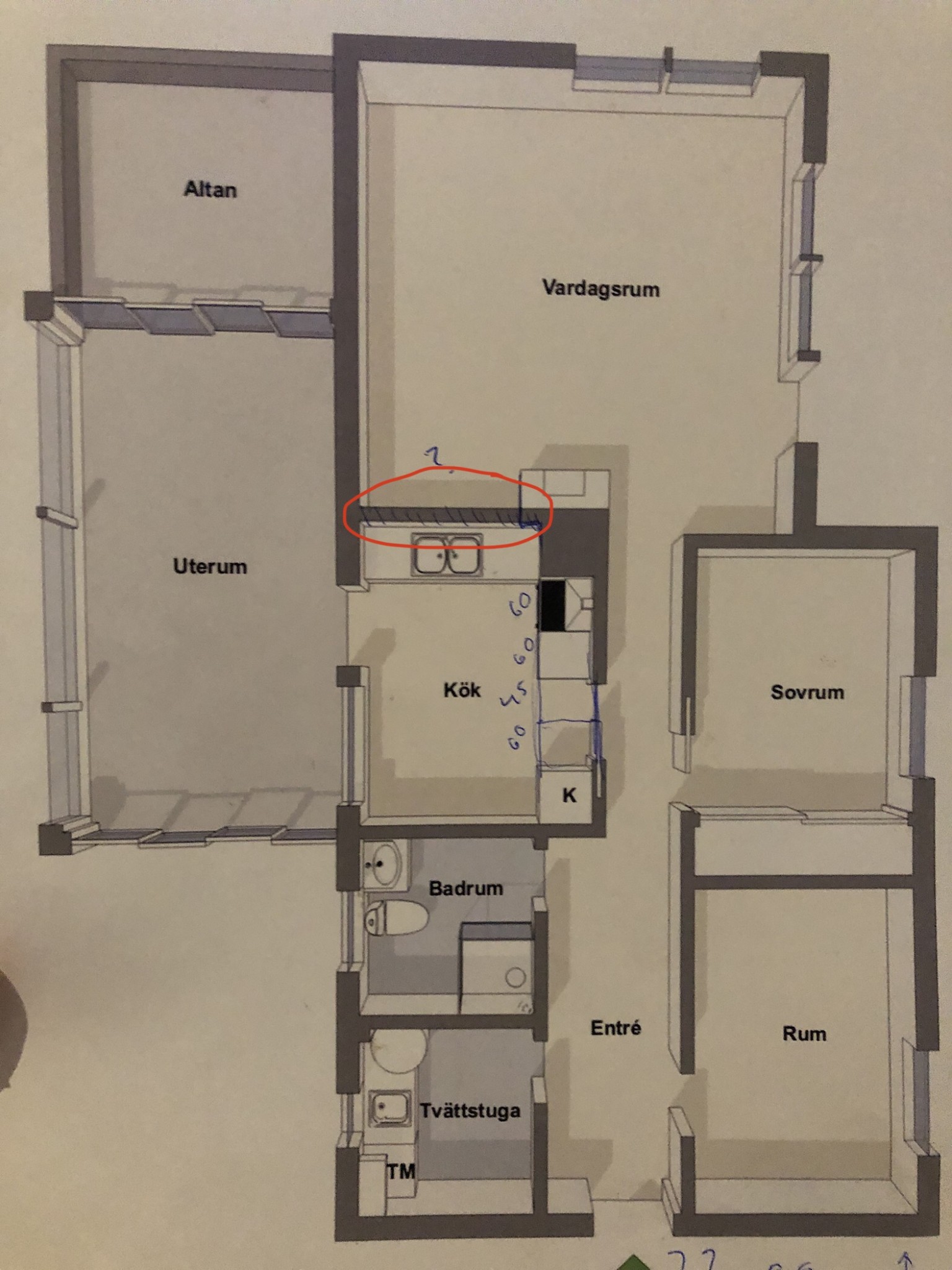
Then if we turn it around, the wall is so short that even if it is load-bearing, a very strong beam is not needed to transfer the load if it is load-bearing in the worst-case scenario.
Since the ridge runs at a 90° angle to the current wall, the roof trusses run along the road. In these cases, the wall is usually not load-bearing.M MoveMe said:
The longitudinal wall between entrance/hall & "room"/"bedroom" may be load-bearing.
In houses that are around 100 years old, it’s not just about the rafters but also about the beams in the ceiling structure that can run in different directions in different parts of the attic, and of course, you cannot remove a wall that is required for their support.
Click here to reply