
Hello!
I'm considering tearing down a wall and wanted to see if any of you can interpret the original blueprints. I've circled the wall I want to remove (red).
I should add that the previous owner already removed the wall on the other side of the house in the 90s as well as more than half of the one I'm planning to remove. (green)
The reason I'm asking is that when I look at the part that's left, it seems to have some kind of load-bearing or at least support function.
I'm considering tearing down a wall and wanted to see if any of you can interpret the original blueprints. I've circled the wall I want to remove (red).
I should add that the previous owner already removed the wall on the other side of the house in the 90s as well as more than half of the one I'm planning to remove. (green)
The reason I'm asking is that when I look at the part that's left, it seems to have some kind of load-bearing or at least support function.
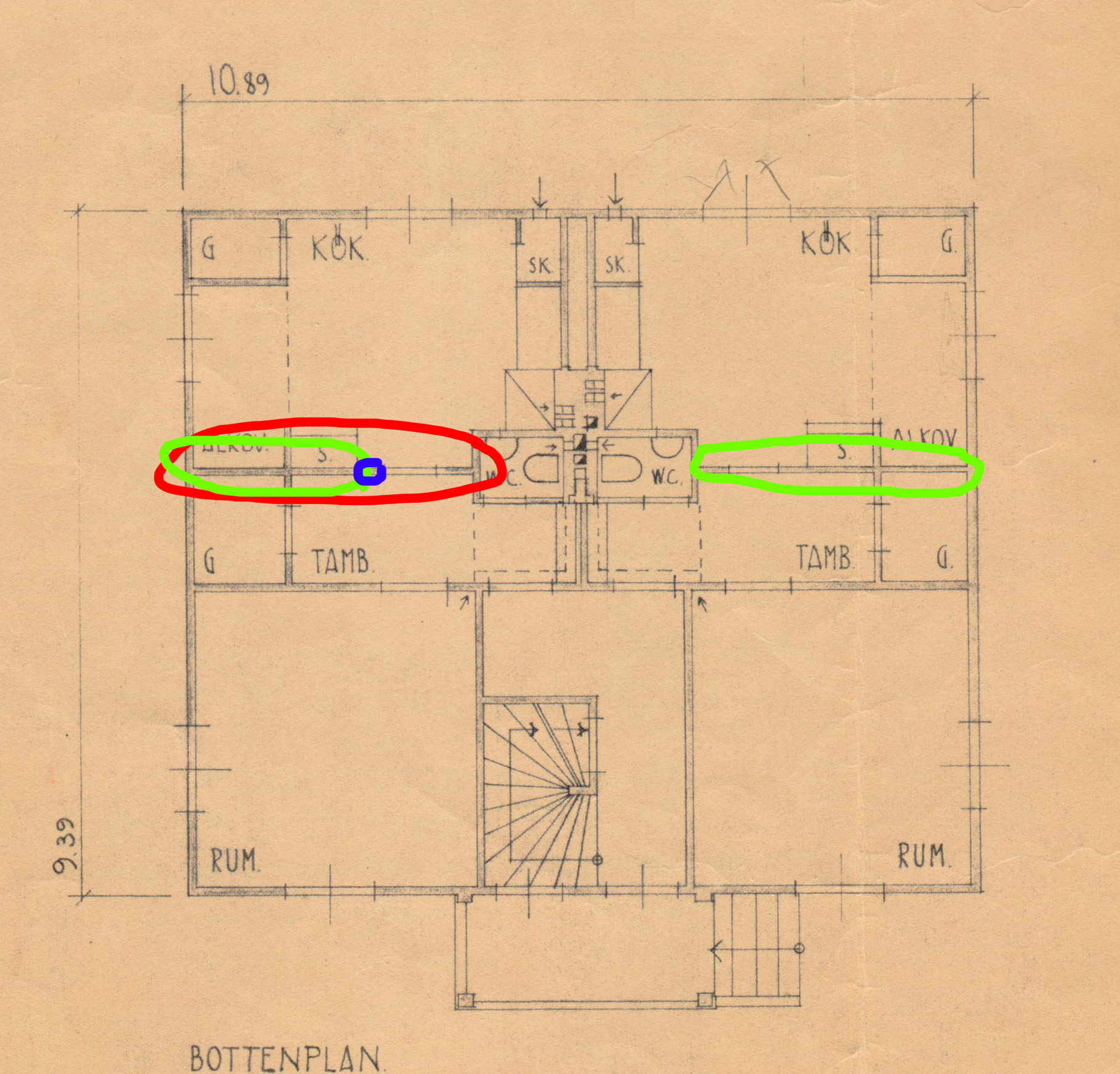
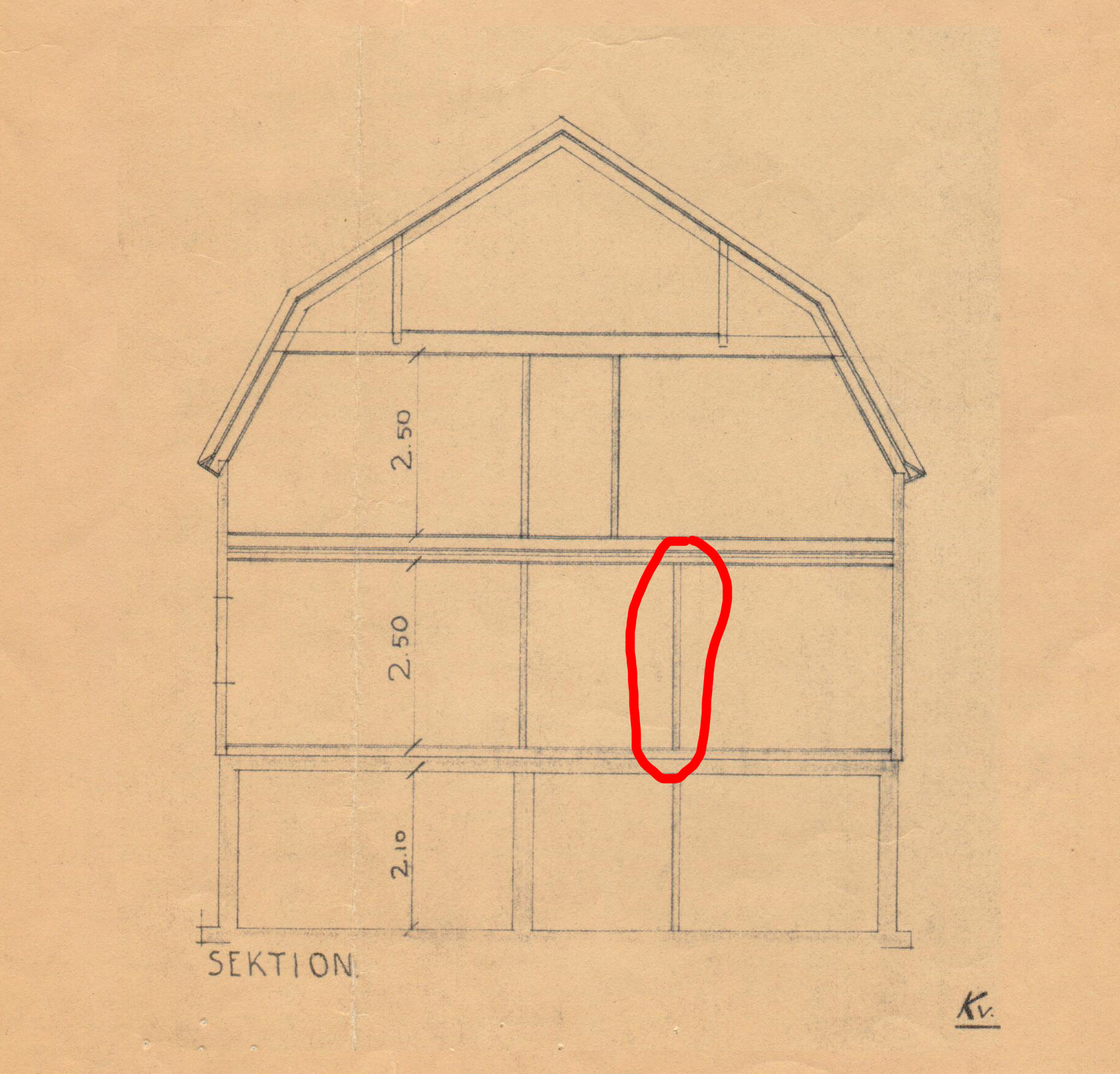
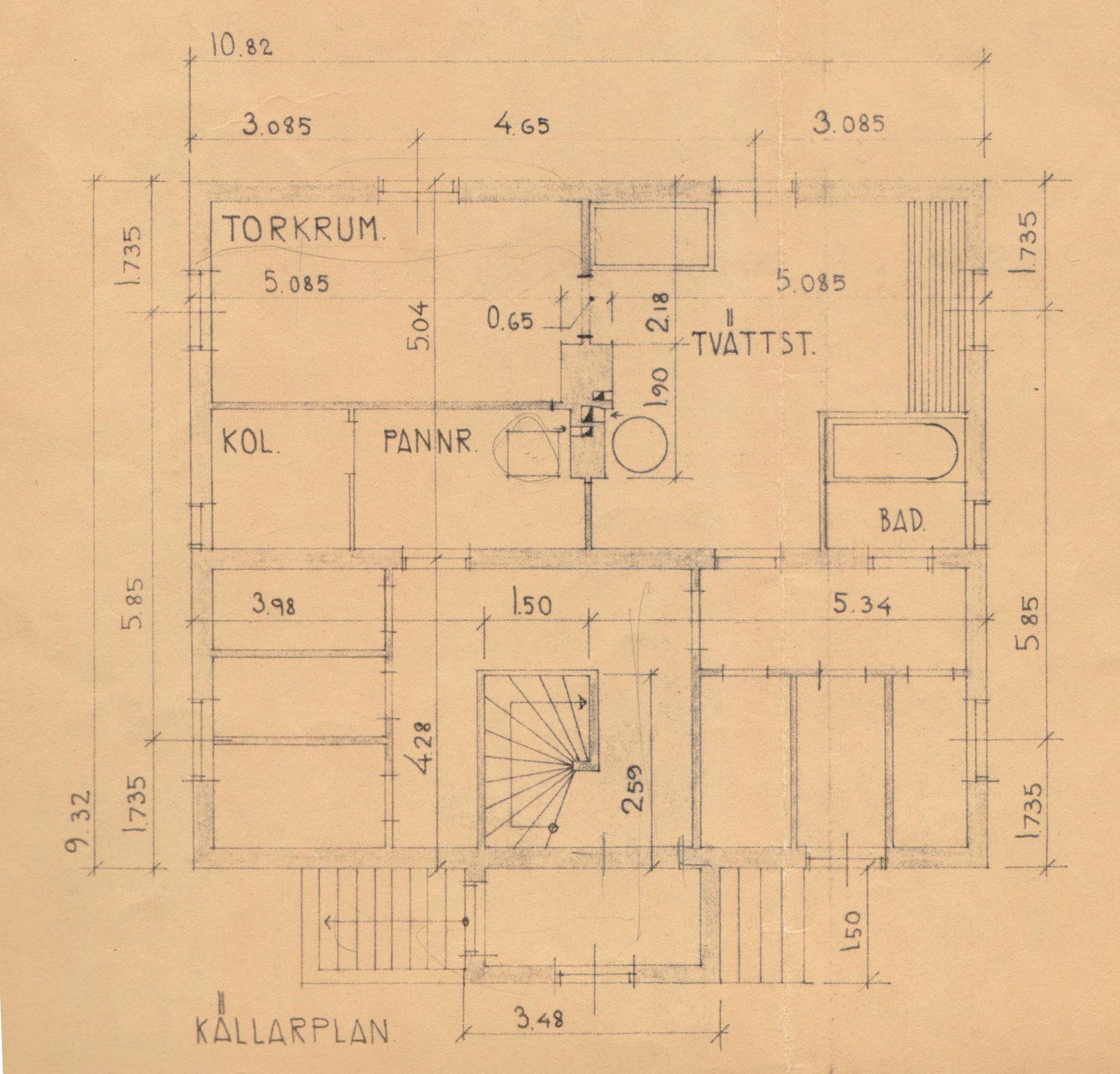

The house has a plank frame. This means that all walls can have a load-bearing function. It is difficult to speak with precision without knowing exactly how the floor joists are positioned. In principle, there are two parallel core walls. The floor joists can rest on both of these. You can either use a stud finder to examine how the floor joists are positioned or assume that the wall is load-bearing and support it with a glulam beam and columns.
Call the municipality's building engineer and ask him to come out and look, then you'll get the correct answer straight away.
Thanks for the response.J justusandersson said:The house has a plank frame. This means that all walls can have a load-bearing function. It is difficult to be precise without knowing exactly how the floor joists are placed. Basically, there are two parallel heart walls. The floor joists can rest on both of these. Either you investigate with the help of a stud finder how the floor joists are positioned or you assume the wall is load-bearing and replace it with a laminated beam and pillars.
I have cut open a piece of the ceiling and it looks like the floor joists continue to the next wall but also rest on this wall. It is a 145x45 stud that is supported by wall studs with 120 CC. The floor joists are 220x70 with 60 cc.
Assume you need to replace with a glulam beam. To be able to calculate it, you need to know the current dimensions. It is a beam approximately 90x315 mm in size.
Thanks, I was planning on having some kind of support anyway.J justusandersson said:
As I mentioned in the first post, the previous owner removed the same wall on the other side of the house in the early 90s. From what I can see, there are only two 70 studs on either side of the removed wall, so there is no support at all. Is that something I need to worry about? What's the worst that can happen?

It's nothing you need to worry about, but a problem for the neighbor.
Click here to reply
Similar threads
-
Restore old opening in load-bearing wall
Building Physics -
Är denna vägg bärande mellan kök och vardagsrum?
Kök -
Bärande innerväggar,eller
Attefallshus, friggebod, garage & andra småhus -
This wall is not load-bearing, is it?
Building Materials and Construction Technology -
Rev en icke bärande vägg, ska nu sälja huset.
Utbyggnad och tillbyggnad