
1,276 views ·
6 replies
1k views
6 replies
Load-bearing wall - take down wall on upper floor
Hello,
We are planning a kitchen and are considering whether we can take down the purple-marked wall on our upper floor. The wall has thin studs and generally feels weak. We have a lot of blueprints, but these are the ones with the upper floor.
I'm also including a picture of the lower floor that shows different material types than wood.
Many thanks in advance!
We are planning a kitchen and are considering whether we can take down the purple-marked wall on our upper floor. The wall has thin studs and generally feels weak. We have a lot of blueprints, but these are the ones with the upper floor.
I'm also including a picture of the lower floor that shows different material types than wood.
Many thanks in advance!
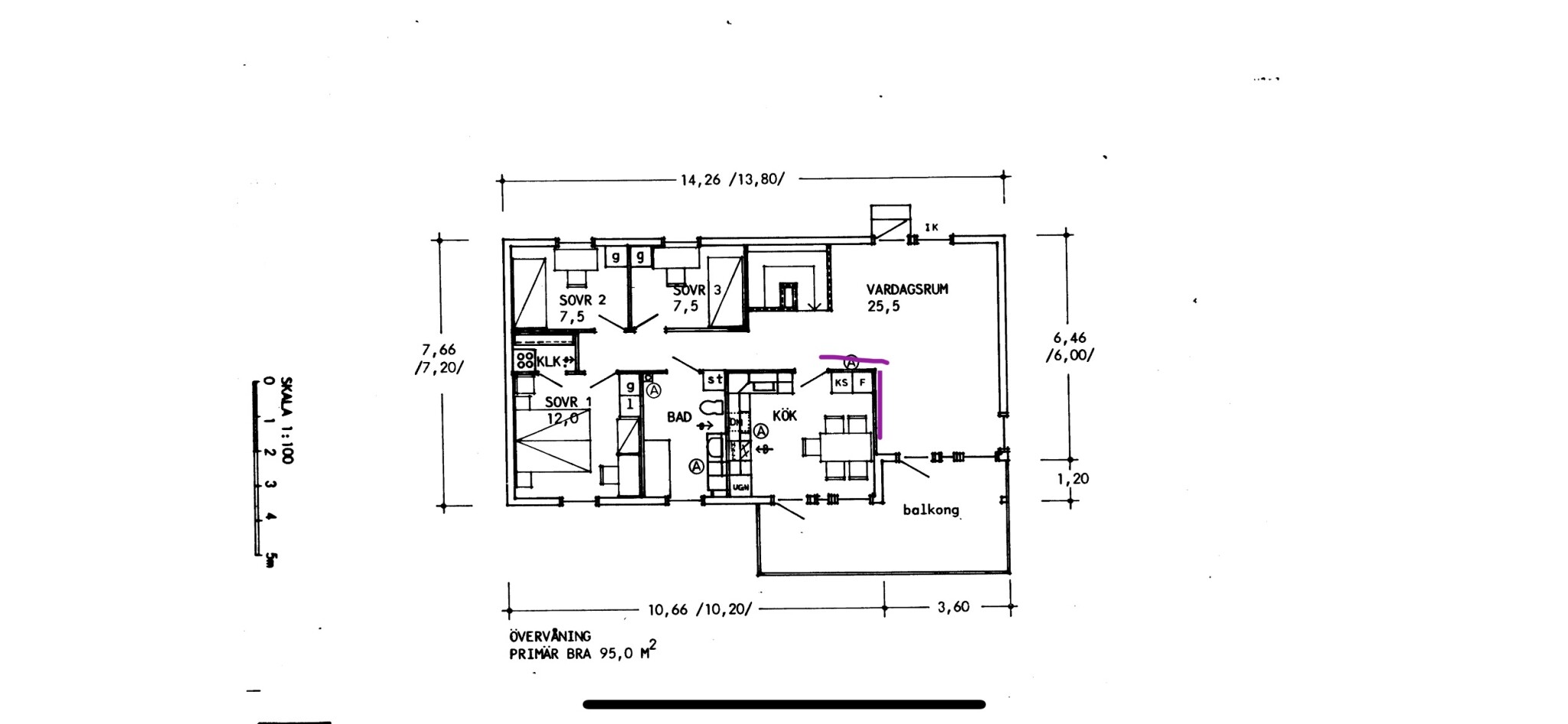



Do you not have a sectional drawing, meaning a drawing that shows a cross-section of the house?
The truss construction is important information in this case and it is usually shown in the sectional drawing.
The truss construction is important information in this case and it is usually shown in the sectional drawing.


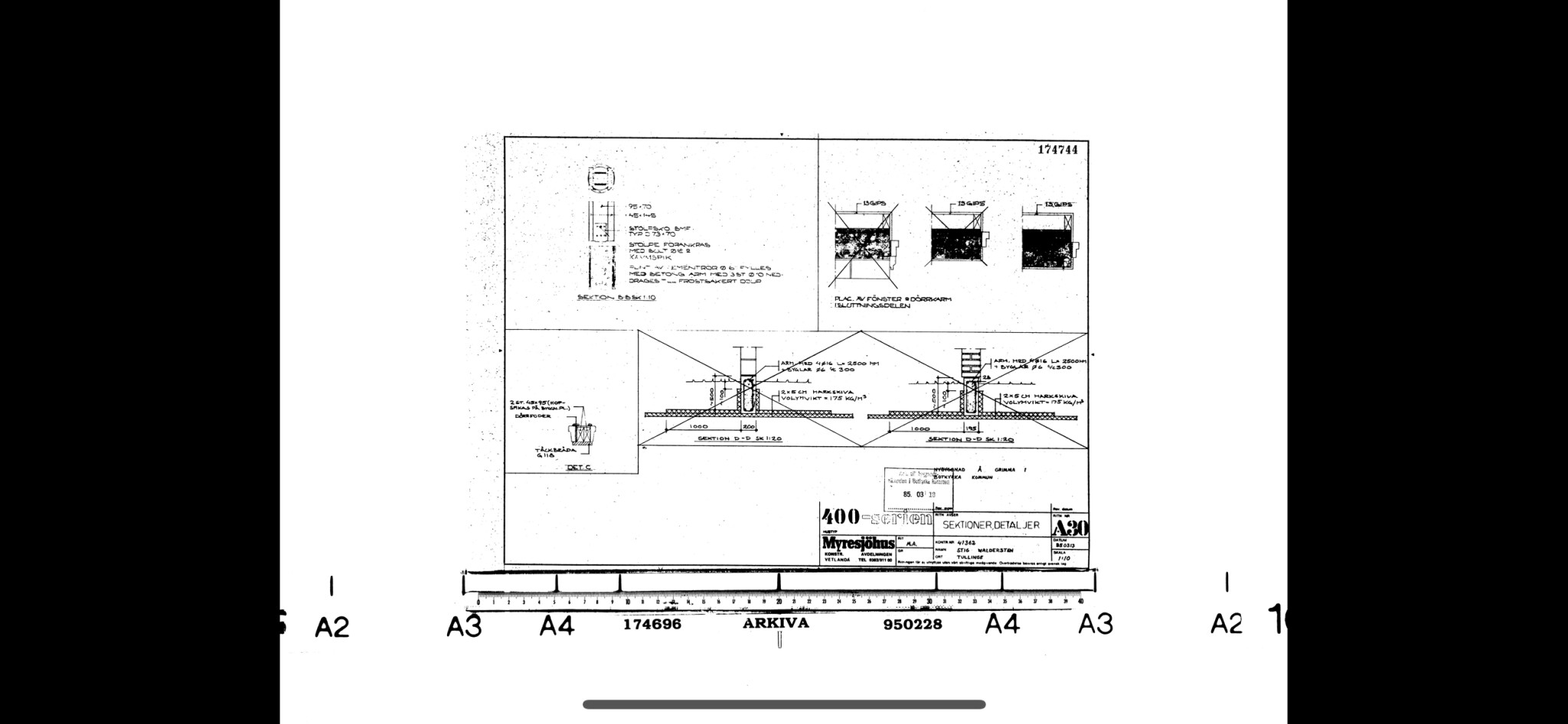
According to the sectional drawing, there are truss rafters, and usually, there are no load-bearing interior walls on the floor below the attic. To be sure, check if there is a beam in the living room ceiling between the freezer and the exterior wall to the right. Also, check in the attic at the same spot if possible.
Living rooms can become difficult to furnish if too many walls are removed, e.g., lacking walls for the TV and a suitable place for the sofa opposite.
Living rooms can become difficult to furnish if too many walls are removed, e.g., lacking walls for the TV and a suitable place for the sofa opposite.
Thank you so much, will check! Regards, JonesBirgitS said:
According to the section drawing, it is truss rafters, and in that case, there usually aren't any load-bearing interior walls on the floor below the attic. To be sure, check if there is a beam in the living room ceiling between the freezer and the outer wall to the right. Also, if possible, check the same place in the attic.
Living rooms can become difficult to furnish if too many walls are removed, e.g. lack of walls for a TV and where it also fits to have the sofa opposite.
Not true. The sectional drawing shows only the shape of the roof and not the trusses. Nothing is known about the structure of the roof. What's more, the dates on the documentation indicate that it was built almost 40 years ago, and trusses were not as common as they are today. I would recommend a check of the roof structure by a professional
Correct, but there is text in the attic "FACKVERK" which means trusses, so what I wrote is accurate.S sturnus said:
In Sweden, trusses have been common since the early 60s, at least when it comes to standard single-story houses with or without a basement.S sturnus said:
Click here to reply