I'm in the process of renovating a newly purchased 1920s house...
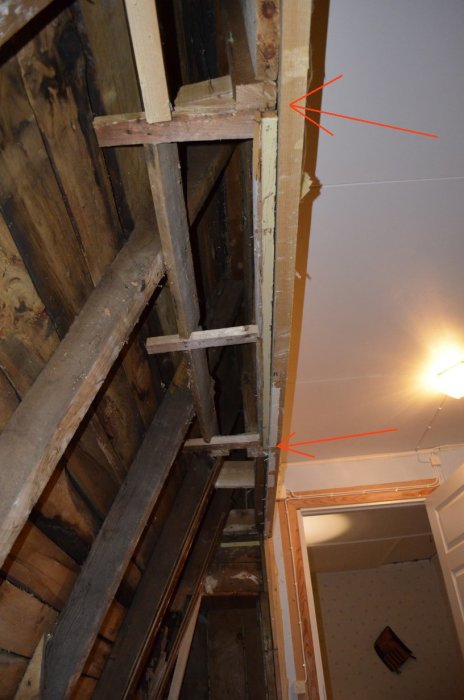
I've come across 2 vertical studs that have been cut off by the previous owner some years ago, but they're puzzling me..
Are (were) they load-bearing or not??
I know I won't get a definite answer, as you need to see it on-site, of course, but I would appreciate some insights..
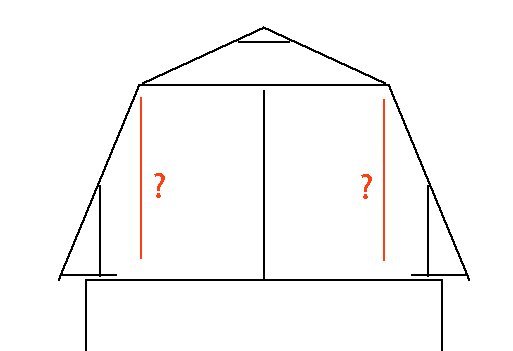
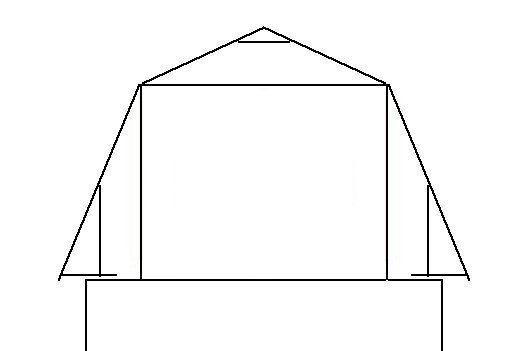
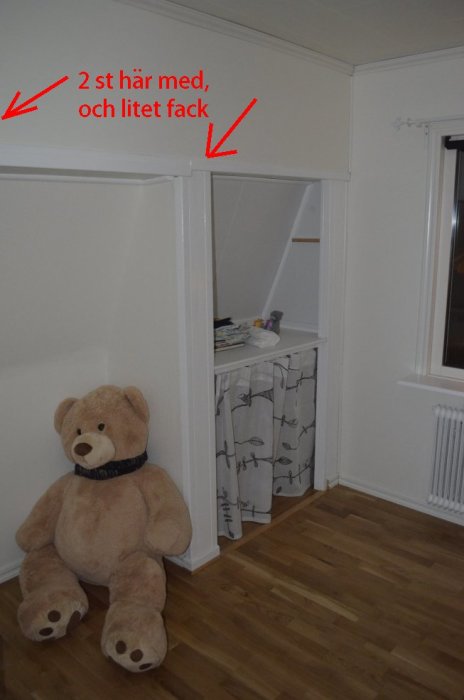
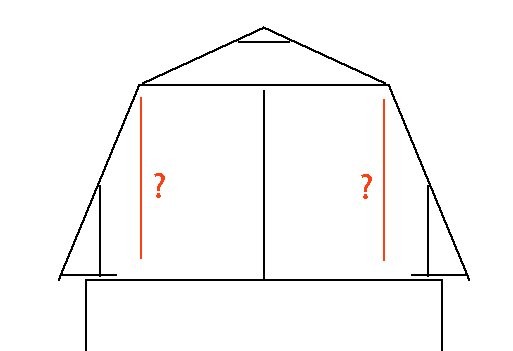
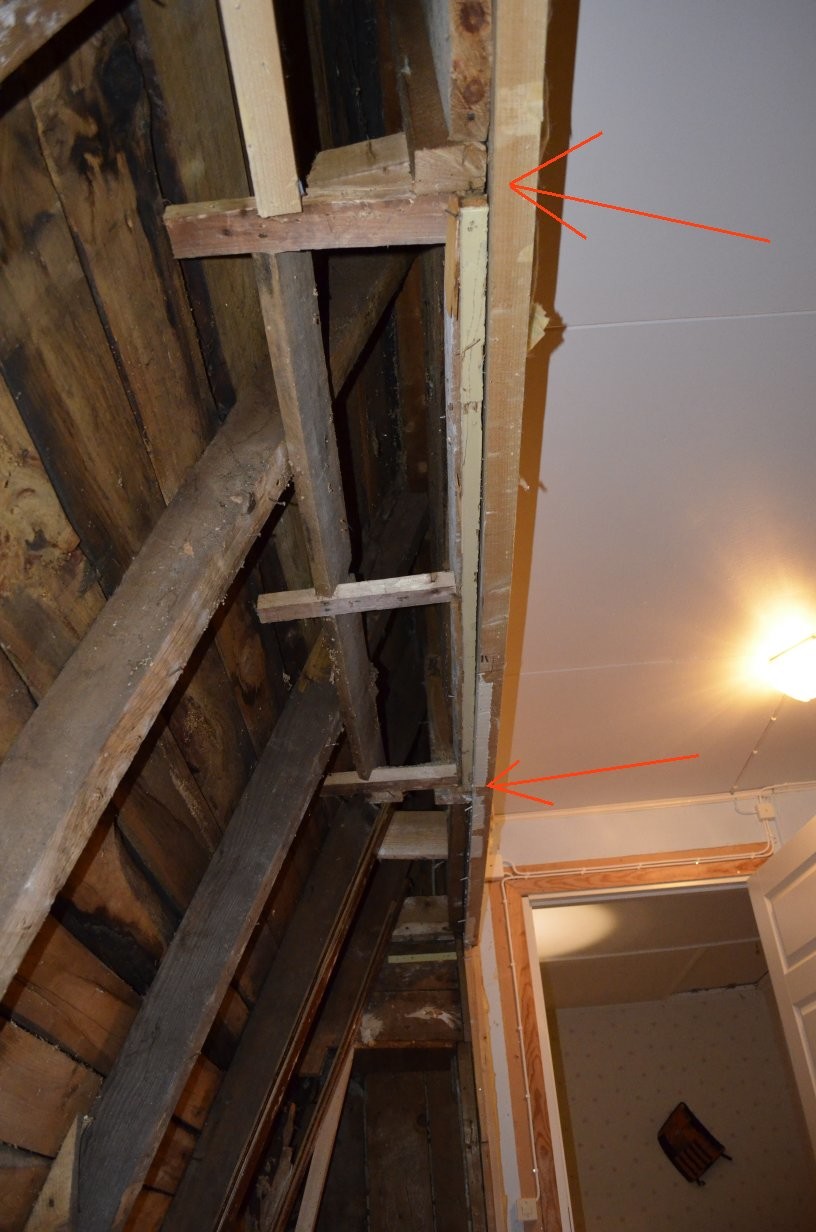
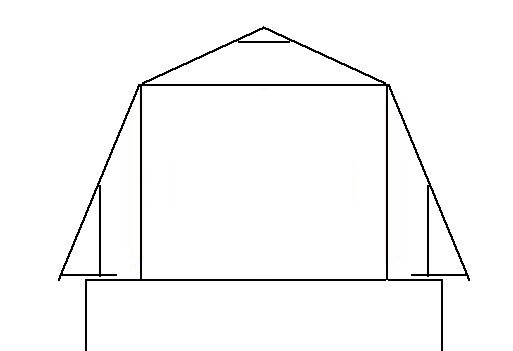
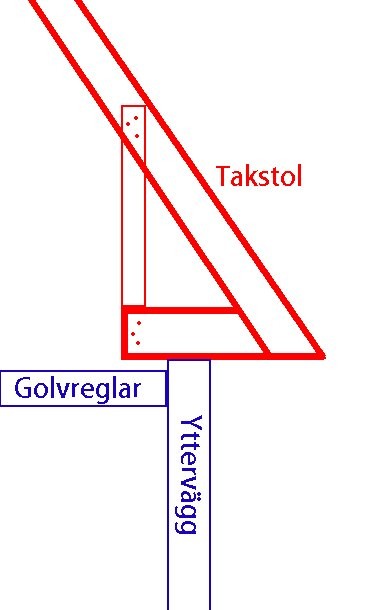
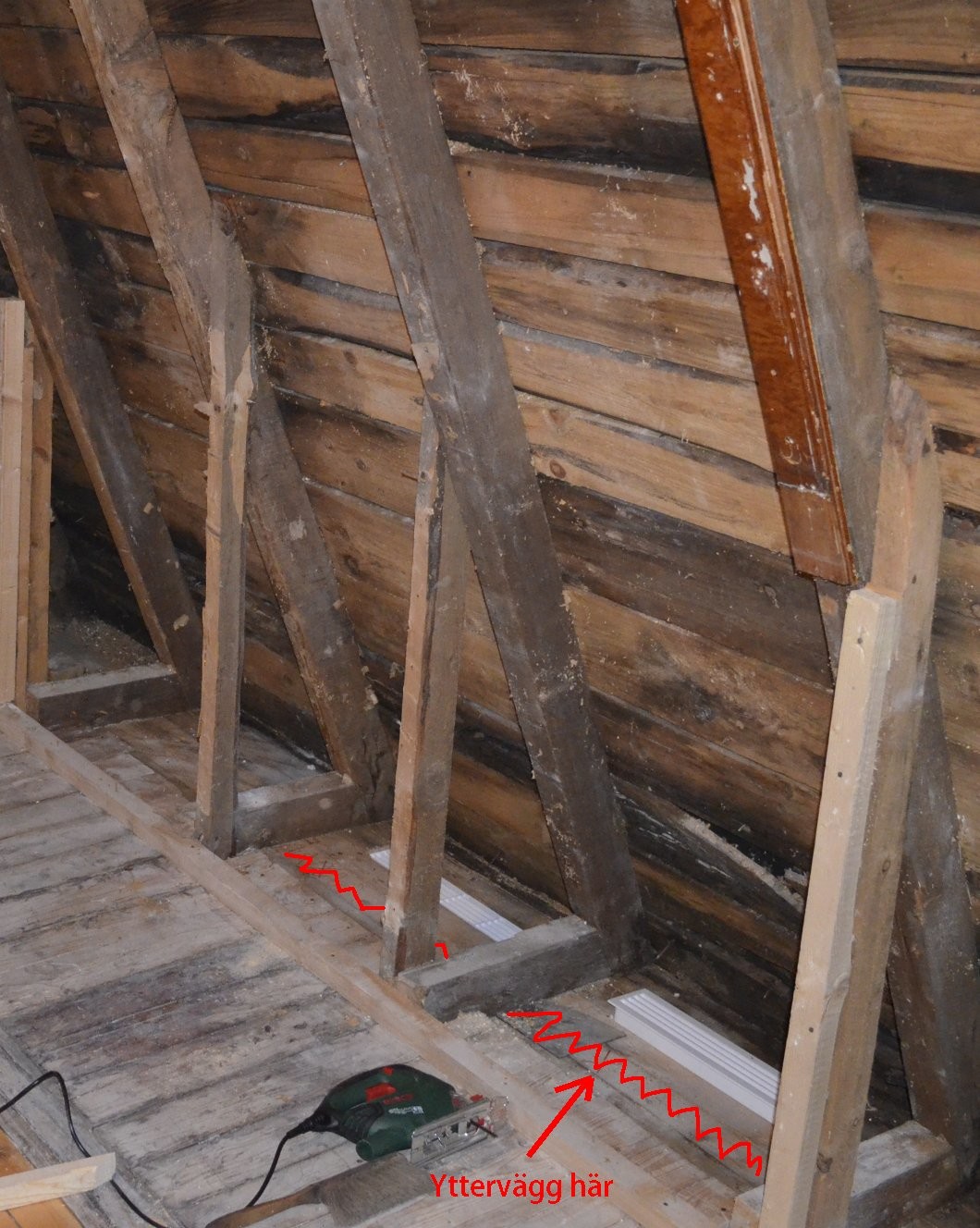
The roof is a mansard roof with a knee wall, and the studs I'm wondering about are the ones marked in red on the picture..
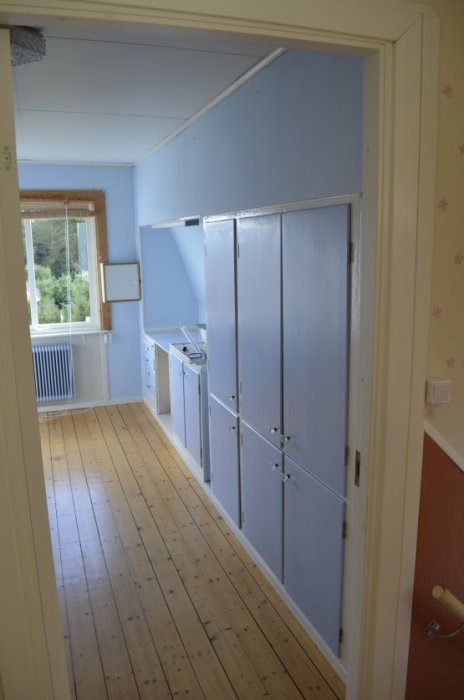
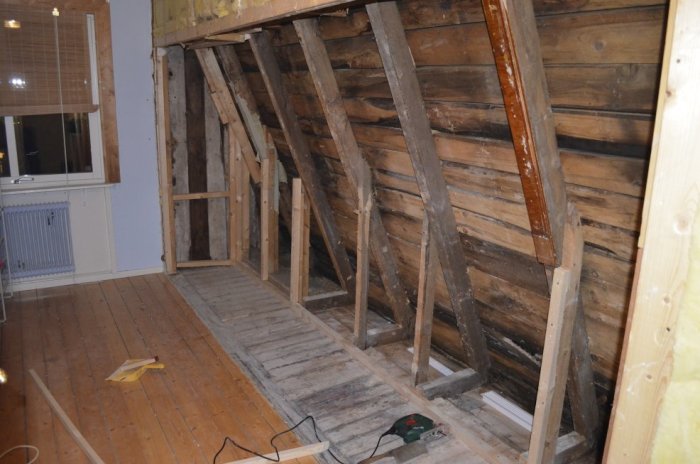
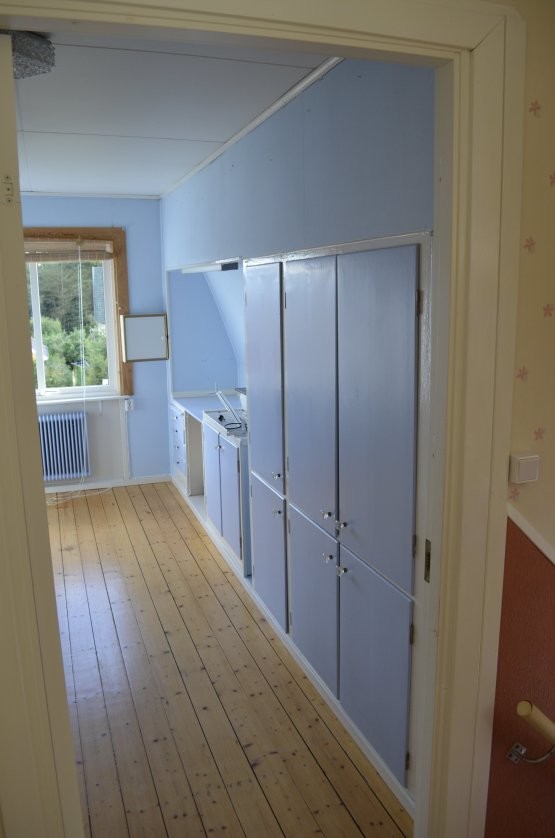
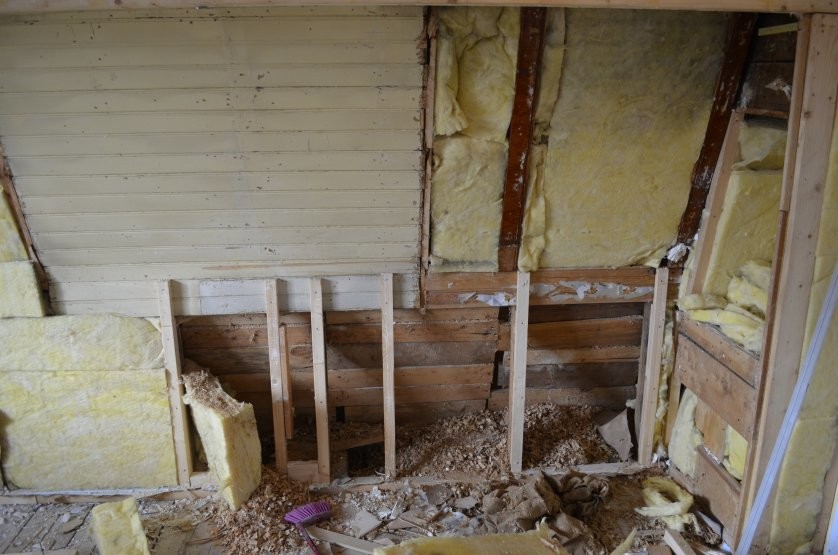
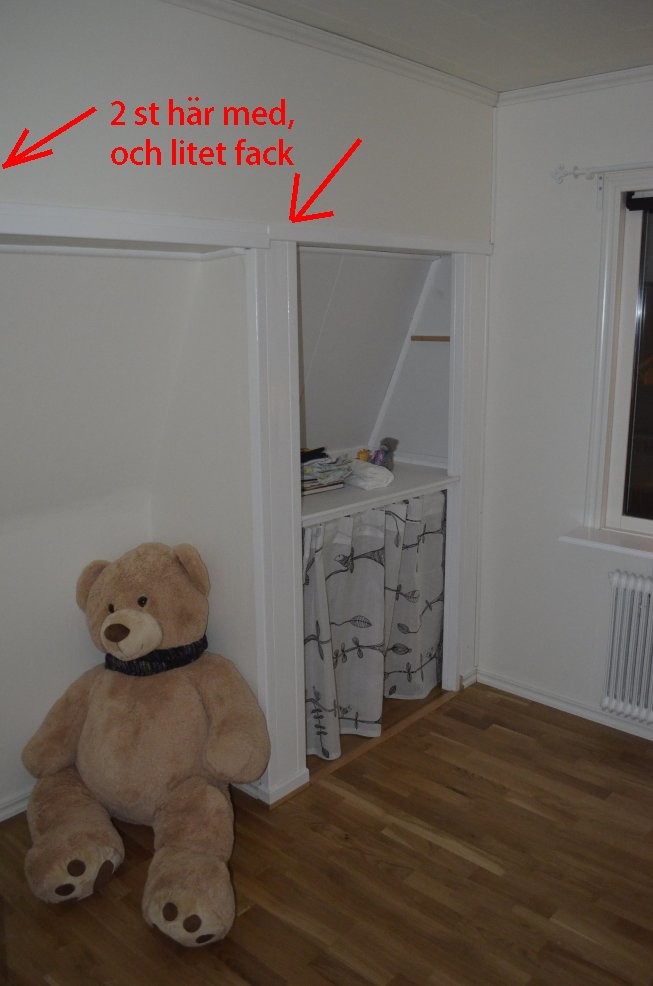
This is how it looked when I moved here and was about to start fixing..
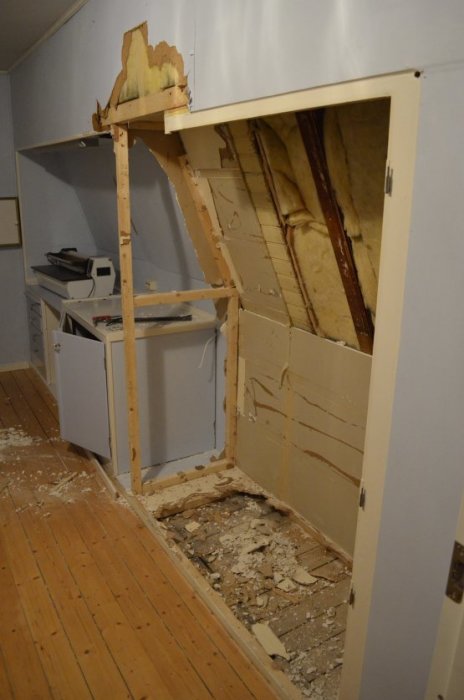
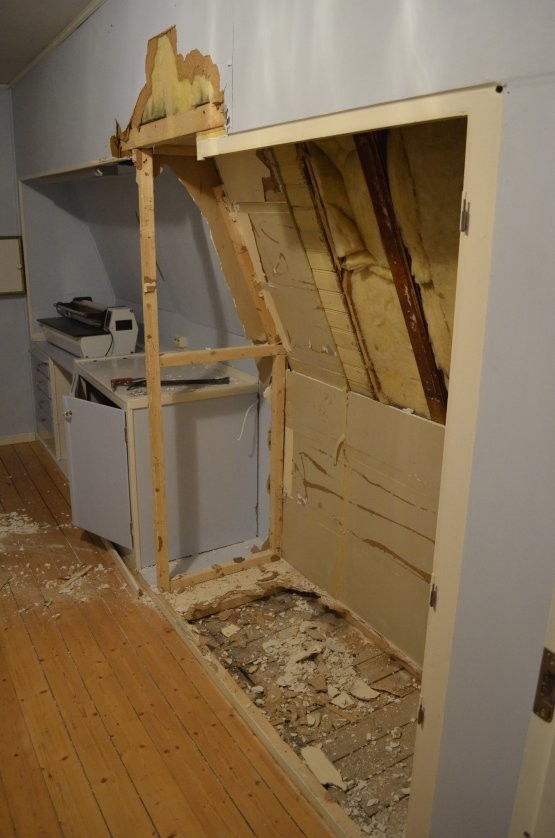
Started clearing and uncovered a stud that was part of the closet.. A flimsy, yet a small support..
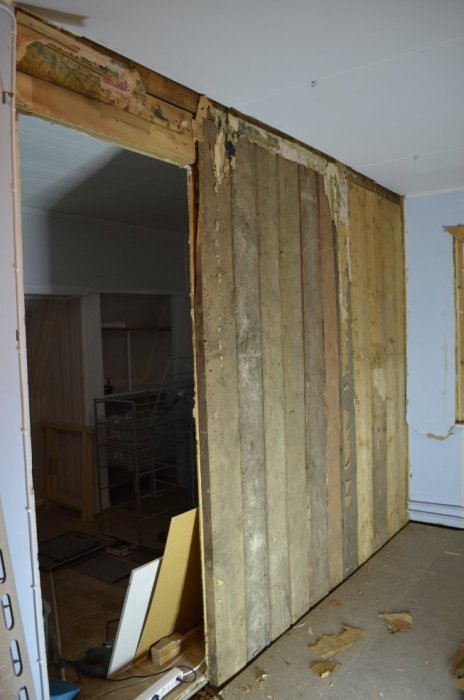
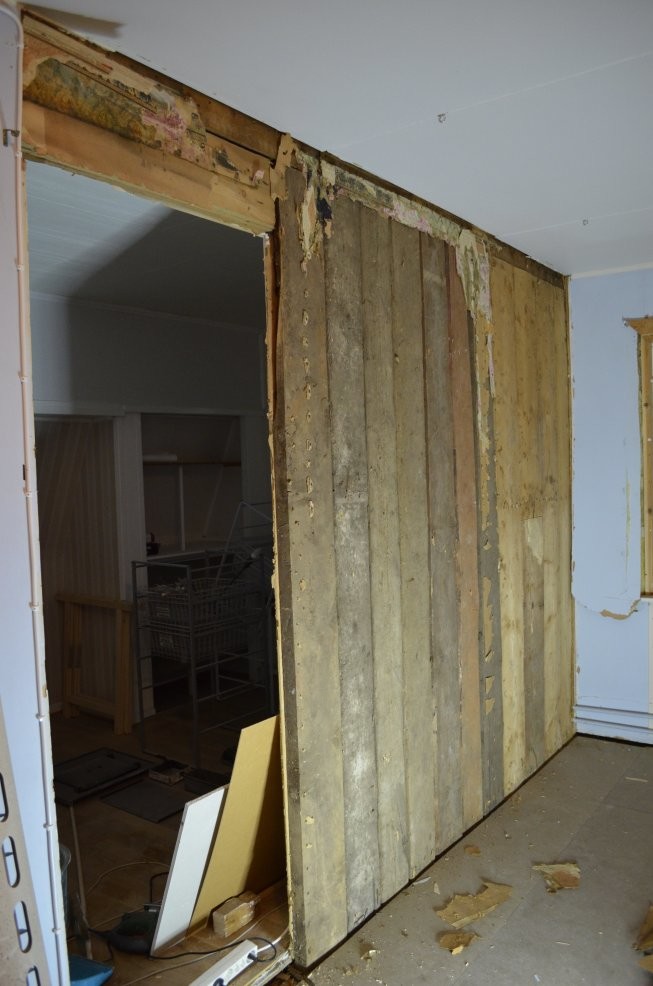
Cleared a bit more and uncovered a part of the original(?) wall with paneling, odd, there was only this section in the middle of everything.. Sawdust behind, but perhaps a clue on how everything was originally constructed..
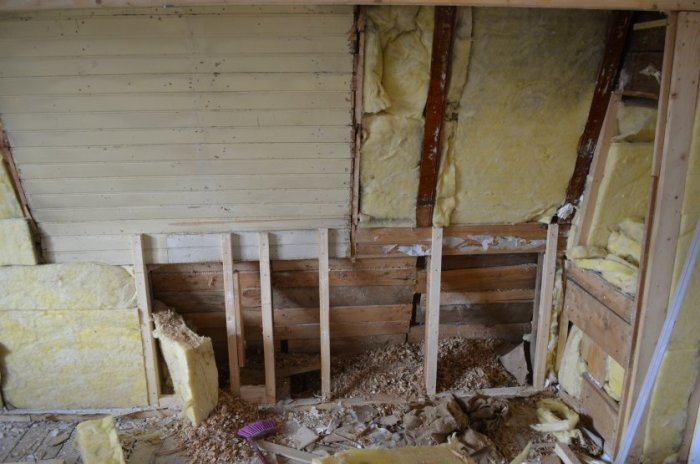
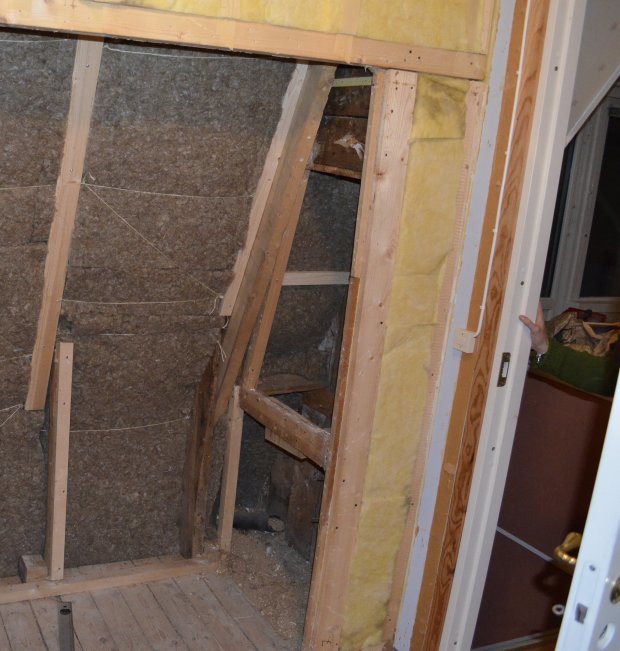
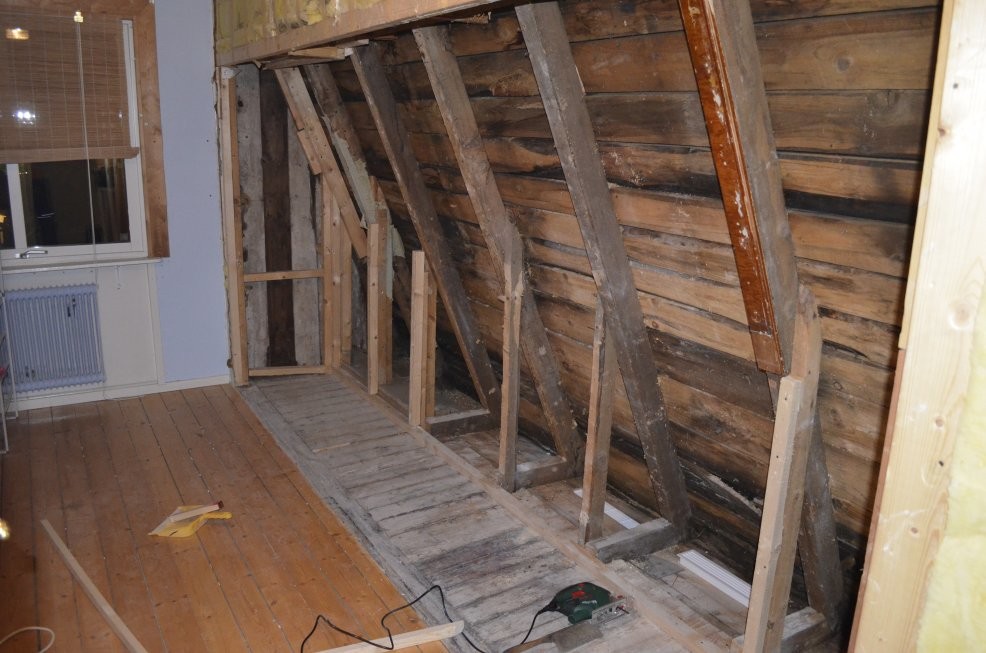
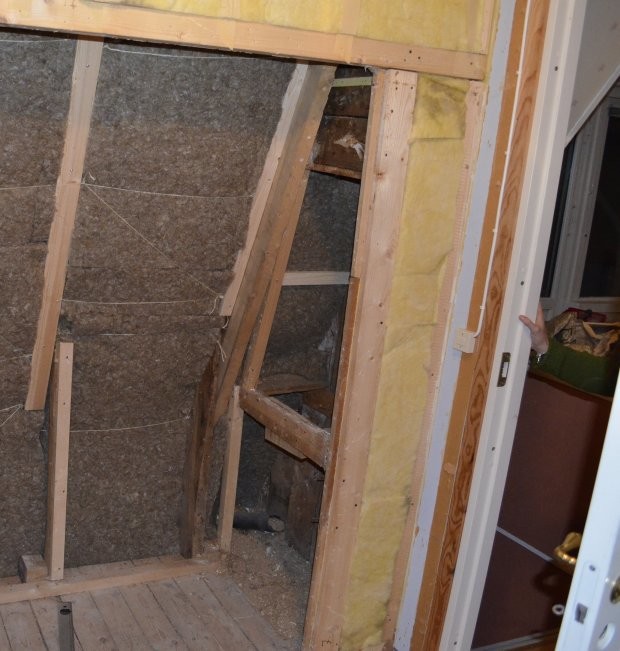
Now the roof trusses are exposed, and you can see how everything is constructed..
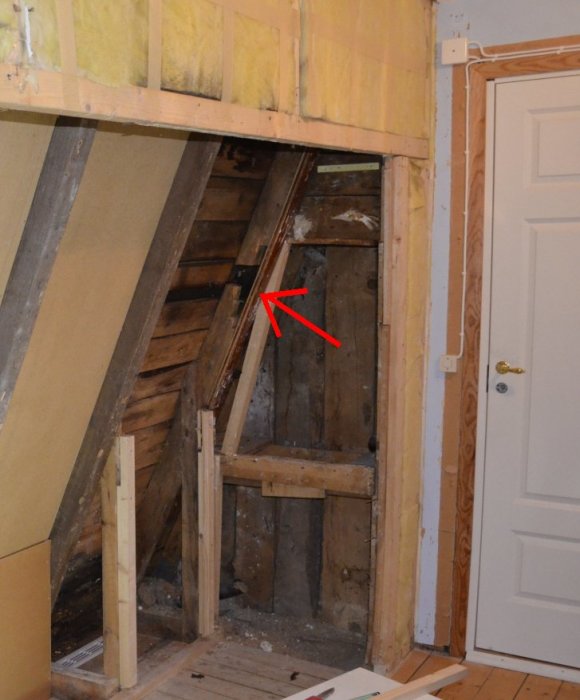
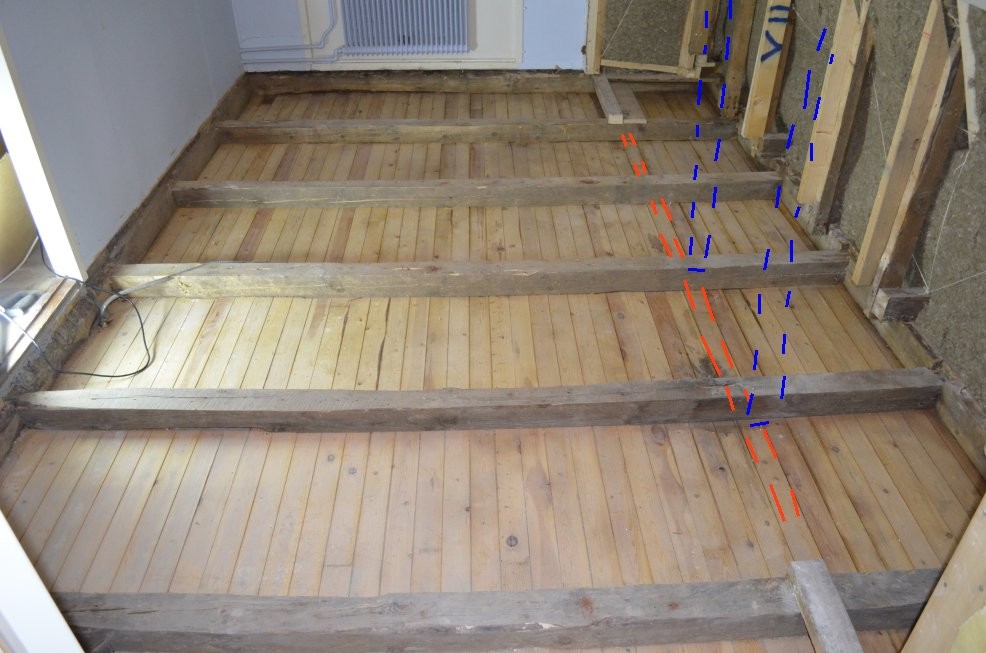
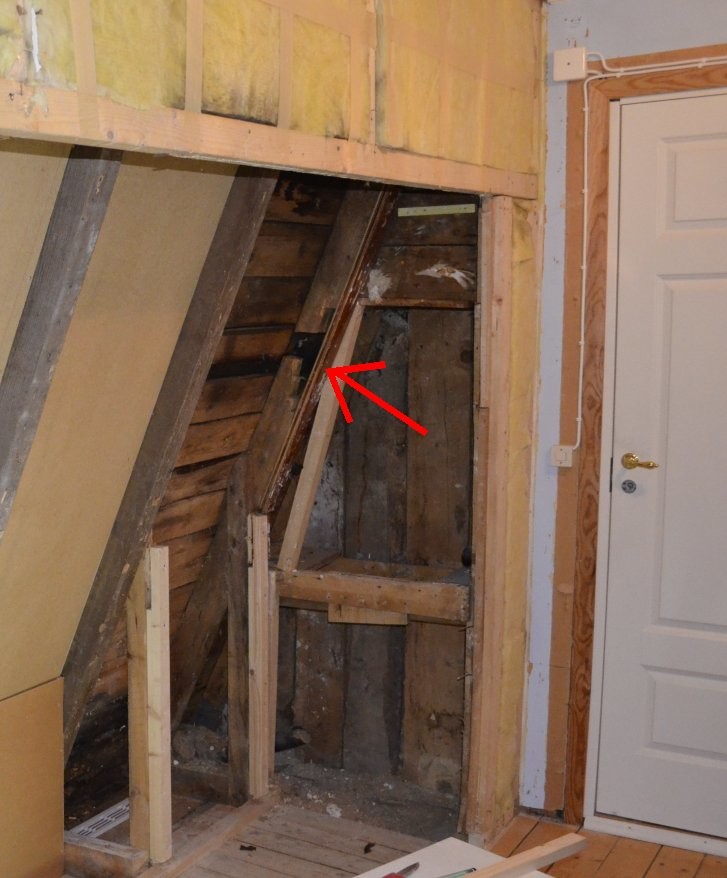
Looked up here in the space.. and there were two cut-off vertical studs..
Load-bearing as support for the beam where the roof bends and there's a horizontal beam? Or just a corner for the original wall that bent inwards and created a small compartment into the old paneling?
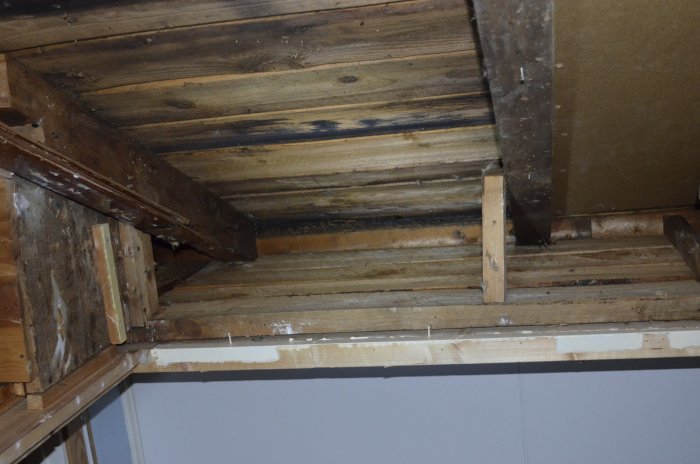
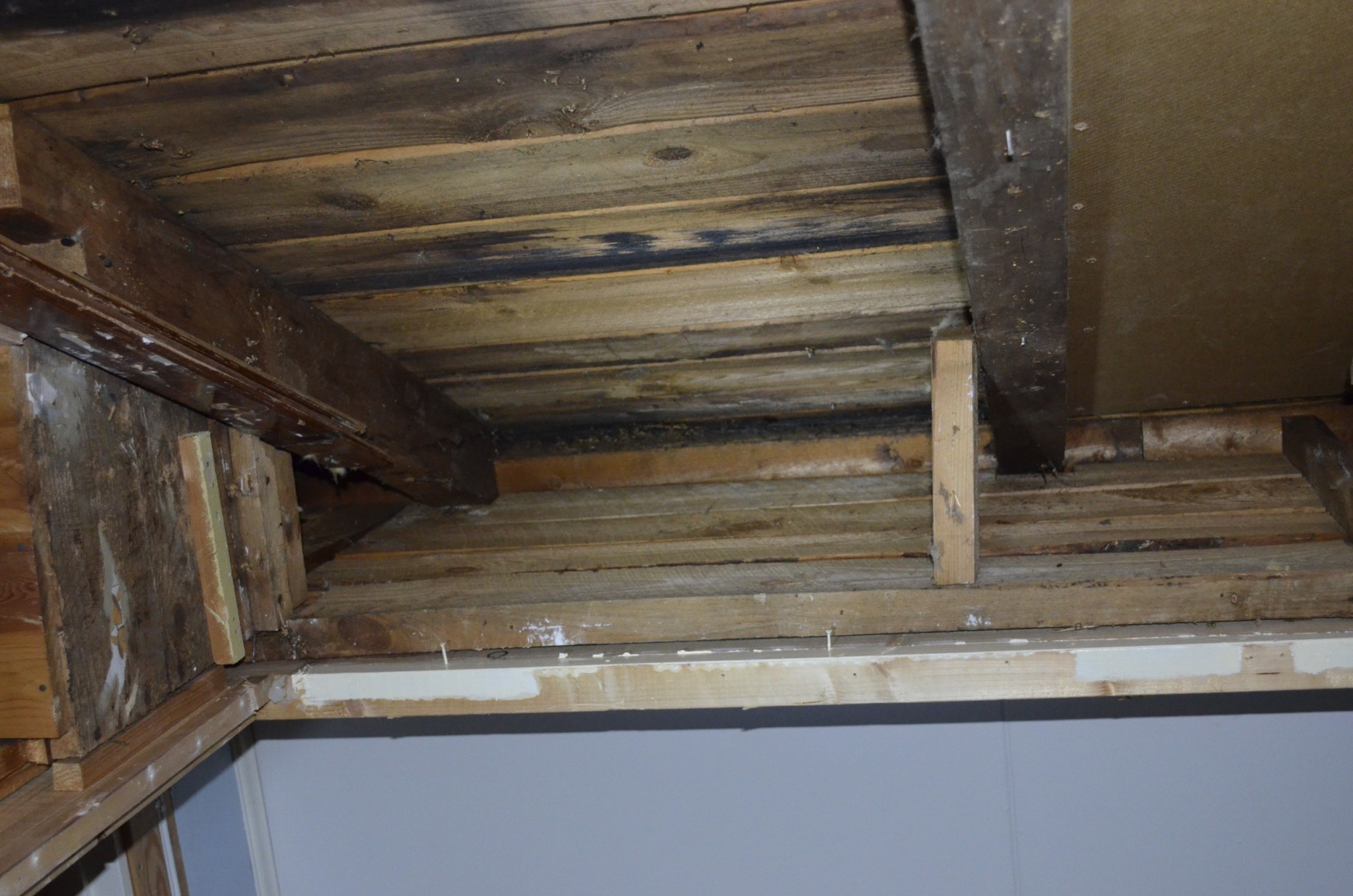
Another picture up in the gap, but from a different angle and closer to the door..
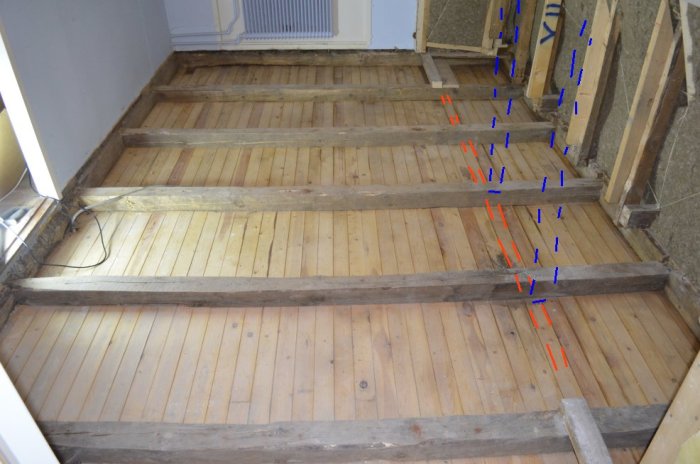
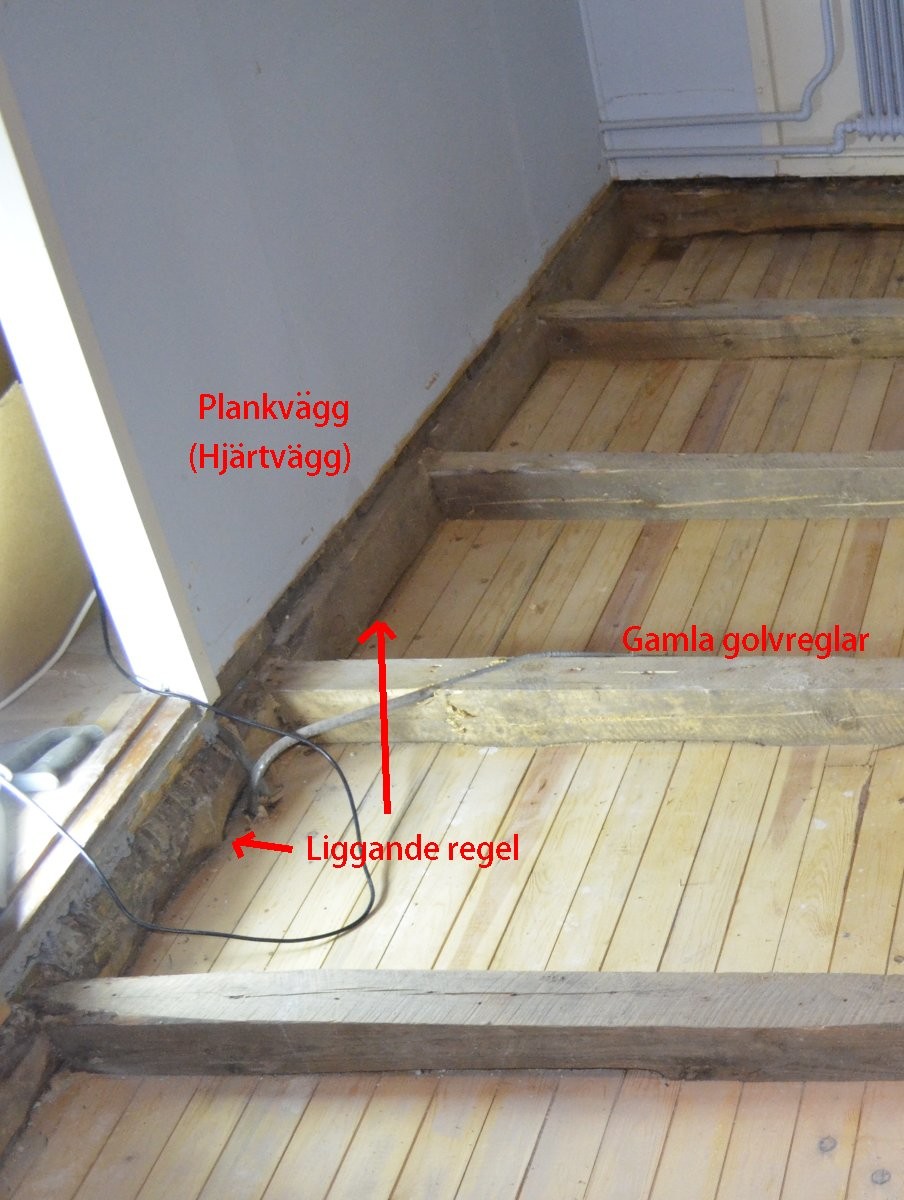
Here I had torn up the floor to put in stronger beams than the flimsy 4"x4" that are there and sway as well as make the floor bowl-shaped.. but here you can see a beam they left (and I cut off here) that the two studs once supported..
This is what the knee wall looks like.. load-bearing..
There's much that suggests the two studs aren't/weren't load-bearing, such as they're relatively flimsy, the floor beam they stood on isn't particularly strong either, there's no wall underneath to support the weight, and the floor beams themselves aren't especially strong..
.. BUT.. some things make me a bit worried.. the rooms in the other angle (L-shaped house) have no knee wall but have walls in these places that look just like the knee wall, and there's no wall directly underneath there either.. and the room on the other side of the knee wall has its vertical studs intact.. and why are there small stumps left at the ends if not to support something when space could have been gained by skipping all these vertical studs..
Moreover, they've already cut off one roof truss without concern...
sooo...
Thoughts... Important studs or not to worry about??
I think it was common to build without slanted roofs on mansard roofs, and get good solid attic spaces/storage rooms.
From a construction standpoint, it should be the lower rafters that carry the weight of the roof and transfer it almost directly onto the outer walls. That is, the full-height interior walls are/should not be load-bearing.
The longitudinal (cut-off) beams have probably distributed the load. I'm a bit uncertain if it's from the roof, or if it's to stiffen up the floor, maybe even to "hang" the floor from the trusses? I've seen similar construction in a stable loft, (with a regular gable roof though, but larger spans). There I believe it was to support the truss rafters in the middle and transfer and distribute the load over the intermediate floor (which in turn had support underneath due to horse boxes with 5"x5" posts toward the stable aisle).
In our Skåne-länga, we have 6"x5" beams in the intermediate floor/trusses with a rough and somewhat varying spacing of 120 cm over a span of about 5.5 m. On top of them, across (along the house) in the middle, lies a 6"x5" beam over load-bearing transverse walls in the house. This beam and the roof (truss) beams are pulled together with large forged carriage bolts, providing clearly increased load-bearing capacity. Which was needed when loading a few tons of grain in the attic, just as an example of load-bearing/hanging beams.
Now, I'm not an engineer but I doubt you would place a load-bearing beam on the floor. It should instead go directly to the floor beam. And a floor beam of 4"x4" feels very weak.
As for the heart wall in boards, it seems to be nailed to the floor and thus doesn't stand on a floor joist. In that case, it isn't load-bearing either. Maybe there's some pillar with an overlying beam or something like that? Is it possible to get a more zoomed-in image of how the board wall is attached to the floor?
Now, I'm not a constructor but I hardly think one would place a load-bearing beam on a floor. It should in that case go directly to the floor joist. And a floor joist of 4"x4" feels very weak.
As for the center wall in boards, it seems to be nailed to the floor and thus not standing on a floor beam. Then it is not load-bearing either. Maybe there is a pillar with a beam above or so? Is it possible to have a more zoomed-in picture of how the board wall is attached to the floor?
//Johan
Regarding the center wall, it is load-bearing with the greatest certainty.. The board wall stands on a substantial horizontal beam to which the floor joists are also attached.. and beneath it there is another board wall and under that a stone wall.. so consistently load-bearing center wall..
And then the fact that not even the roof trusses go directly down to an exterior wall was one of the reasons why I felt there should be additional support .. but they form a kind of triangle that supports itself on the outer wall.. However, it feels like by today's standards everything is so weakly dimensioned when it comes to roof trusses, floor joists, and other supports, while the outer walls are really sturdy.. just not used to the building technique from the past..
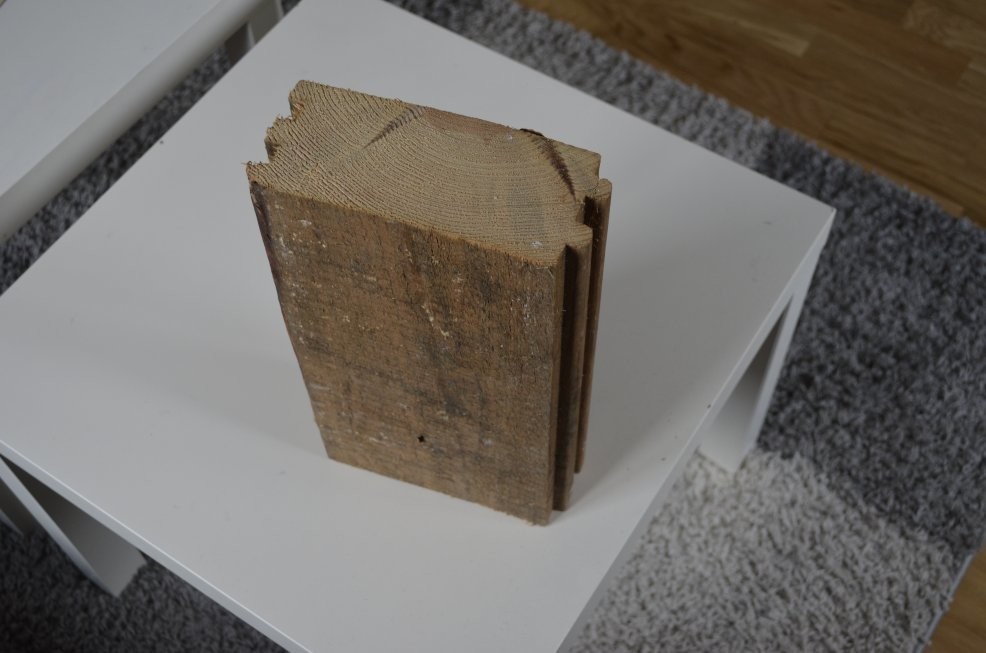
Part of the outer wall 8x18cm.. the center wall is somewhat weaker, but not by much..
If it's like my old brittle, worm-eaten timber in the barn, it may look weak and worn, but it's super timber. Almost comparable to HEA beams. At least mine is. It's incredibly dense, slow-grown wood. Despite being well perforated by wood-boring beetles, I was only able to get a 4" nail 1" in before it bent *. This repeated 4 times, and after feeling how firmly the nails were still held, I bent them in towards the wood and decided to leave it at that. And this was just the top of a "slana" (diam<10 cm) that I was nailing into. If you use HSS drills in the wood, they quickly lose their sharpness.
(* Ok, I may not be a professional carpenter, but I'm not usually that bad with a hammer. )
It certainly looks like the planks are standing on the beam below, and that presents a different situation. In that case, you should probably think carefully before putting the saw to it. But you already knew that.
If it's like my old rickety worm-eaten timber in the barn, then it may look weak and worn, but it's a super timber. Almost comparable to HEA beams. At least mine. It's incredibly compact slow-grown timber. Even though it's well-perforated by common furniture beetle larvae, I only managed to get a 4" nail in 1", then it bent *. This happened 4 times, and after feeling how firmly the nails were fixed despite this, I bent them into the wood and settled with it. And that was just the top of a "slana" (diam<10 cm) that I nailed into. If you use HSS drill bits on the timber, they quickly lose sharpness.
Sorry for OT but such old timber is wonderful! I tried drilling into the sill at home to see how far carpenter ants had eaten. Turns out they had gone about 2 cm because then it was a dead stop in the heartwood! Tried with an 8mm wood drill bit but got nowhere, just started to smoke
I'll continue on the topic and join the chorus that has commented on how hard old timber can be. In my previous house (built in 1949), I was trying to build onto the eaves during additional insulation work. When I tried to drive 6x160mm screws into the existing rafters/trusses, the bits (Torx T25) couldn't handle it; they broke. It was the first and only time I've experienced bits not being able to transfer the necessary torque. After ruining 4-5 bits from different manufacturers and only getting two screws in, I changed my strategy and used an impact driver instead. Then I was able to drive the remaining 20 screws with just one bit.
Click here to reply
Vi vill skicka notiser för ämnen du bevakar och händelser som berör dig.




 )
)