Hello
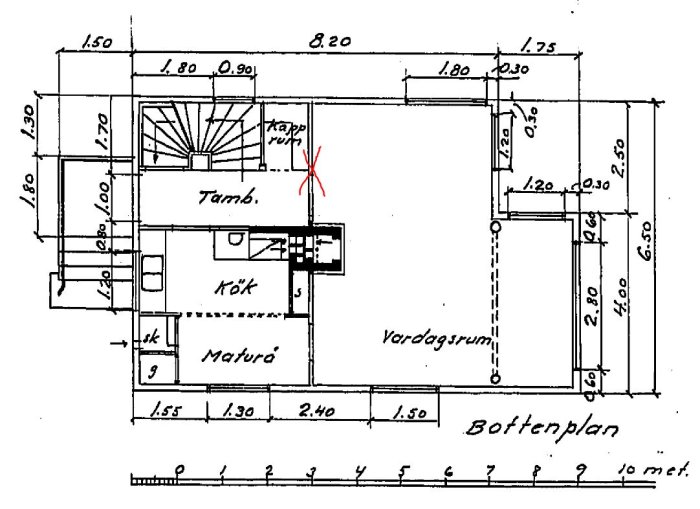
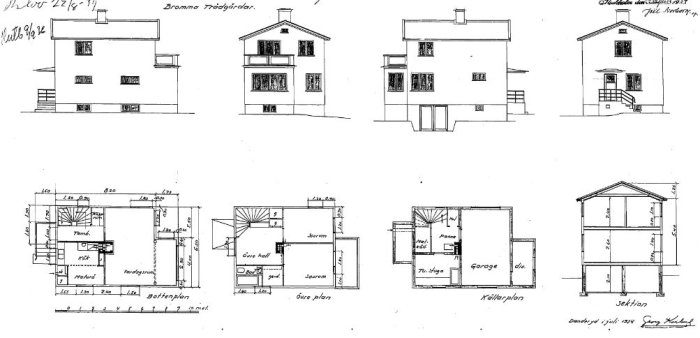
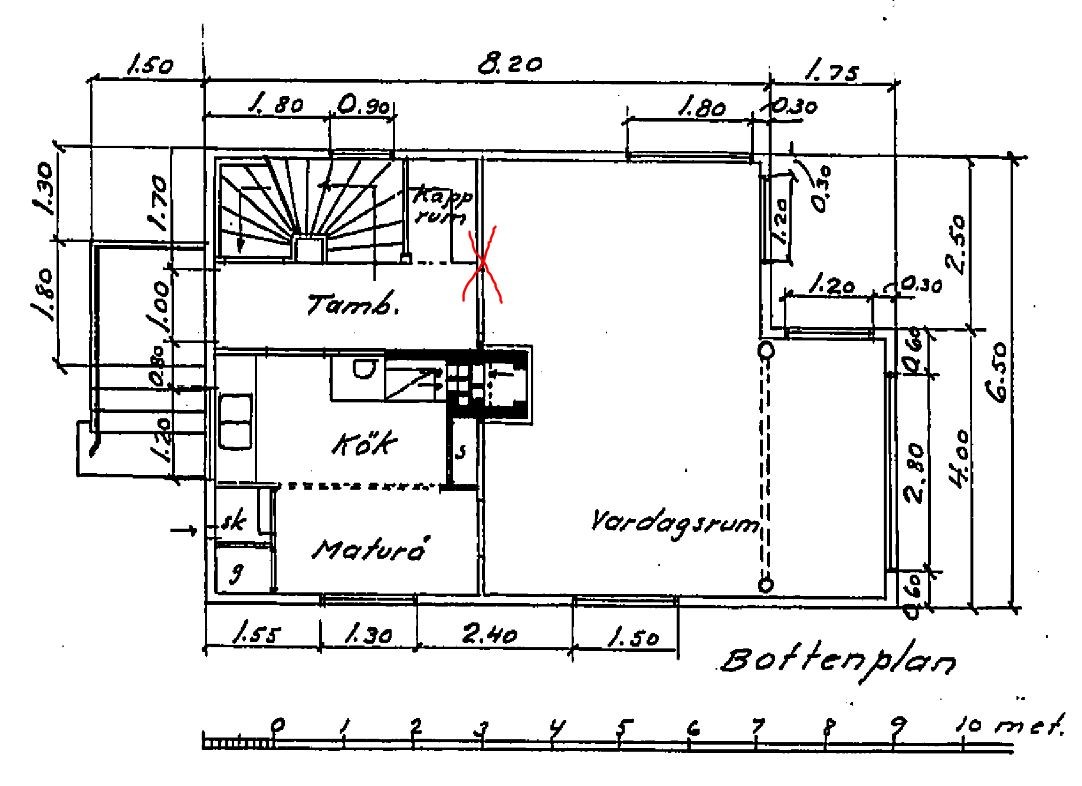
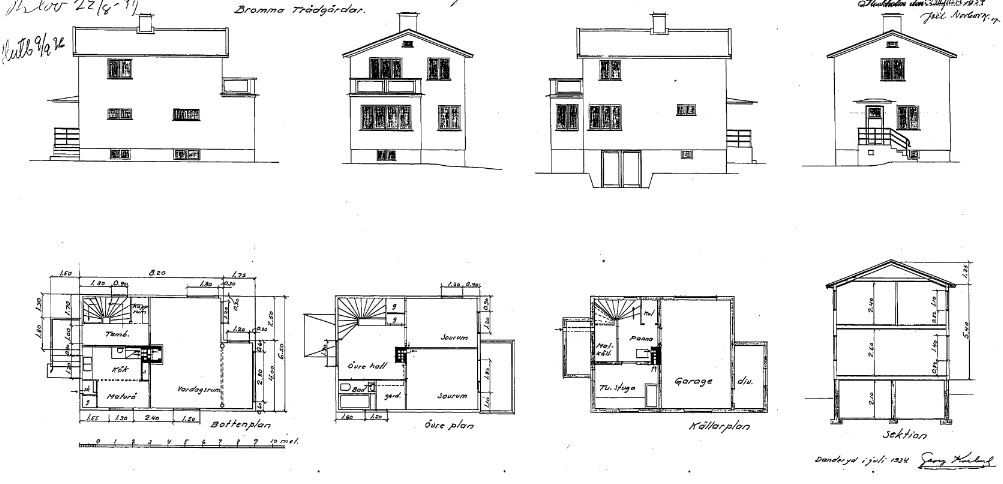
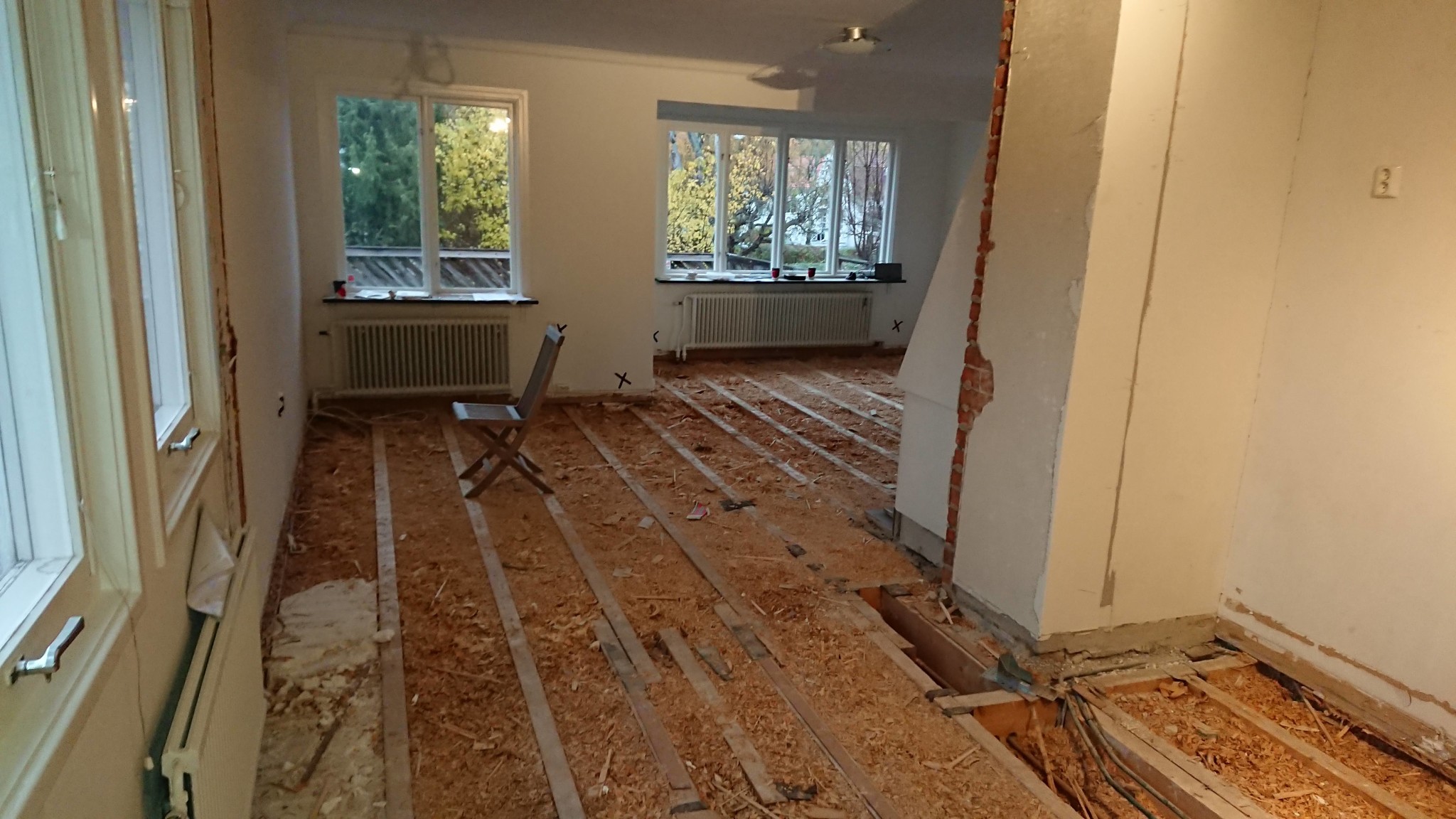
Trying to figure out if the wall between the tambur and living room (see red cross, attached drawing) could have been load-bearing (already removed it...).
The floor joists are perpendicular to that wall and the floor joists towards the basement are supported over a corresponding wall in the basement.
Is there any possibility that this wall is not load-bearing and that I can therefore avoid building support with glulam beams?
Perhaps the exclusion method with an 8-meter beam span is completely unreasonable in itself for a house built in 1929?
There is a stairwell there and then it is certainly a transition between the beam and the outer wall on which the floor 1 tr rests, what did the wall look like, a solid/thick piece that stood under tension or was it thin and easy to take down?
It is a staircase there and it's likely a transfer between the beam and the outer wall that the 1st floor rests on. How did the wall look? Was it a sturdy/thick piece under tension or thin and easy to take down
Thanks for the reply, according to the builders, the wall was quite stubborn to take down and made entirely of wood like all the walls seem to be in the house. However, it wasn't very thick, about 10 cm.
Is there any way to ensure there is such a transfer between the beam and the outer wall?
Houses from 1929 should not be trusted... I've lived in one for 30 years myself, so I know the hard way. You can never assume that the second floor is a repeat of the first floor. I think much (except that the roof hasn't collapsed) suggests that the wall was load-bearing, if you go by the drawing. However, if it had been load-bearing, the photo would have looked different. It's likely that the floor joists on the next floor are in the other direction. This also aligns better with the direction of the roof trusses. You'll need to go up and check that.
Click here to reply
Vi vill skicka notiser för ämnen du bevakar och händelser som berör dig.