Hi, I hope I'm in the right forum to some extent.
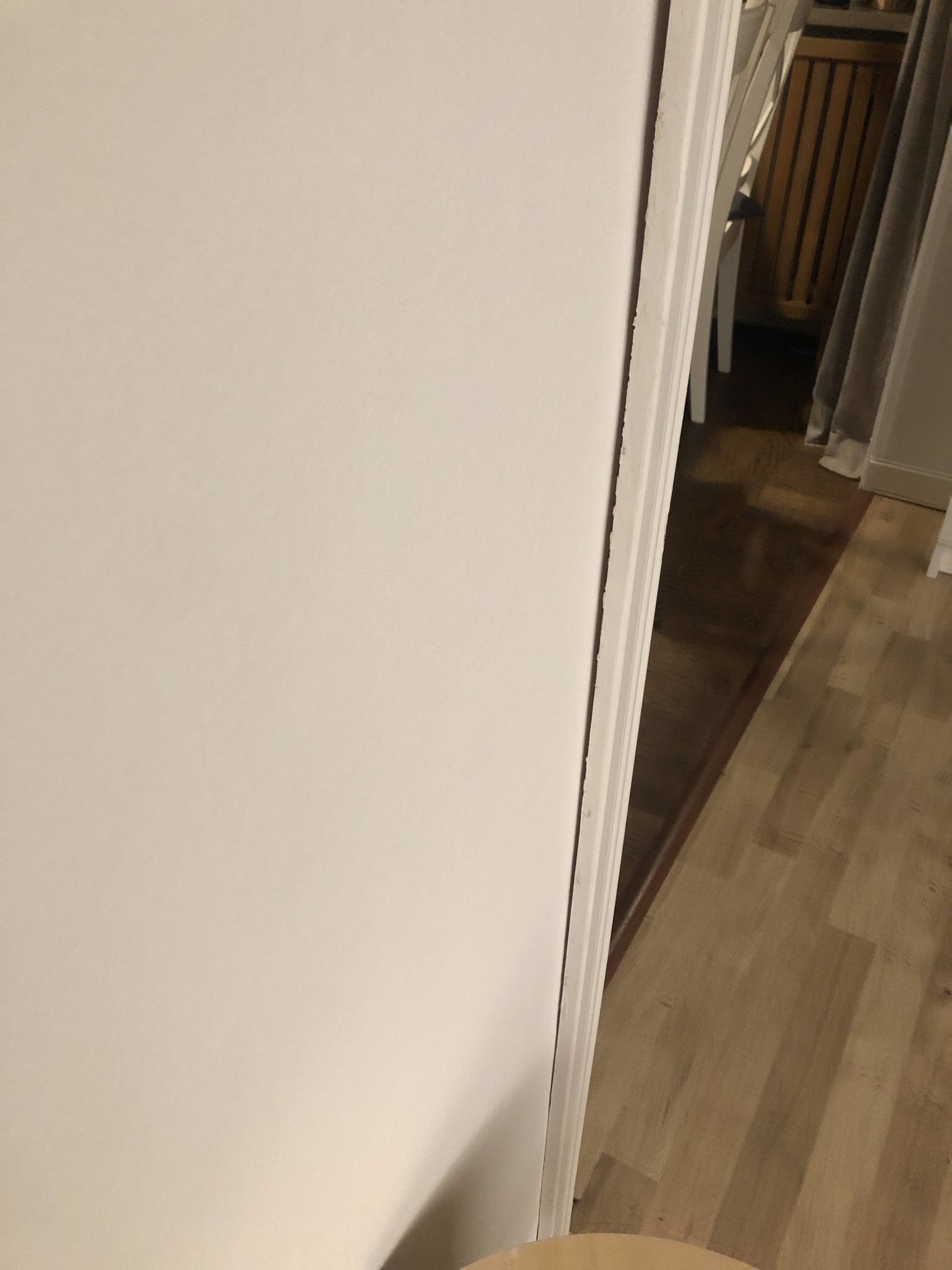
Does anyone know how I can fix this in the nicest (and easiest) way, the strip is not close to the wall when we've nailed it.
Putty? White silicone? Wood? All solutions are welcome except redoing the whole door frame.
Hi, I hope I have come to somewhat the right forum.
Does anyone know how I can fix this in the nicest (and simplest) way, the trim is not flush against the wall when we nailed it in.
Putty? White silicone? Wood? All solutions are welcome except redoing the entire door frame.
Of course, I will be painting the frame and trim in the near future.
How is it nailed seems a bit like yours is sitting a bit crooked. If it couldn't be fixed, I would have used a baseboard nailed through the trim and then covered the rest with latex caulk.
Just a question, when you lay the molding on a floor, is it completely straight? Quite often, moldings warp during painting.
Try to nail closer to the frame but still at the edge of the trim,
It's probably not wood that the nail is gripping onto where you have nailed.
If it just grips the wood then you can bend in the trim but at the cost of the jernkng opening, so you still can't avoid bringing out filler/latex sealant.
Absolutely do not use silicon as it is not paintable.
How is it nailed, looks like yours is a bit crooked. If it couldn't be fixed, I'd have bottomed with a list nailed through the trim and then covered the rest with latex caulk.
Just a question when you're laying, is the list on a floor completely straight? Quite often, lists warp when painting.
Ttopmount said:
How is it nailed, looks like yours is a bit crooked. If it couldn't be fixed, I'd have bottomed with a list nailed through the trim and then covered the rest with latex caulk.
Just a question when you're laying, is the list on a floor completely straight? Quite often, lists warp when painting.
should be straight, however the nail is quite far towards the opening, since it's concrete further out.
This list was up before and it was a bit the same thing then, hence my guess that the wall is uneven (old house) it's the same thing on the other side of the wall on the same side too.
Try nailing closer to the frame but still on the outer edge of the trim,
It's probably not wood that the nail is anchoring into where you've nailed.
If it just gets anchored in wood, you can bend the trim, but with the cost of the jernkng opening, so you still can't avoid bringing out the filler/latex sealant.
Absolutely do not use silicone as it is not paintable.
Thanks for the response. Unfortunately, I can't nail on the outer edge as it is concrete.
It's likely the door frame and wall construction causing this.
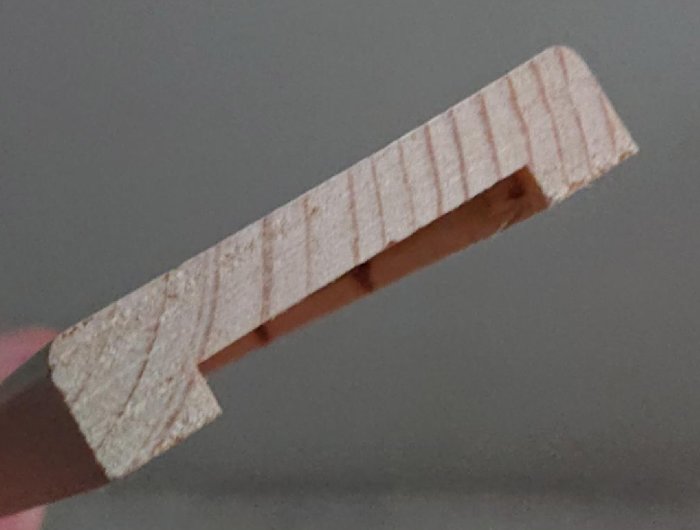
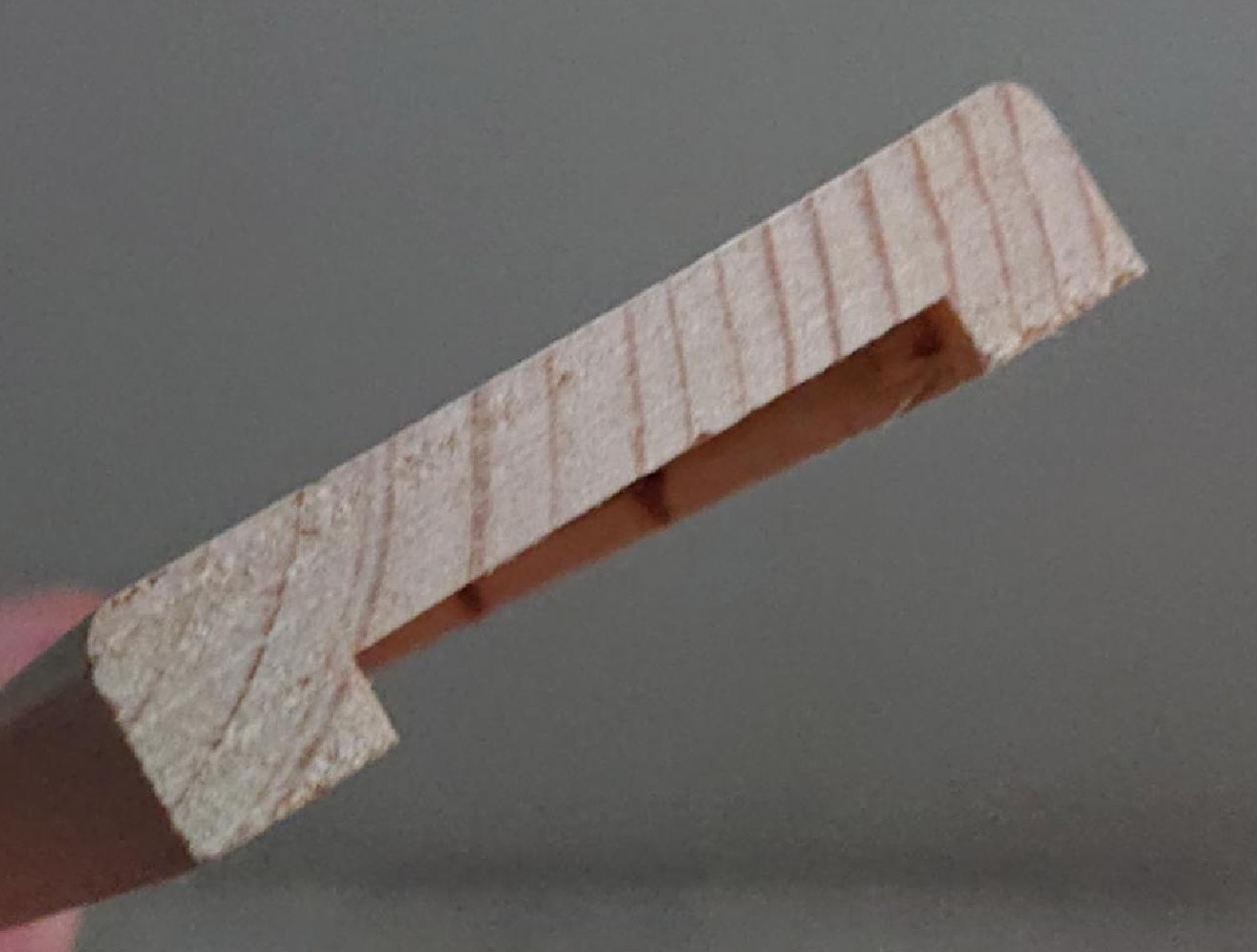
If it is not enough to just nail it on the outer edge, the only solution is probably to remove it again and plane down the edge so it rests not in the middle of the moulding but on both edges.
I have used nail plugs (for clips) when gluing moldings, to get some pressure. Which worked fine, though a bit tricky as you need to hit the right spot. Another time I used small nail plugs intended for moldings, which I countersunk and filled over, worked very well.
An alternative if you don't want to use wooden dowels is to apply adhesive to the strip before nailing it. Apply pressure to the strip for a while using a prop/old piece of wood/curtain rod, whatever you have. Then use latex caulk on the edge.
It looks like the frame is not level with the wall but is a bit inside the wall.
It's better if the frame is a bit outside the wall.
This can probably be arranged by "building out" the frame with a smyglist, preferably 8x21 mm, between the frame and trim so that the trim does not "ride" on the edge of the wall. It is preferably complemented with glue between the wall and trim when you secure the trim with nails/brads through the smyglist into the frame. https://www.byggmax.se/smyglist-p08668015
I have renovated my hallway with plastered walls on lightweight concrete where the door frames were mounted before plastering. To make it work, I had to rout out extra on the back of the trim and use a combination of glue and nails, and then press it while the glue dried.
Click here to reply
Vi vill skicka notiser för ämnen du bevakar och händelser som berör dig.