When the exterior walls are done, the interior walls will follow... I thought I could ask you while I have you "on the line."
They are brick walls that have been plastered. I have washed them with limewater to bind the mortar that would otherwise just fall out. What would you have done with these walls?
Do you want a smooth surface or do you prefer the character that a brick wall provides? If you want to renovate the joints, it is an extremely tedious job. You remove some of the joints using a joint milling cutter available for the angle grinder, or you rent a good machine. A good machine is much easier to work with since it's so easy to damage the bricks. Brush out all loose material. Then water thoroughly. Apply the mortar. Let it set a little. Then scrub off the excess.
There was a little break in the reporting here, but I've "cheated" a bit on the brick walls by kind of plastering with lime mortar and then brushing out the stones with a wire brush. It will probably be OK with lime paint on top.
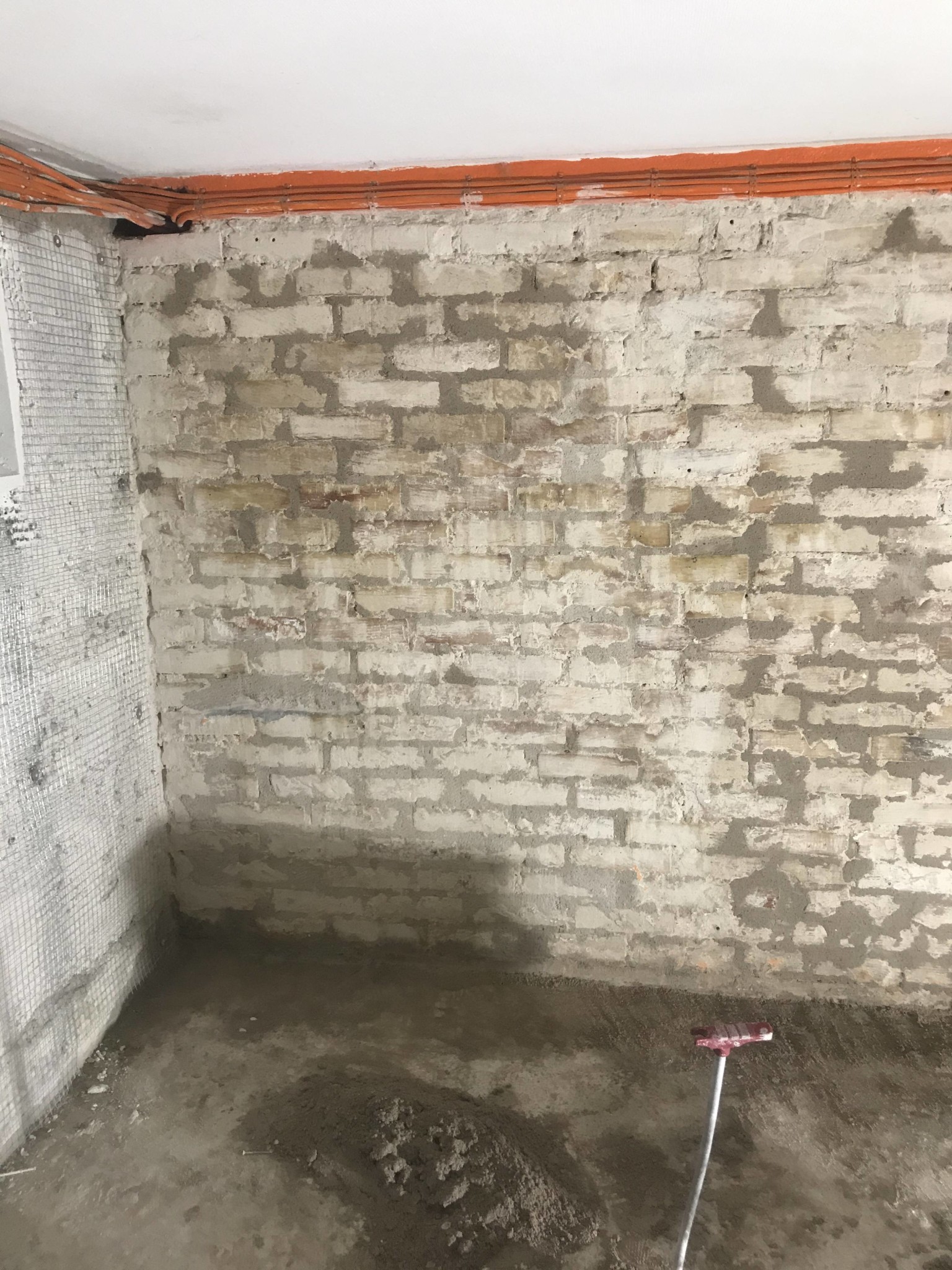
Now I have started my little project. The idea is to spruce up a couple of old walls where I sanded off old paint of the wrong type, and also to spruce up a couple of new walls made of lecablock. It will be a small storage, so the areas are not enormous. I will be using hydraulic lime plaster. I believe it was lime plaster originally in 1933.
While others are hoarding toilet paper, I'm hoarding hydraulic lime plaster. According to the man at my local concrete factory from whom I bought the plaster, no priming is needed when using hydraulic lime plaster, "it sticks to everything". Despite that, I tried priming a bit yesterday with loosely mixed lime plaster.
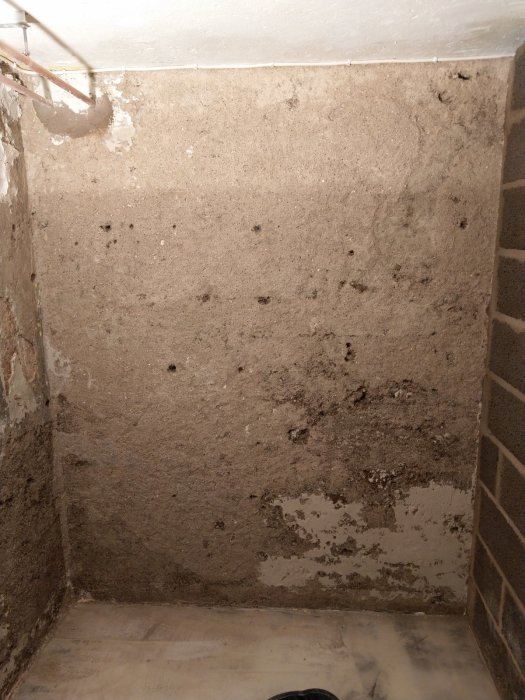
Before priming:
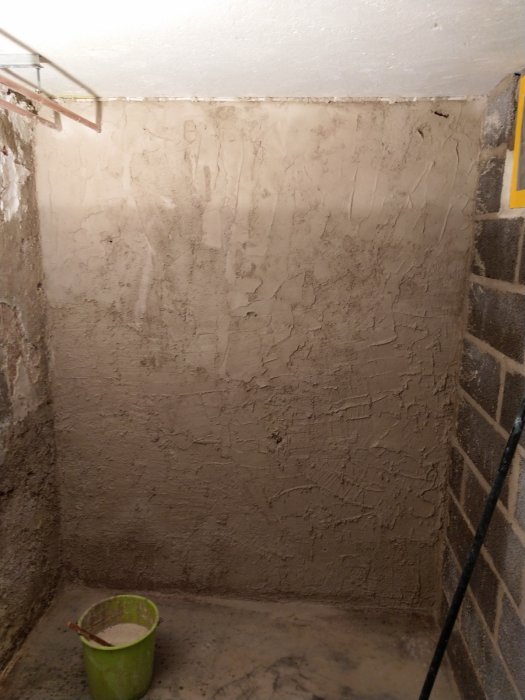
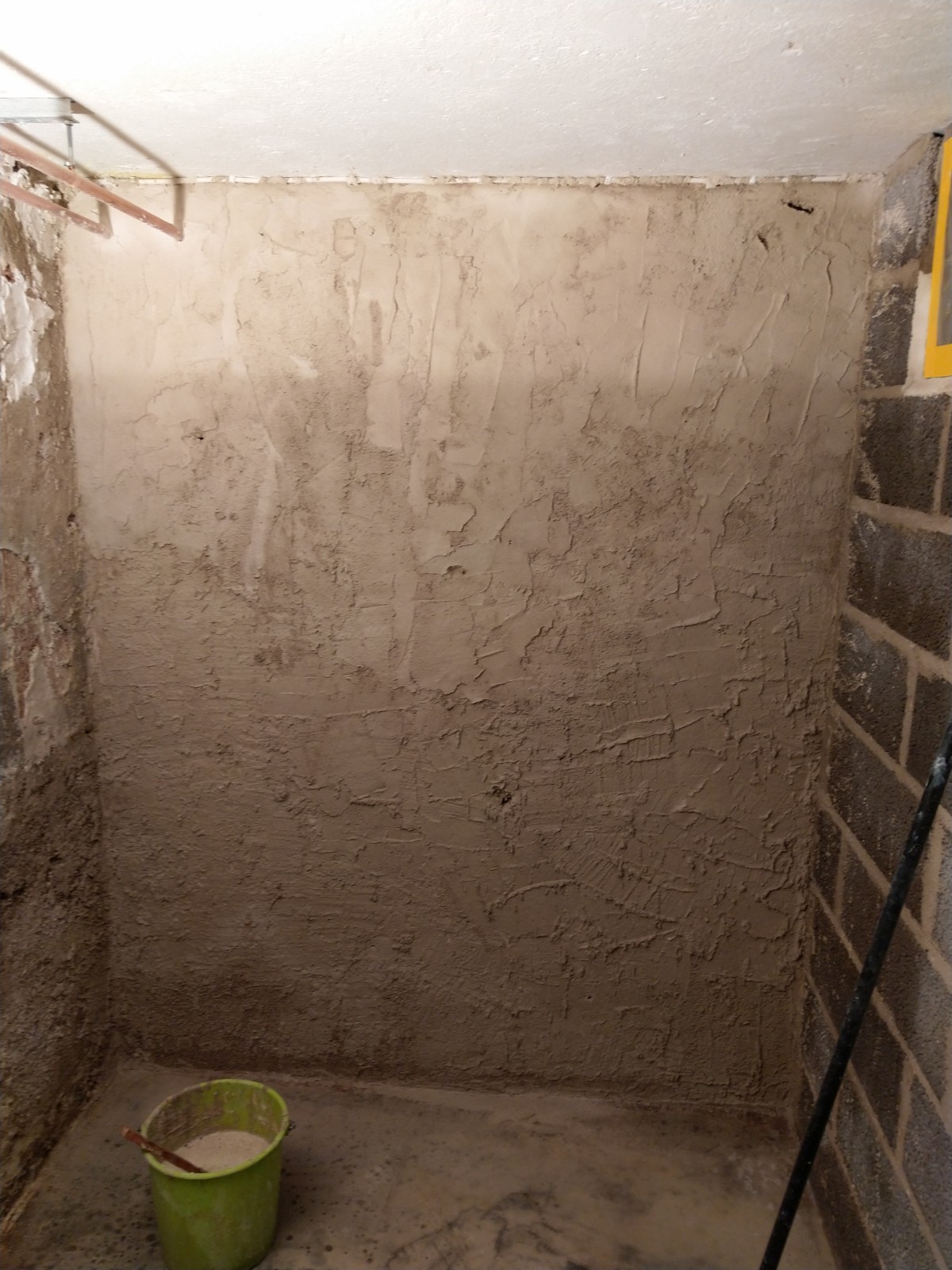
After priming:
Some reflections:
My "backhand" is terrible, my "forehand" just a little better, and my "serve" is the best, but still far from the pros. It was terribly time-consuming, so moving forward I will skip priming and just continue. It seems to adhere well anyway.
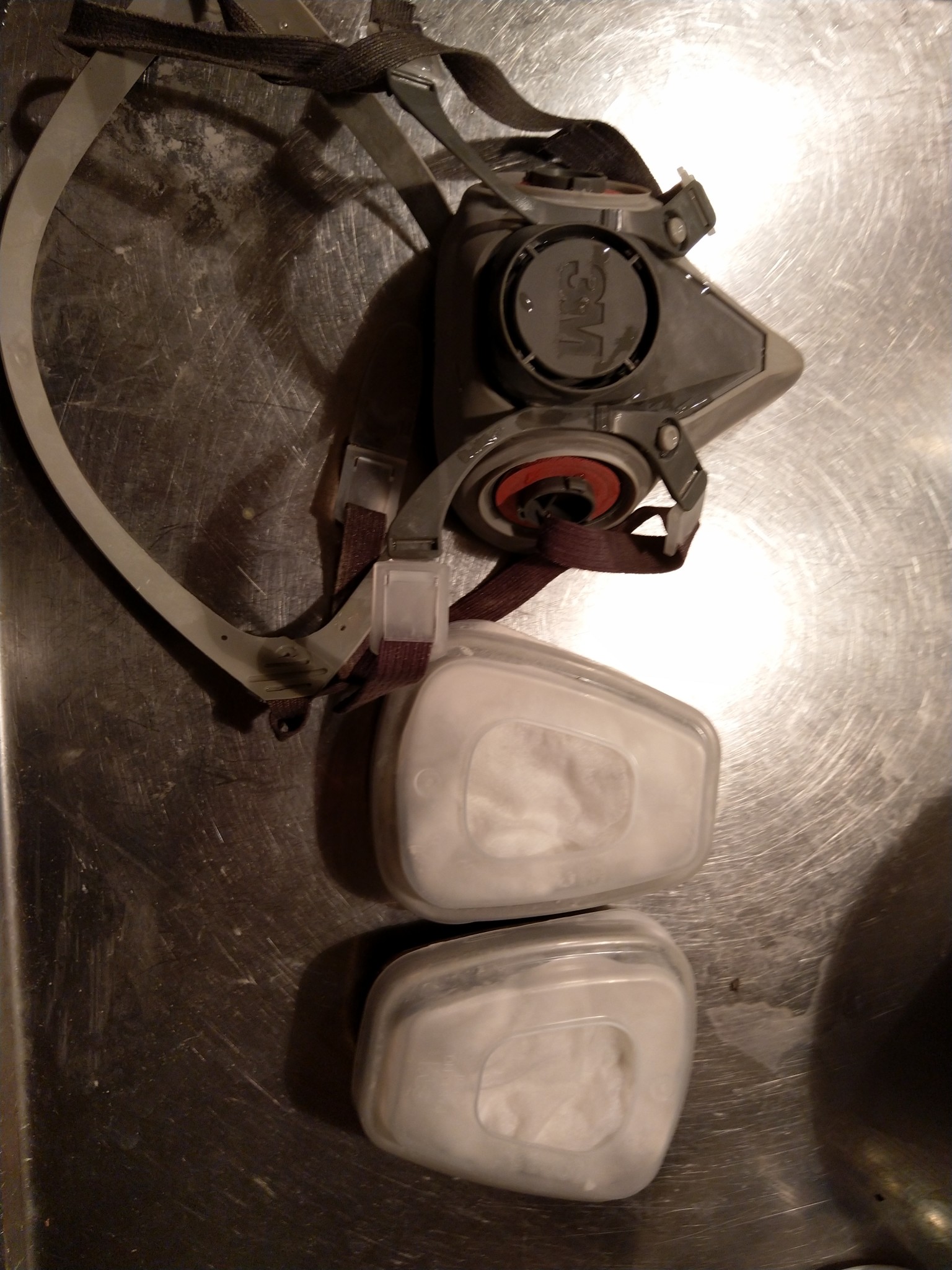
For some reason, I couldn't buy respirators now, so I had to proceed without. Now I have a hopefully temporary cough from lime plaster dust. It's not good to cough in these times. You get looks. I've found an old respirator that I'll try to clean, so maybe I'll avoid the trouble next round.
Today I patched up the larger irregularities, but I think I have to let it set for a while now. It gets very humid in the air, so it will probably take some time before I can apply the next layer.
Use respiratory protection. Lime is not fun to get down in your airways. I often use a full face mask. Not fun to sweat in, but you only have two eyes and two lungs.
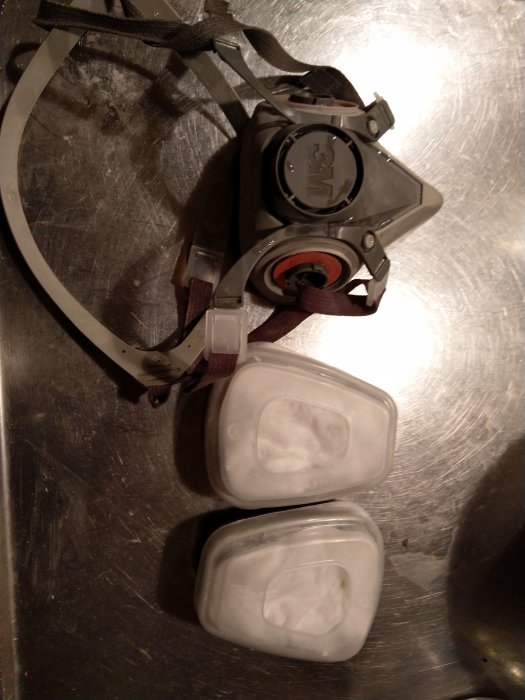
Now I have cleaned the respirator I found. It was in better condition than I thought. After rinsing and vacuuming, it looks really decent. The expiration date on the filters hasn't passed either. Next time I mix mortar, the mask is on.
The brick wall is painted white, possibly with plastic paint, which can't be plastered without mesh since the plaster won't adhere to any paint (except lime paint).
If it had been unpainted, it would have worked excellently to plaster it without mesh.
I have now started my little project. The idea is to spruce up a couple of old walls where I sanded off old paint of the wrong type, and to spruce up a couple of new walls made of lecablock. It will be a small storage room, so there aren't any enormous surfaces. I will use hydraulic lime plaster. I believe it was lime plaster originally in 1933.
When others stockpile toilet paper, I stockpile hydraulic lime plaster. According to the man at my local concrete factory, where I bought the plaster, no primer is needed when using hydraulic lime plaster, "it sticks to everything". Despite that, I tried priming a bit yesterday with loosely mixed lime plaster.
Before priming:
[image]
After priming:
[image]
Some reflections: My "backhand" is terrible, my "forehand" just a little better, and my "serve" is the best, but still far from the pros. It was terribly time-consuming, so going forward, I'll skip the priming and just go on. It seems to stick well anyway.
For some reason, I couldn't buy a face mask now, so I had to go without. Now, I hopefully have a temporary cough from lime dust. It's not good to cough in these times. You get looks. I've found an old face mask that I will try to clean, so maybe I can avoid the misery next time.
Today, I filled in the larger uneven areas, but I think I have to let it set for a while now. It gets very humid, so it will probably take a while before I can do the next layer.
Hydraulic lime plaster doesn't adhere to everything; it adheres to the same things as all KC plasters do. However, hydraulic plaster is not KC. It's just a bit more expensive and slower to dry since there is no cement in it. If you want something that sticks to everything, use Ardex A46, which is cement-based but has plastic in it.

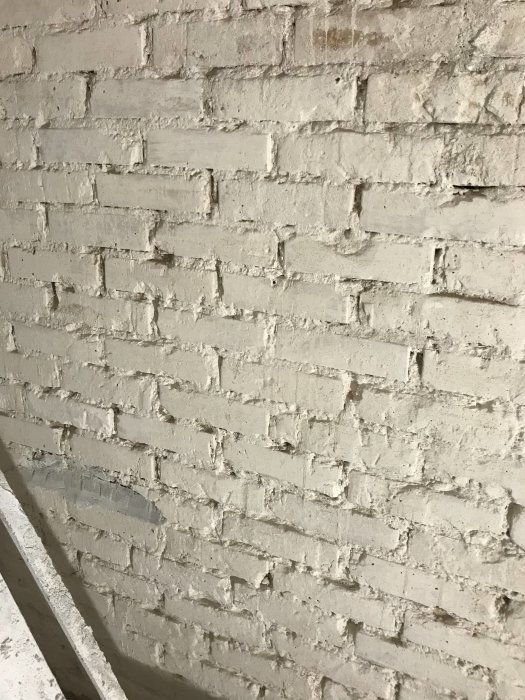
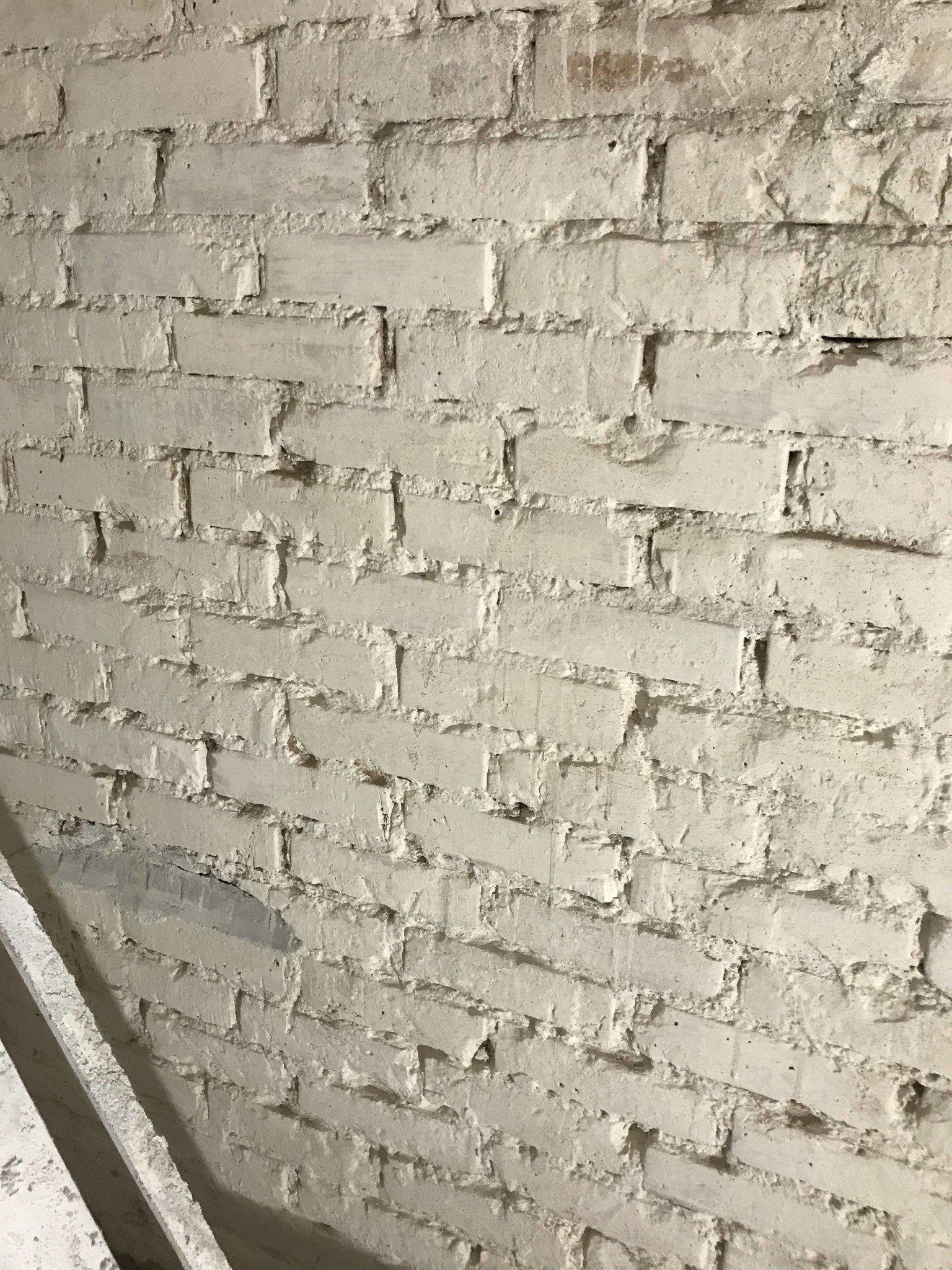

 According to the man at my local concrete factory from whom I bought the plaster, no priming is needed when using hydraulic lime plaster, "it sticks to everything". Despite that, I tried priming a bit yesterday with loosely mixed lime plaster.