
4,540 views ·
6 replies
5k views
6 replies
Leveling concrete floor for Platon mat
Prerequisites:
Basement level in a newly drained slope villa. To be furnished as living space. The slab is reinforced about 80mm thick, resting on 0-8 sand.
The interior of the slab is exposed and everything is now bone dry after successful drainage, but I want a belt and suspenders approach, so I'm planning to lay down: Platon multi with upturn and passively ventilated with open skirting, 200mm S100 foam plastic, felt paper (to prevent squeaking), grooved chipboard with underfloor heating, hardboard, taped carpet.
There are 3 rooms, each about 10 sqm.
The Problem - the concrete floor is very uneven.
Additionally, we've demolished part of it and laid new drainage pipes and refilled with sand and leca.
To make the floor stable and even enough for Platon, we need to level it out. Flow is out of the question since it involves a very uneven surface and dips up to 30mm.
Tried grinding it down with an HTC, but it couldn't handle the job (6000 SEK down the drain).
Question - Would it be effective to patch with fine concrete?
The surface doesn't need to be aesthetically pleasing and any cracks shouldn't be an issue...
Question 2 - how long does it need to cure before we cover with Platon?
Basement level in a newly drained slope villa. To be furnished as living space. The slab is reinforced about 80mm thick, resting on 0-8 sand.
The interior of the slab is exposed and everything is now bone dry after successful drainage, but I want a belt and suspenders approach, so I'm planning to lay down: Platon multi with upturn and passively ventilated with open skirting, 200mm S100 foam plastic, felt paper (to prevent squeaking), grooved chipboard with underfloor heating, hardboard, taped carpet.
There are 3 rooms, each about 10 sqm.
The Problem - the concrete floor is very uneven.
Additionally, we've demolished part of it and laid new drainage pipes and refilled with sand and leca.
To make the floor stable and even enough for Platon, we need to level it out. Flow is out of the question since it involves a very uneven surface and dips up to 30mm.
Tried grinding it down with an HTC, but it couldn't handle the job (6000 SEK down the drain).
Question - Would it be effective to patch with fine concrete?
The surface doesn't need to be aesthetically pleasing and any cracks shouldn't be an issue...
Question 2 - how long does it need to cure before we cover with Platon?
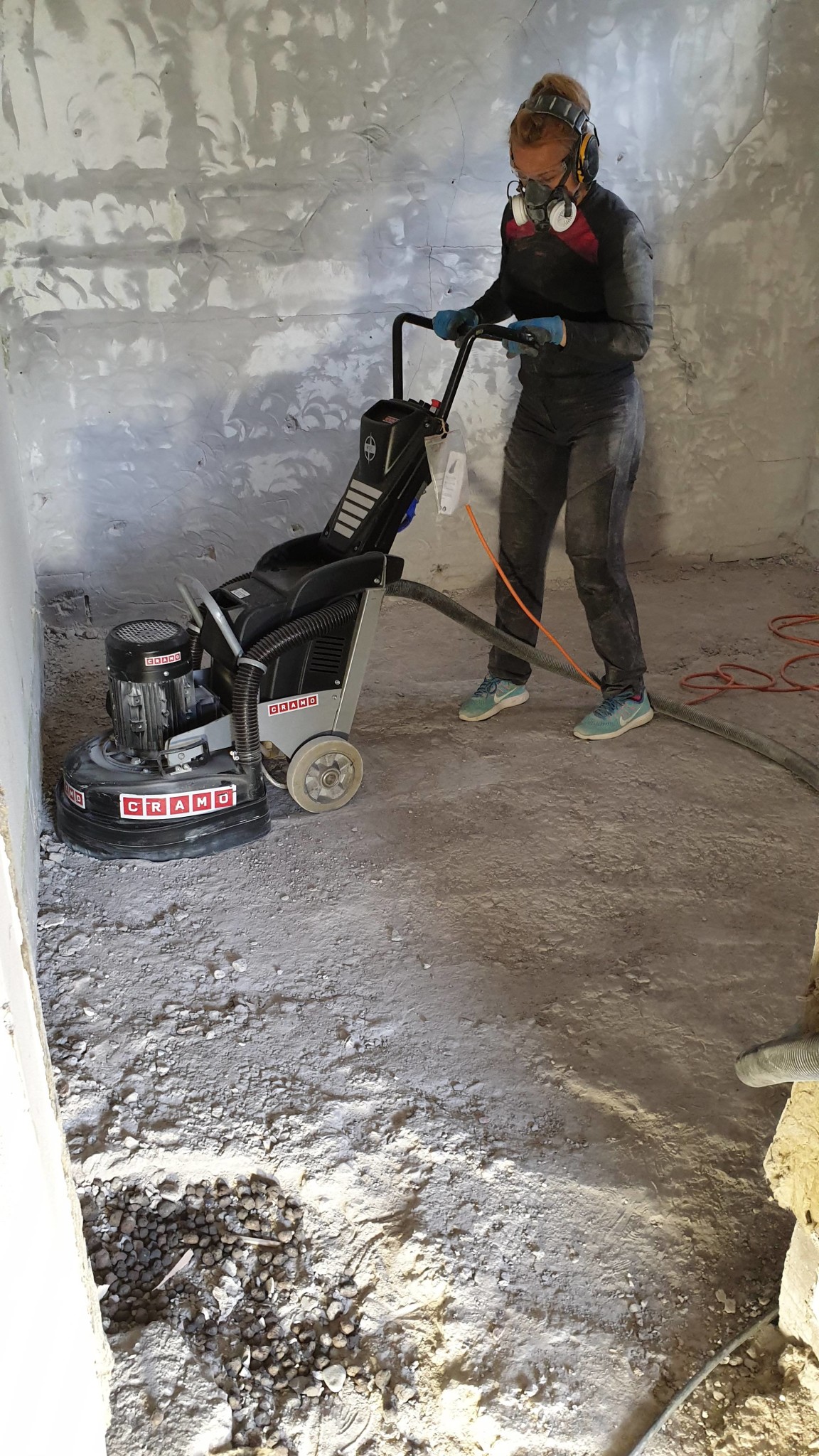



I'm not a carpenter, but I would have filled the holes with concrete. Filled in the worst valleys and sanded down the peaks that stick up with a handheld concrete sander. That should be even enough, or is the entire floor sloping?
Then put on Platon and do as you planned.
Question: Do you have room for that much (200mm) insulation in the basement?!
If it's sloping and uneven, maybe Nivell could be an option. However, I'm not sure how much it adds. Or if it's any good.
Then put on Platon and do as you planned.
Question: Do you have room for that much (200mm) insulation in the basement?!
If it's sloping and uneven, maybe Nivell could be an option. However, I'm not sure how much it adds. Or if it's any good.
Floating becomes quite expensive. 30sqm x 20mm = 40 bags = approx 9000SEK
I have received a quote for leveling. Approximately 14000SEK per room (!).
If one is to "plaster" with concrete, does regular fine concrete work? Priming? Watering before/after? Curing time?
I have received a quote for leveling. Approximately 14000SEK per room (!).
If one is to "plaster" with concrete, does regular fine concrete work? Priming? Watering before/after? Curing time?
Regarding the height of the insulation... not really. But underfloor heating requires at least 200 to avoid the risk of reverse moisture transfer.
I'm considering 150mm cell foam and a radiator instead. I have 242cm from sole to ceiling. So it will be tight...
What would you do?
I'm considering 150mm cell foam and a radiator instead. I have 242cm from sole to ceiling. So it will be tight...
What would you do?
I tested using fine concrete for filling now. To remove the worst holes and thereby use less self-leveling compound.
The surface will be about 10-20mm thick.
When can I pour?
The recommended RH is probably 90%. With such a thin surface, what can I expect in terms of time?
The surface will be about 10-20mm thick.
When can I pour?
The recommended RH is probably 90%. With such a thin surface, what can I expect in terms of time?
Hi minitusen, how did this project go, how did you solve it in the end?M minitusen said:
I have similar issues with an uneven slab.
Click here to reply