I'm in need of a bit more storage space in the house and have an unused attic (cold attic, uninsulated). I thought I could store Christmas decorations and other stuff that isn't directly affected by cold and some moisture.
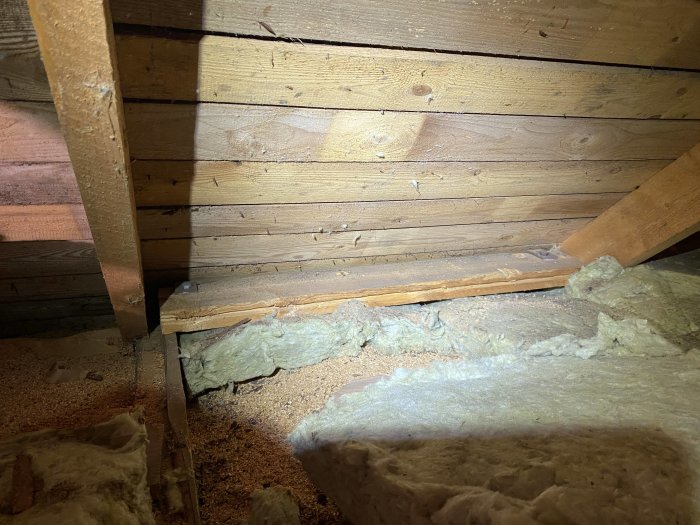
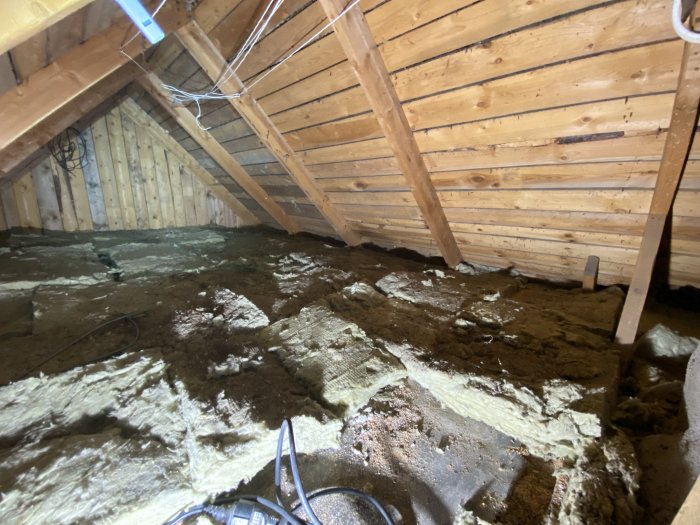
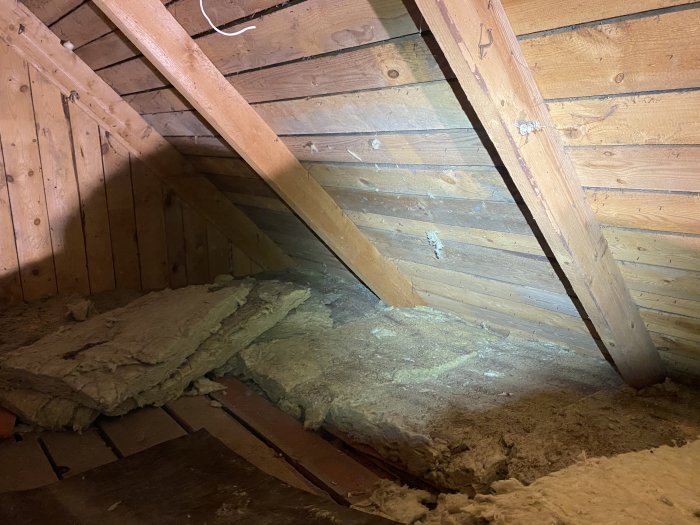
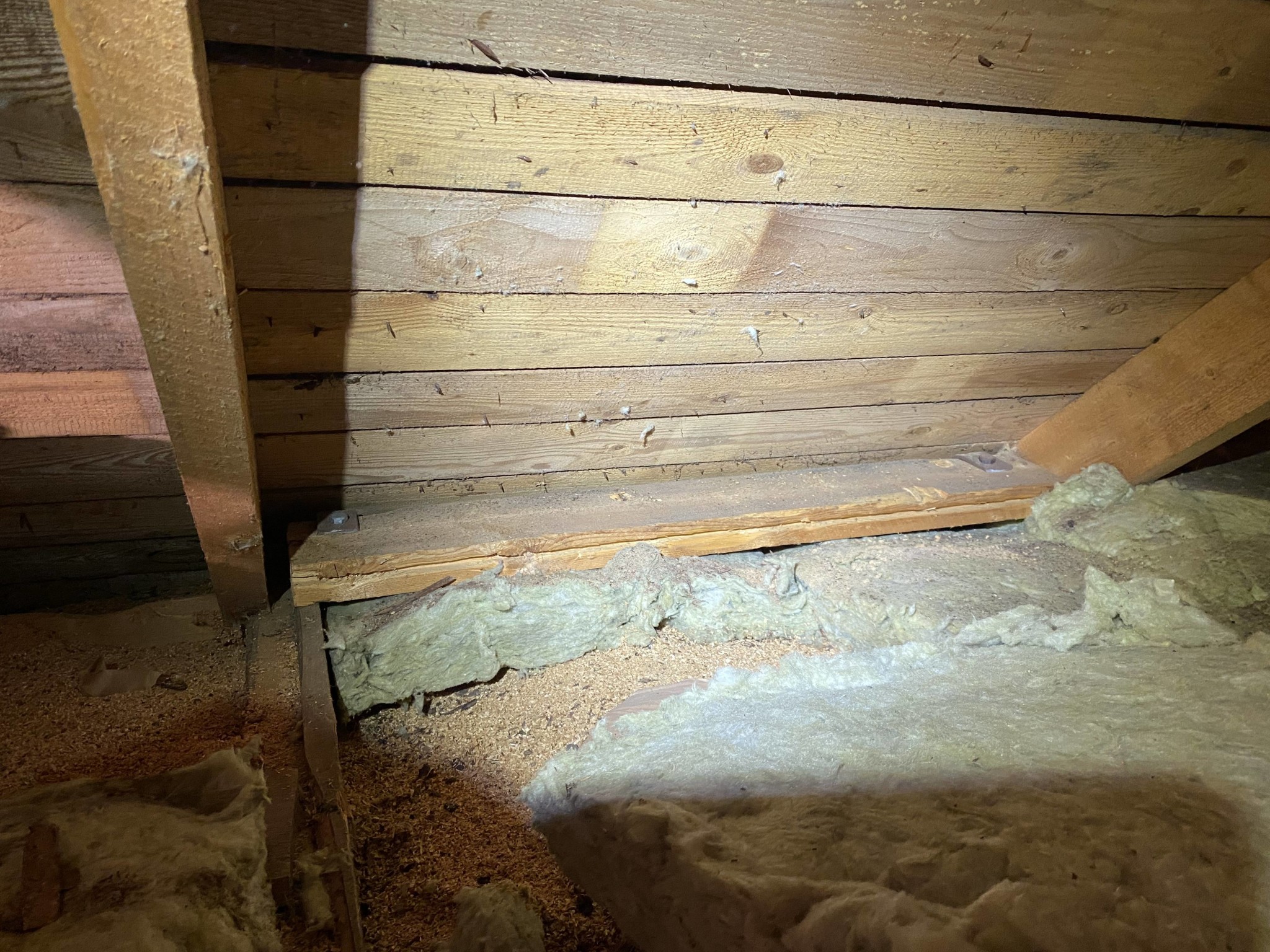
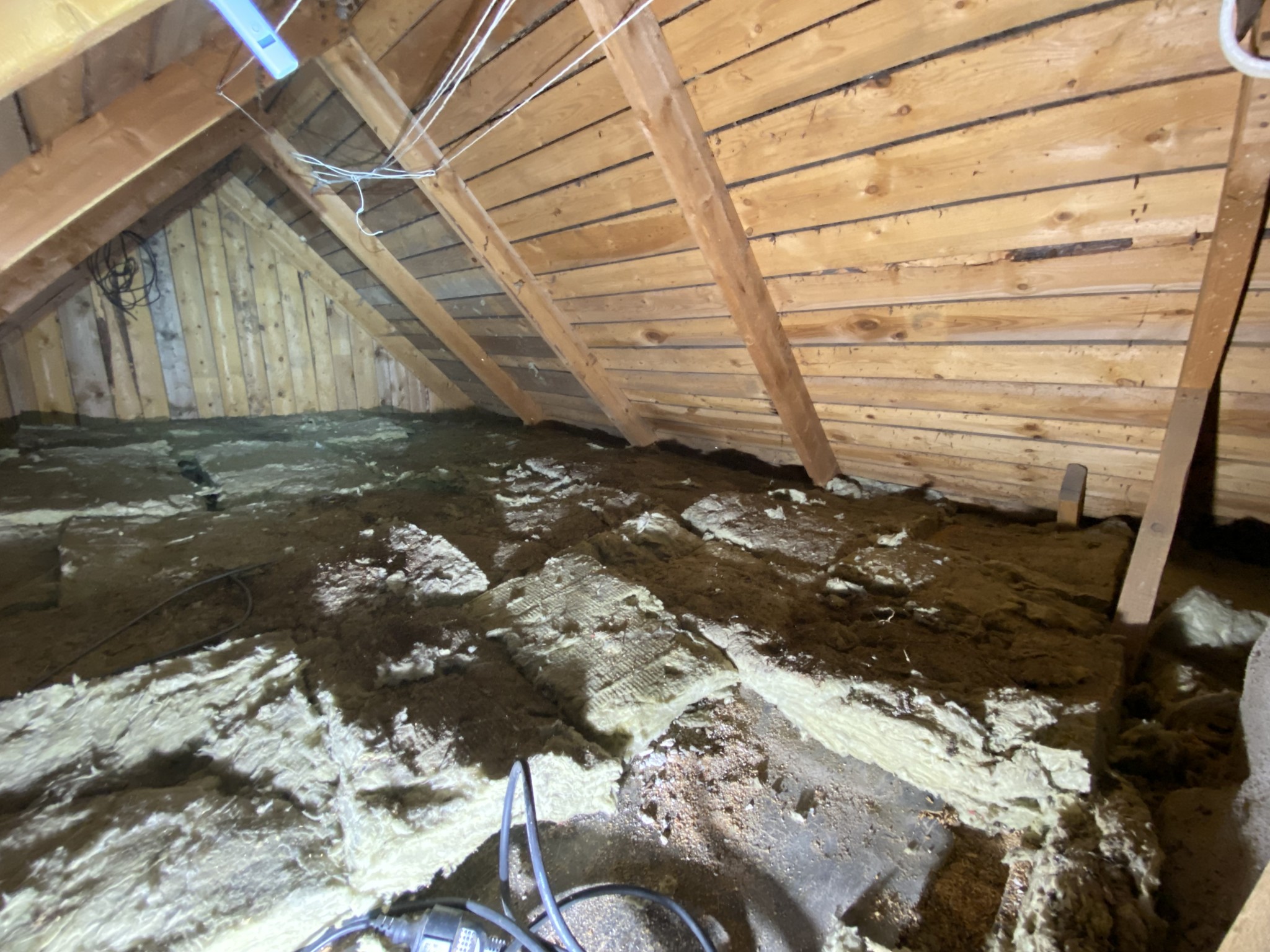
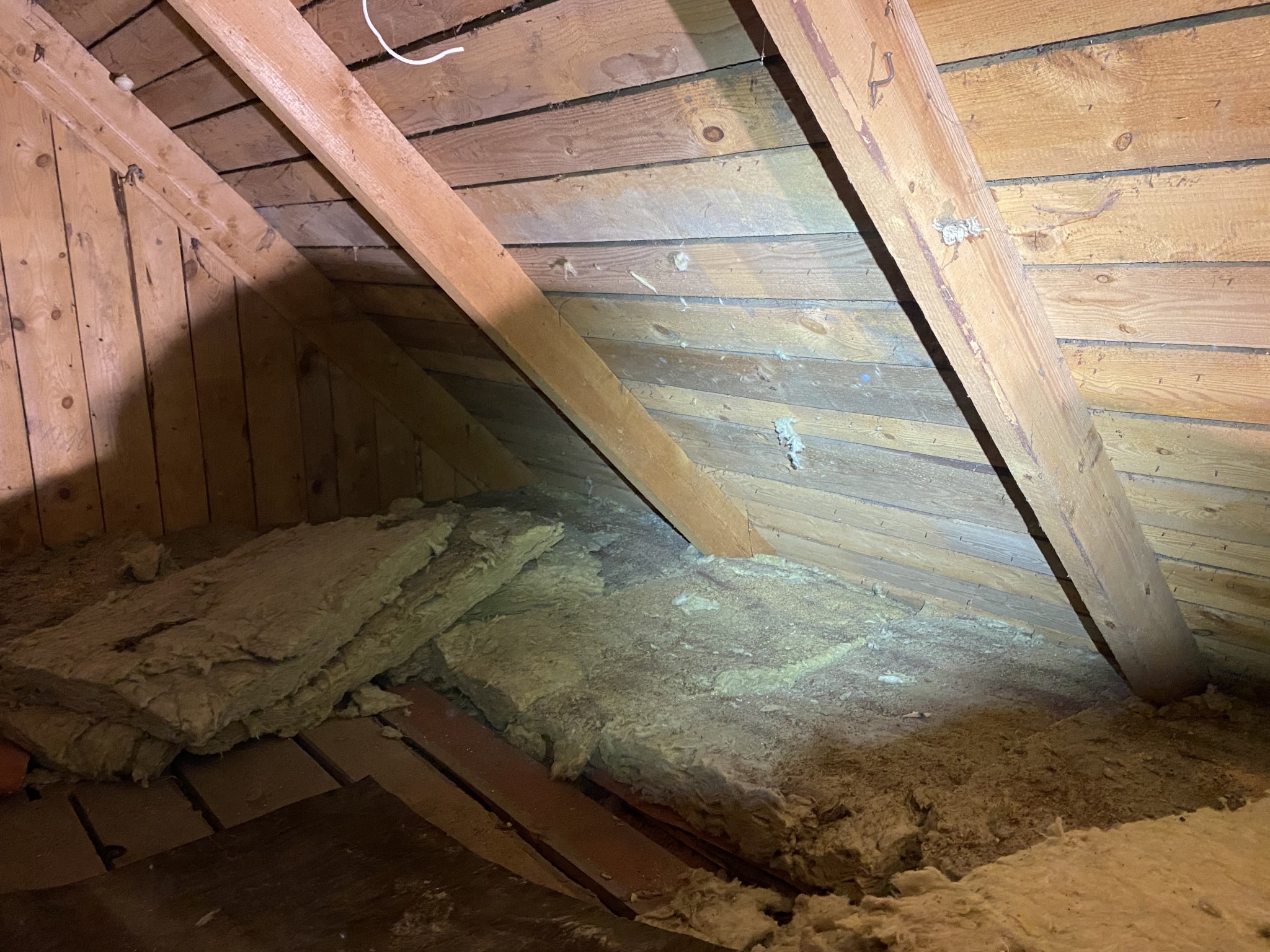
The house was built in 1928, has 2 floors and then the attic. I was up in the attic yesterday, between the rafters (45x150) there's a layer of paper, sawdust (about 10-15cm thick layer), then planks between the rafters (about 28x150), an old "mat" and on top someone has added insulation.
I have no problems with moisture, so I don't want to change anything with the "insulation". My thought is to lay a layer of rough lumber, or something similar, on top of the insulation.
I'm not planning to store any heavy boxes or large loads, but I'm still worried that the house can't handle the increased weight. My thought is to place the boxes along the sides, to put as little weight as possible in the middle of the rafters. If I jump/sway in the middle of the rafters, I can feel them flex/move.
The span is about 350cm, and the rafters are 45x150. Do you think they can handle the increased weight, or can I reinforce the structure somehow? A beam on top of or next to the rafter, screwed into the truss?
I'm unsure if I can get 350cm long studs up through the hatch; would it be possible to splice the new studs and still achieve reinforcement?
Or would it be enough if I lay beams over several rafters to distribute the load over more than one rafter?
The floor joists you're talking about are hanbjälkar. Their main task is to hold the roof trusses together. They are not designed to bear any load other than insulation. That's why they feel wobbly to walk on. However, they can handle storage of lighter things like Christmas decorations and such. The fiberglass insulation laid on top of the sawdust is a form of additional insulation that was added later. It's best if you first build on the hanbjälkar so the new sheathing doesn't compress the insulation (which seems to be a bit carelessly laid). Remove the old loosely laid boards. Take the opportunity to reorganize everything so it becomes a little more tidy.
The floor joists you're talking about are binders. Their main task is to hold the roof trusses together. They are not sized to carry any load other than insulation. That's why they feel shaky to walk on. However, they can handle the storage of lighter items like Christmas decorations and the like. The glass wool mats on top of the sawdust are a form of additional insulation added afterward. The best thing is if you first build up the binders so that new roof boards don't compress the insulation (which seems to be a bit carelessly laid). Remove the old loosely laid boards. Take the opportunity to reorganize it all to make it a bit more tidy.
Okay. Understood.
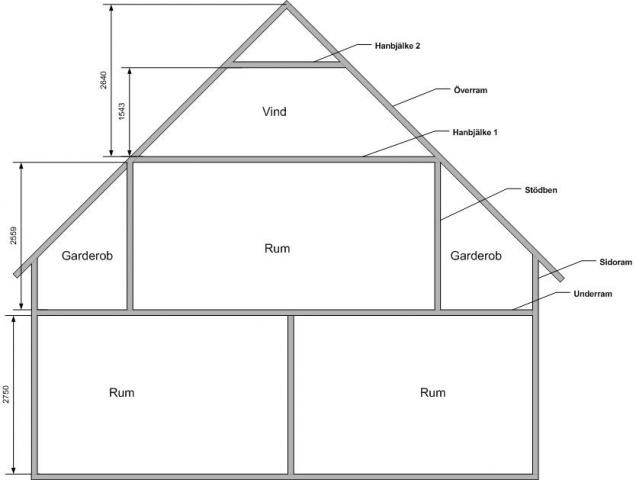
I found an image that resembles our construction, except that we don't have binder number 2.
Binder number 1 is about 350cm long.
You mean that I should place, say a 45x95 on top of the existing 45x150, so they together form "one" beam measuring 245 in height?
And if I feel that cc110 between the beams is too long, I should add joists at cc60 on top of the 45x95 I've placed.
Is it possible to extend the 45x95 joist with something like a hole plate or overlap joists, or is that just wishful thinking?
You are adding 45x95 to achieve the distance, which does not enhance the load-bearing capacity of the collar tie. You can splice as you like. The large distance between the trusses should be compensated by choosing slightly thicker sheathing. In an old truss, the sloping rafters are called "högben." The terms top chord and bottom chord are primarily used for trusses. The collar ties also serve to reduce the dimensions of the högben. Therefore, there may be more collar ties.
You add 45x95 to get the distance, which does not reinforce the carrying capacity of the collar beam. You can splice any way you want. The large distance between trusses can be compensated by choosing slightly thicker boarding. In an old truss, the sloping rafters are called high beams. The terms upper chord and lower chord are primarily used for trusses. The collar beams also serve to reduce the dimensions of the high beams. Therefore, there may be more collar beams.
Thanks for the response. I understand that it's partly to build up the boarding and make room for the insulation, but if you lay two studs on top of each other, shouldn't they become stronger too, and be able to support more weight in the middle? Or am I thinking wrong?
As a clarification to @justusandersson's comment, which I know he is already very knowledgeable about, it does indeed become stiffer with an additional beam on top, but not nearly as much as if they were glued to fully interact.
If you combine two beams of the same dimension (without friction), it becomes twice as stiff as with a single beam. If the two beams are connected (infinite friction), it becomes eight times stiffer than with a single beam.
Click here to reply
Vi vill skicka notiser för ämnen du bevakar och händelser som berör dig.