
4,755 views ·
10 replies
5k views
10 replies
Laying chipboard flooring before interior walls?
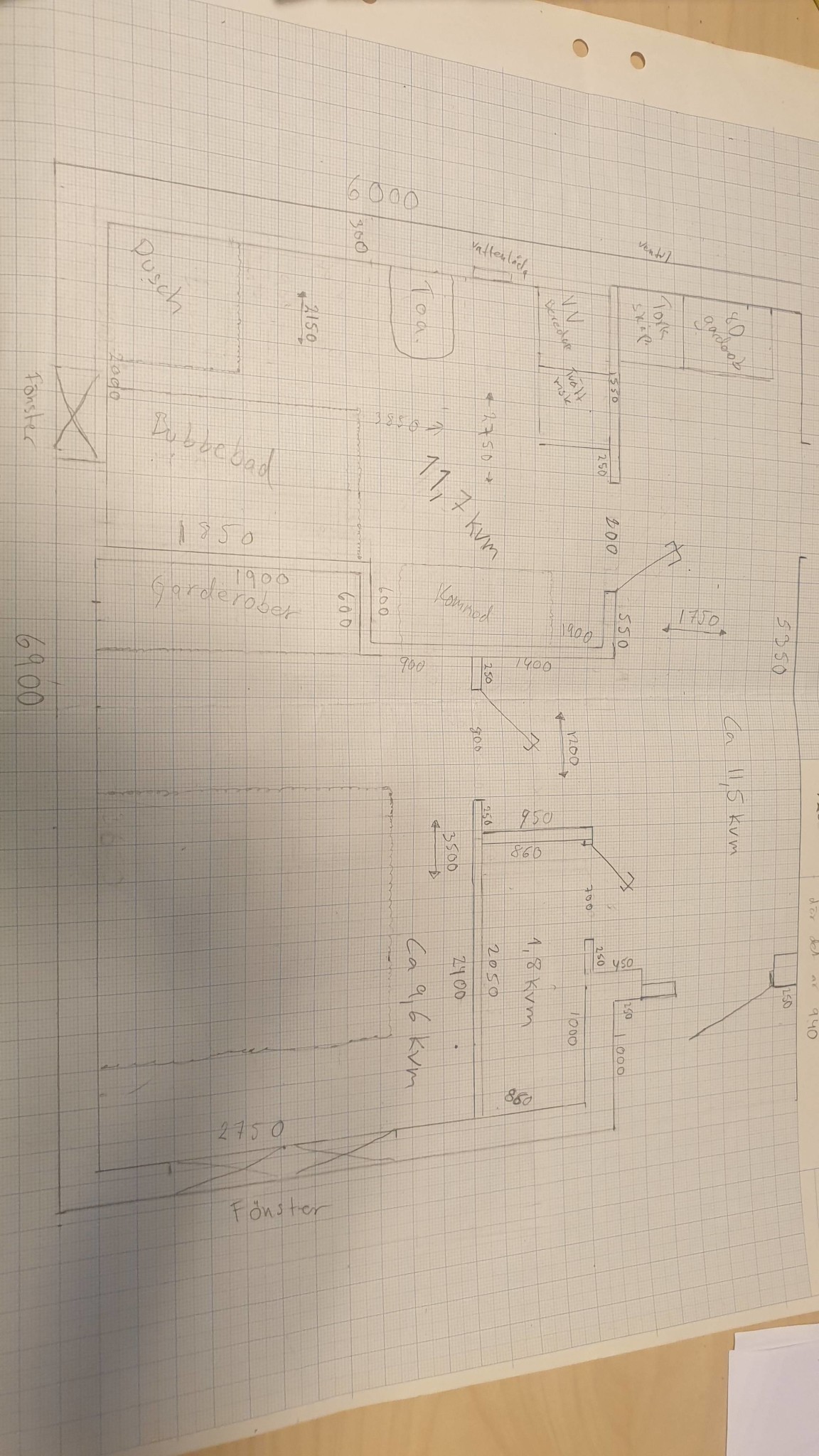
Pros and cons of installing floor chipboard throughout my 42 sqm extension before nailing up interior walls? No load-bearing walls, in other words. It will include 1 bathroom, 1 bedroom, and a hallway with a drying room inside this space.
Can you do the same with the slatted panel in the ceiling? Attaching a sketch of the extension.
Can you do the same with the slatted panel in the ceiling? Attaching a sketch of the extension.
Member
· Västernorrland
· 12 059 posts
probably just a matter of taste. But it is easier to build walls if the floor is there and also the sparse ceiling. The perfectionist probably does it differently, but in general, no modern building material is made so that you can lift it up for any reason anyway.
That's what I thought too. If you get water damage, for example, you'll have to break it apart anyway since the floor particleboard is glued anyway.S Stefan1972 said:



Member
· Västerbottens län
· 18 060 posts
The floor before the wall when building is rational.
Worse when you need to take up the floor, not easy to cut the chipboard all the way to the wall.
The floor after the wall results in more deflection in the floor near the wall if you don't brace between the floor joists.
Plague or cholera, just choose.
Worse when you need to take up the floor, not easy to cut the chipboard all the way to the wall.
The floor after the wall results in more deflection in the floor near the wall if you don't brace between the floor joists.
Plague or cholera, just choose.

It depends on how long it is, it is stated in the installation instructions for the floor, in our house construction we placed an expansion joint under a wall because it stated a maximum of 10m wide and we have about 11m.J Jotsat said:
Click here to reply