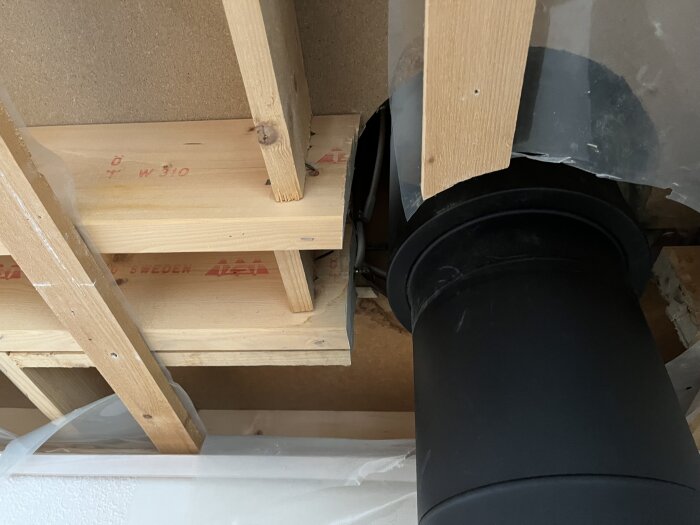
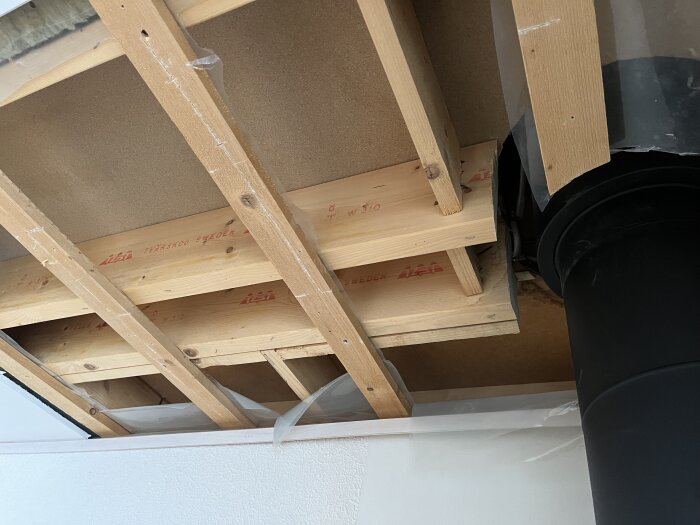
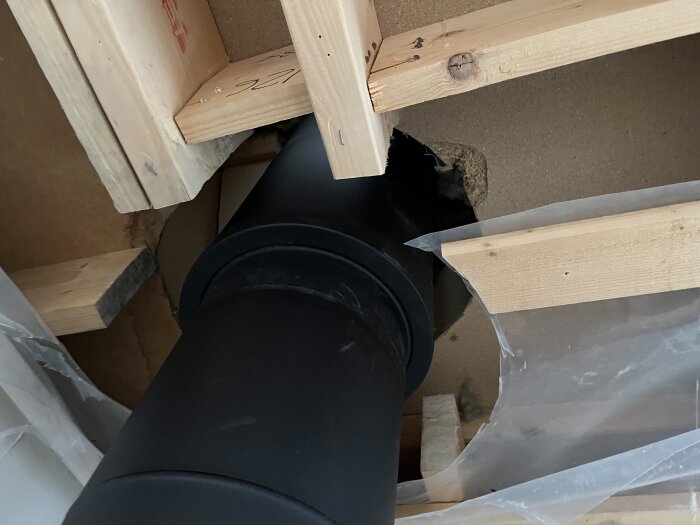
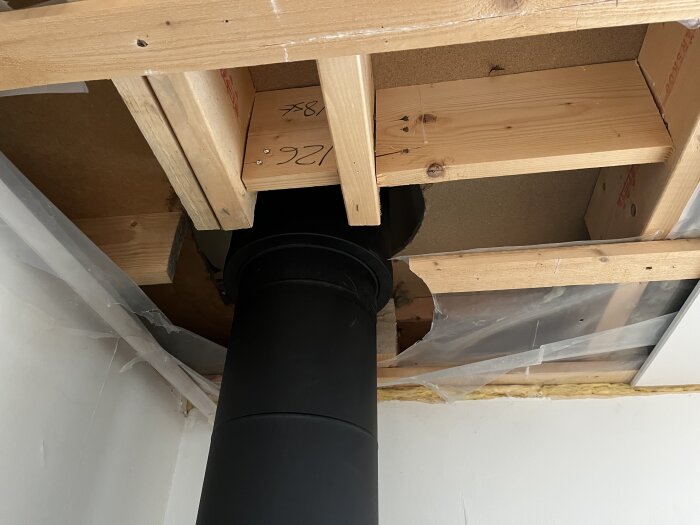
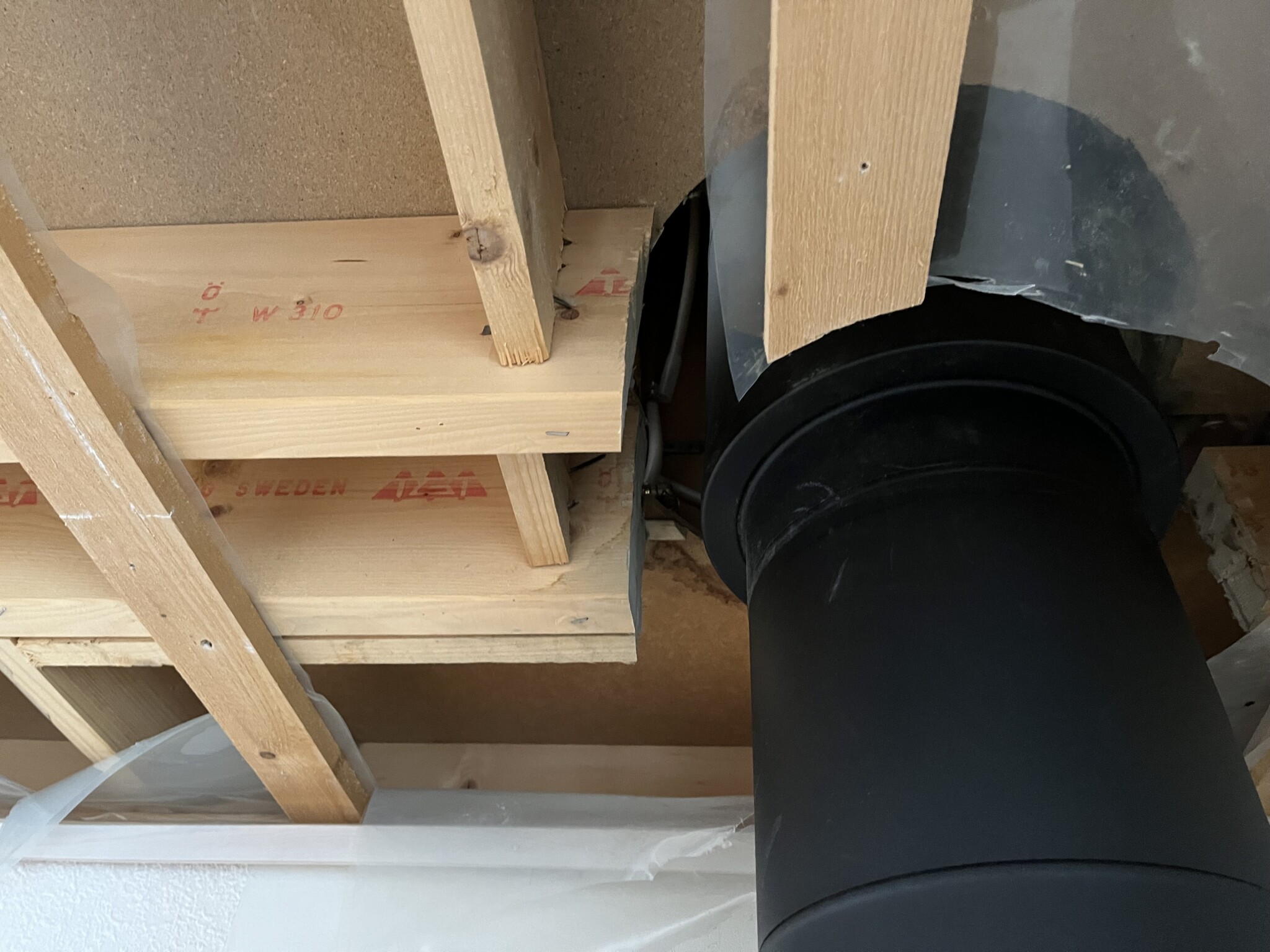
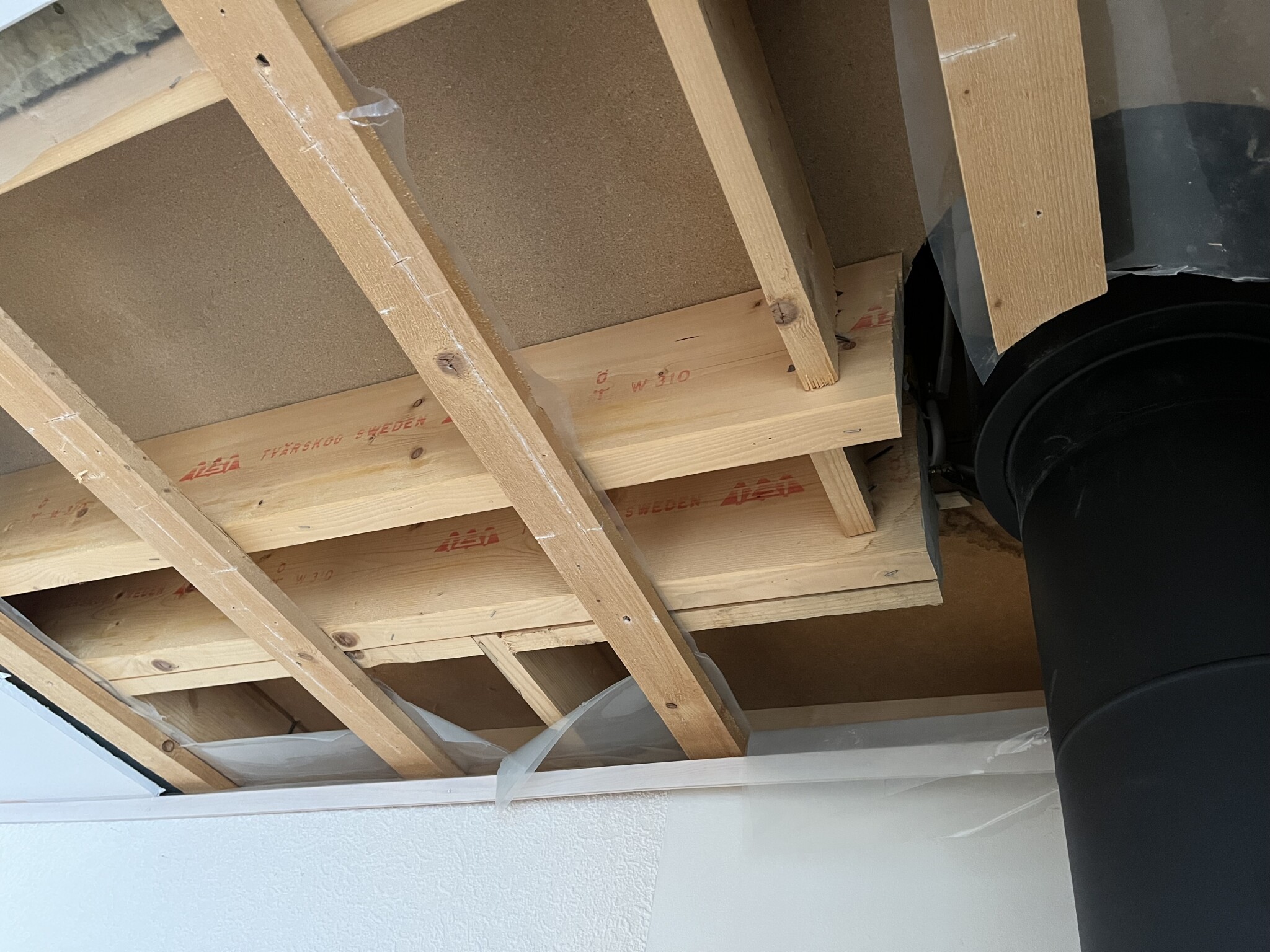
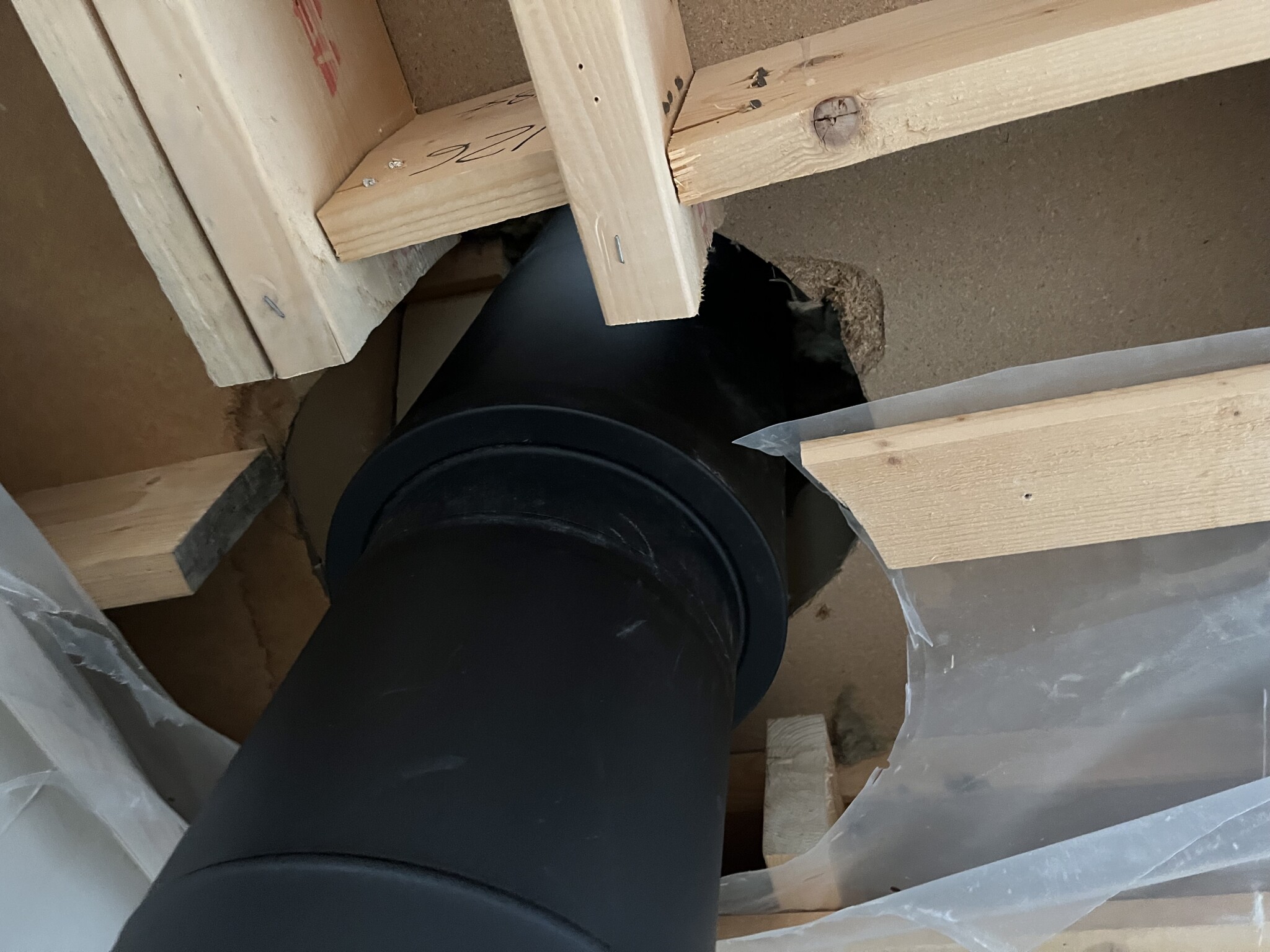
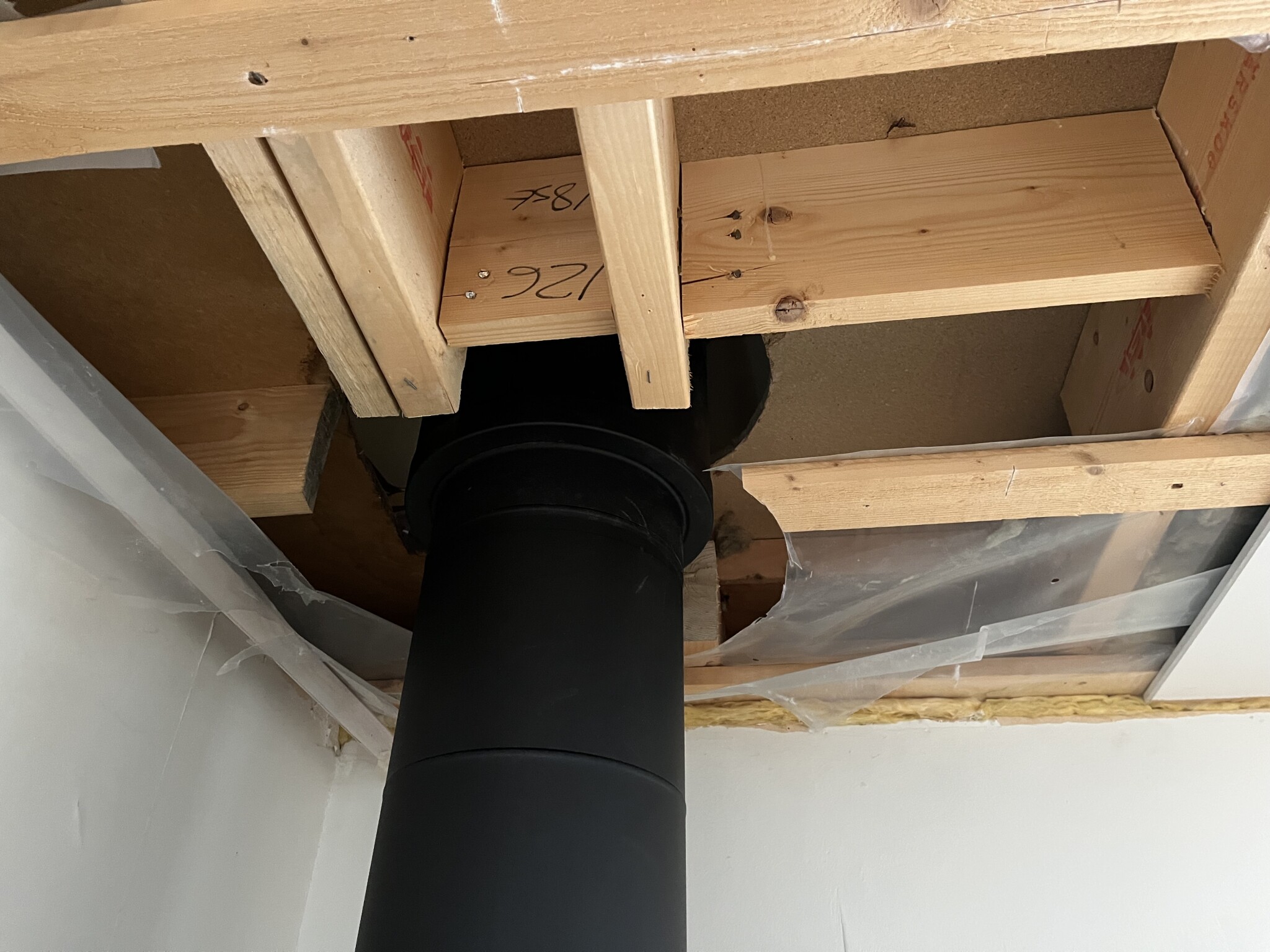
I would have emailed the pictures to the well-renowned firm and asked if this is how chimney installation should be done.
I think it looks like pure cheating; if it were newly done, I would, of course, demand that they redo it. However, it might be more difficult to demand if it's been over ten years since the chimney was installed.
Hello
Have you experienced any problems with the floor upstairs?
No, it shouldn't look like that.
How long has it been since the chimney was installed?
Haven't noticed anything on the floor upstairs and also don't see any deviation when I measure with a level.
The installation was done 3 years ago.
It must be very common for floor joists or rafters to "be in the way" during chimney penetrations.
What do you do in these cases?
Offset. Transfer the load to those next to it. If it can be avoided, it is. Avoid rafters as long as possible. It's not that the lower arms from the rafters are part of the joist? If so, it's important to address it as it affects the strength of the rafter.
Shouldn't the chimney also be fully insulated BEFORE it enters the joist space?
It looks like the joint to a larger diameter is inside the joist space.
Shouldn't the chimney also be fully insulated BEFORE it enters the ceiling joist?
Here it looks like the joint to a larger diameter is inside the ceiling joist.
/M
Yes, it's true that the double-walled chimney starts a few centimeters up in the ceiling.
However, there is a stone wool board about 100 mm high around that part of the chimney, which I assume is the solution.
Click here to reply
Vi vill skicka notiser för ämnen du bevakar och händelser som berör dig.