We have bought a house with a chimney that goes through the kitchen on the ground floor and through the bathroom on the upper floor.
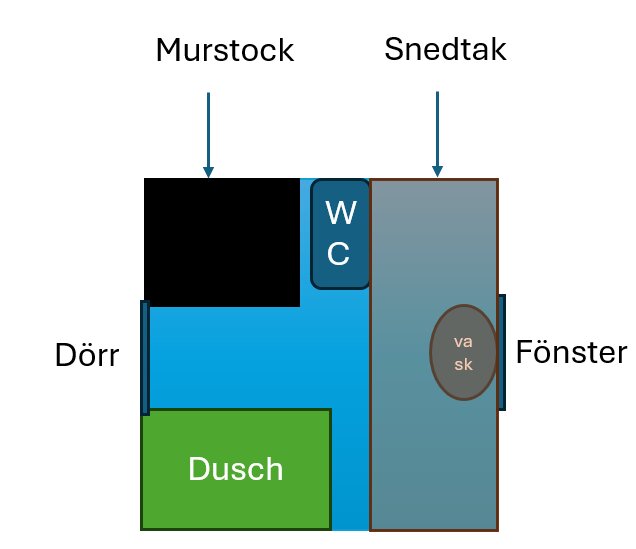
The bathroom is quite small and located under a sloped ceiling, so every square meter is invaluable. By removing the chimney, we can redesign the bathroom so the space can be used more efficiently, and it basically feels like we gain twice the area.
Even in the kitchen, it takes up space that could be used much more effectively.
So when we bought the house, I was 100% sure we would demolish the chimney. After reading this thread, I'm a bit more hesitant. First, how can we determine if it's load-bearing before starting demolition, and is a fireplace truly perceived as such a valuable feature? We live in a city where we can only have fires for ambiance from October to March (and the recommendation is a maximum of twice a week). The house has district heating. So how valuable is a fireplace under these conditions, really?
It is particularly the bathroom under the sloped ceiling where it feels that we could really achieve a much better bathroom without the chimney.
With this in mind - what are your best arguments for us not to demolish the chimney?
We have bought a house with a chimney stack that goes through the kitchen on the ground floor and the bathroom on the upper floor.
The bathroom is quite small and located under a sloping roof, so every square meter is worth gold. By removing the chimney stack, we can redesign the bathroom so that the space can be used even more efficiently, and essentially it feels like a space twice as large.
Even in the kitchen, it takes up space that could be used much more efficiently.
So when we bought the house, I was 100% convinced that we would demolish the chimney stack. After reading this thread, I am a bit more hesitant. Partly how to find out if it is load-bearing before starting demolition, and partly if there is really such a perceived value in having a wood stove. We live in a big city where you are only allowed to light a fire for leisure from October to March (and the recommendation is a maximum of 2x a week). The house has district heating. So how much value does a stove have under these conditions really?
It is especially the bathroom under the sloping roof where it feels like we can really create a much better bathroom without the chimney stack.
[image]
With this in mind - what are your best arguments for us not to demolish the chimney stack?
Cozying up on the couch in front of a fire is life's quality (according to me!) and not something I would trade for an extra square meter in a bathroom.
I would rather explore the possibility of a dormer in the sloped roof area.
I would guess that it is not supporting. You rarely want wood directly against a warm/hot chimney. Often, a small crown of bricks is made at the level of the joists and ceiling.
This with cozy fires can be done with a newly placed metal chimney, but sure, it doesn't retain/distribute heat as well as a masonry chimney. However, if you want the space, then so be it. Just keep in mind that a metal chimney requires a certain volume around it where there can't be anything combustible.
We were doubtful and indeed, no one in the thread pushed us to demolish haha.
We ended up NOT demolishing the chimney. We adapted the kitchen instead. A compromise that is absolutely livable. Better drawers and cabinets so we didn't lose any storage capacity. The only drawback is that no side-by-side fridge/freezer could fit. But we have a freezer in the basement so it works anyway despite a growing family.
We installed a fireplace in the chimney, so now the winter season is really nice with cozy fires! We have opened up between the kitchen and the living room, and it's very stylish with a fireplace in the middle of the floor. (The picture was taken before everything was finished, nowadays there are no furniture and stuff next to it.)
Also sending a bonus picture, we had a guest in the chimney this spring, a young owl.
If it's an old house, the beam is often the most important load-bearing structure that supports the load-bearing beams for floors and floors.
So check very carefully before you start going at it with a crowbar and sledgehammer - if it's load-bearing and you still want to remove it, you'll need to build some replacement solution that can support the weight just as well as the beam did before.
Personally, I would never in my life remove the beam as it is the heart of the house, more or less in old houses...
If it is an old house, the beam is often the most important load-bearing structure that supports the beams for floors and ceilings.
So check very carefully before you start using the crowbar and sledgehammer - if it is load-bearing and you still want to remove it, it will be necessary to build some replacement solution that can support the weight as well as the beam did before.
Personally, I would never in my life remove the beam as it is more or less the heart of the house in old houses...
If there have been tile stoves, they have been supported by iron beams through the chimney. It would then be wise to also support the beams in the same way.
Whether this is the case in your house is uncertain. But the very thought of removing the chimney is completely incomprehensible to me, even considering the gain of space. Roof dormer. As mentioned.
Then it is good to have a backup heat source when/if the district heating stops heating. Right now there's Putin panic. Russian hackers will... Next time, everyone at the district heating center will die in the next pandemic. Yes. The reason to have an alternative emergency heat source with a hotplate does not exactly decrease with the increasingly vulnerable society we have built up. When the hot water and radiators cool down, it's not so bad to throw a log in the fire.
It's also like a healing balm for marriage.
Hello again. It now looks like we're doing exactly like you and keeping the chimney.
From the picture you showed from your home, it could just as well be our home
I assume you hired a professional installer? Approximately what was the cost, excluding the inset stove?
Great, good luck!
For us, the whole project landed at 65k, where the stove itself was 25k and the installation 40k.
No one can say that it’s dirt cheap. But there are a lot of hours and various work phases. Our builder came and went quite a bit, so there was a lot of travel time too.
I don't believe in the option of removing parts of the chimney. It supports its own weight as it is currently built. It would result in a significant weakening of the structure and probably require several times the amount of work.
You can implement other types of ventilation. For example, mechanical exhaust or HRV (Heat Recovery Ventilation). Installing these requires a larger intervention in the house with ducting and other elements and costs from about ten thousand to several tens of thousands. I personally assist the natural draft in the chimney with fans. These cost a few thousand each.
Time to make a pros and cons list? List the advantages you get with the different options and what it costs in work/time/money as well as the disadvantages that come along.
Hi, sorry if I'm hijacking the thread but I have a similar question I need help with. I have a similar chimney (attached construction drawing), see the arrow, at the bottom left of the image. I'm unsure if the joists are supported by the chimney or if they are supported by the wall underneath. Can you see what applies in this case?
I am sitting at my desktop computer with a 32" screen in the higher price segment and have a very hard time deciphering your image. Aside from that, you should naturally not rely on advice in such important matters from unknown people on a forum, but you are probably aware of that.
Our house has a similar construction where all the rafters are supposed to be self-supporting, but those that pass the chimney rest on it. Likely, out of sheer self-preservation instinct, despite having access to blueprints, I would still shore up these rafters if I decided to take down the chimney. After inspection, I would assess whether, with my fairly limited competence in house construction, I dared to remove the shores without hiring an engineer.
I agree that the drawing is in awful condition - probably Microfiche or Microfilm in perhaps several copying generations and captured too brightly when it was scanned in, or the Microfiche copy wasn't in better condition when it was scanned...
You might need to bring in someone knowledgeable/constructor to look at it on-site before doing anything at all, but why remove the chimney?, many pay big money to get one with a stove in houses that have no form of fireplace or other secondary heating that isn't electricity-dependent - with Putin in the East, one must consider the possibility that something could happen and that it occurs in the winter when it's really cold outside.
Hello, I was probably not clear with my question. I don't want to remove the chimney but want to take down parts of the wall beside it so we get a slightly larger opening than what we have today. Do you think this is possible? I agree that the drawing is poor, but it's the only one I could get hold of.
It is pointless to guess the answer to your question. Try tapping on the wall. In our house, there isn't a single load-bearing interior wall. This is evident if you tap lightly with your fist. Unfortunately, they didn't add any insulation in the interior walls, so it echoes emptily wherever you tap.
On your drawing, one can read Torslanda träteknik AB. That company seems to still exist. You can also read Byggnadsnämnden in Gothenburg. One or both of these might have the drawings of your house. If not, you will need to hire someone knowledgeable in construction. Perhaps you have someone in your circle of acquaintances or at work who can take a look.
Vi vill skicka notiser för ämnen du bevakar och händelser som berör dig.



Fulkemisten said:
I don't believe in the option of removing parts of the chimney. It supports its own weight as it is currently built. It would result in a significant weakening of the structure and probably require several times the amount of work.