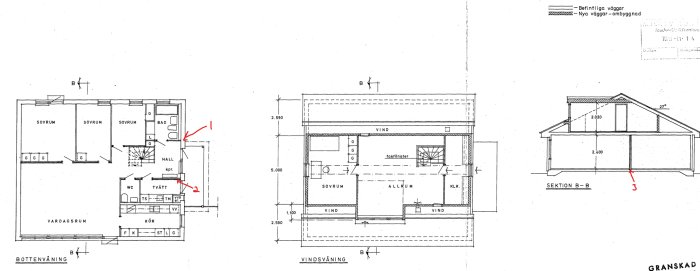
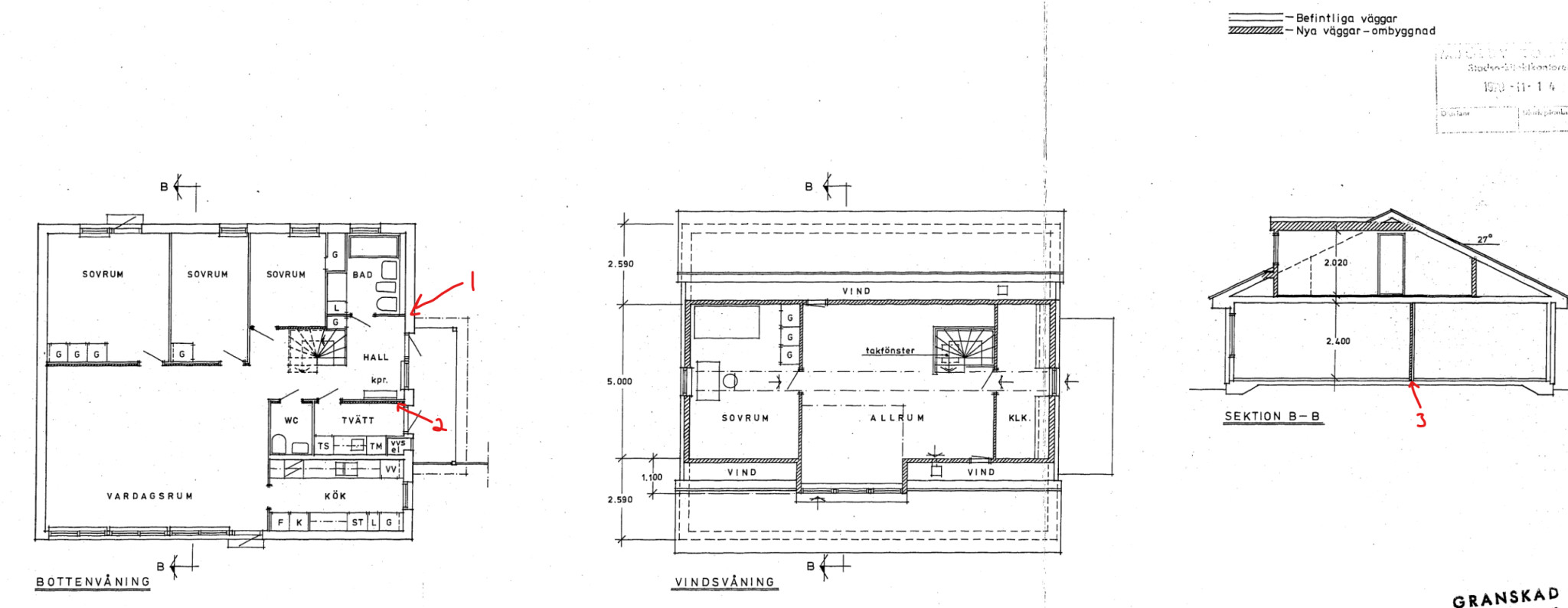
We are exploring possibilities for changing the floor plan. The most interesting part is the wall with the red arrow in the first picture. We want to remove the wall between the exterior wall and ~180cm in. However, I get a bit confused when I see how it is in reality compared to what the drawings show. A bit of background first: the attic was finished around 1979, and then some "reinforced walls" were added on top of the earlier ones. Thoughts and Confusions:
Red arrow 1: This wall does not match reality, and I don't think it ever did. The wall aligns with the bedroom behind the stairs, and you can see the previous wall behind the electrical boxes.
Red arrow 2: The drawing shows that the new wall is placed inside towards WC and laundry, but in reality, it is placed outside. Perhaps that's not strange?
Red arrow 3:
In this cross-section, which wall does it correspond to? Have they just drawn one of the walls and skipped the others? Its placement suggests it's not wall 2, raising the question of whether wall 2 is not load-bearing? This is supported by the picture below but not picture number three...
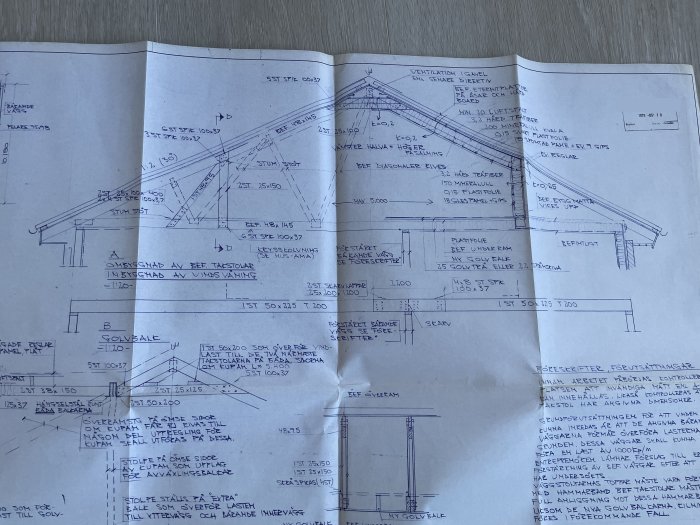
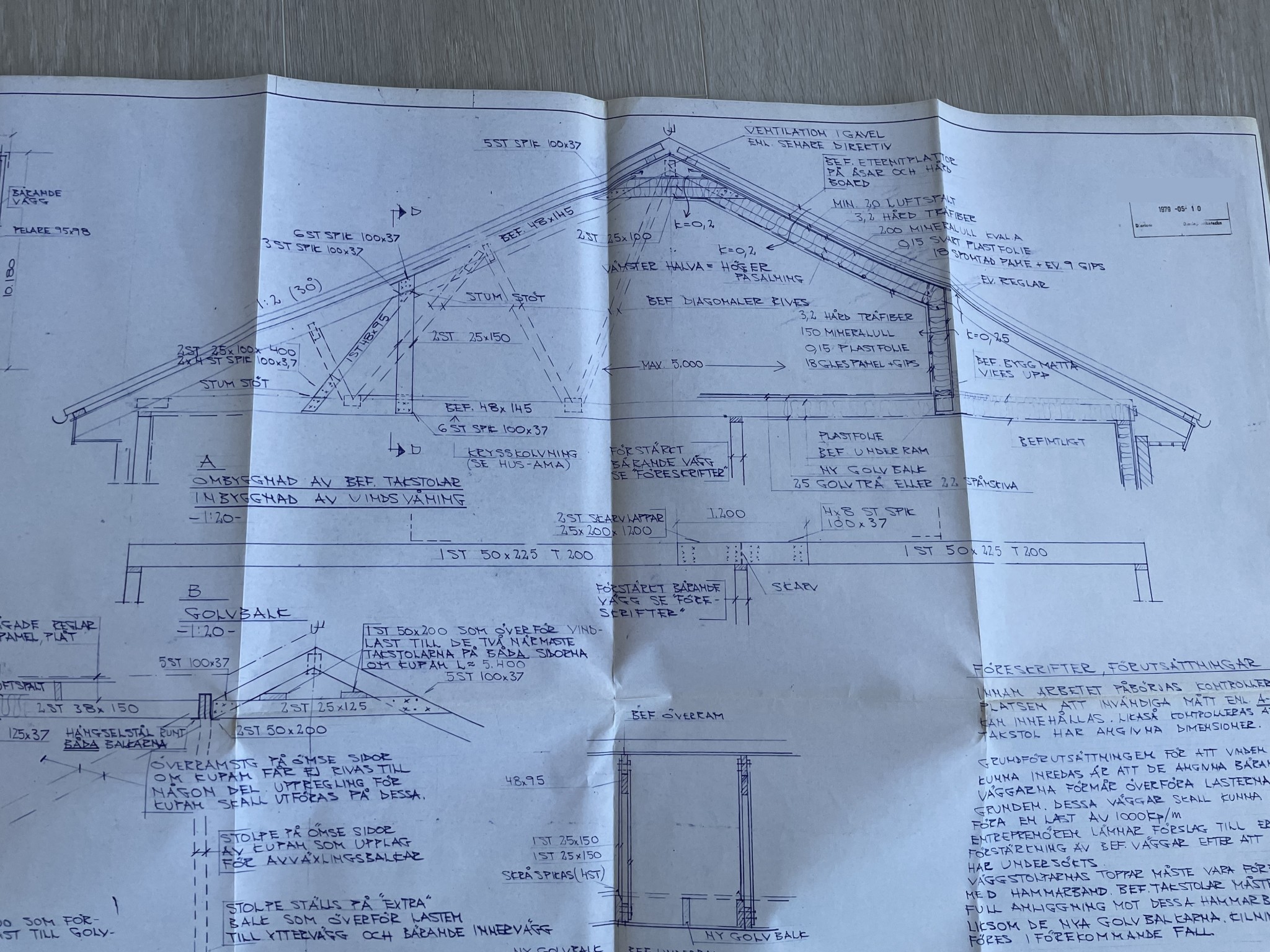
Image 2:
Another cross-section, again with only one wall like in the image above. Why are the others not included?
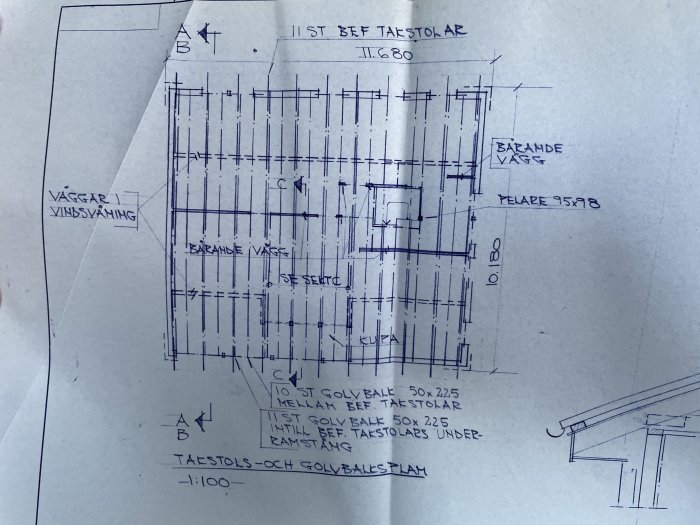
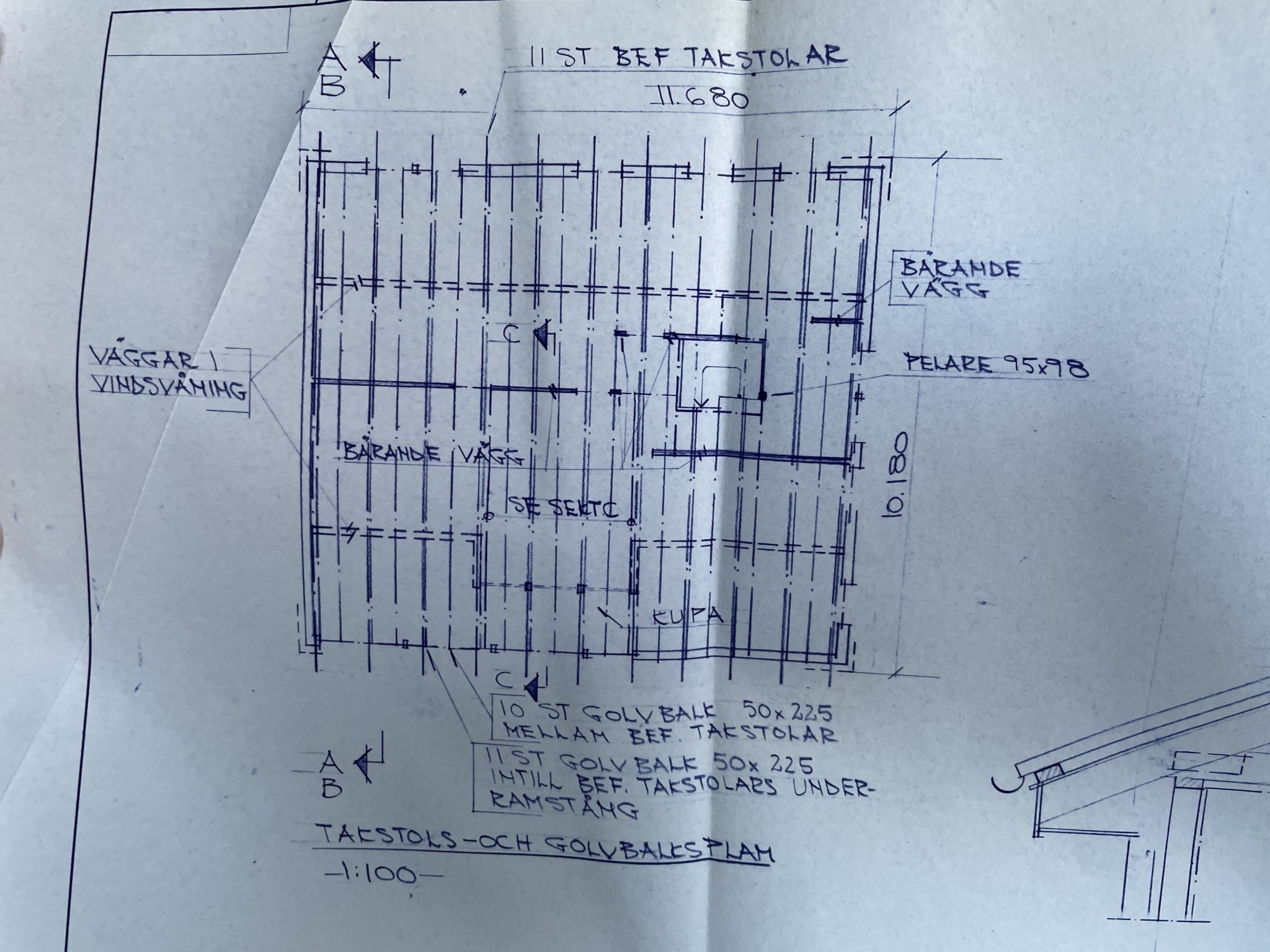
Image 3:
Here's the image that faintly suggests all new walls are load-bearing, although with wall number 1 misplaced. The column 95x85 by the stairs is also missing.
*edit* I just saw that these were walls in the attic. However, it seems most walls are those on the lower floor, which you can see in the top part of image number 2.
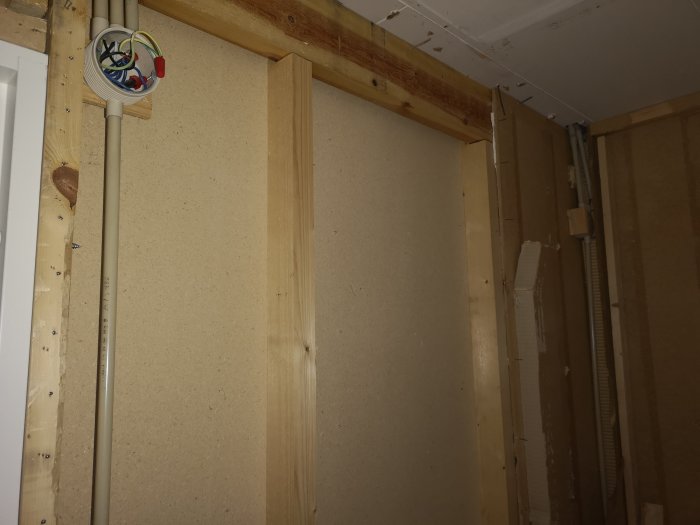
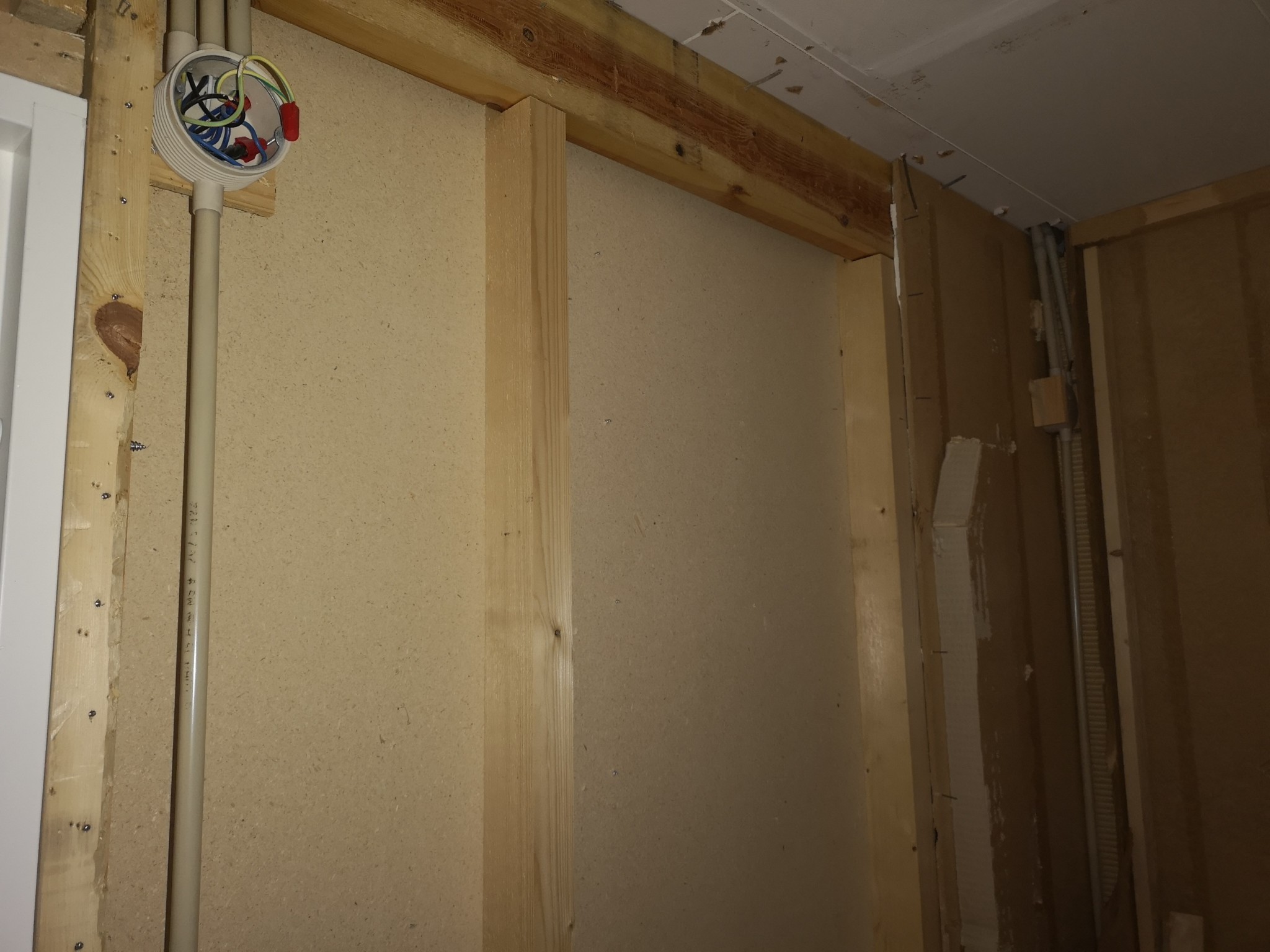
Image 4:
Here is one of the new walls with the last part of the previous one far away (from the bedrooms far left in the first drawing). Unfortunately, I don't have the measurements, but I would estimate them to be 45-50x~200.
What and how does this support anything? The wooden beam is next to the ceiling, which is some kind of fiberboard/huntonit. Nowhere have I seen anything else resting on this beam. My logic says that such thin and porous ceiling can't help support anything, am I wrong?
Finally, is our desire to remove 180cm of wall 2 reasonable without it costing a fortune? Are there other alternatives?
The floor plans indicate where section B-B is taken. The sectional drawing is a cross-section through the house and normally only shows the walls that the section cuts through. The house originally had truss roof structures that only rested on the exterior walls (long sides). Then, to make the attic inhabitable, the trusses were modified (simply put). This has also required some walls to be made load-bearing. Which walls these are is essentially shown in the Truss and floor beam plan. If you want to remove a currently load-bearing wall, it must be replaced by a beam and two columns.
The floor plans show where section B-B is taken. The sectional drawing is a cut through the house and normally only shows the walls that the section goes through. The house originally had truss rafters that only rested on the exterior walls (long sides). Then, to make the attic inhabitable, the trusses were modified (simplified expression). This has also required some walls to be made load-bearing. Which walls these are is essentially shown on the Roof Truss and Floor Beam Plan. If you want to remove a currently load-bearing wall, it must be replaced by a beam and two columns.
Thank you, that helps me understand the drawing a bit better! Do you also know what rests on these beams? Can it really be that the thin hollow ceiling is on top? Do you have any rough estimate of what such a replacement might cost? Who should be contacted for that?
Click here to reply
Vi vill skicka notiser för ämnen du bevakar och händelser som berör dig.