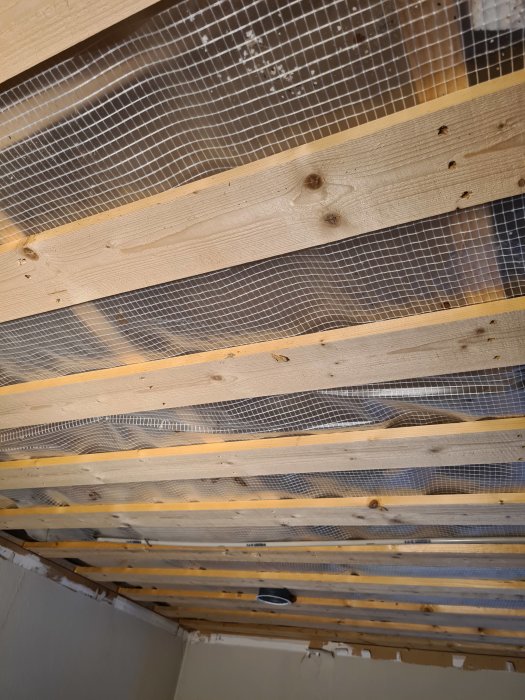
Hi, I'm planning to replace the ceiling on the 1st of 2 floors in my 80s house. When the old ceiling was taken down, we discovered that during the construction process a lot of debris was left in the interlayer (like crumpled garbage bags, pipe stubs, large sheets of packaging plastic, and wood pieces). I want to clean up as much as I can before the new ceiling goes up, but to do that I need to remove large parts of the crawl-space barrier.
As I understand it, this is not vapor-tight (there are also unsealed holes where pipes come through the plastic). Am I correct - does the plastic serve no moisture function so I can remove it, or should I leave it alone?
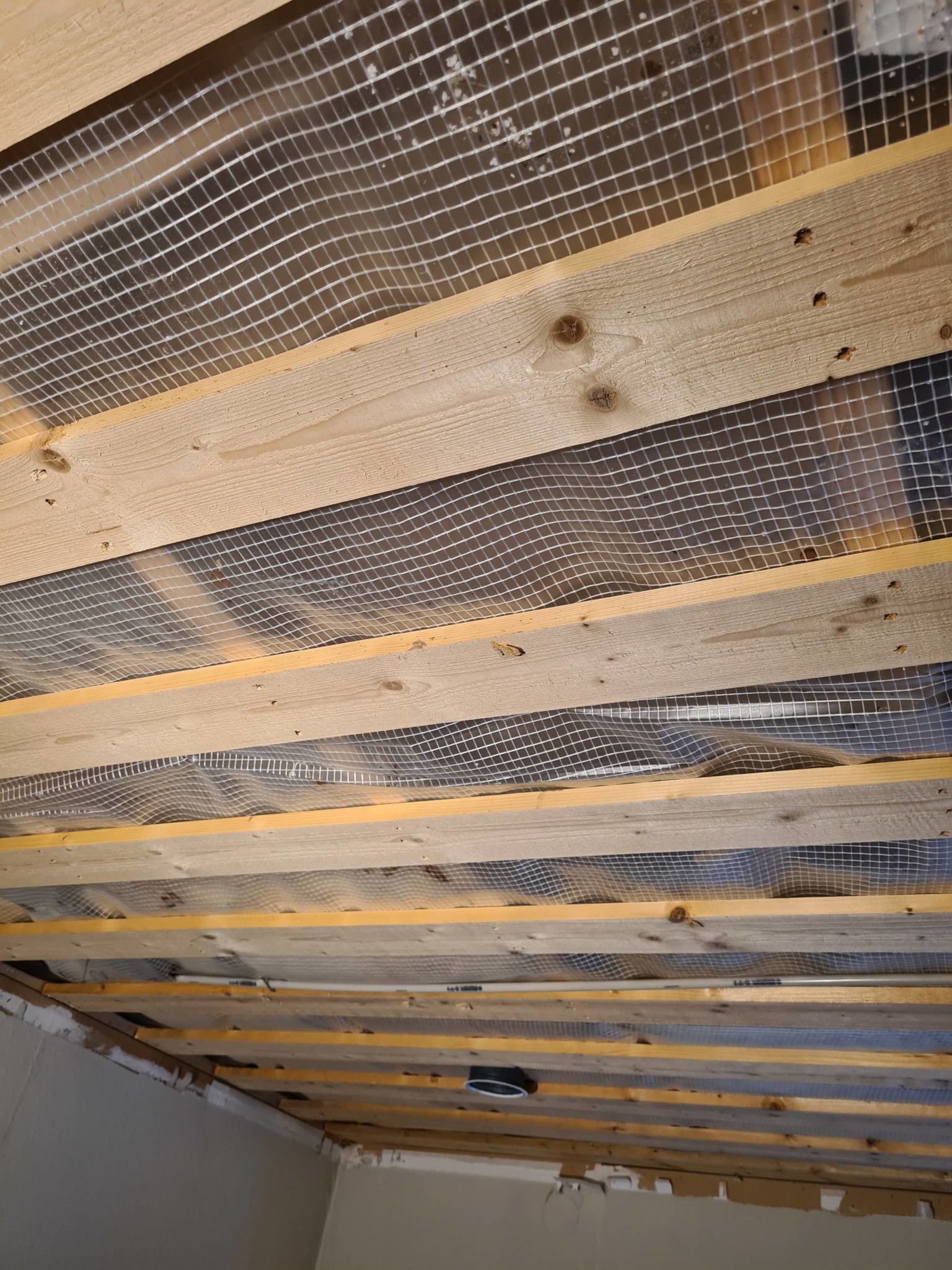
Hey, I'm going to replace the ceiling on the first floor of my two-story house from the 80s. When we took down the old ceiling, we discovered that during the construction process, they had left a lot of debris in the space between the floors (like crumpled garbage bags, pipe stubs, large pieces of packaging plastic, and planks). I want to take the opportunity to clean up as much as I can before the new ceiling goes up, but I'll need to tear away large parts of the trampling protection.
[image]
From what I understand, this isn't vapor barrier (there are also unsealed holes where pipes come through the plastic). Am I right - does the plastic not serve any moisture function so I can remove it, or should I leave it?
Isn't it just meant to be something to lay the insulation on that doesn't break if you step on it wrong?
Yes, that's how I interpreted it too, so there were a lot of holes in that plastic, and now the new ceiling is up .
By the way, it's crazy that a lot of (very) flammable material was left in the intermediate floor during constructions earlier (I've heard from a carpenter I know that it's a bit better now).
Click here to reply
Vi vill skicka notiser för ämnen du bevakar och händelser som berör dig.

treborh said:
Hey, I'm going to replace the ceiling on the first floor of my two-story house from the 80s. When we took down the old ceiling, we discovered that during the construction process, they had left a lot of debris in the space between the floors (like crumpled garbage bags, pipe stubs, large pieces of packaging plastic, and planks). I want to take the opportunity to clean up as much as I can before the new ceiling goes up, but I'll need to tear away large parts of the trampling protection. .
.