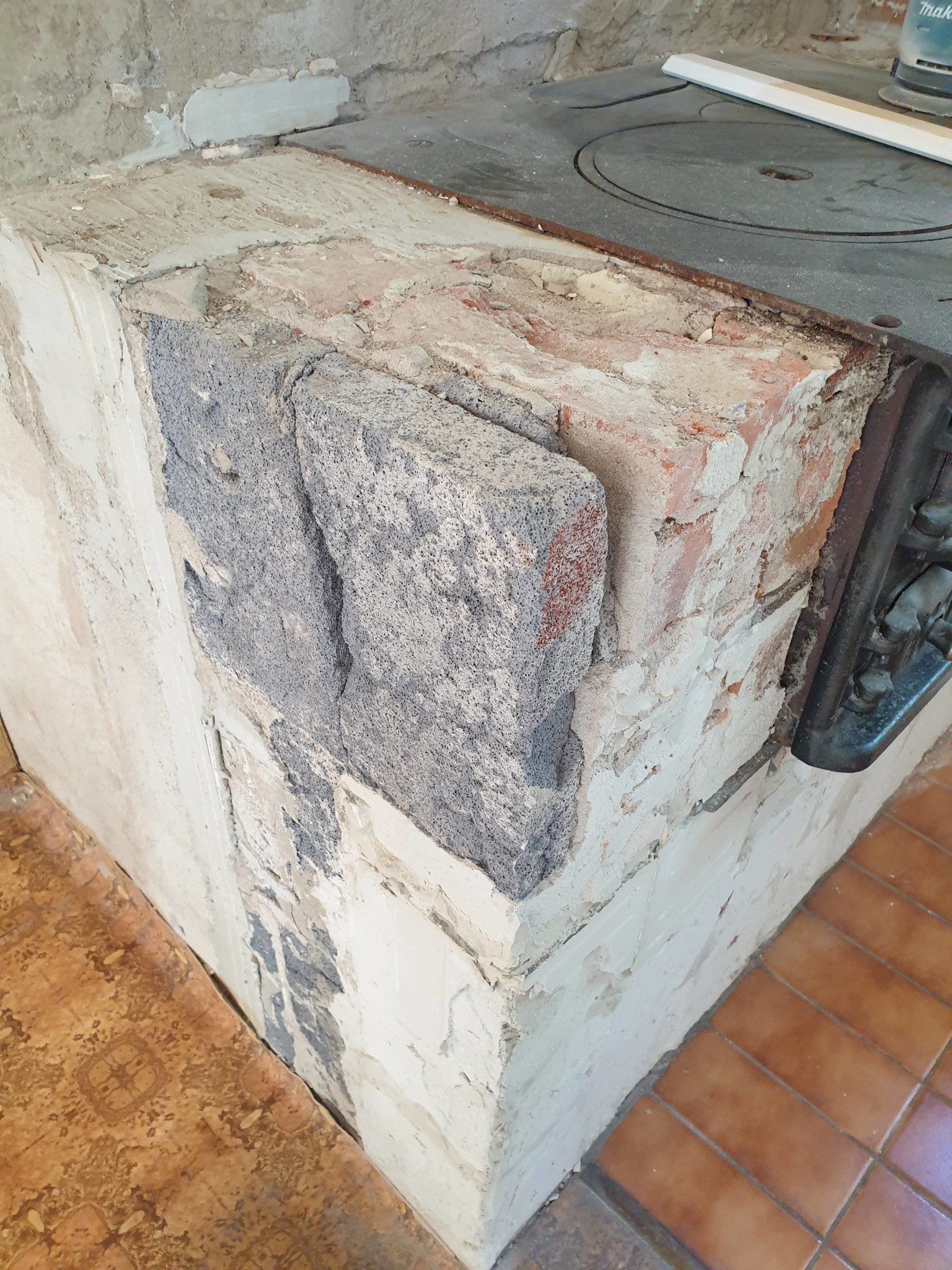
I'm renovating the kitchen and have removed the tiles that were around the wood stove.
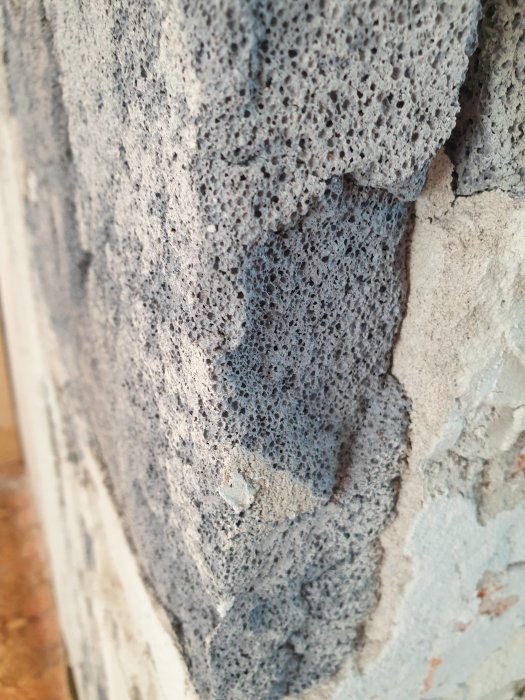
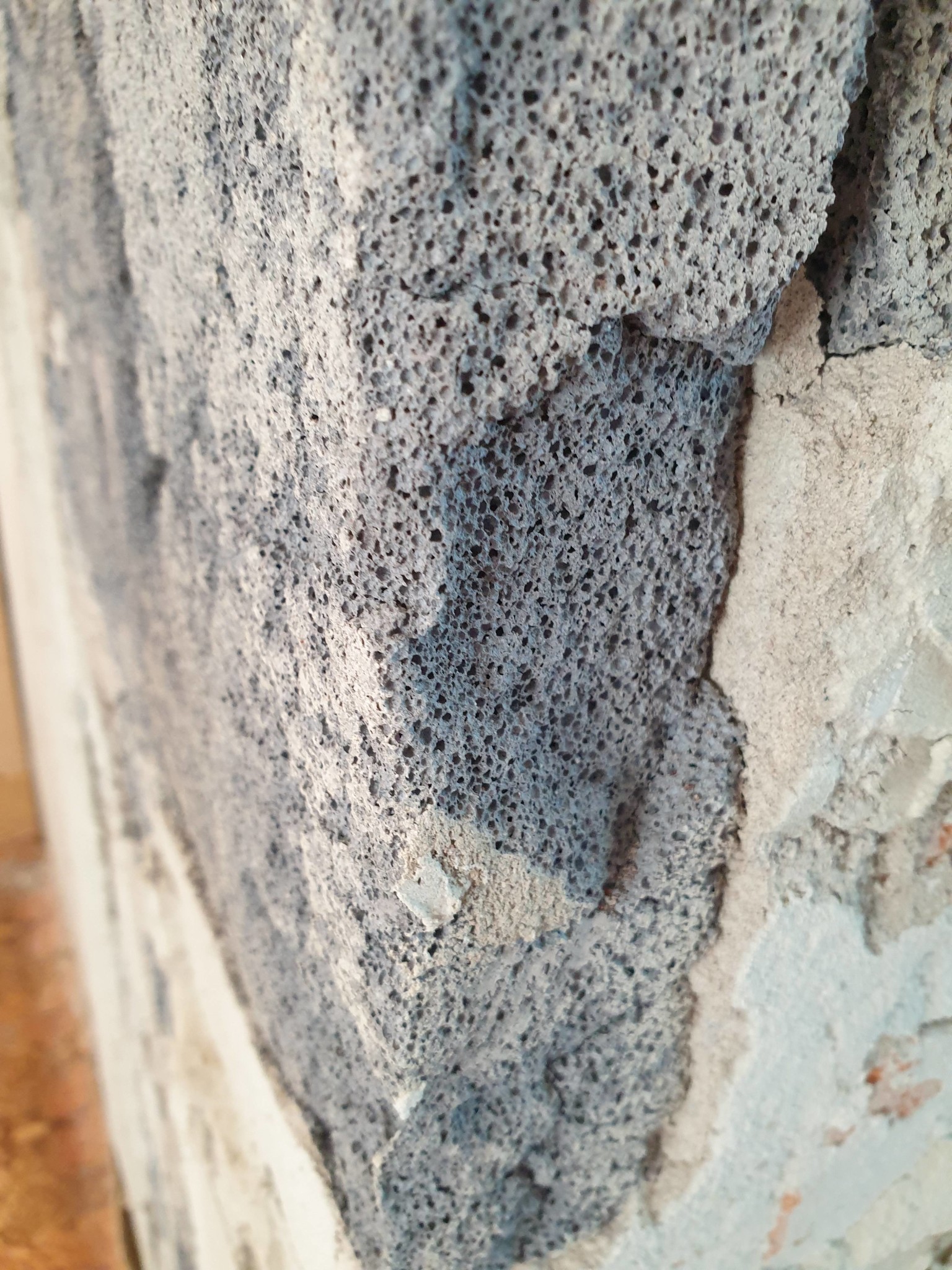
For some reason, the previous owner finished the masonry with one row of something strange and blue... there was an oven with hotplates placed close to it, so maybe that's why? To protect the oven from the wood stove's heat?
Is it blåbetong?
Should we remove it?
Should we be worried?
We are going to place a built-in oven + microwave in a tall cabinet next to it but with a spacer of about 5 cm to create an air gap. Should we place a minarit board there?
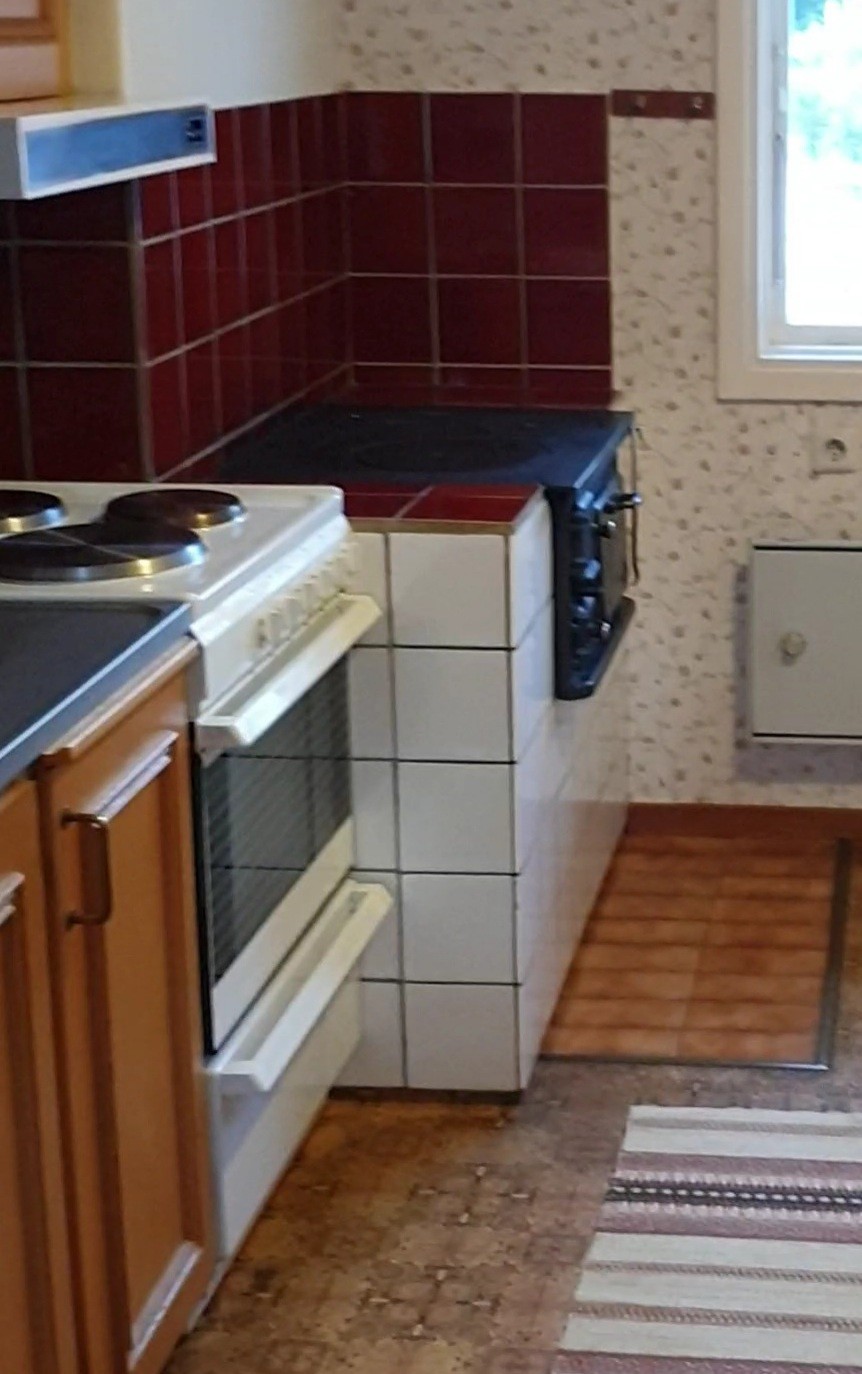
This is how it looked before we started demolishing:
As is well known, blåbetong can emit radioactive radon.
In this case, it is so little that it probably doesn't have any practical impact on health, so do what is easiest.
I should save these images, it's probably the first time someone asks about blåbetong, and it IS blåbetong.
Otherwise, it's usually pictures of woodlice or slag plates.
Delete them if it feels right, it's easy to replace with something else.
Of course you remove it even if it's not life-threatening. Why keep a limited part in aerated concrete in a newly renovated kitchen? The concrete emits radon gas that can, over a long time, harm the lungs and cause lung cancer.
Just knowing this makes anyone with an IQ level over 60 replace the concrete with a harmless material.
Of course, you should remove it even if it's not life-threatening. Why keep a limited part of blue concrete in a newly renovated kitchen?
The concrete emits radon gas which can, over time, damage the lungs and cause lung cancer.
Just the knowledge of this makes everyone with an IQ level over 60 replace the concrete with a harmless material.
But calm down. It's hard to see that four blocks of blue concrete would give elevated levels in a house. I myself have all exterior walls and some interior walls in blue concrete. Had about 300 Bq/m3 before new ventilation.
Furthermore, it's not the radon gas itself that's dangerous; it's the substances that radon decays into, the so-called radon daughters, that emit harmful radiation.
Click here to reply
Vi vill skicka notiser för ämnen du bevakar och händelser som berör dig.