
2,505 views ·
18 replies
3k views
18 replies
Internal wall for heavy load
Hello!
I'm planning to build an internal wall to separate a storage area from the main space in the garage. On the wall, I'll mount an Elfa system that will be quite heavily loaded, approaching the maximum load per shelf, so the entire shelf might weigh a couple of hundred kilograms.
The garage's exterior walls consist of 100mm KL-wood. The ceiling consists of 60mm KL-wood inner ceiling with 100x395mm ceiling beams on top (directly above where the internal wall should stand). The floor is made of concrete slab (hard concrete treated during finishing).
- This means all the "external" attachment points are really stable and it is easy to anchor a wall in them.
What kind of construction should I use to get as stable (yet thin) a wall as possible?
My thought was to use a frame of 45x70 studs spaced at 300mm centers, make it sturdy and then mount 15mm K-plyfa on each side and maybe stop there? Aesthetically, plyfa is good enough for the purpose and fits well with the KL-wood walls.
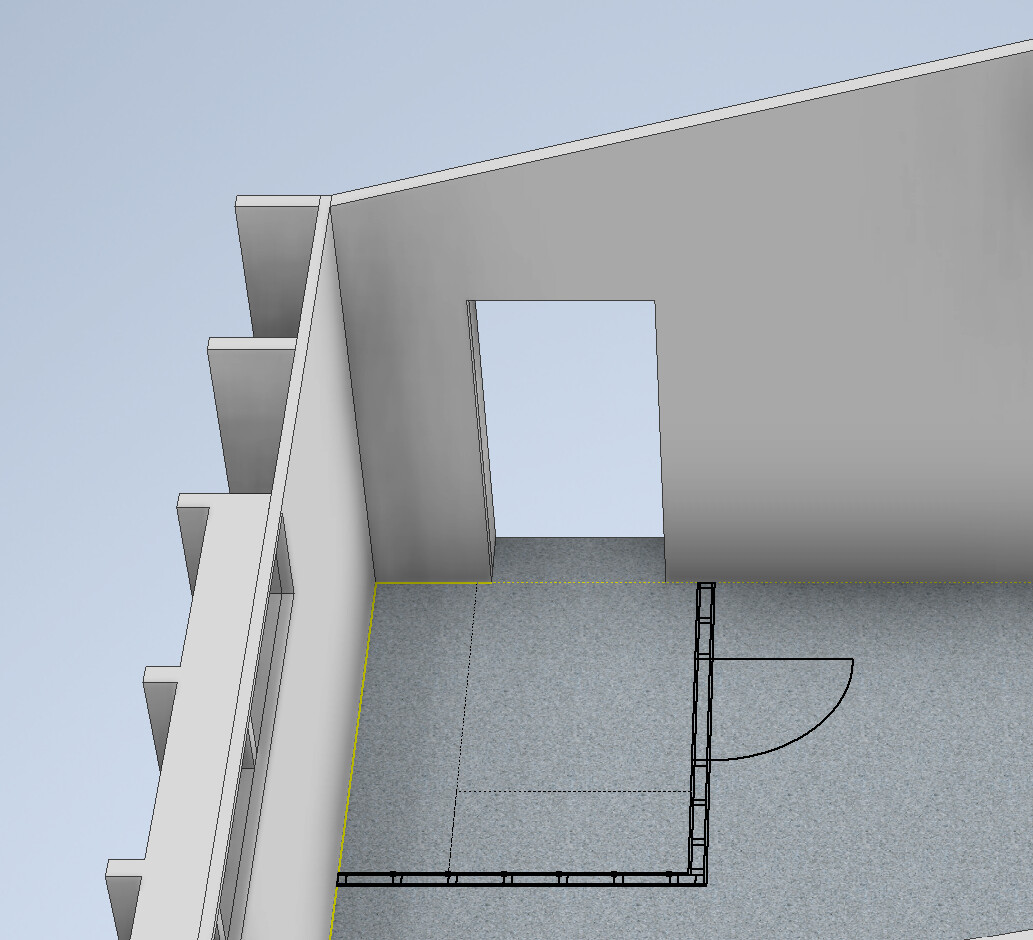
The wall goes at an angle according to the attached image 1900x2300mm internal dimensions. Roof angle 15 degrees.
I have no need for either insulation or soundproofing, but I’m thinking of adding wood fiber boards or linen insulation to avoid a drumming sound if you hit the wall with a box.
Am I on the right track, or do I need to reinforce significantly more?
I'm planning to build an internal wall to separate a storage area from the main space in the garage. On the wall, I'll mount an Elfa system that will be quite heavily loaded, approaching the maximum load per shelf, so the entire shelf might weigh a couple of hundred kilograms.
The garage's exterior walls consist of 100mm KL-wood. The ceiling consists of 60mm KL-wood inner ceiling with 100x395mm ceiling beams on top (directly above where the internal wall should stand). The floor is made of concrete slab (hard concrete treated during finishing).
- This means all the "external" attachment points are really stable and it is easy to anchor a wall in them.
What kind of construction should I use to get as stable (yet thin) a wall as possible?
My thought was to use a frame of 45x70 studs spaced at 300mm centers, make it sturdy and then mount 15mm K-plyfa on each side and maybe stop there? Aesthetically, plyfa is good enough for the purpose and fits well with the KL-wood walls.
The wall goes at an angle according to the attached image 1900x2300mm internal dimensions. Roof angle 15 degrees.
I have no need for either insulation or soundproofing, but I’m thinking of adding wood fiber boards or linen insulation to avoid a drumming sound if you hit the wall with a box.
Am I on the right track, or do I need to reinforce significantly more?
What are you going to load on the shelves?W wuchi said:Hello!
I am going to build an interior wall to separate a storage area from the main space in the garage.
On the wall, I will install an Elfa system that will be quite heavily loaded, close to the maximum load per shelf so the total shelf might weigh a couple of 100 kg.
The garage's exterior walls consist of 100mm KL-trä.
The ceiling consists of 60mm KL-trä inner ceiling and with 100x395mm beams on top (right above where the interior wall will stand).
The floor consists of a concrete slab (treated with ströhårdbetong during smoothing).
- That is, all the "external" anchor points are very stable and it's easy to secure a wall to them.
What kind of construction should I use to achieve as stable (but thin) a wall as possible?
My idea was a frame in 45x70 with a type CC 300mm spacing, short pieces reinforced, and then attach 15mm K-plywood on each side and maybe leave it at that? Aesthetically, a plywood finish is good enough for the purpose and fits well with the KL-trä walls.
The wall is angled according to the attached image 1900x2300mm inner dimensions. Ceiling angle 15 degrees.
I don't need any insulation or soundproofing, but I'm thinking of throwing in wood fiber boards or alternatively linen insulation to avoid a hollow sound if you bump into it with a box.
Am I on the right track, or do I need to reinforce significantly more?
The construction feels reasonable to me. The question is what does the Elfa system handle?
Why don't you screw Elfa tracks into the studs? That way, the board material could be hardboard if you want.W wuchi said:Hello!
I am going to build an internal wall to separate a storage area from the main space in the garage. On the wall, I will mount an Elfa system that will be quite heavily loaded, close to the maximum load per shelf, so the total shelf might weigh a couple of hundred kilos.
The garage's external walls consist of 100mm CLT wood. The ceiling consists of 60mm CLT ceiling and with 100x395mm ceiling beams on top (directly above where the internal wall will stand). The floor consists of a concrete slab (densely reinforced concrete treated during smoothing) - Thus, all "external" attachment points are extremely stable and it's easy to anchor a wall into them.
What construction should I use to get as stable (but thin) a wall as possible?
My thought was a framework of 45x70 studded at about CC 300mm, brace it well, and then put 15mm K-plywood on each side and maybe leave it at that? Aesthetically, plywood is good enough for the purpose and fits well with the CLT wood walls.
The wall runs at an angle according to the attached image 1900x2300mm internal dimensions. Roof angle 15 degrees.
I have no need for either insulation or soundproofing, but I'm considering throwing in wood fiberboards or alternatively flax insulation to avoid a hollow sound if you bump into it with some box.
Am I on the right track or do I need to reinforce significantly more?
All kinds of stuff I've collected over the years. Everything from spare parts for car/bike to skating gear, binders full of papers, etc. The weight adds up quite quickly.FlugfiskarniJämtland said:
If you use the version with a horizontal top track, it should support 300kg per pair of vertical hanging uprights, if I understand it correctly, provided the wall behind holds the screws.
I haven't yet found what a rail directly screwed into the wall/stud can handle, but it should be equivalent for the system.
Regardless of which variant of Elfa I choose, I'm planning to ensure there's a stud behind where I attach it.


Should work with studs at cc60, I think, along with 15mm k-plywood.W wuchi said:Hello!
I am going to build a partition wall to separate a storage area from the main space in the garage.
On the wall, I will mount an Elfa system, which will be loaded quite heavily, close to the maximum load per shelf, so the total shelf might weigh a couple of 100kg.
The garage's exterior walls consist of 100mm CLT.
The ceiling consists of 60mm CLT inner ceiling and has 100x395mm ceiling beams on top (directly above where the partition wall will stand).
The floor consists of a concrete slab (surface-hardened concrete treated with smoothing).
- That is, all "external" anchor points are very stable and can easily anchor a wall.
What construction should I use to get the sturdiest (but thin) wall possible?
My plan was to use a frame of 45x70 studs at approx. CC 300mm, cross-brace it robustly, and then put 15mm K-plywood on each side and maybe stop there. Aesthetically, the plywood is more than adequate for the purpose and fits well with the CLT walls.
The wall is angled according to the attached image 1900x2300mm internal dimensions. Roof angle is 15 degrees.
I have no need for either insulation or soundproofing but am considering throwing in wood fiberboards or possibly flax insulation to avoid a hollow sound if someone bumps into it with a box.
Am I on the right track, or do I need to reinforce significantly more?
How much weight can the Elfa system handle?

Weight classification on Elfa (and similar systems) is a maximum weight per post, which many forget when they look at what a shelf bracket or a shelf can withstand, so it is the center-to-center measurement that you have to adjust according to the load. But if you hang a horizontal rail and have the posts loosely hanging on it, it's much stronger than you think as long as the fastening is stable. I had an older relative who had adjusted the cc to fit large plastic bins of 45/60 liters between the brackets, and they were filled with electrical cable, machines, saw blades, workshop books, screw packages, and all sorts of heavy things. Five shelves high, one rail wide, and 45 cm deep. I was both startled and impressed when I dismantled the shelf, which had considerable load and was free-hanging...
Last edited:
I fully agree! Hardboard is not good in most cases. Even in this one. What I wanted to say was that plywood isn't necessary if the frame is made strong and the shelves are attached to it. Plywood has become expensive. But I will backtrack here and admit I missed the detail that plywood works well aesthetically as a surface layer - then it's a no-brainer to go "your" way and use the board. It will be an incredibly strong and incredibly stiff wall.