
3,220 views ·
2 replies
3k views
2 replies
Insulate joists so that drying can occur....
Hello Builders!
I have often read here on the forum. Now I have a question that I need tips and help with.
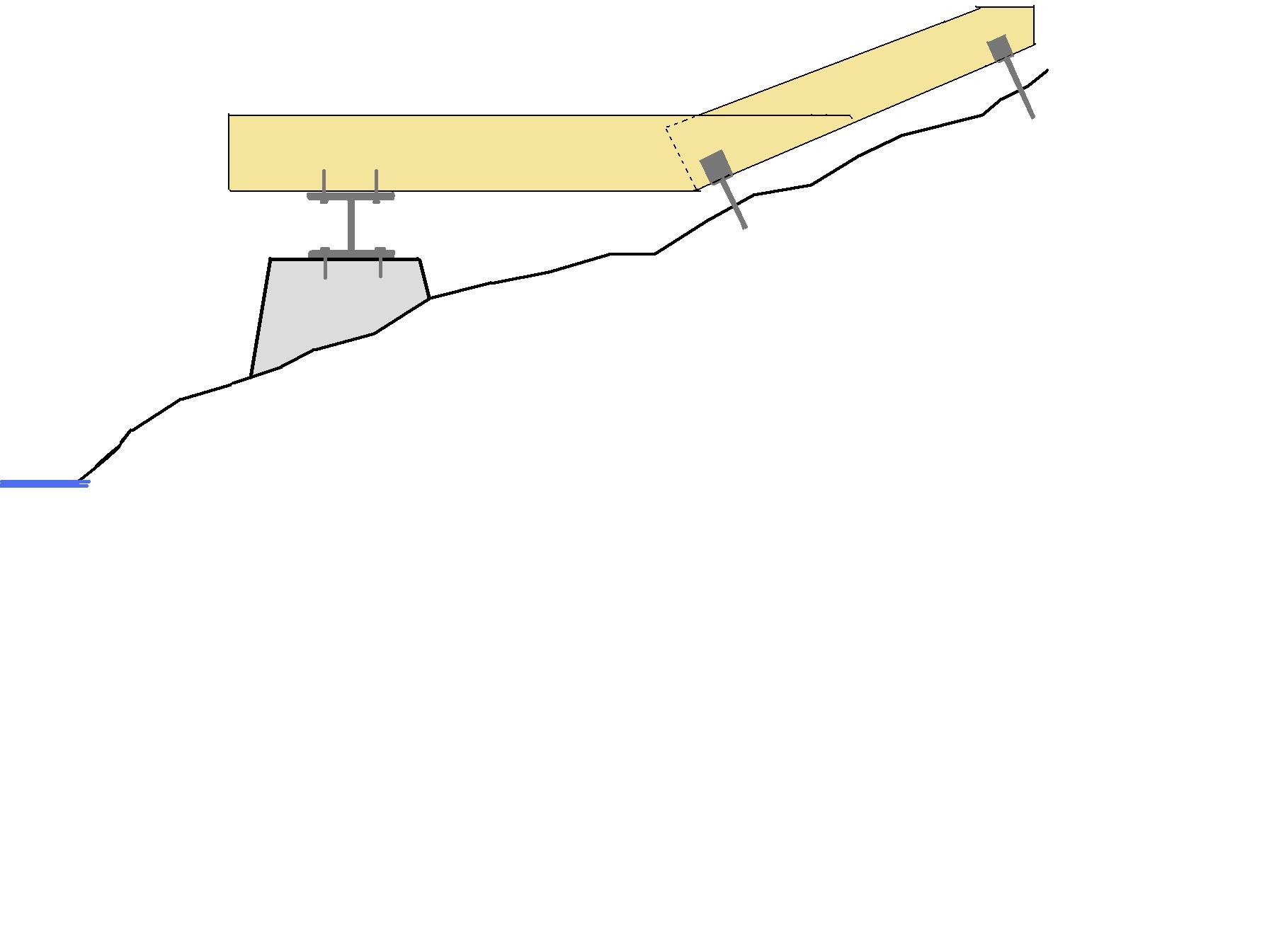
I have just started building a wood-fired sauna with a shower and changing room. The location is really good, right by the sea on the west coast (I got a shore protection exemption because there has been a boathouse on the site for a very long time). I have cast strong concrete pillars between which a heavy steel beam (HEB 160) is placed; I had the beam hot-dip galvanized for better corrosion resistance, and the reinforcement in the pillars is acid-resistant. The building is pulled back towards the mountain as much as possible to keep the existing jetty in front of the sauna (a new jetty construction is being done but in the same way as before - not shown in the pictures below). Because the mountain slopes quite steeply, the building cannot have a flat floor across the entire area, but that's no problem – a sauna is one of the buildings that can be "built uphill" – there will still be benches at the back. In the part where there will be a changing room/shower, a bench and a water heater, etc., will also be placed where the "floor slopes."
Now to my problem; It’s about the water level, which can rise quite significantly on the west coast. Normally, our jetty is about 1.30 meters above the water. According to the previous owner, who lived here for over 20 years, the water has sometimes reached the jetty, but never gone over it. During our 5 years as owners, the water once reached the jetty and once actually went 15-20 cm over it (!) I can't remember if it was 2008 or 2009, but none of those who grew up in the area had ever experienced such high water. There were very large floods in Gothenburg that day. So, to reduce the risk of a flooded sauna, I am raising it so that the finished floor is about 40 cm above the current jetty. Why not raise it further, someone asks... but, unfortunately, it’s not possible due to other factors, the façade needs to be integrated into the existing fence as required by the building committee, among other things.
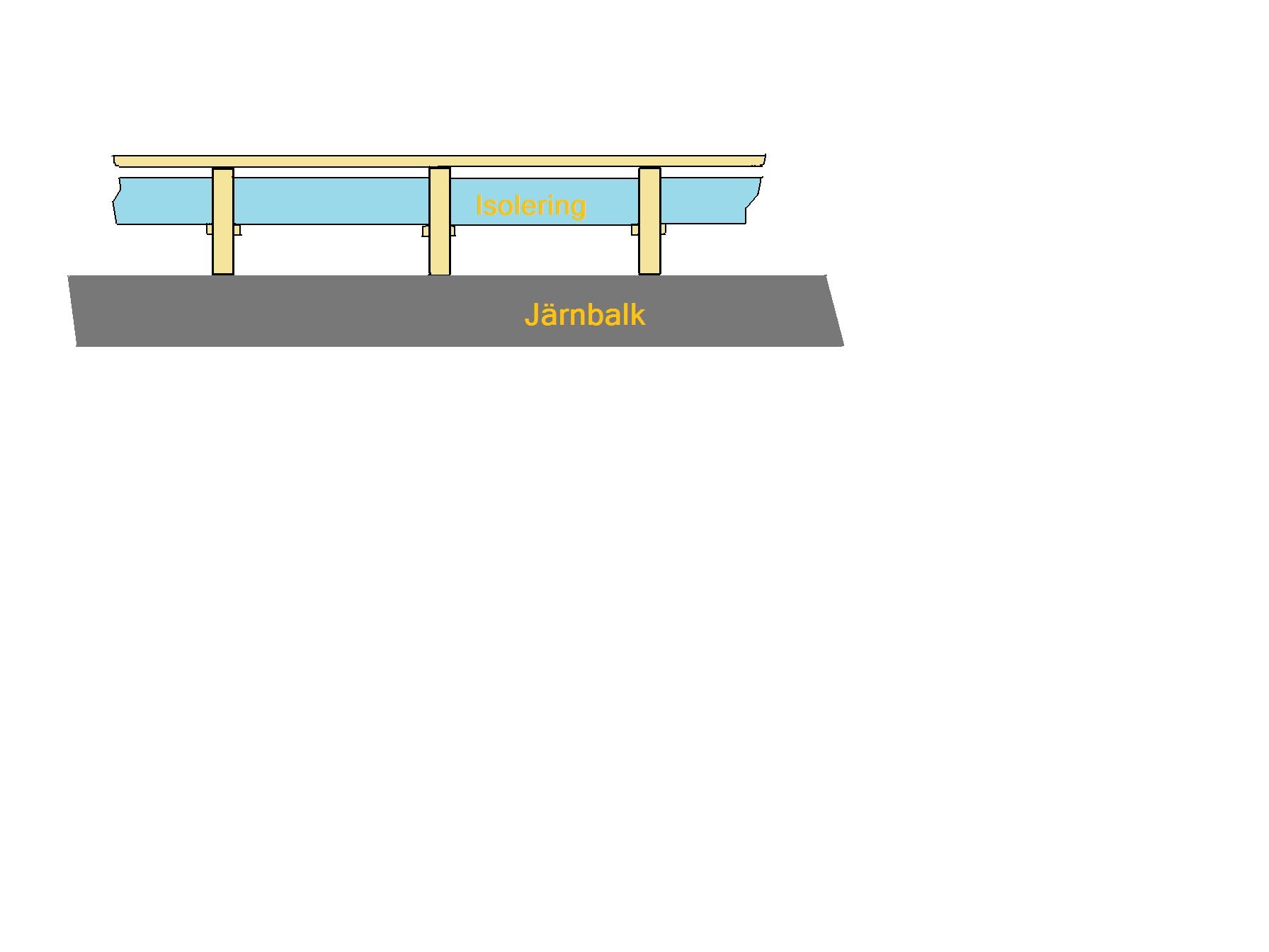
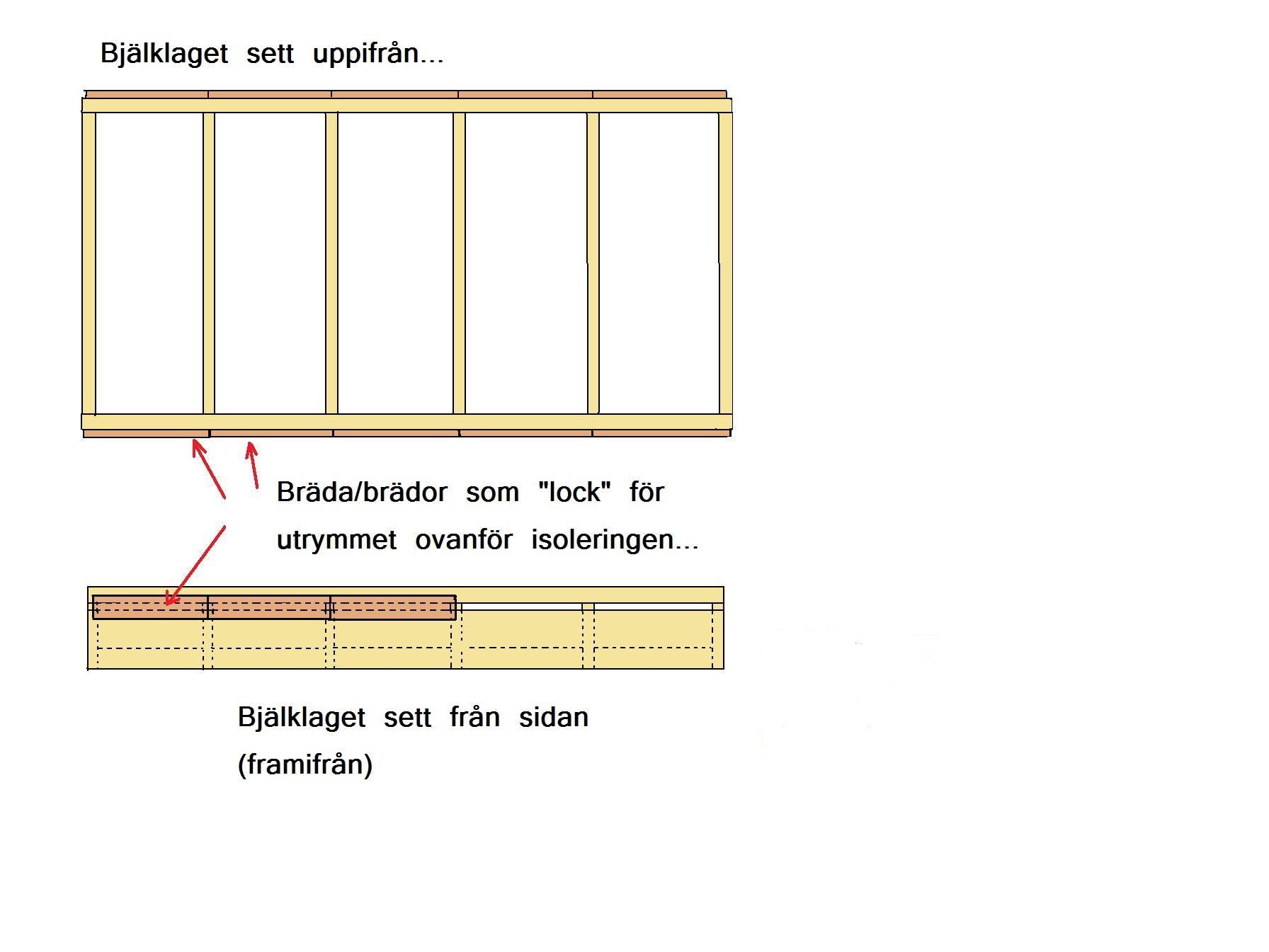
Then the question is: to insulate the floor or not...? I have read some threads, and some believe that a sauna floor doesn’t need insulation, and I can agree with that. But on the other hand, it’s not wrong to have some insulation at least – plus, we want to have the changing room somewhat heated, so some insulation is required there. I got an idea that maybe you could lay about 10-12 cm of Styrofoam between the floor joists but leave an air gap at the top (i.e., directly under the floor that will probably consist of raw boards). Through some sort of “hatches” at the front, this space could be opened up. If the elements wreak havoc and the joist gets drenched (you can monitor this), the "hatches" can be removed to allow drying...?
I realize that if the "void" directly under the floor isn't tightly sealed from drafts, the insulation won't be effective at all. Cold air will be there, and hence a cold floor (just like in houses with settled sawdust insulation). But you can pack some mineral wool inside the hatches to make it fairly airtight, thereby warming the air gap, making the floor feel reasonably warm. But this offers a chance to dry out the joist without ripping up the floor if an accident should occur.
I repeat that the joist will not regularly stand in water in any way, but in the future, there is some risk that it might happen once!
What do gentlemen/ladies on the forum think - would such a construction work, do you think? See the attached pictures showing the principle of the construction.
I also take the opportunity to ask a few more questions:
1) Is there any reason to use treated timber for parts of the floor construction? Not because of the flood risk, because it's only during extremely adverse weather conditions that there's a risk of such high water, but because the sauna is placed in a very humid environment... the nearby sea naturally brings a lot of moisture, and rainwater runs down the mountain and passes under the building. Or can treated wood emit odors...? It also absorbs moisture more than regular wood...?
2) I will need to install quite a few bolts and post shoes in the rock. Does anyone have experience attaching with sulfur...? We have a heavy iron post that's been in the rock with sulfur since at least 1930, according to photos we've found. That’s not bad – can modern "chemical anchors" really measure up to that...?
Grateful for answers and tips!
/Micc
I have often read here on the forum. Now I have a question that I need tips and help with.
I have just started building a wood-fired sauna with a shower and changing room. The location is really good, right by the sea on the west coast (I got a shore protection exemption because there has been a boathouse on the site for a very long time). I have cast strong concrete pillars between which a heavy steel beam (HEB 160) is placed; I had the beam hot-dip galvanized for better corrosion resistance, and the reinforcement in the pillars is acid-resistant. The building is pulled back towards the mountain as much as possible to keep the existing jetty in front of the sauna (a new jetty construction is being done but in the same way as before - not shown in the pictures below). Because the mountain slopes quite steeply, the building cannot have a flat floor across the entire area, but that's no problem – a sauna is one of the buildings that can be "built uphill" – there will still be benches at the back. In the part where there will be a changing room/shower, a bench and a water heater, etc., will also be placed where the "floor slopes."
Now to my problem; It’s about the water level, which can rise quite significantly on the west coast. Normally, our jetty is about 1.30 meters above the water. According to the previous owner, who lived here for over 20 years, the water has sometimes reached the jetty, but never gone over it. During our 5 years as owners, the water once reached the jetty and once actually went 15-20 cm over it (!) I can't remember if it was 2008 or 2009, but none of those who grew up in the area had ever experienced such high water. There were very large floods in Gothenburg that day. So, to reduce the risk of a flooded sauna, I am raising it so that the finished floor is about 40 cm above the current jetty. Why not raise it further, someone asks... but, unfortunately, it’s not possible due to other factors, the façade needs to be integrated into the existing fence as required by the building committee, among other things.
Then the question is: to insulate the floor or not...? I have read some threads, and some believe that a sauna floor doesn’t need insulation, and I can agree with that. But on the other hand, it’s not wrong to have some insulation at least – plus, we want to have the changing room somewhat heated, so some insulation is required there. I got an idea that maybe you could lay about 10-12 cm of Styrofoam between the floor joists but leave an air gap at the top (i.e., directly under the floor that will probably consist of raw boards). Through some sort of “hatches” at the front, this space could be opened up. If the elements wreak havoc and the joist gets drenched (you can monitor this), the "hatches" can be removed to allow drying...?
I realize that if the "void" directly under the floor isn't tightly sealed from drafts, the insulation won't be effective at all. Cold air will be there, and hence a cold floor (just like in houses with settled sawdust insulation). But you can pack some mineral wool inside the hatches to make it fairly airtight, thereby warming the air gap, making the floor feel reasonably warm. But this offers a chance to dry out the joist without ripping up the floor if an accident should occur.
I repeat that the joist will not regularly stand in water in any way, but in the future, there is some risk that it might happen once!
What do gentlemen/ladies on the forum think - would such a construction work, do you think? See the attached pictures showing the principle of the construction.
I also take the opportunity to ask a few more questions:
1) Is there any reason to use treated timber for parts of the floor construction? Not because of the flood risk, because it's only during extremely adverse weather conditions that there's a risk of such high water, but because the sauna is placed in a very humid environment... the nearby sea naturally brings a lot of moisture, and rainwater runs down the mountain and passes under the building. Or can treated wood emit odors...? It also absorbs moisture more than regular wood...?
2) I will need to install quite a few bolts and post shoes in the rock. Does anyone have experience attaching with sulfur...? We have a heavy iron post that's been in the rock with sulfur since at least 1930, according to photos we've found. That’s not bad – can modern "chemical anchors" really measure up to that...?
Grateful for answers and tips!
/Micc
An addition...
I forgot to mention that I will naturally ensure that the sauna floor has a waterproof layer that can withstand water spills. I haven't figured out the exact solution yet but maybe it will be a regular vinyl flooring. As for the shower, it will probably be a shower cabin.
/Micc
I forgot to mention that I will naturally ensure that the sauna floor has a waterproof layer that can withstand water spills. I haven't figured out the exact solution yet but maybe it will be a regular vinyl flooring. As for the shower, it will probably be a shower cabin.
/Micc
Click here to reply