
8,186 views ·
5 replies
8k views
5 replies
Insulate a friggebod. What to do in the ceiling? Tricky construction.
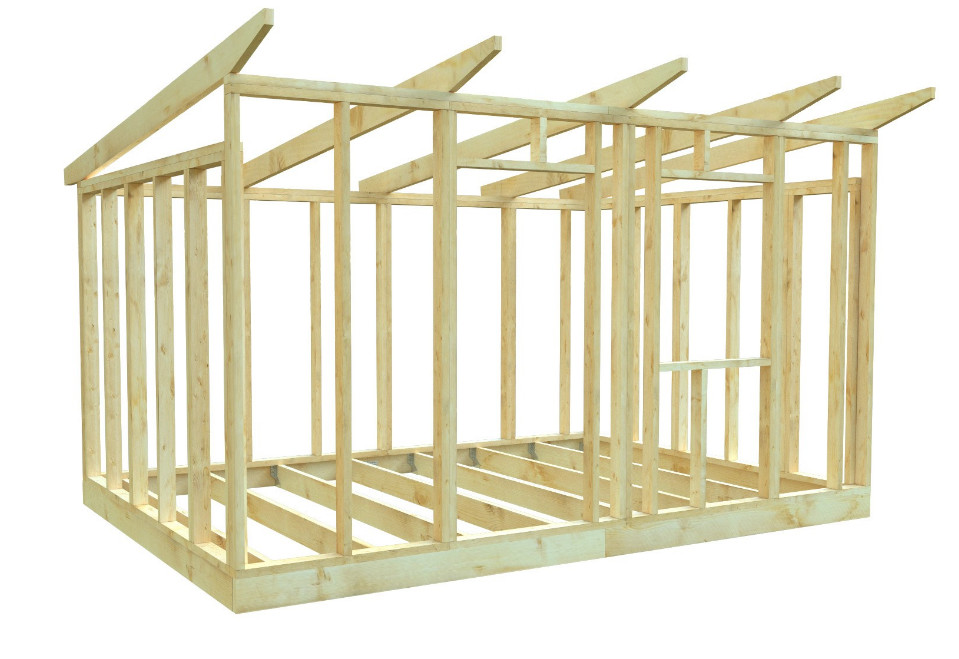
I'm going to insulate a garden shed. The construction is roughly like in the picture.
I'm wondering how to install a vapor barrier under the rafters and then battens. I think it gets really awkward at the first and last rafter (if you understand what I mean). You can't fold the plastic down onto the wall.
What should I do?
Does anyone have pictures of how it could be done?
I'm wondering how to install a vapor barrier under the rafters and then battens. I think it gets really awkward at the first and last rafter (if you understand what I mean). You can't fold the plastic down onto the wall.
What should I do?
Does anyone have pictures of how it could be done?
I've always wondered what that really means? Because in the summer, there's no point in having the heat on (just like in the house). Does that count as not heated year-round? Because in that case, you shouldn't have plastic in houses either. :-/H huggan said:
Yes, plastic or no plastic was thankfully not the question here. I live plastic-free but would probably use plastic on the friggen. It's easy to make completely airtight and I think it's a convenient way to keep the moisture in.
However, I think the problem is bigger than the plastic. If you plan to have a sloping ceiling, the gables must be built up higher so you can attach the inner wall covering to something, and then you'll have to attach the plastic to the gable walls instead.
If you're going to have a flat ceiling, you need to saddle down the roof trusses until they become flat, and that should solve the issue at the gables.
However, I think the problem is bigger than the plastic. If you plan to have a sloping ceiling, the gables must be built up higher so you can attach the inner wall covering to something, and then you'll have to attach the plastic to the gable walls instead.
If you're going to have a flat ceiling, you need to saddle down the roof trusses until they become flat, and that should solve the issue at the gables.
Heated year-round means at least 15 degrees year-round, and it's that on summer without heating.K Klicka said:

Tomture61
Self-builder
· Född i Luleå
· 6 335 posts
Tomture61
Self-builder
- Född i Luleå
- 6,335 posts
In a residential building, activities like showering, using a dishwasher, boiling water, etc., can occasionally result in very high humidity in the air. Current building standards require ventilation. In houses without ventilation, warm/humid air is pushed upwards. To the attic or out through the walls. The risk of mold attack in the structure/attic is high.
If you're thinking about insulating your shed and don't have the same standards as in a residential building, i.e., no water. Then skip the plastic and try to keep the air in the insulating layer still. That is, no gaps on the interior walls and perhaps exterior gypsum board on the outside of the shed.
If you're thinking about insulating your shed and don't have the same standards as in a residential building, i.e., no water. Then skip the plastic and try to keep the air in the insulating layer still. That is, no gaps on the interior walls and perhaps exterior gypsum board on the outside of the shed.
Click here to reply