If you haven't asked for a quote before, then it can't be fraud, can it?
It can still be fraud. If the craftsman gives a quote of 1500:- for what I need, I might think it's OK because as a customer, I might not have a clue about the actual cost of those items. Then the craftsman goes and buys the items and shows me a receipt. Still OK. By Christmas, the craftsman gets 500:- from the store owner as a thank you for that purchase.
In that situation, I consider it fraud. The craftsman and the store owner have jointly deceived the customer into overpaying for the goods.
Edit: Sorry, my response above missed something in what I replied to.
However, if you haven't asked for a quote, I still think it's fraud. It's about two parties deliberately deceiving the third party so that they lose money.
If I ask you to buy a liter of milk, I would consider it fraud if you go to a store where you get a receipt stating that 1 liter cost 100:- and then you receive 40 kronor from the shopkeeper.
To some extent, I don't think it's wrong for the tradesperson to receive a certain discount from the lumberyard, but that it isn't then passed on to the customer. The customer has a ten-year right to claim under KTjL, so the tradesperson must take this into account when doing a job. The suppliers of the material rarely have a warranty period that covers these 10 years.
It can still be like that. If the craftsman gives the price quote of 1500:- for what I need, I might think it's OK because as a customer, I may not be aware of the exact cost of those items. Then the craftsman goes and buys the items and shows me a receipt. Still OK. At Christmas, the craftsman receives 500:- from the seller as thanks for that purchase.
In that situation, I consider it to be fraud. Then the craftsman + seller have jointly fooled the customer into paying too much for the goods.
Edit: Apologies, my previous response missed something in what I was replying to.
However, if you haven't asked for a price quote, I still believe it's fraud. Because it's about two parties deliberately deceiving the third so that they lose money.
If I ask you to buy a liter of milk, I would consider it fraud if you go to a store where you get a receipt showing that 1 liter cost 100:- and then you get 40 crowns from the shopkeeper.
If you as a customer don't know the prices, it's easy to feel deceived. Most things today can be easily checked at Byggmax or another hardware store that has prices in their webshop.
I agree that it is a form of fraud. But I also think it's very easy to avoid being tricked by checking the prices before making any arrangements with the craftsman.
I agree that it is a form of fraud. But at the same time, I think it's very easy to avoid being deceived by checking prices before making any agreements with the tradesman.
But if you check every item for its cost, then it's even better to go and buy the stuff yourself. A huge advantage of that is that you don't have to pay hourly wages + mileage for the tradesman to go shopping.
How does the average tradesman feel about the customer handling all the purchases? For me as a customer, it would be great if I got a list of the stuff the tradesman needs next time he comes, and I'll get these things from the hardware store I choose. I guess tradesmen used to milking customers for huge markups aren't too keen on that setup.
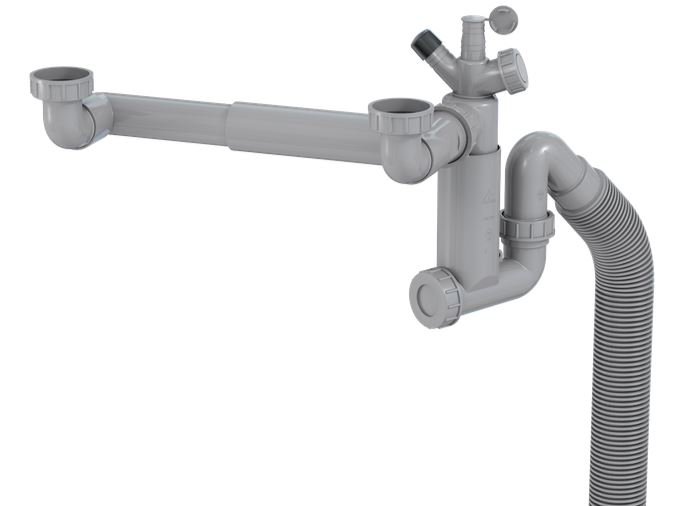
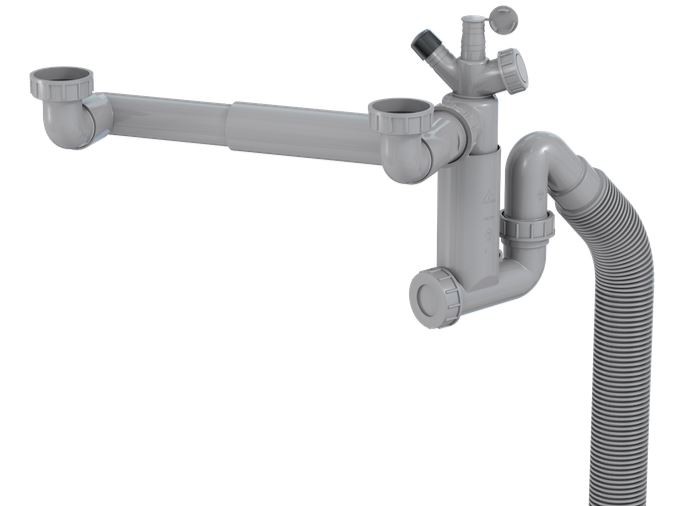
Pretty OT, but it's sometimes a pain to shop for small things as a private person. I had to pay 58 bucks for the little black plastic cap for a sink drain trap in an (extremely) well-stocked bathroom shop in downtown Stockholm just recently. I wonder what a tradesperson would have to pay for the same? I think you can find a whole new complete drain trap for 300 bucks if you search. Dad was quite good at asking for discounts even on single small items at various places and often succeeded, but I just paid up and looked happy.
I can, to a certain extent, not think it is wrong that the craftsman gets a certain discount from the lumberyard, but that it is not then passed on to the customer. The customer has a right of complaint for 10 years according to the KTjL, so the craftsman must take this into account when they do a job. The material suppliers rarely have a warranty period that covers these 10 years.
No, there is no right of complaint for 10 years on material
Thanks for the interesting info! Funny wording "For Christmas he gets 150,000kr so he and his family can stay in the mountains over the holidays". My construction company closed as soon as my job was done, and the boss and his wife went away for 3 (THREE) weeks on the other side of the world.
But for heaven's sake.....
Let people do what they want in their lives.
But if you have to check the price of every item, it's even better to go and buy the stuff yourself. A huge advantage of that is that you avoid paying hourly wages + mileage reimbursement to the contractor for going shopping.
How does the average contractor feel about the customer handling all the purchases? For me as a customer, it would be great if I got a list of the items the contractor needs next time he comes so I can get these items from the building supply store of my choice. I assume contractors who are used to milking customers for massive price differences aren't too keen on that setup.
Are you prepared to pay for the time it takes to make a "shopping list"?
In that case, it's completely fine with me.
. It's that he feels cheated out of the money they used to pay for the trip.
And that's exactly what I'm hung up on.
They might have inherited money, saved for many years, won, etc., etc. But TS might know more than I do, who knows.
But sure, let's do a calculation of the whole thing.
As I understand it, TS paid the actual purchase price + 12% - totally fine if you ask me.
The contractor may POSSIBLY have a kickback, which in my world is a loyalty bonus and nothing the customer should be concerned with. Just like when the contractor gets to go on a sponsored trip, receives a Christmas gift, or tickets to a national game from the building supply store.
But let's say this bonus generates 3%..... Then we're talking 4,500:- on a construction that cost 900,000!!
AND the bonus is surely conditional, and depending on when the job is done, the contractor doesn't even know if there will be a bonus. They might change suppliers or drastically reduce their purchases for some reason or another.
No, be happy that the often hard-working business owner has written an agreement where he can pocket some money and maybe take a little vacation.....
And while the craftsman worked hard on your house, you could be on vacation.. The alternative is to make the purchases and do the renovation yourself. It's only then that you get off cheaply.
I have just extended the villa in Lund, cost about 900,000 SEK of which 150,000 SEK was for materials. The materials were purchased by the builder himself at his nearest large building supply store. He recommended it because they "have the best prices." When I was to pay the builder's invoices, I received a copy of his material costs. He added 12% on all purchases.
Here is a price example. The extension was built with large H+H blocks, they cost 72 SEK + VAT each in the store. I bought 600 pieces. On the invoice, they have the price of 68 SEK + VAT + builder's markup 12%.
I thought it felt incredibly expensive. A large builder should have low prices, a 20-30% discount? If he also buys 600 pieces of the same item with direct delivery, shouldn't the price be an additional 10-20% lower?
Just for fun, I emailed another building supply store in the same chain but in Malmö. In their quote, the price was 54 SEK + VAT + delivery cost.
I believe that the construction firm and the building supply store have some kind of deal, the builder gets a bonus on the side for each material purchase without me, the customer, finding out about it. Either that, or he is being fooled by the building supply store, which has overcharged him.
I don't think it's something to get worked up about. The service of not having to buy the items, of course, costs, and the tradesperson getting a kickback is completely fine. Loyalty programs are classic. Similar to SAS bonuses that went to the individual rather than the company that paid. However, I think the model showing full price + markup + bonus is a bit greedy. The tradesperson's price and detailed invoice (without markup) + loyalty bonus + hourly cost for purchase is what I find most transparent.
I can probably say it's not just the carpenter or the department store that's r........ Us.
I am a carpenter by trade myself. And we were supposed to build a brick wall and needed hollow bricks.
When I was going to get the bricks, I think I went to my building supply store, got a price, say 10 SEK each.
Then I ordered the same from Germany (stepfather is German) and it cost 1.67.
But the funny thing about it was that it was made in Sweden at the same brick factory as the one sold in Sweden. The same with drywall, we bought (ordered) drywall from a Danish store; it cost a third as much as in Sweden. And when it arrived, it was Swedish and made in the same factory as our "building supply store" had. We ordered a hell of a lot of drywall, but this was 20-15 years ago. What I believe is that the price structure here in Svedala is probably too high.
We are used to paying more for goods and are really bad at bringing prices down. Over many, many years, the price structure becomes high.
Look at radio and TV stores; the markups were huge in the past, and today we have one of the cheapest TV and radio stores in Europe. Look at Ikea, the same product with different prices in different countries.
I don't work as a carpenter now due to an accident, but I don't think it has changed much.
Vi vill skicka notiser för ämnen du bevakar och händelser som berör dig.