I'm preparing to install the ceiling drywall for the garage and would need some advice and thoughts on the best and most convenient way to install the ceiling drywall. The situation is as follows:
22-degree roof pitch
Open to the ridge
1200mm centers on the roof trusses
The tie beam/underarm consists of a 70x45 rafter with two 95x28 pieces nailed to each side (with a common upper edge).
The drywall panels are already purchased, measuring 2500x900x13 with beveled edges along the long sides (for joint tape).
The section looks as follows (centers for battens are 300 for the first 7 lower panels, then it's a bit tighter for the top three):
(Initially, and until recently, I was planning to have horizontal panels, hence the peculiar distance on the upper battens, where I intended to have a split panel at the top)
Now to my dilemma, since I have chosen to have it open to the ridge, I need to cut notches in the drywall to fit around the underarms, which involves quite a bit of work. As I see it, I have two options:
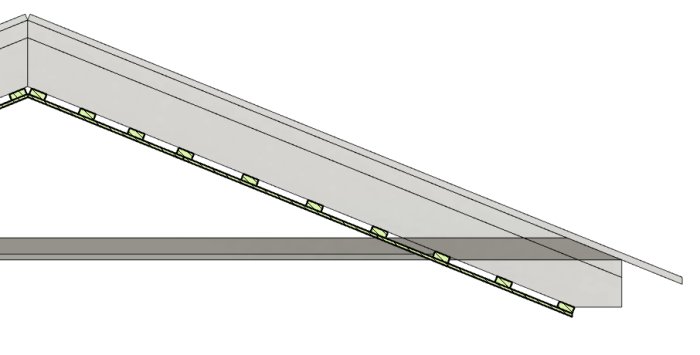
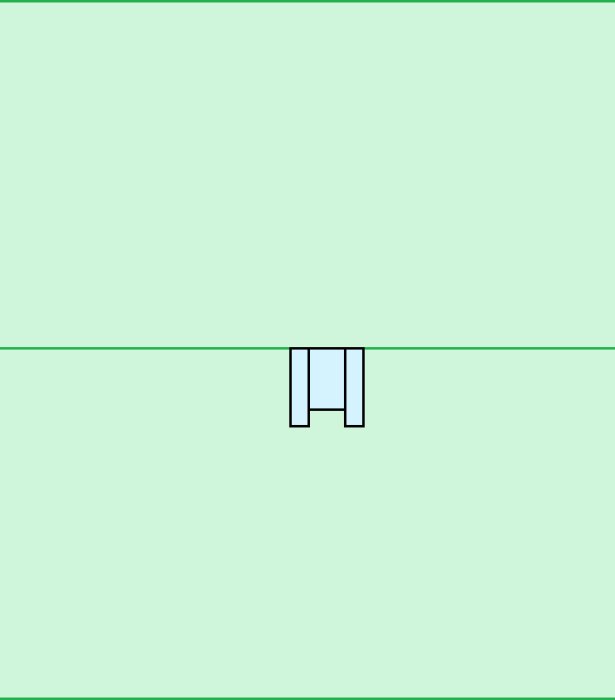
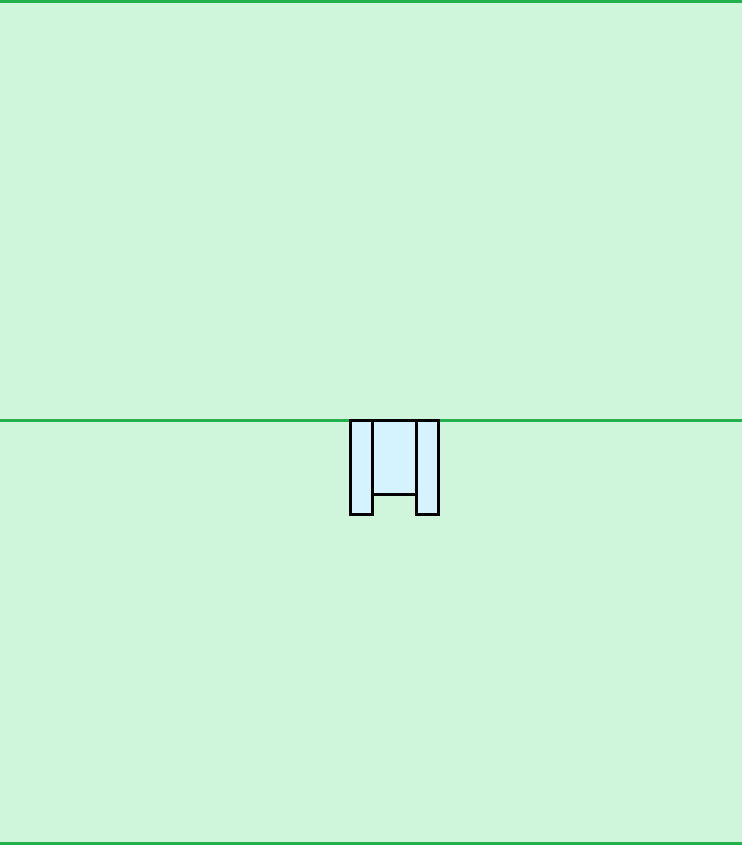
Horizontal panels running along the battens (view from the side, green are drywall panels, dark green are drywall panel joints, and blue is a section of the underarm for the roof truss):
With a bit of luck and skill, the joint between the first and the second panel might end up exactly where the underarm extends into the room. This will make it fairly simple to notch out for the underarm. The disadvantage of this solution is that it is generally recommended to install the panels perpendicular to the battens and it involves a lot of short ends to taper and spackle.
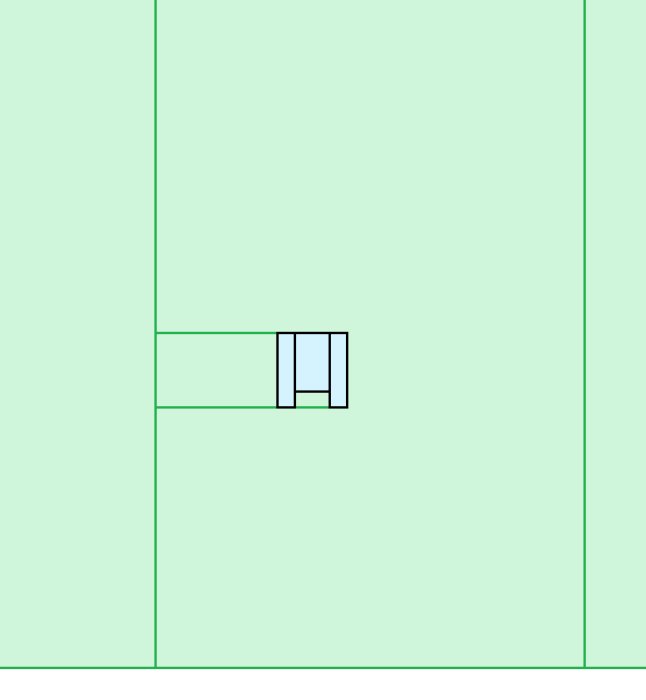
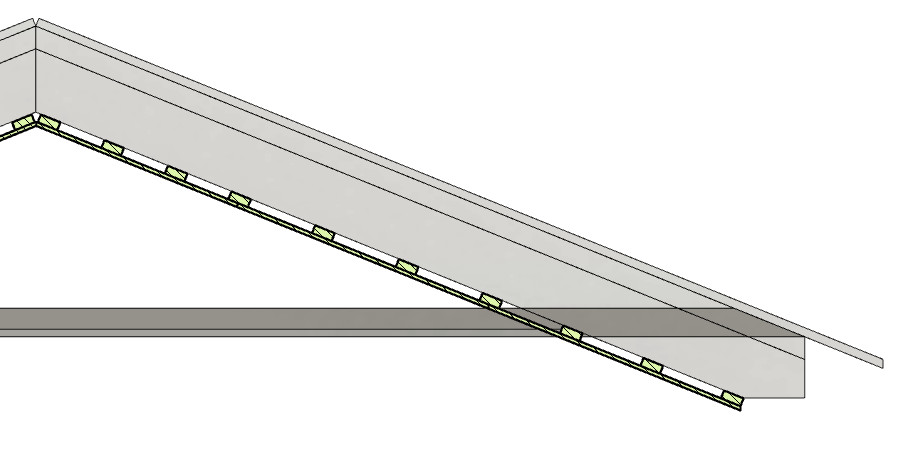
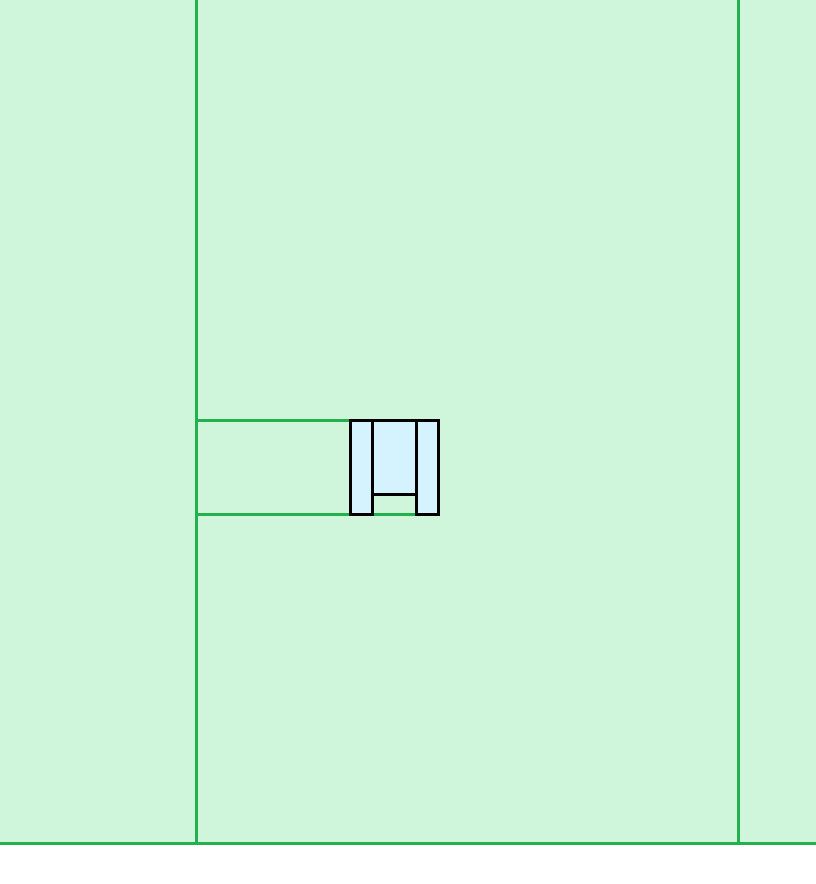
Option two is vertical panels:
Since I have purchased panels that are 900 wide, they do not match the truss spacing exactly, resulting in fairly large notches that need to be made and also spackled over. The advantage is, of course, that the panels run perpendicular to the battens and I won't have any short ends to spackle since the panels are 2500mm long and the distance from the tie beam to the ridge is 2530mm, i.e., they are 30mm short, but this can probably be disguised with a molding either at the tie beam or up at the ridge.
So what's easier, going with option one, dealing with numerous short ends (tapering, installing noggings, paper tape, and spackling) or option two where I have to work on filling the gaps created by the notching? What would you choose?
If you want to keep it simple and stylish without having to install a ceiling molding, run the panels across the spars. Buy a roll of metal tape, the kind you use for joining gypsum board, which is like a perforated strapping with holes in the middle so you can fold it 90 degrees if you want.
You also install this on the top edge of the wall gypsum that meets the ceiling gypsum, so they are screwed into the same. This allows you to gypsum closely, then apply some caulking in the angle, and then paint the ceiling and wall without gaps or ceiling molding. The metal tape can also be used at joints, the ceiling won't crack in the same way as if you only use wood, which shrinks slightly over time otherwise at the cross joints.
If you want it simple and neat without having to install a ceiling trim, run across the sparse battens, purchase a roll of metal strap, the type you use to splice gypsum with, it acts like a perforated strap with holes in the middle, allowing you to bend it 90 degrees if desired.
Attach this also on the upper edge of the wall gypsum that meets the ceiling gypsum so they are screwed into the same, then you can fit the gypsum tightly, apply a bit of paintable caulk in the angle, then paint the ceiling and the wall with no gaps and without a ceiling trim. You can also use the metal strap at the joints; the ceiling won't crack in the same way as when you only use wood which tends to shrink a little with time in the transverse joints.
Thanks for the response, I wasn't aware of the metal strap, it will definitely be used at the ridge. I have stone walls, so the transition from wall to ceiling will be a soft caulk, for example, paintable caulk should suffice for that.
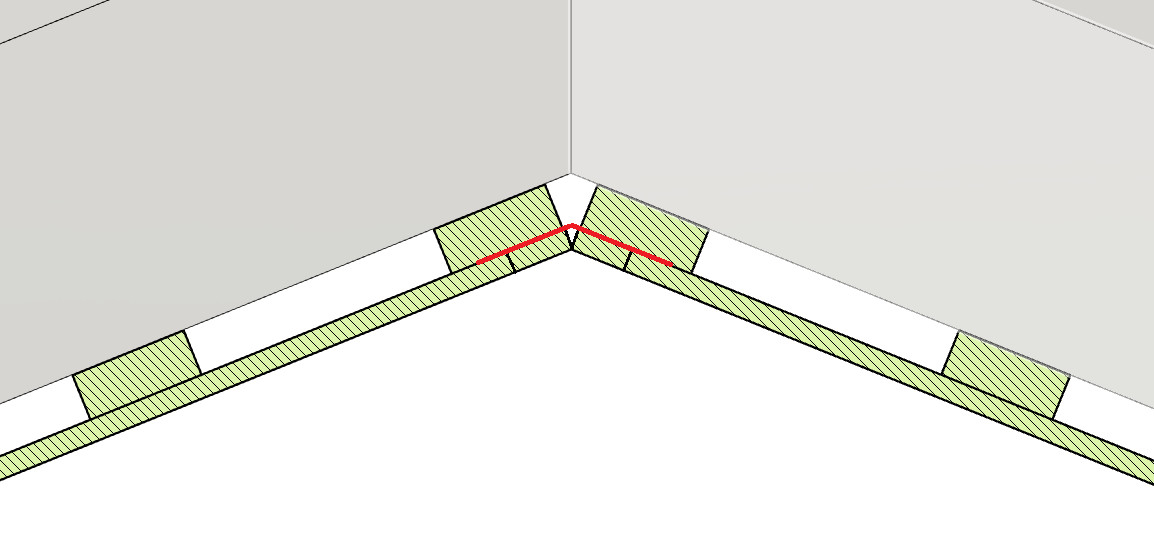
What about this solution (if I interpret what you write correctly), the plates perpendicular to the battens and at the ridge:
Perforated strap between the two battens, then I will have to fill in with 3-4 cm gypsum pieces to fill the missing part (the plates are 2500mm, needing 2530mm). Then paper tape and putty on that.
Thanks for the answer, I wasn't aware of the metal strip, it will definitely be used up in the ridge. I have stone walls, so the transition from wall to ceiling will be a soft joint, e.g. painter's caulk should suffice for that.
What do you think about this solution (if I'm interpreting what you write correctly), the boards perpendicular to the batten and up in the ridge:
[image]
Batten strip between the two battens, then I'll need to fill it out with 3-4 cm gypsum pieces to fill out the missing part (the boards are 2500mm, need 2530mm). Then paper tape and filler over it.
Looks good, the gypsum boards are held together by the metal strip and become a unit, minimizing cracks. Batten strip or metal angles are also used at the corners of the house, where many get creases or cracks, thereby preventing that from happening. A roll of 25 meters usually costs around 500 SEK, but it's a must when building without ceiling moldings in a wooden house.
Sounds good, then the plasterboards are held together by the metal strip and become a unit, minimizing cracks. Strapping tape or metal angles are also used at the corners of the house, where many people get wrinkles or cracks; this way you avoid that from happening. A roll of 25 meters usually costs around 500 SEK, but it's a must when you're building without ceiling moldings in a wooden house.
How do the professionals usually do it when they install this metal strip at the ridge? Cut the entire length, bend it, and then temporarily fasten it with countersunk screws (so that the plasterboard lies evenly against the metal strips/lath)?
Click here to reply
Vi vill skicka notiser för ämnen du bevakar och händelser som berör dig.