
2,269 views ·
1 replies
2k views
1 replies
How to plaster/fill a basement wall?
Hello!
I have an uninsulated (except for the mentioned room) and unheated basement where there used to be stud frames with chipboard, fiberglass fabric, and insulation. I have recently torn down the frames, boards, and insulation, exposing the walls. They consist partly of the house's natural stone foundation but as an interior wall, there are also plastered brick walls. The house is from 1933.
I want to improve, strengthen, and freshen up the walls which are in poor condition in some places, both in the brick joints and the plaster itself.
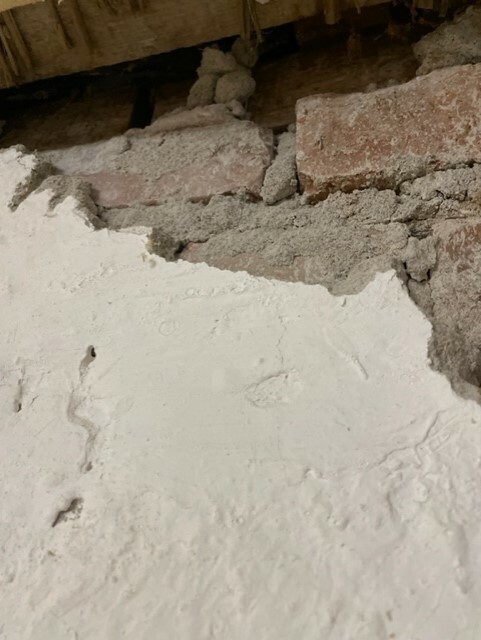
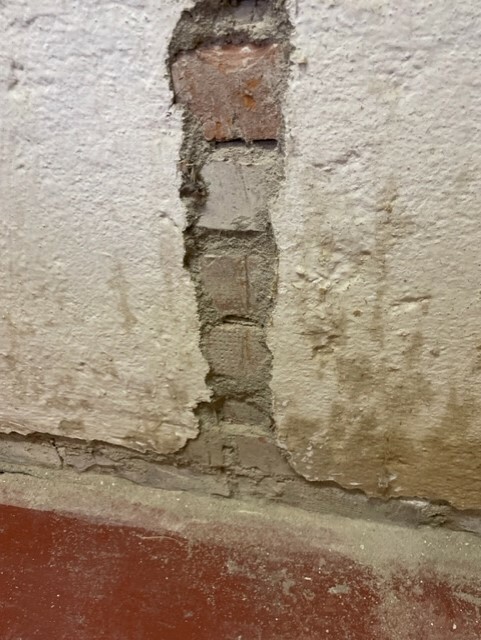
How do I proceed? I understand that there is plaster which is "diffusion open" for lack of a better word. But otherwise? Wet down, plaster, and supplement the brick joint? As you can see, the brick joint is "crumbly" and quite dry "fluffy," as is the plaster in some places. However, there are only small sections where the brick is visible.
I would gladly receive tips and tricks!
I have an uninsulated (except for the mentioned room) and unheated basement where there used to be stud frames with chipboard, fiberglass fabric, and insulation. I have recently torn down the frames, boards, and insulation, exposing the walls. They consist partly of the house's natural stone foundation but as an interior wall, there are also plastered brick walls. The house is from 1933.
I want to improve, strengthen, and freshen up the walls which are in poor condition in some places, both in the brick joints and the plaster itself.
How do I proceed? I understand that there is plaster which is "diffusion open" for lack of a better word. But otherwise? Wet down, plaster, and supplement the brick joint? As you can see, the brick joint is "crumbly" and quite dry "fluffy," as is the plaster in some places. However, there are only small sections where the brick is visible.
I would gladly receive tips and tricks!
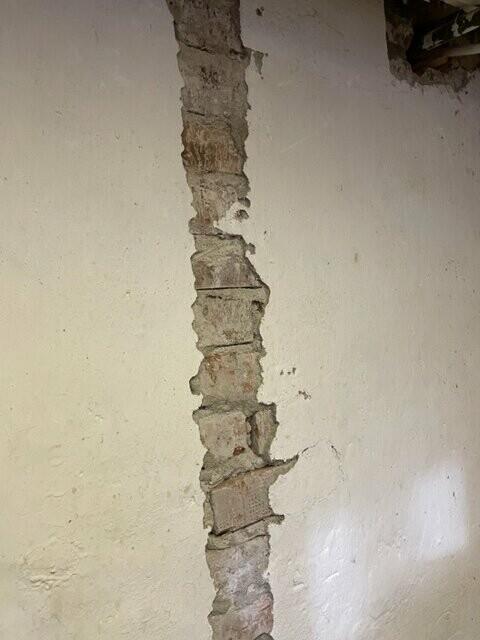
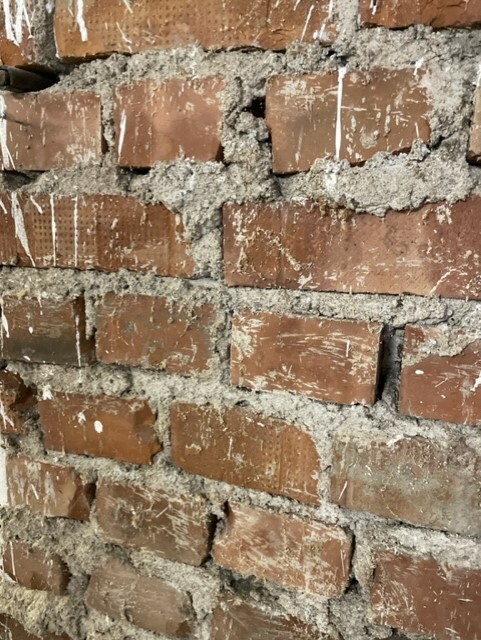
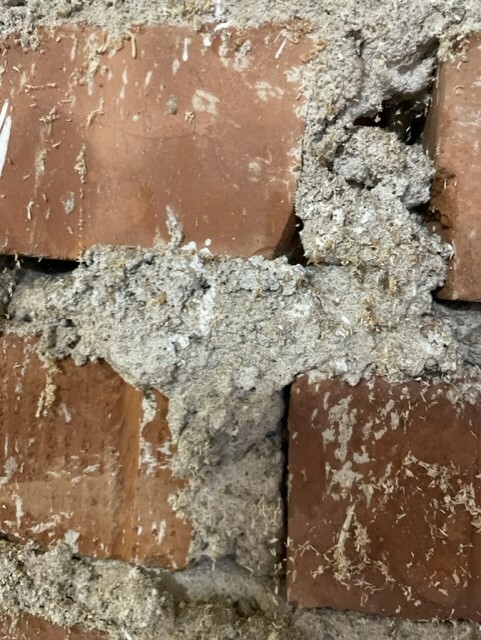
Steel brush the bricks and joints; if the plaster is loose/soft/very hollow.
Knock it off with a hammer.
Pre-wet quite a lot and apply a loose base coat on all clean bricks with 3 mm c mortar.
A few hours later or the next day, fill in with the same mortar, you can apply it with a felt float.
And maybe stay 5 mm inside the existing plaster surface.
The day after again, pre-wet and plaster with 1 mm c mortar, and rake it with a Kanitz or float with a felt float.
All lime mortar and kc mortar are diffusion-open, c mortar is kc mortar.
But if you apply a paint that isn’t later, it doesn’t matter.
The paint you have on now doesn’t look open.
Knock it off with a hammer.
Pre-wet quite a lot and apply a loose base coat on all clean bricks with 3 mm c mortar.
A few hours later or the next day, fill in with the same mortar, you can apply it with a felt float.
And maybe stay 5 mm inside the existing plaster surface.
The day after again, pre-wet and plaster with 1 mm c mortar, and rake it with a Kanitz or float with a felt float.
All lime mortar and kc mortar are diffusion-open, c mortar is kc mortar.
But if you apply a paint that isn’t later, it doesn’t matter.
The paint you have on now doesn’t look open.
Click here to reply