
Now, the thing is, I've done some tearing in one of the rooms and all sorts of junk comes off the walls. The bottom line is that in two "corners" or angles, if you will, I'm not quite sure how to make them straight? You can't just throw up a drywall from both sides and get it straight that way. It should be clarified that there isn't space on any side to put up a drywall. So how do you get these kinds of corners that you see in the pictures to be straight in the best way?
As you can see in the bottom picture, it's a bit too dark, there's supposed to be a strip along one edge since I'm going to tile there later. The question is whether I can run strips along the outer edges and then mask the strips to fill the gaps with filler, the ones that will be on the inside edge, so to speak? But if I have to sand, there's a pretty big risk that I'll accidentally go over the metal strip a number of times.
I've tested a bit with some repair gypsum and tried to get the edges straight, but it was impossible.
As you can see in the bottom picture, it's a bit too dark, there's supposed to be a strip along one edge since I'm going to tile there later. The question is whether I can run strips along the outer edges and then mask the strips to fill the gaps with filler, the ones that will be on the inside edge, so to speak? But if I have to sand, there's a pretty big risk that I'll accidentally go over the metal strip a number of times.
I've tested a bit with some repair gypsum and tried to get the edges straight, but it was impossible.
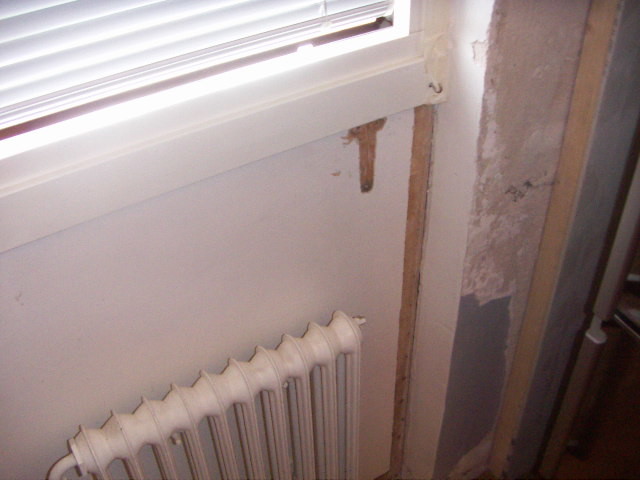
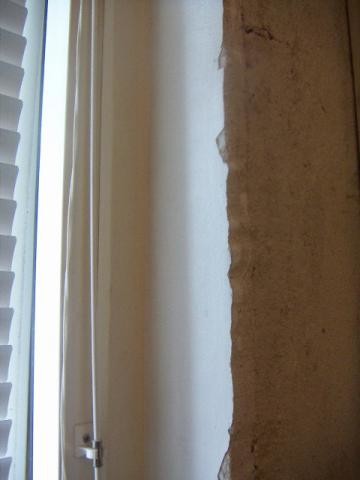
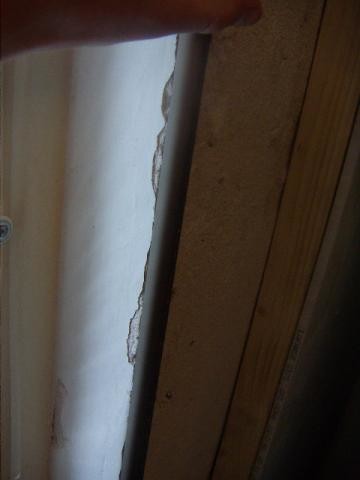
Last edited:
Can't really tell from the pictures whether it's a stone or wood surface we're dealing with? Probably plaster on brick, etc.
If it is, you'll need to clean up the corner using a straight board. You can nail or screw the board in the recess towards the window (if possible), with the edge aligned with the wall and vertically. Then just fill in with plaster on the wall and scrape off against the board edge with a piece of wood, letting it dry. Afterward, carefully remove the board and fill in plaster or gypsum in the holes left by the nails/screws.
Alternatively, you can plaster the wall flat and vertically until you reach the recess, let it dry, and place the board on the newly plastered wall surface, then plaster the recess and corner last.
You can also use a so-called corner iron for plastered outer corners, which you attach in the underlying material. However, the problem you'll have is leveling in two directions and keeping track of two wall surfaces (the recess and the wall) at the same time. Therefore more difficult than the above, but much, much stronger and more durable.
_______________
Byggaren
If it is, you'll need to clean up the corner using a straight board. You can nail or screw the board in the recess towards the window (if possible), with the edge aligned with the wall and vertically. Then just fill in with plaster on the wall and scrape off against the board edge with a piece of wood, letting it dry. Afterward, carefully remove the board and fill in plaster or gypsum in the holes left by the nails/screws.
Alternatively, you can plaster the wall flat and vertically until you reach the recess, let it dry, and place the board on the newly plastered wall surface, then plaster the recess and corner last.
You can also use a so-called corner iron for plastered outer corners, which you attach in the underlying material. However, the problem you'll have is leveling in two directions and keeping track of two wall surfaces (the recess and the wall) at the same time. Therefore more difficult than the above, but much, much stronger and more durable.
_______________
Byggaren

Corner iron then plaster mix?
Click here to reply