
12,914 views ·
18 replies
13k views
18 replies
How to frame a ceiling before drywall


Member
· Västerbottens län
· 18 047 posts
Probably better soundproofing.
Protte
Protte
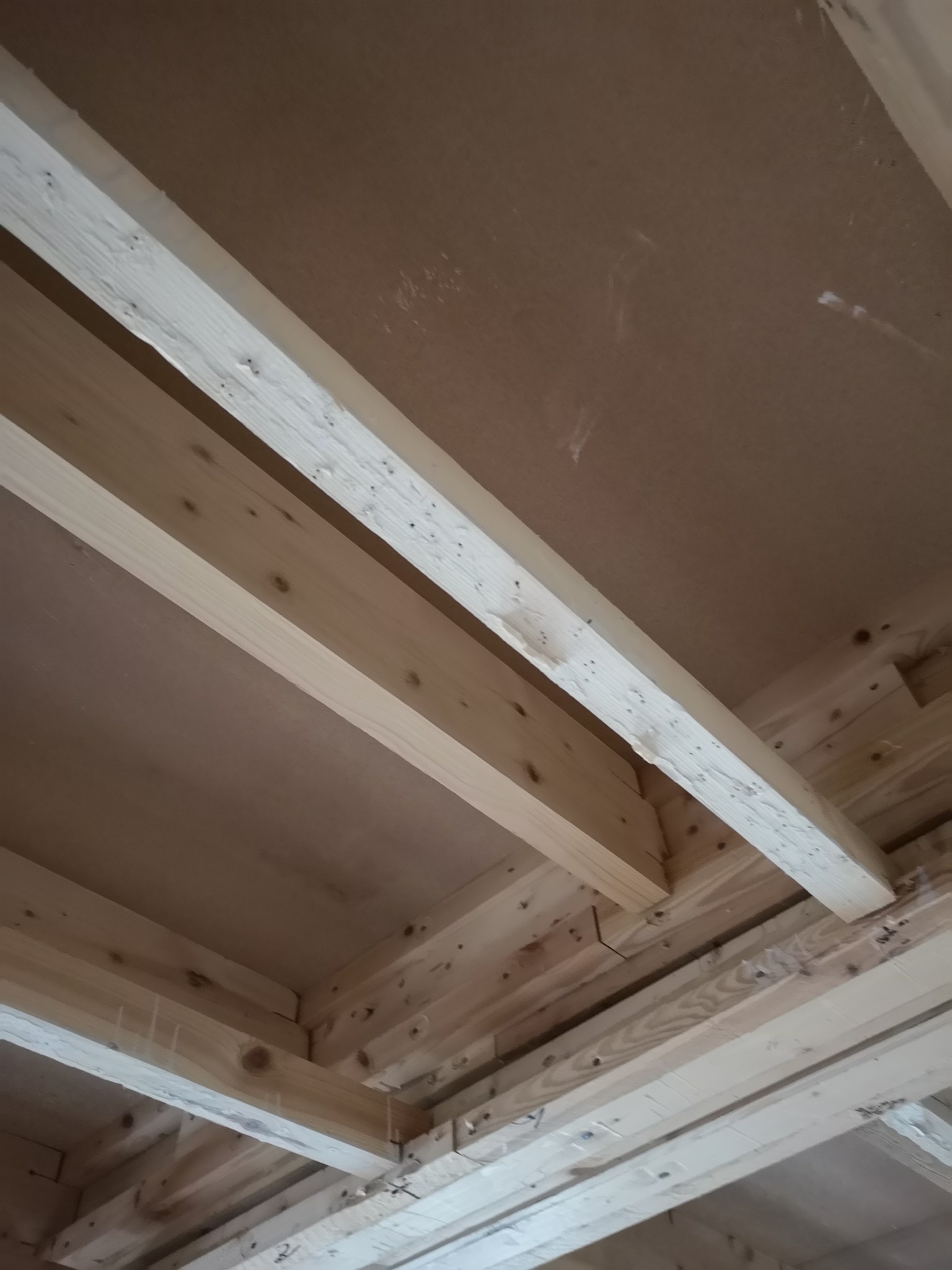
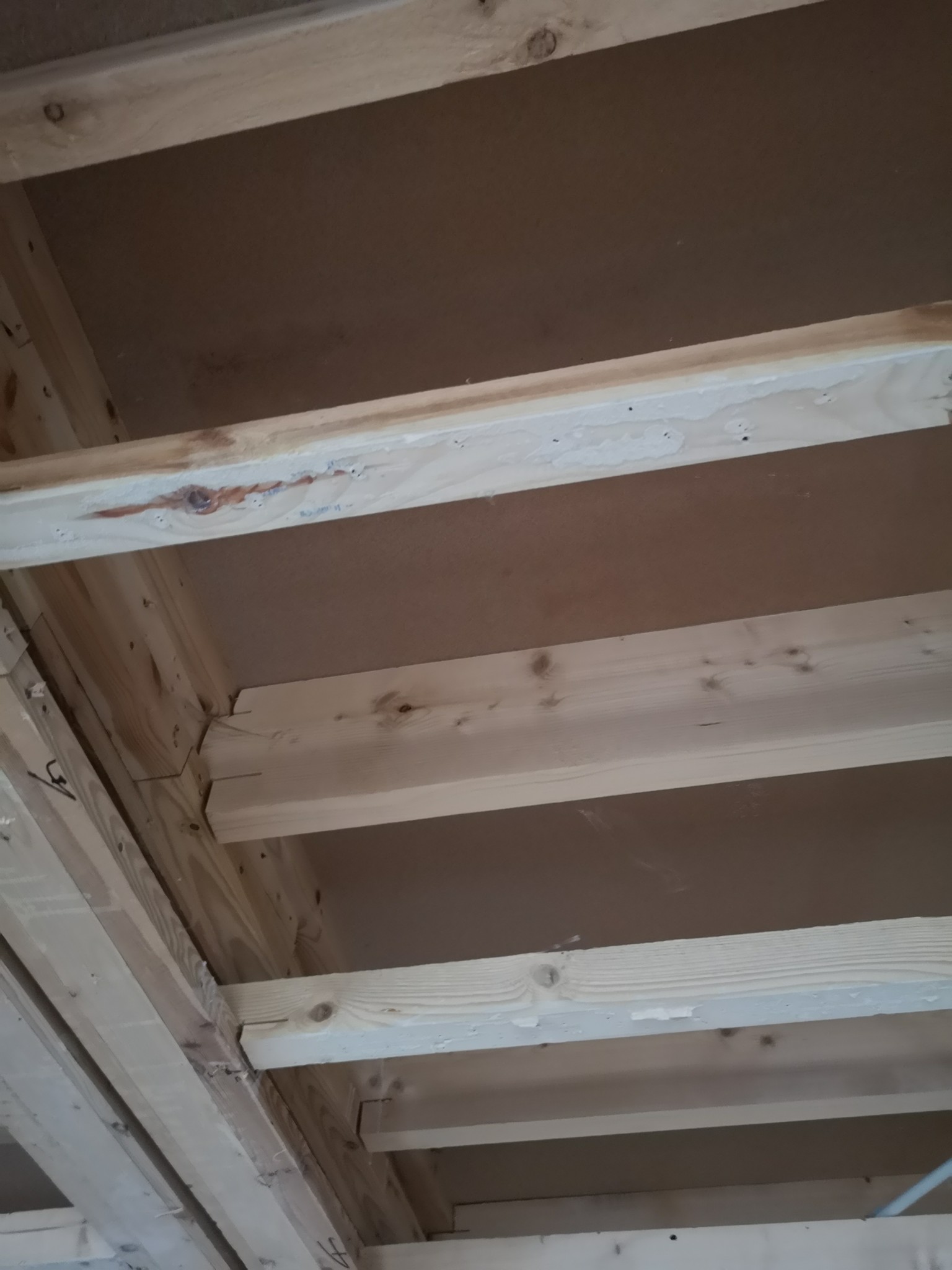
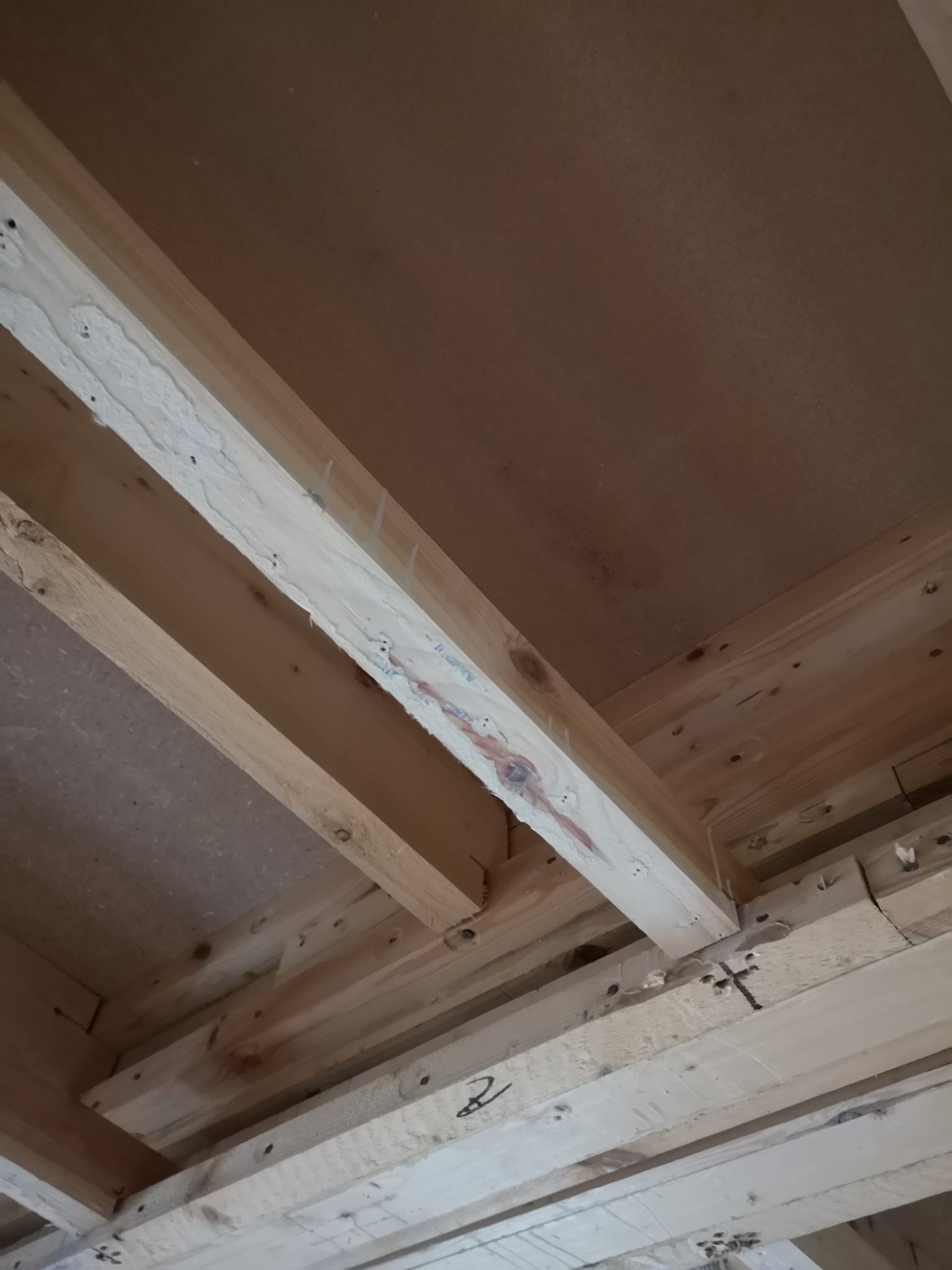
Do you mean that it was framed that way for better soundproofing? I'm mainly thinking that the studs are too weak/thin and have worse load-bearing capacity if they're not fixed to wooden beams.
Or are you thinking that you should keep the existing framework?
It is usually done to get better sound insulation between floors/ceilings, and if you are going to install regular ceiling gypsum, a 30cc stud spacing is required, but 40cc may suffice. The easiest way is to lay battens across the existing studs. Battens preferably 28x70, but 22x70 may be sufficient since you have quite a short distance between the studs...
Feel free to add some insulation towards the floor and secure it with plastic straps while you're at it for sound insulation...
Feel free to add some insulation towards the floor and secure it with plastic straps while you're at it for sound insulation...
Okay. A huge thank you for the great info! I'll go with that. But one question. Do you think the span of the current joists is a problem if you look at the pictures? That it's sagging?anders07 said:
You usually do it to get better sound insulation between the floor/ceiling, and if you're going to install typical ceiling plasterboard, 30cc joist spacing is recommended, but 40cc might suffice. The easiest way is if you lay battens across the joists that are there. Battens preferably 28x70 but 22x70 might be enough since you have quite short spans between the joists...
Feel free to add some insulation against the floor and secure it with plastic strips while you're at it for soundproofing...
Looks like 45x70, right?
I think that should be enough, but if you pull/hang a bit on the beam and it doesn't flex too much, it should work fine.
A gypsum board weighs around 8kg per square meter, so that's what it must support without sagging.
I think that should be enough, but if you pull/hang a bit on the beam and it doesn't flex too much, it should work fine.
A gypsum board weighs around 8kg per square meter, so that's what it must support without sagging.
Construction veteran
· Norrland
· 342 posts
I think it almost looks like it's hanging already. Or is it an optical illusion? Feels like it's a bit flimsy. But do as anders07 wrote and test load it. You can suspend the beams in the crossbars in the center of the floor structure to the upper floor if it sags. If you don't want to suspend with a beam for the sound's sake, you can use metal strapping instead.
I think it looks more like something homemade, like 50x75. If you're not worried about noise from above, just strap the joists there with perforated tape or something similar. Be careful to make it straight (a long straightedge helps a lot).
Alternative 2 is to Sala on existing joists with something stronger, the dimension depends on the span.
finally, spaced boarding
Alternative 2 is to Sala on existing joists with something stronger, the dimension depends on the span.
finally, spaced boarding
There's a little flex. I'll try all of them later to see. I think they've settled a bit which has caused some bending. Thanks!
A bit of sag/bend I would also say. But it's hard to judge. However, you might have to measure in to see how they relate to each other. What do you mean by supporting beams and perforated bands? I'm a bit of a novice.S Snickarkirre said:I think it almost looks like it's sagging already. Or is it an optical illusion? Feels like it's the weakest link there. But do as anders07 wrote and test load. You can support the beams to the cross ties in the middle of the floor if it deflects. If you don't want to use a beam for noise reasons, you can use a perforated band instead.
Thanks for the input!
When I measured quickly it was 45x75. But I also ask you. What do you mean by attaching the joists? In terms of noise, I will be adding insulation, as it won't work otherwise.Larsa said:
I think it looks more like something homemade, like 50x75. If you're not worried about noise from above, you can attach the joists with perforated tape or similar. Be precise so it's straight (a long straightedge helps a lot).
Option 2 is to reinforce the existing joists with something more robust, the dimension depends on the span.
Finally, slats
Hängsla, you can screw a higher board or plank, like 120 mm, into existing joists to "stiffen" them up.
You can also attach perforated steel strips to the floor joists and "hang down" and screw into the joists. Think of it as if the joists are hanging in the perforated strips. It should be enough with one perforated strip in the middle.
It's important that the perforated strips are vertical so the weight is evenly distributed on them.
You can also attach perforated steel strips to the floor joists and "hang down" and screw into the joists. Think of it as if the joists are hanging in the perforated strips. It should be enough with one perforated strip in the middle.
It's important that the perforated strips are vertical so the weight is evenly distributed on them.
Construction veteran
· Norrland
· 342 posts
It's just like it sounds, like a brace that you hang the 45x75 studs in. You either do this with a stud like 45x45 or with perforated tape. Perforated tape is a type of metal strip on a roll with lots of holes in it. As anders07 mentioned, it is sufficient to place one brace in the middle. You can attach a stud/perforated tape to the noggin attached to the floor joists of the upper floor and then attach the 45x75 to the stud/perforated tape.
A laser is perfect to use when aligning a ceiling. Otherwise, a mason's line works fine too. If you attach a mason's line across the studs in the middle of the ceiling, about 50mm below the studs closest to the walls, you only need to measure at each stud and then lift them until you have a 50mm gap between the line and the stud, then fasten the brace to the stud. Then it's ready for the battens
A laser is perfect to use when aligning a ceiling. Otherwise, a mason's line works fine too. If you attach a mason's line across the studs in the middle of the ceiling, about 50mm below the studs closest to the walls, you only need to measure at each stud and then lift them until you have a 50mm gap between the line and the stud, then fasten the brace to the stud. Then it's ready for the battens
Okay, great. Thanks for the help! I'm with you nowHängsla, you can screw a higher batten or plank, like 120 mm, into existing battens to "stiffen" them.
You can also attach perforated tape to floor joists and "hang down" and screw in the battens. Think of it as the battens hanging in the perforated tape. One perforated tape in the middle should be enough.
It's important that the perforated tapes are vertical so the weight is evenly distributed on them.