I was trying to attach a hook strip to a wall that seems to have some sort of chipboard. I inserted a molly plug, and it seemed to have gone well, but when I tried to screw in the screw, it only went partway. Then it just spun around. I couldn't even unscrew it.
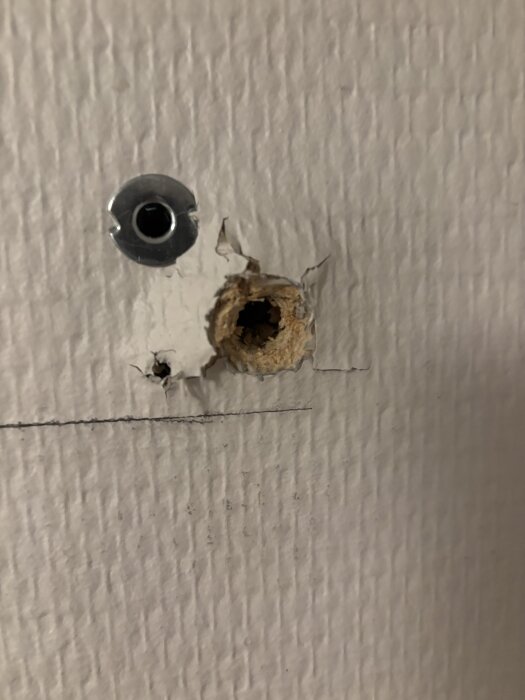
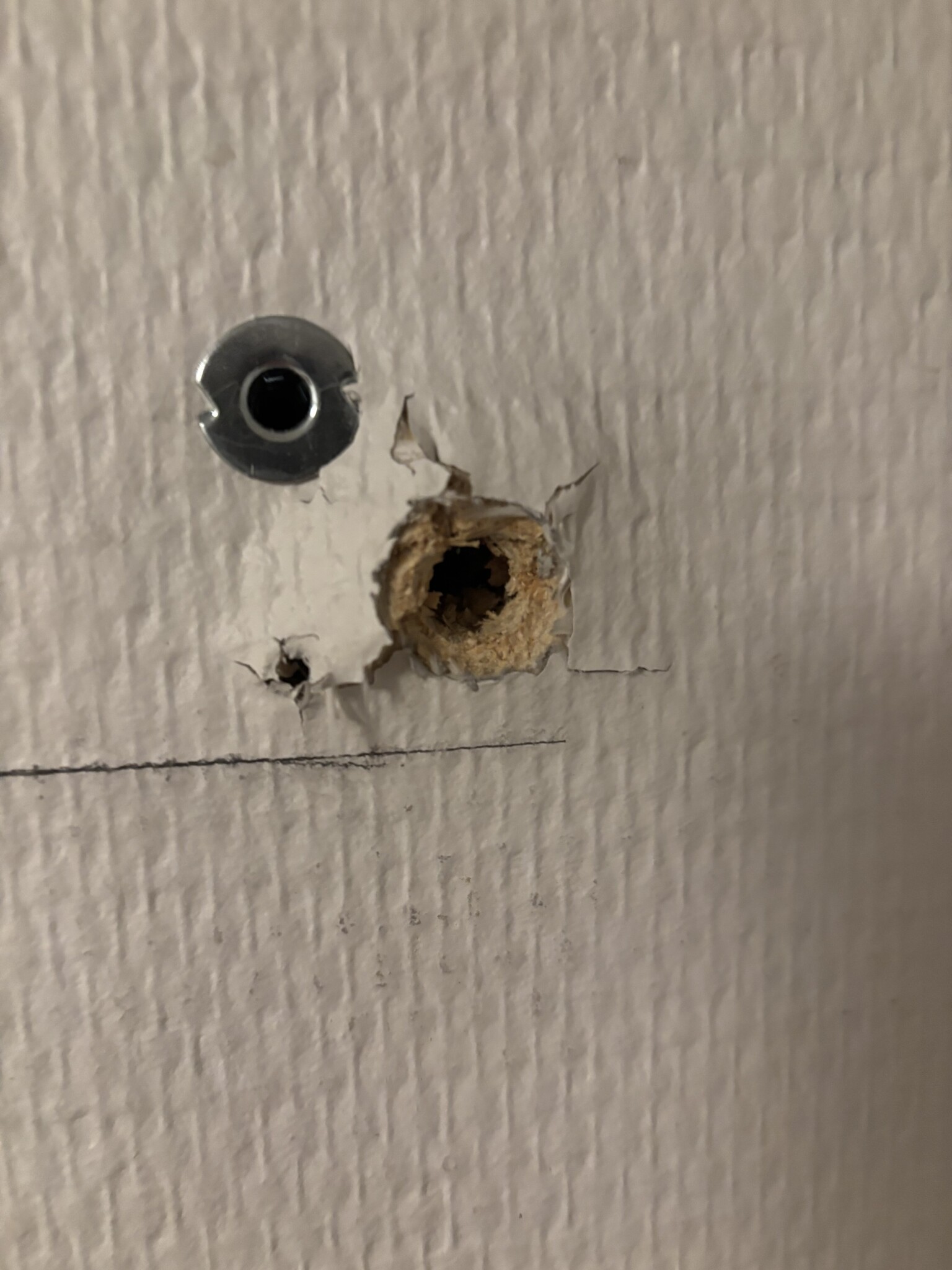
In the end, I had to pull the thing out and it didn't go well. It left an ugly bulging hole.
I'm not quite sure what went wrong; the other plugs worked fine. But somehow the threads must have been damaged, I guess.
It looks crooked and deformed, but that might have happened when I pulled it out.
How do I fix this easily and neatly?
I would prefer to get the hook strip up with a mounting roughly where the ugly hole is now.
The plug has two rather small pins that couldn’t withstand the torque. It looks like you used a power screwdriver? Naughty, naughty!
Now the board is splintered, so I would guess you'll have to get a hole saw and make an insert plate and attach it from behind with lots of adhesive and find a piece of wallpaper to try to match the pattern somewhat if it's in a visible area...
Alternatively, I would have drilled a clean hole and inserted a dowel that I would then screw the hook into.
The plug has two rather small pins that couldn't withstand the torque. It looks like you used a screwdriver? Naughty naughty!
Now the board is split, so I would guess you'll need to take out the hole saw and make an insert plate, attach it from behind with plenty of material, and find a piece of wallpaper to try to match the pattern somewhat if it's in a visible spot...
Alternatively, I would have drilled a clean hole and inserted a piece of dowel, then screwed the hook into it.
No, I mounted it with a molly tool. So, I was a bit surprised that the threads seemed to have broken somehow.
Regarding solution no. 2 with the dowel. Do you mean just driving in a long enough piece so it "reaches" the next material after the cavity behind the board, like? No glue or anything, just adjust the hole and the dowel's circumference so it just fits in and reaches the next wall?
Correct. When you insert the screw, the dowel should have enough friction not to spin if it is cross-sawed with, for example, a Japanese saw so that it can expand when you tighten the screw. You can also glue a shorter, 3-4 cm, dowel into the hole and be satisfied with that.
The downside of a bottomed dowel is that sound suddenly has a rather effective shortcut through the wall if it's not next to a stud... Unsure if a furniture pad at the bottom would dampen the sound sufficiently?
The advantage is that it is a temporary solution that can sit permanently. If you don't want a hole there, you can replace the dowel with a new one without a hole. Or just change the hole pattern a bit within reasonable limits depending on the diameter of the dowel...
I've used dowels in many concrete walls to be able to use or repair/putty old broken holes from previous owners and also to repair wood walls like yours from previously mentioned owners who apparently thought anything other than metal expansion plugs was nonsense. In a concrete wall, absolutely, but in wooden walls!?!
No, I used a molly tool for assembly. So I was a bit surprised that the threads seemed to have broken somehow.
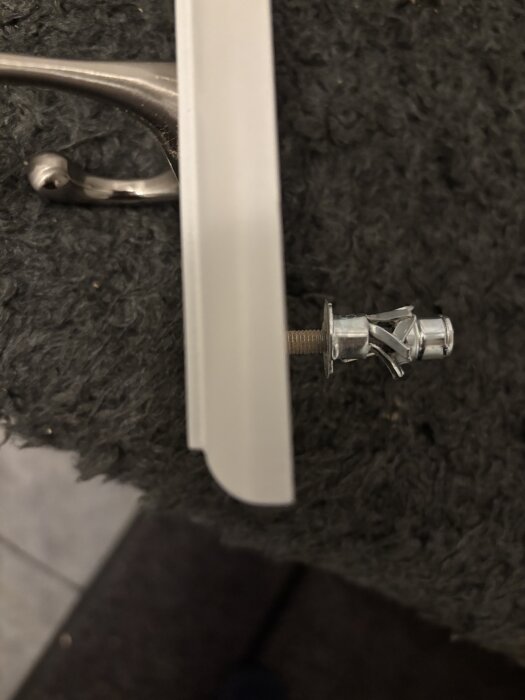
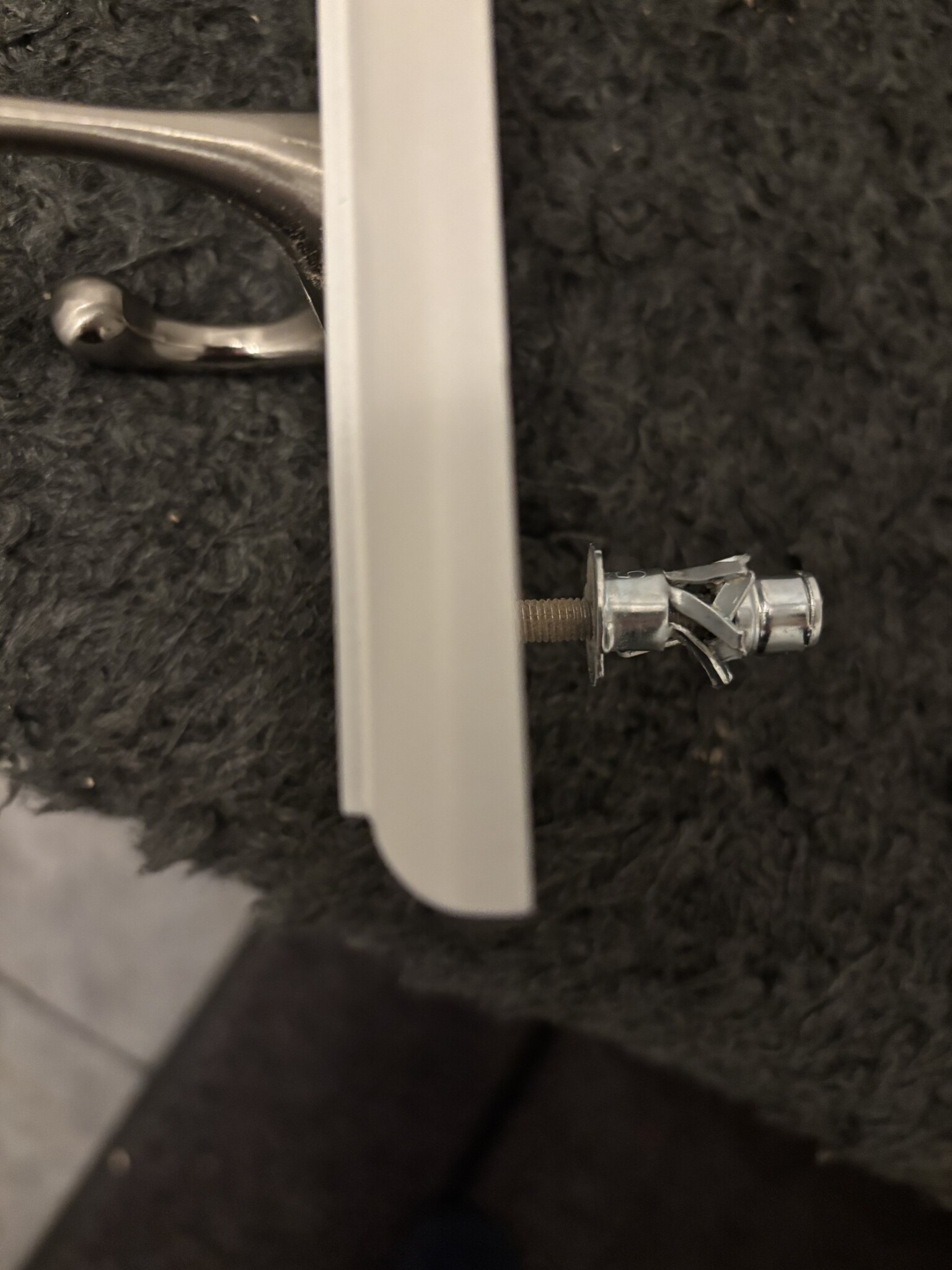
In the picture it is clearly visible that you have crushed the Molly plug. It should look like a cone on the backside and not like a "Plockepinn". Or is it after it has been forced out the same way it went in?
No, I installed it with a molly tool. So I was a bit surprised that the threads seemed to have failed in some way.
Regarding solution no. 2 with a dowel. Do you mean to just drive in a piece long enough that it "reaches" the next material after the cavity behind the board? No glue or anything, just adjust the hole and dowel's circumference so that it just fits in and reaches the next wall?
In the picture, it's clear that you crushed the Mollu plug. It should look like a cone on the backside and not like a game of pick-up sticks. Or is it like that after it was forced out the same way it went in?
Well, I don't know why it looks like that. But I wouldn't be surprised if it ended up that way because I forced it out and bent it quite violently. I installed it like all the other plugs that fit nicely and work as intended.
Something went wrong either when I placed it, or there was something wrong with it from the start. Despite using the molly tool, the threads got messed up.



VidarH said:
The plug has two rather small pins that couldn't withstand the torque. It looks like you used a screwdriver? Naughty naughty!Intet said: