I plan to use a bunch of frame sleeves for a purpose other than door/window, and I became curious about how much load a frame sleeve can withstand. Sharing is caring, they say, so in true Care Bear spirit, I hereby share my experiment.
My not entirely scientific setup was as follows:
1 Essve 38 mm frame sleeve
2 pieces of standard 45x45 timber
"A bunch" of Irwin XP 600 clamps
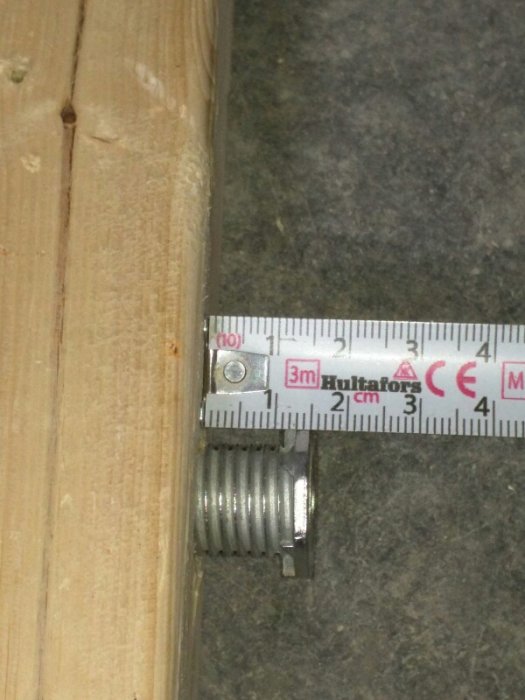
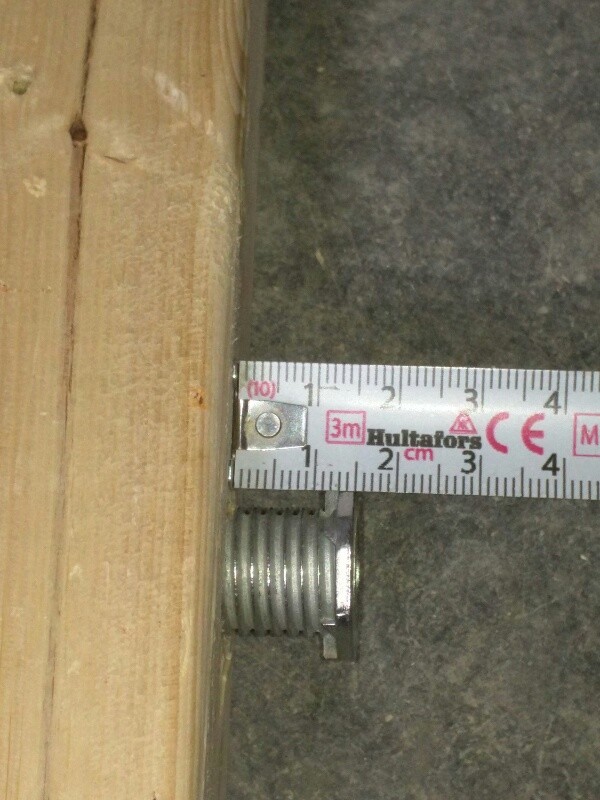
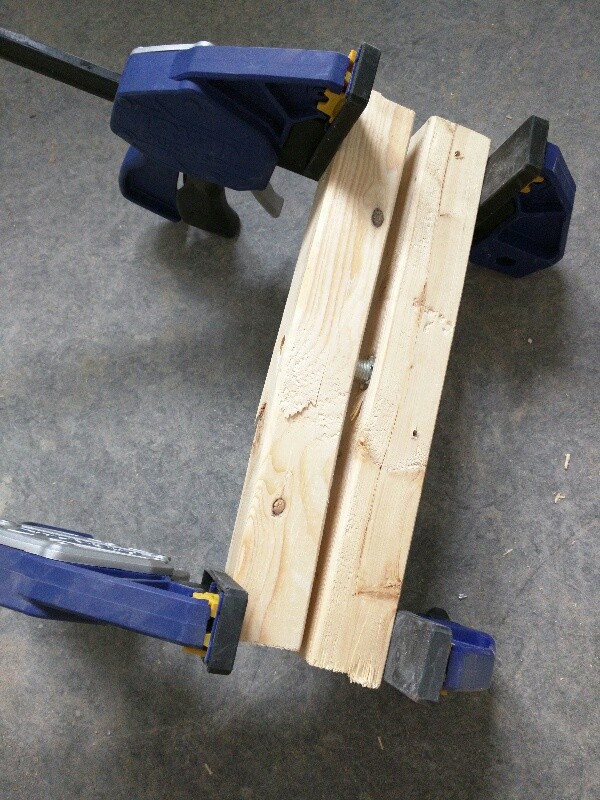
I started by drilling a 14 mm hole in the middle of one of the timbers and screwed the frame sleeve into this hole. To simulate a less than optimal case, I chose to screw the sleeve all the way into the timber and then back it out to a suitable distance, so it would cut threads all the way into the wood, so to speak. "Suitable distance" in this case was 15 mm, which means the sleeve is screwed in 23 mm into the timber:
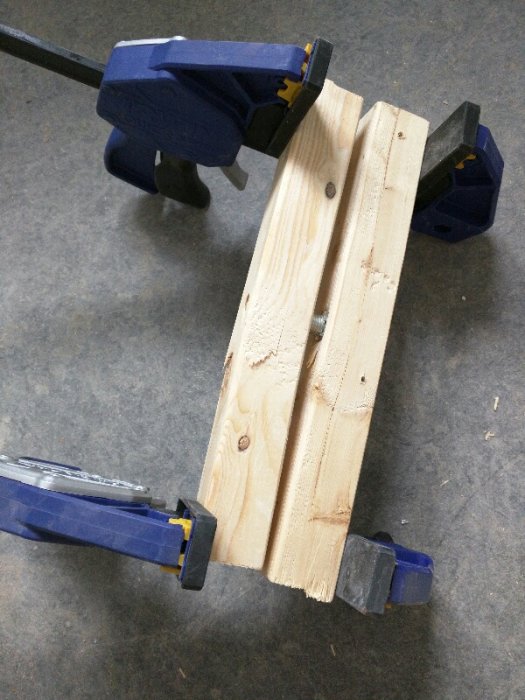
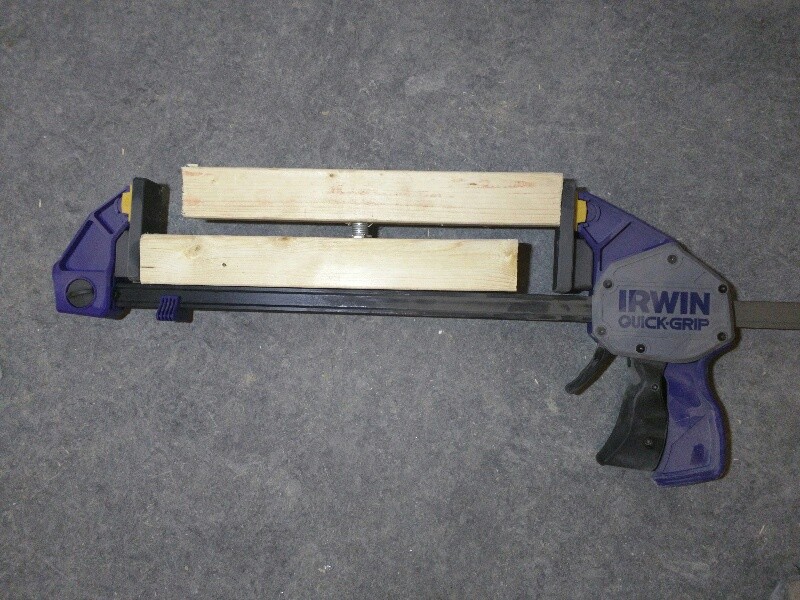
Then I took the other timber, put everything together with 2 clamps, and squeezed one at a time until it stopped. I had a feeling that 2 clamps wouldn't be enough, and sure enough, the clamps stopped before the sleeve failed:
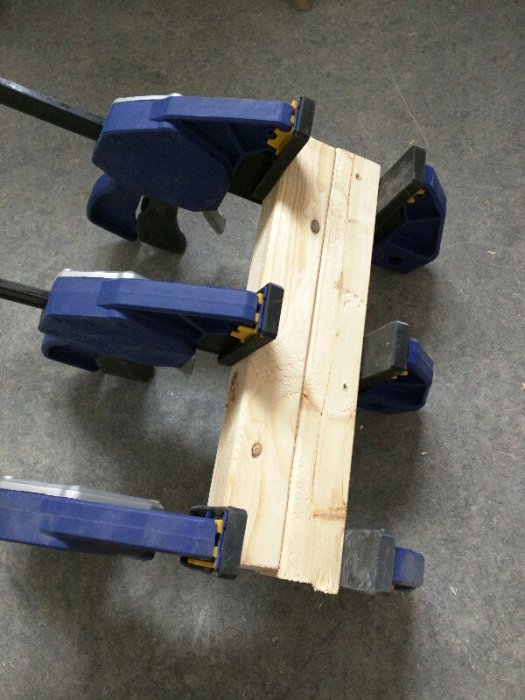
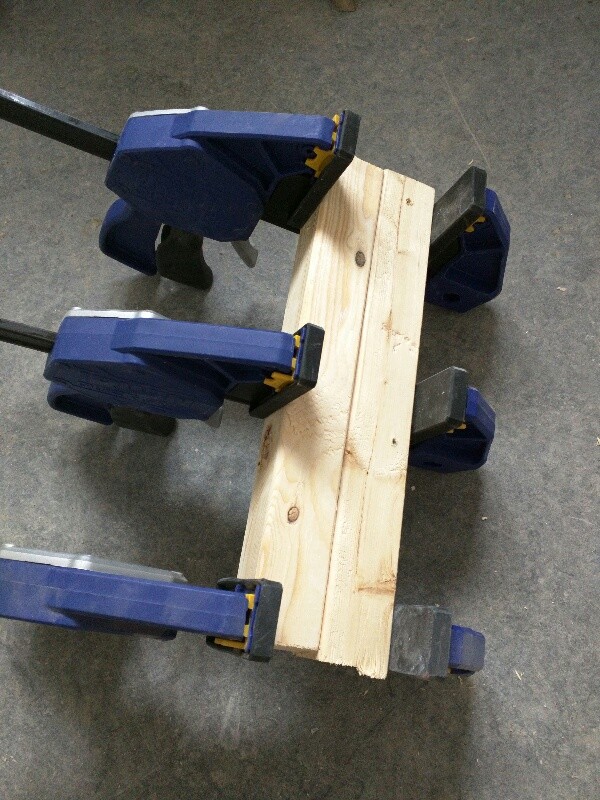
But when I then used a third clamp right over the sleeve, the sleeve finally failed and was pressed into the timber:
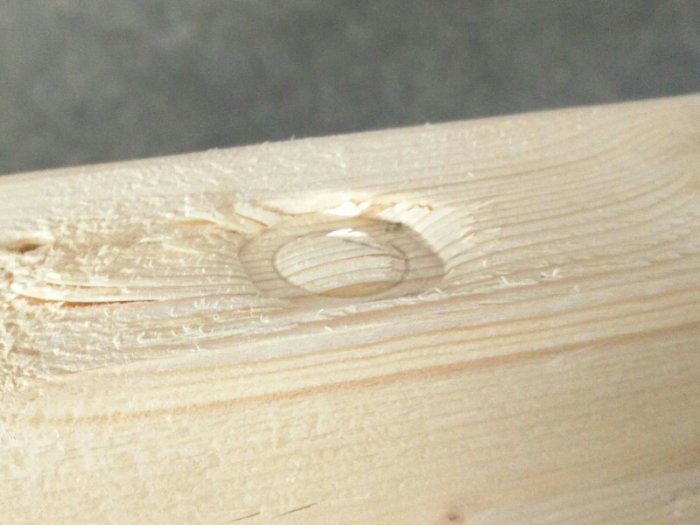
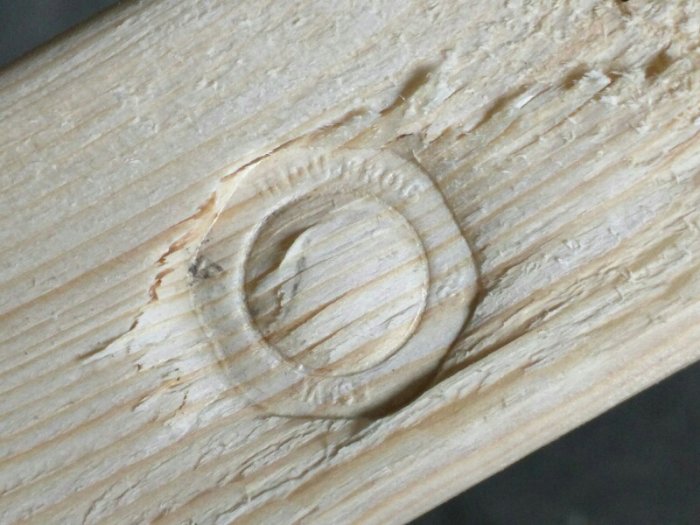
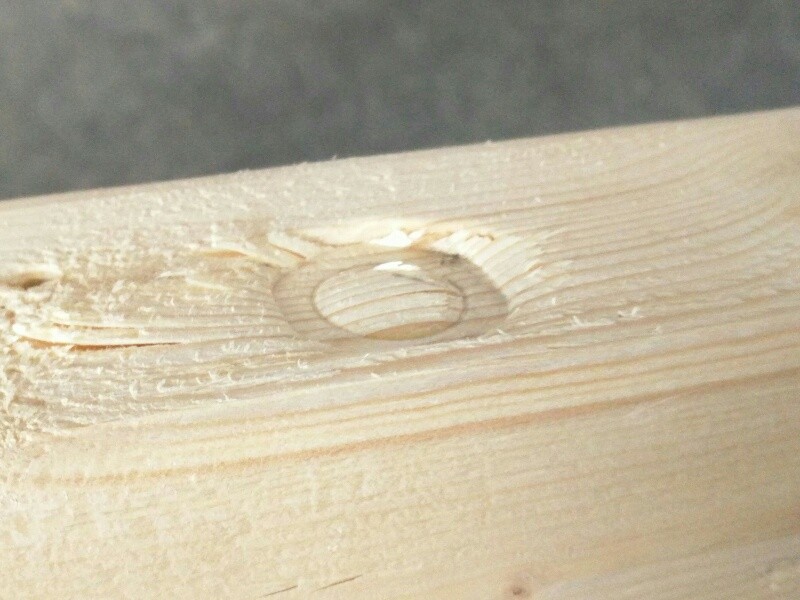
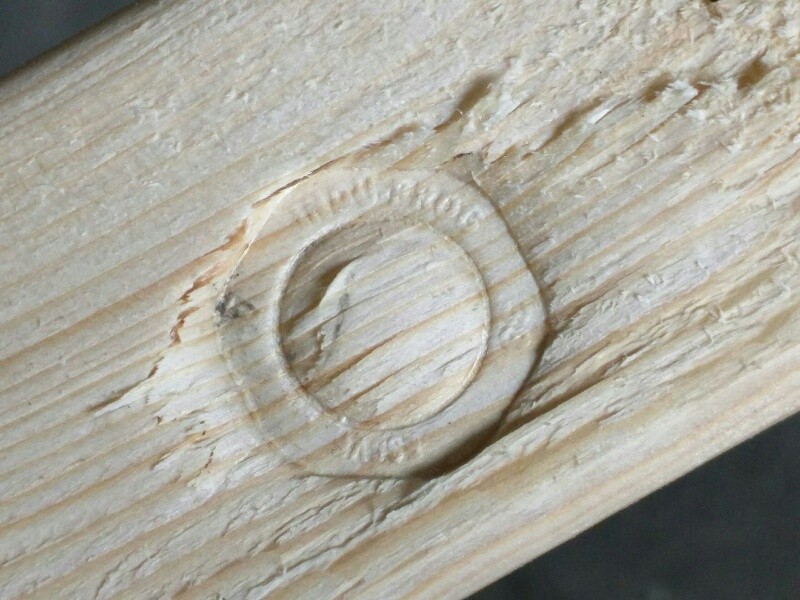
Here's how the impressions on the opposing timber turned out. It's a bit funny that you can read what's on the sleeve itself (I flipped the last image so the text in the impression would be upright):
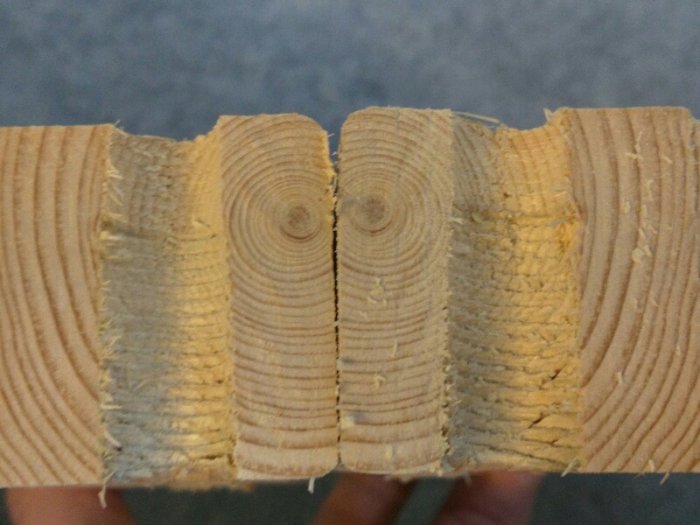
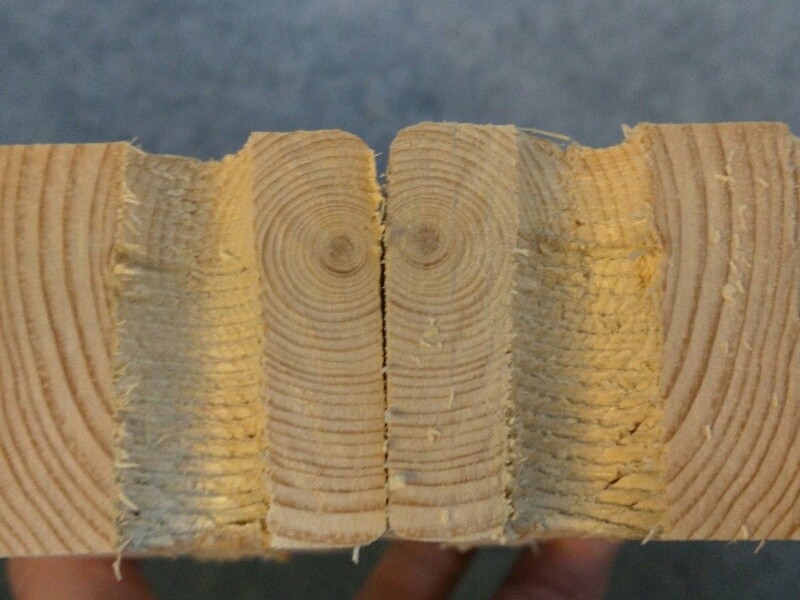
I then sawed the timber with the hole open, and you can clearly see how the threads in the wood have been torn apart:
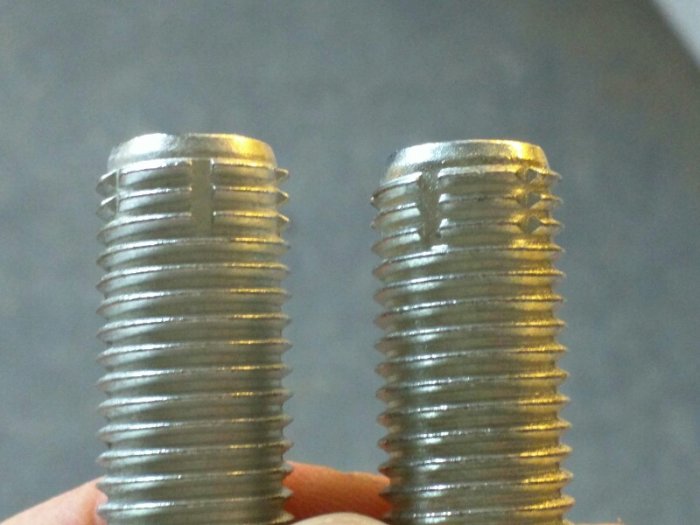
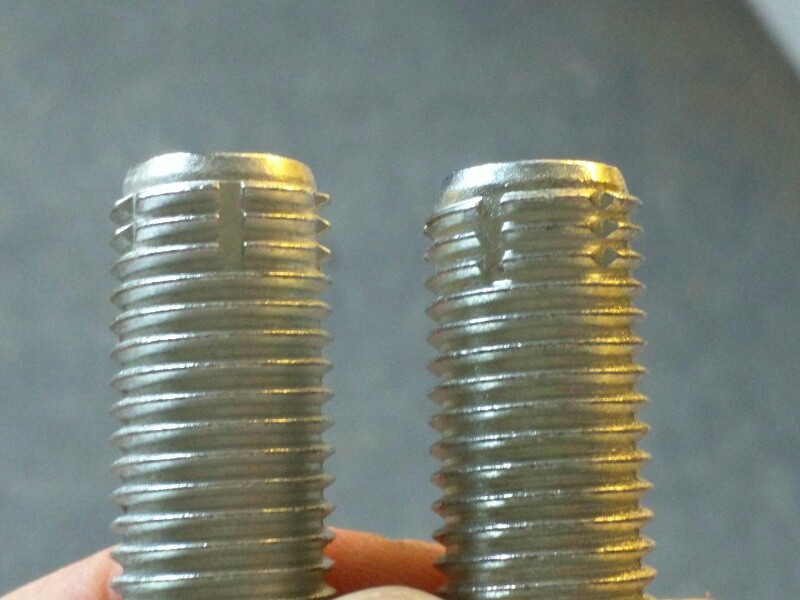
The sleeve itself, however, survived completely unscathed. The one on the left is from this experiment, the one on the right is brand new:
So what was the result of this little experiment? In other words, how much load are we talking about? If we assume that the marketing of the Irwin XP 600 is correct, each clamp can exert a force of "600 lbs", which corresponds to just over 270 kg. Since I had to use all my might on 3 clamps, I would estimate that the total load was around 800 kg.
To verify this, I finally took a new timber and repeated the entire experiment once more, but this time I needed to use 4 clamps before the sleeve failed. However, it didn't require significant force on the 4th clamp, which confirms that the force required is "approximately 3 Irwin XP 600."
Long story short; a frame sleeve (screwed in 23 mm into a timber) can handle a load of approximately 800 kg each!
But isn't it the rule that determines that, not the sleeve? If you redo it with different timber/grading/growth method/species, you'll likely get a different value?
I believe it would be difficult to carry out such a test at home. As empirical experience has shown, the wood is likely to give way before the frame screw does.
I would guess that the timber is of higher quality in the frame than in the C14 studs that have been tested by TS.
But isn't it the casing that withstands it rather than the rule? If you do it with different lumber/classification/growth method/species, you will likely get a different value?
Of course. If it had been, for example, oak, it likely would have required double before the wood gave in. This was meant more as a less optimal situation, and it hardly gets less optimal than an unclassified Byggmax rule...
Kallebo said:
Furthermore, you should try placing the clamp in the middle from the start, then probably one clamp would have been enough.
I actually tried that the second time, but it was not enough by a long shot; as mentioned, I needed to go to 4 clamps that time.
Kallebo said:
But it's fun that you share your experiment, even though I don't quite understand what you'll use it for..
I'll get back on that when the project begins.
Mikael_L said:
I would like to know what the jamb screws can withstand in "lateral load," like if they are sheared off.
I tried the following setup, but one clamp was not enough. So, at least 270 kg, to put it briefly:
I would like to know what load a frame screw can withstand in "side load", like being sheared off.
Find out the cross-sectional area of the frame screw and the breaking point for the material in the frame screw. Area * breaking point and you'll have the force.
When I replaced the temporary exterior construction door, which had been temporarily installed for only about 3 years, I discovered that half of the frame screws had simply broken off.
Brand Biltema, if that could be the reason...
Find out the cross-sectional area of the karmskruv and what the breaking point is for the material in the karmskruv. Area * breaking point and then you have the force.
You hear about karmhylsor being used to align things like rafters in ceilings or walls. I assume it should work for floors as well.
For the normal case, i.e., a shear force, it would be interesting to know how many threads need to be engaged in something like a door frame (some kind of rule of thumb, like 15mm protruding (23mm thread for this karmhylsa) feels okay, but would, for example, 10mm thread still be okay...
Funny experiment, but it doesn't say anything about how much load/force the frame sleeve can withstand. You know nothing about the strength/force you applied to the clamps on the first two "bottomed" pieces of wood, and on the third, the wood gave up, the clamps are still intact. I managed to crush a clamp of the same brand completely new. I don't believe for a second that I can develop that strength with one hand. But I got a new clamp as a replacement.
Of course. If it had been, for example, oak, it would probably have required twice as much before the wood gave in. This was meant more as a suboptimal situation, and it hardly gets less optimal than an ungraded Byggmax rule...
I actually tried this the second time, but it wasn't nearly enough; as I said, I needed to use 4 clamps that time.
I will get back to you when that project is started.
I tried the following setup, but one clamp wasn't sufficient. So at least 270 kg in short:
[image]
however, you still don't have the same timber as is in frames
Funny experiment, but it doesn't say anything about how much or the load/force the frame sleeve can withstand, you know nothing about the strength/force you've applied to the clamps on the first two "bottomed" wooden pieces and at the third, the wood gave out, the clamps are still intact.
I managed to crush a clamp of the same brand, brand new but with a specified 800 kg. I don't think for a second I can exert that force with one hand. But I got a new clamp as a replacement.
The first two clamps didn't bottom out the studs; the picture shows when I couldn't press them together any more. And that each clamp can press 270 kg I don't doubt based on previous experiences. But as I said, it wasn't a fully scientific experiment.
Vi vill skicka notiser för ämnen du bevakar och händelser som berör dig.